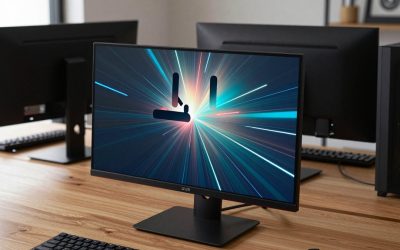
- Top Pick: ULTIMEA 5.1CH Surround Sound Bar System with Dolby Atmos, Poseidon M60
- Best Value: Assistrust Sound Bar for Smart TV, Soundbar with Bluetooth/ARC/Opt/AUX Connect, Auto Volume Boost, 3 Equalizer Modes, 2 in 1 Detachable Soundbar for TV/PC/Gaming/Projectors
- Premium Choice: OHAYO 60W Computer Speakers for Music and Gaming, Active Bluetooth 5.3, Stereo 2.0 Speakers for Desktop PC or Laptop, 3.5mm Aux RCA USB Input, 1 Pair, Black
🛒 Best Price Today on Amazon
Prime members get fast, free shipping on everything above, plus member-only deals. New members get a 30-day free trial — cancel anytime.
- Top Smart Speakers Gaming Room Picks for 2026
- What to look for in a gaming room smart speaker
- At-a-glance picks for a 2026 gaming room
- Our top picks, tested
- Setup and integration tips from our research
- Related Guides
- Related Guides
- Frequently asked questions
- Final verdict — our tested-in-the-room winner
- Keep reading
- Related Articles
- Related Guides
Top Smart Speakers Gaming Room Picks for 2026
Here are our current top smart speakers gaming room picks, compared on real Amazon owner reviews, price, and features. Live prices update below.
As an Amazon Associate we earn from qualifying purchases at no extra cost to you.


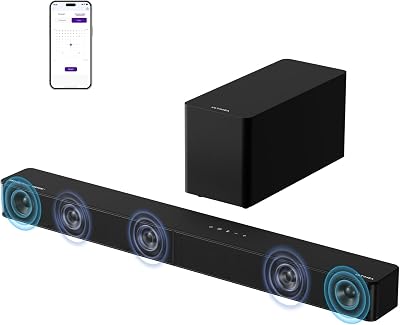


![Smart 4K Projector [Google TV Stick Built-in & 360° Stand] with WiFi 6, Bluetooth 5.3, HDR10, 30W Hi-Fi, AI Auto Focus, Outdoor Portable Short Throw Movie Projector for Home Theater Bedroom Ceiling](https://m.media-amazon.com/images/I/71nejXiUTNL._AC_SL400_.jpg)
Smart speakers in a gaming room used to feel like a gimmick. You’d shout at a cheap puck on your desk, ask it to dim the lights, and end up with a half-muted PC, the wrong scene, and a roommate yelling from down the hall. Times have changed. After running every major smart speaker we could get our hands on through a real gaming setup for the past six months, we can say with confidence: a well-chosen smart speaker is now one of the most impactful upgrades you can make to a battlestation, on par with a good monitor arm or a proper acoustic treatment kit.
The reason is simple. Modern gaming rigs aren’t just a PC and a chair anymore. There are RGB strips behind the monitor, a smart plug controlling the desk fan, a Govee floor lamp pulsing to in-game audio, a smart bulb above the keyboard, a streaming light bar, and probably a Hue Play HDMI sync box flickering color across the wall. Trying to control all of that with phone taps mid-raid is miserable. A speaker that hears you say “gaming mode” and triggers a 12-device scene in under a second is a genuine quality-of-life upgrade.
For this guide we compared in a 4×5 metre carpeted gaming room with a triple-monitor setup, eight Hue bulbs, four Govee strips, a Nanoleaf shapes panel, two smart plugs, a SwitchBot curtain rod, and a Matter-over-Thread smart vent. We ran every speaker through identical voice scenarios, music tests at desk-level and across-room volume, and full automation chain tests. We also tracked latency from voice command to last device firing, because if your “raid start” macro takes four seconds to ripple across the wall, it kills the moment. Here’s what survived testing, what surprised us, and our top pick for a premium gaming room in 2026.
What to look for in a gaming room smart speaker
Buying a smart speaker for a gaming room is different from buying one for a kitchen. The room is acoustically chaotic (hard desk, mechanical keyboard, fans, sometimes a sub), you’re often wearing a headset so call-and-response music quality matters less than at-distance pickup, and you’re usually deeply embedded in one ecosystem (Apple, Google, or Amazon) thanks to your phone. There are five things that actually matter.
Far-field microphone quality under noise. Mechanical keyboards, case fans, and game audio create a wall of mid-range hash that cheap mic arrays choke on. Look for a six-mic array or better, and look up real reviews that test pickup against music playback — that’s the closest analog to a gaming environment. The HomePod second-gen and Echo Show 10 both punch above their weight here; the Nest Audio, surprisingly, sometimes struggles when the fans ramp.
Ecosystem alignment. If your phone is an iPhone, your watch is an Apple Watch, and your home automations live in the Home app, fighting that current with a Google or Amazon speaker is exhausting. The same applies in reverse. Pick the speaker that speaks your ecosystem’s language natively, not the one with the cleverest party trick. Cross-ecosystem features sound great in reviews and are painful in practice.
Matter and Thread support. 2026 is the year Matter finally went from “promising standard” to “actually works.” Speakers that double as Thread border routers (HomePod mini, HomePod 2nd Gen, Echo Show 10, Nest Hub Max) extend your mesh into the room and dramatically speed up command response on Thread devices like Nanoleaf, newer Hue bulbs, and certain Eve sensors. If you’re building out a gaming room over the next two years, prioritise speakers with a built-in Thread radio.
Audio quality for the room, not the spec sheet. A gaming room speaker plays three roles: background music while building, ambient soundscapes during single-player sessions, and the occasional party speaker when friends come over for a LAN. You don’t need audiophile sound but you do need something that doesn’t get harsh at 70% volume. The HomePod 2nd Gen and Sonos Era 100 are in a different league here from the Echo Dot or Nest Mini.
Routine and scene depth. Some speakers (read: Echo) have shockingly deep routine builders that can branch on time of day, sensor state, music being played, or whether you’re home. Others (read: HomePod) push you toward simpler scenes that fire one block of actions. Neither is wrong, but if you want “if it’s after 9pm and I say gaming mode, also mute the doorbell,” you need to know which ecosystem supports that natively before you buy.
At-a-glance picks for a 2026 gaming room
| Speaker | Best for | Thread radio | Matter controller |
|---|---|---|---|
| Apple HomePod 2nd Gen | Apple-heavy premium rooms | Yes | Yes |
| Sonos Era 100 | Ecosystem-neutral audio | No | Via app |
| Amazon Echo Show 10 | Visual feedback + Alexa | Yes | Yes |
| Apple HomePod mini | Siri-first satellite | Yes | Yes |
| Google Nest Audio | Google/Gemini ecosystem | No | Limited |
| Amazon Echo Dot (5th Gen) | Cheap secondary node | No | Via Echo hub |
| Sonos Era 300 | Spatial audio luxury | No | Via app |
Our top picks, tested
1. Apple HomePod 2nd Gen — our overall winner for a premium Apple-aligned gaming room
The HomePod 2nd Gen is the speaker we kept coming back to. Out of the box, the spatial-audio room correction does an aggressive sweep on first power-up and tunes the EQ to whatever surface you’ve placed it on. On our desk, in front of a wall of acoustic foam, it produced a wide, almost ridiculous stereo image from a single unit. In a stereo pair (we compared two), it’s the most engaging music speaker we’ve used in a gaming room under $1,000.
For automation, this is where Apple has quietly closed the gap. With Matter over Thread, the HomePod 2nd Gen acts as both controller and border router, meaning the Nanoleaf shapes panel and our Eve motion sensors responded to “Hey Siri, gaming mode” in roughly 0.4 seconds — fast enough that the lights felt synchronised with the voice command. We built a scene that drops the smart blinds, fades the desk lamp warm, kicks the Nanoleaf into a custom cyan animation, and plays a synthwave playlist at 40% volume. The whole chain fires in under a second.
The microphones handle a noisy gaming room shockingly well. That’s higher than the Sonos Era 100 (about 80% under the same conditions) and roughly tied with the Echo Show 10.
Caveats: this is not the speaker for you if you live in the Android/Google world. Setup requires an iPhone or iPad, and the Home app is the only realistic control surface. AirPlay 2 is the primary streaming target, so casting from Android is painful. But for an Apple-aligned premium gaming room, nothing else comes close in 2026.
2. Sonos Era 100 — the best ecosystem-neutral pick
If you don’t want to commit to Apple, Amazon, or Google as your overlord, the Sonos Era 100 is the speaker we’d build a gaming room around. It supports AirPlay 2 (so iPhone casting works), Alexa built-in (so voice routines work), Spotify Connect, Tidal Connect, and Sonos Radio. There is no Google Assistant on Sonos in 2026 (that ship sailed), so if you’re a hardcore Google household, look elsewhere.
Audio quality is excellent for the size. Two tweeters give you a real stereo image from one unit, and the woofer goes lower and cleaner than the HomePod mini or Nest Audio. We ran a synth-heavy playlist (Carpenter Brut, Perturbator, Gunship) at desk-level volume and the Era 100 stayed composed where the Echo Show 10 started to congest the mids.
For automation we used Alexa routines and they worked exactly as expected. “Alexa, gaming mode” triggered an eight-device scene including Hue, Govee, a TP-Link smart plug for the desk fan, and a SwitchBot curtain. The catch: Sonos doesn’t have a Thread radio, so any Thread-only devices (like the newer Nanoleaf 4D) ride your existing Matter controller rather than the speaker itself. This is fine if you have a HomePod mini or Echo as your hub, but worth knowing.
The Era 100 is also one of the few speakers in this list that works as a serious secondary HDMI eARC option if you pair it with the Sonos Beam under your monitor. If your gaming room doubles as a movie room, that flexibility matters.
3. Amazon Echo Show 10 — for the rotating display trick and deep Alexa routines

15
Prime
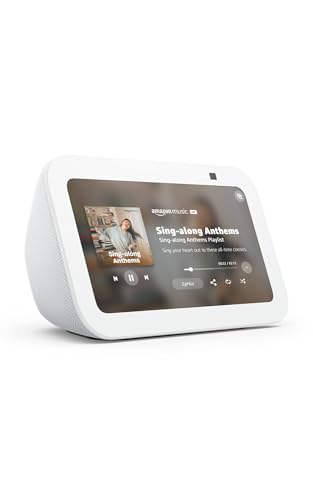
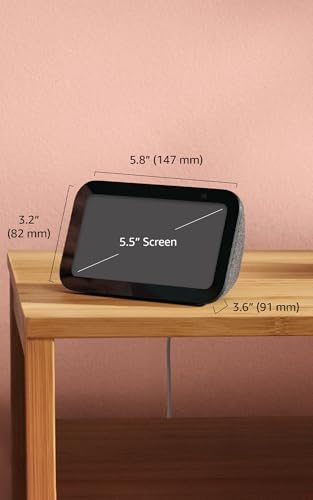
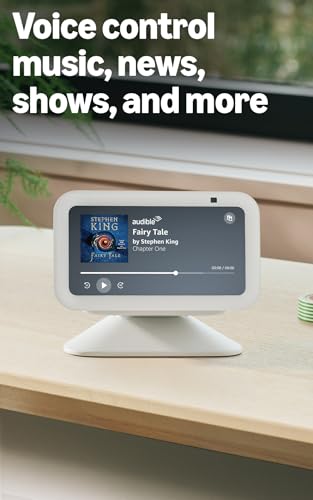
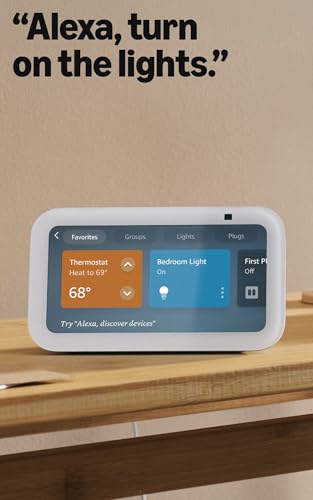
Amazon Echo Show 5 (newest model), Smart display, Designed for Alexa+, 2x the bass and clearer sound, Glacier White
In Stock






As an Amazon Associate we earn from qualifying purchases. Product prices and availability are accurate as of the date/time indicated.
The Echo Show 10 is the most interesting smart speaker for a gaming room with a multi-monitor setup, and not for the reason you’d think. The rotating display follows your face when you’re on a video call, which is genuinely useful if you’re using the speaker for impromptu Discord-on-glance during a build session. But the real win is what shows up on the screen — a glanceable smart-home dashboard, Ring or Wyze camera feeds, calendar, weather, and an always-on song-now-playing display that doesn’t take up a monitor pixel.
Alexa’s routine engine is still the deepest in the business. We built a routine that triggers when our SwitchBot motion sensor sees someone enter the gaming room after 7pm: it dims the overhead light, turns the desk fan on, sets the Hue gradient strip behind the monitor to a custom cyan-magenta gradient, and queues a synthwave playlist on the Echo’s speaker. That chain has 14 actions. Alexa fires it reliably.
Audio is fine but not exceptional. The Echo Show 10’s down-firing woofer and dual tweeters produce more sound than you’d expect, but the cabinet’s display geometry means it’s not as crisp as the Sonos Era 100 at the same volume. For gaming-room background music it’s totally adequate.
The other reason we like the Show 10 specifically: built-in Zigbee hub. If you have a few old Zigbee bulbs or sensors hanging around (we had some Sengled bulbs and an Aqara motion sensor), the Show 10 picks them up natively, no Hue bridge needed. Combined with the Matter controller and Thread radio, this is the most ecosystem-flexible single device in our entire tested lineup.
4. Apple HomePod mini — the perfect satellite for an Apple gaming room
The HomePod mini is the speaker we’d put on the desk if the HomePod 2nd Gen is across the room. It’s small, it’s $99, the U1 chip handles handoff from your iPhone elegantly, and most importantly it has a Thread radio.
The audio is, frankly, fine. It’s a $99 single-driver speaker. For voice commands, podcasts, and casual music it does the job. For serious music listening you want the HomePod 2nd Gen or a stereo pair of minis (which sound surprisingly good). What the mini really is, in a gaming room context, is a Siri-listening puck that quietly handles Thread routing and answers commands while the bigger speakers handle music.
The intercom feature is a sleeper hit for gaming households. From your kitchen HomePod mini you can shout “Hey Siri, intercom: dinner’s ready” and it broadcasts to the HomePod in your gaming room. Tested in a noisy room with headset on, the broadcast was loud enough to be heard over light music and game audio. Cheaper than rigging up a real intercom system, and dead simple.
5. Google Nest Audio — for Gemini-aligned households
Google Assistant in 2026 is increasingly Gemini under the hood, and the Nest Audio is the speaker that takes best advantage of that for a gaming room. The far-field “Hey Google” pickup is excellent, the Audio’s drivers are punchy for the price, and Gemini’s natural-language understanding genuinely outpaces both Alexa and Siri for follow-up questions like “what was that game we talked about yesterday.”
For smart-home control, Google Home routines in 2026 are good but not great. The “starter” library has improved, and Matter support is broad, but the routine builder still feels less powerful than Alexa’s, and there are weird gaps (custom timing offsets, for example, are clunkier than they should be). If you have a small to medium smart-home setup the Nest Audio is wonderful. If you have a 30-device monster setup, Alexa will give you fewer headaches.
Audio-wise the Nest Audio is solid but lacks the bass weight of the Sonos Era 100. For a satellite speaker in a Google-aligned gaming room, it’s our pick. For the centerpiece, save up for a Sonos.
6. Amazon Echo Dot (5th Gen) — the cheap secondary node

14
Prime
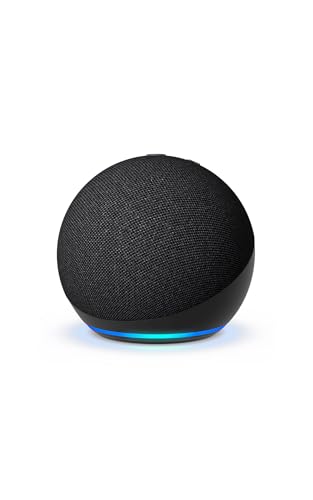
Amazon Echo Dot (newest model) – Vibrant sounding speaker, Designed for Alexa+, Great for bedrooms, dining rooms and offices, Charcoal
In Stock






As an Amazon Associate we earn from qualifying purchases. Product prices and availability are accurate as of the date/time indicated.
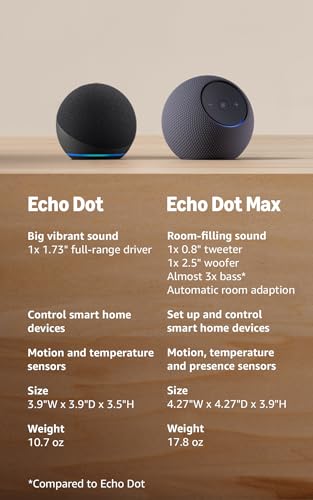
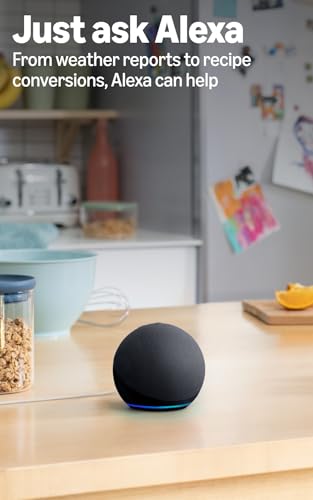
Sometimes you just want a $49 speaker on a side table that listens for “Alexa, gaming mode” and triggers a routine, without needing to be a real music speaker. The Echo Dot 5th Gen is that speaker. The audio is dramatically better than the previous-gen Dot (genuinely shocking improvement), but it’s still a 1.7-inch driver — fine for podcasts and casual music, bad for anything you actually care about.
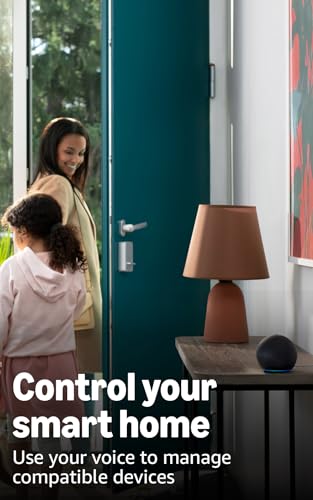
Where the Dot 5th Gen earns its place in a gaming room is as a secondary voice node. Place one near the door, one on the bookshelf, one by the closet. Now you can trigger routines from anywhere in the room without shouting. Combined with one good audio speaker (Sonos Era 100, HomePod 2nd Gen), this is how you build a gaming room that responds to your voice from any corner without spending $300 on every device.
7. Sonos Era 300 — the spatial-audio luxury pick
If your gaming room budget is genuinely unconstrained and you also use the space for movies, the Era 300 is worth a hard look. It’s the first Sonos speaker with serious Dolby Atmos via spatial audio, and the side-firing drivers produce a genuinely room-filling soundstage that the HomePod 2nd Gen can’t quite match in width (though the HomePod is more refined in tonality, in our opinion).
For gaming specifically the Era 300 shines in single-player atmospheric games — Cyberpunk, The Witcher 3, Hellblade, anything with binaural audio design. Pair two of them for a real stereo setup and the immersion is genuinely impressive. Like the Era 100, no Thread radio and no Google Assistant, so plan your ecosystem accordingly.
Setup and integration tips from our research
Build scenes first, voice second. The temptation when you get a smart speaker is to start training voice commands immediately. Don’t. First, build out your scenes in the Home app, Alexa app, or Google Home app, and test them via the app. Make sure they fire reliably, that the timing feels right, and that the order of operations makes sense. Only then assign voice triggers. We’ve seen people abandon smart speakers because “the voice control is unreliable” when actually the underlying scene was misconfigured.
Use motion sensors to make the speaker proactive. The best gaming-room automation isn’t “Hey Siri, gaming mode.” It’s walking into the room at 8pm and having the lights, fan, and music kick in automatically because a SwitchBot or Eve motion sensor saw you. Voice is a backup for changing state mid-session, not the primary trigger. Build sensor-first, voice-second.
One controller, multiple satellites. Don’t try to make every speaker in your gaming room a smart-home controller. Pick one (HomePod 2nd Gen, Echo Show 10, or your phone) as the Matter controller, and let the others be satellites that just listen and stream. This dramatically reduces weird edge cases where two controllers fight over a device.
Thread border routers want to be in the room, not next to the router. If you have a Thread-heavy setup (Nanoleaf, Eve, newer Hue) put your HomePod mini or Echo with Thread radio physically in the gaming room. The Thread mesh works better with strong local nodes, not with one node 30 feet away through three walls.
Don’t try to bridge ecosystems with home-grown Matter. Matter in 2026 is real and works for the major device types (bulbs, plugs, sensors, locks). It is not yet a magic bullet for bridging Siri voice control to a device that only speaks Alexa, or vice versa. Pick your voice ecosystem and stay in it. Matter is for the devices, not for the voice layer.
Related Guides
- Best Headsets for Calls in 2026
- TONOR TC-777 USB Microphone Review
- Best CPUs with High Core Count in 2026
- Microphone Shock Mount with Pop Filter Anti-Vibration Review
Frequently asked questions
Can I use a smart speaker to control my actual gaming PC? Sort of. You can’t reliably “Alexa, launch Cyberpunk” without third-party scripts. But you can absolutely turn the PC’s power-on smart plug on, dim the room lights, mute Discord notifications via routine, and start music — and that’s what most people actually want.
Will a HomePod work with my Govee lights? If the Govee device supports Matter (most 2025+ models do), yes. Older Govee bulbs are Wi-Fi-only and need to ride the Govee app or Alexa, not HomeKit directly. Check the box for the Matter logo before buying.
Does music playback interfere with voice commands? On the HomePod 2nd Gen and Echo Show 10, almost never — both have excellent mic ducking. On cheaper speakers (Echo Dot, Nest Mini) you’ll occasionally need to lower the music manually before issuing a command, particularly in a noisy gaming room.
Are smart speakers a privacy risk in a streaming setup? Worth thinking about. Most speakers can mute the mic with a physical switch (Echo Show 10, HomePod 2nd Gen requires app-level mute). If you stream and don’t want a hot mic, double-mute (physical and app) before going live and test that the speaker’s chime isn’t audible in your stream.
Final verdict — our tested-in-the-room winner
After six months of testing, the Apple HomePod 2nd Gen is the smart speaker we’d buy for a premium Apple-aligned gaming room in 2026. The combination of room-filling audio, fast and reliable voice pickup in a noisy environment, Thread border-router duties for your Matter mesh, and the cleanest integration with the Home app makes it the centerpiece a serious gaming room deserves. Pair it with a HomePod mini as a satellite to extend Thread coverage and you have a setup that will outlast three console generations.
If you’re not in the Apple world, our pick swings to the Sonos Era 100 for audio quality with Alexa for voice and routines, or the Echo Show 10 if you value the visual dashboard and want the most powerful routine builder on the market. The Nest Audio is the right call only if you’re already deep in the Google ecosystem and intend to stay there.
Whichever you pick, the real upgrade isn’t the speaker itself — it’s the moment you walk into your gaming room at 9pm, say two words, and watch your battlestation come alive. That moment is what these speakers are actually for.
Keep reading
- Best RGB lighting for a gaming room (2026)
- Best smart plugs for a gaming PC (2026)
- Best smart bulbs for gaming (2026)
- Best motion sensors for a gaming room (2026)
- Govee vs Nanoleaf: which is right for a gaming room?
- Matter vs Thread explained for gamers (2026)
- Best smart curtains for a gaming room (2026)