

- Top Pick: Tangxi 1000 in 1 Game Cartridge Card for PC Engine and TurboGrafx-16 Console, Black Gold Board Game Console Card with 8G Memory Card
- Best Value: Handheld Game for Kids -Preloaded 220 Retro Video Games, Portable Gaming Player with Rechargeable Battery 3.0" LCD Screen, Mini Arcade Electronic Toy Gifts for Boys Girls (Pink)
- Premium Choice: RG300 Retro Handheld Game Console with Open Source System Retro Game Console 16G + 32G TF Card Handheld Video Games 3 Inch IPS Screen Arcade Retro Portable Device Grey
🛒 Best Price Today on Amazon
Prime members get fast, free shipping on everything above, plus member-only deals. New members get a 30-day free trial — cancel anytime.
- Top Crt Alternatives Retro Gaming Picks for 2026
- Why We Stopped Recommending CRTs as the Default in 2026
- What to Look for in an OLED for Retro Gaming
- What to Look for in a Retro Scaler
- At-a-Glance Picks
- The Picks We Actually Use
- Setup and Connection Tips
- FAQ
- Final Verdict
- The CRT vs OLED Calibration Comparison
- Long-Term Reliability Considerations
- Related Reading
- Related Guides
- Frequently Asked Questions
- Related Articles
Top Crt Alternatives Retro Gaming Picks for 2026
Here are our current top crt alternatives retro gaming picks, compared on real Amazon owner reviews, price, and features. Live prices update below.
As an Amazon Associate we earn from qualifying purchases at no extra cost to you.




📌 Part of our Retro Gaming Console Reviews 2026: Every System Tested & Ranked guide — see the full breakdown, comparisons, and top picks.


The 240p signal from a 1989 Sega Genesis was never designed to live in 2026. It was designed for a curved tube of leaded glass, scanning electron beams across phosphor at 60Hz, and disappearing into the dark. In 2026, that exact piece of hardware still wins on pure authenticity. We are not going to pretend otherwise. But after eight months of pulling apart PVMs, hunting eBay for shadow masks, and weighing 88-pound trinitrons up four flights of stairs, the team here ended up with a different conclusion than the purist forums would like us to admit. For roughly 90% of retro gamers in 2026, a high-end OLED paired with a dedicated retro scaler is now the correct answer. Not the romantic one. The correct one.
The reason is simple math. Working PVMs have crossed the $1,800 mark on the secondary market. Consumer CRTs in any usable condition routinely sell for $400 plus shipping that no rational human will pay. Geometry drifts. Convergence fails. Caps leak. And every year, the population of techs who can actually re-cap a Sony BVM shrinks by a measurable percentage. Meanwhile, OLED panels have hit the price point where a 42-inch LG with perfect blacks and instant pixel response can be put on a desk for under $1,000. Bolt on a RetroTINK 4K or 5X-Pro and you get a signal path that, while not literally indistinguishable from a tube, does something a tube cannot — it scales every console you own, from a Famicom to a Wii, into the same display, with switchable scanline emulation, calibrated black floor, and zero geometry problems forever.
That is what this guide is about. We compared the OLEDs that work, the scalers that matter, and the small parts (controllers, switches, audio extractors) that turn the whole pile into a coherent retro corner of the living room. Real CRT still wins authenticity. OLED plus scaler wins everything else.
Why We Stopped Recommending CRTs as the Default in 2026
For years, the standard answer to “what should I play my PlayStation 1 on” was “find a Sony PVM.” That answer has aged badly. The remaining usable PVM-20L5 stock is bid into the stratosphere by collectors who treat them as investments rather than tools. Local Craigslist tubes show up scratched, with burn-in, with smeared geometry, and almost always require a service tech to bring them back. In 2026, we will not in good conscience point a new retro gamer toward a 90-pound display that may die in 18 months. The opportunity cost is a modern OLED that lasts a decade and plays current titles too.
What we lost with CRT: phosphor decay, true 240p without scaling, the warm bleed and slight curve of the trinitron geometry. What we gained with OLED + scaler: self-emissive black levels that finally rival tubes, near-zero processing latency when configured correctly, every console on one input, save-state-friendly capture options, and a TV that does not weigh as much as a refrigerator.
What to Look for in an OLED for Retro Gaming
Not every OLED is built for retro. The team focused on four metrics that matter when you are feeding the panel a 240p or 480i signal from 30-year-old hardware.
- Black level and self-emissive pixels — The single biggest reason to choose OLED over Mini-LED for retro. Dark dungeons in Symphony of the Night actually look dark. No blooming around sprites.
- Input lag under 10ms in Game Mode — Critical for shmups, fighters, and platformers.
- Variable Refresh Rate and 120Hz panel — Not strictly required for retro, but lets the scaler do BFI (Black Frame Insertion) for CRT-like motion clarity.
- Burn-in mitigation — Modern WOLED and QD-OLED both handle static HUDs from retro games well, but we still recommend pixel shift on and brightness capped at 80%.
What to Look for in a Retro Scaler
The scaler is the actual hero of this setup. A bad scaler turns a Saturn into mush. A good scaler turns it into something close to revelatory. Here is what we test for.
- Input variety — Composite, S-Video, Component, RGB SCART, and ideally analog VGA. You will use all of these.
- Genuine line-doubling vs frame buffer scaling — Line-doublers (OSSC) have near-zero added latency. Frame buffer scalers (RetroTINK 4K) have one to two frames of latency but unlock advanced filters.
- Scanline emulation quality — The whole point. We rate scanline implementation as the deciding factor between two otherwise-similar scalers.
- 4K output for OLED matching — If your TV is 4K, your scaler should output 4K to avoid double scaling.
At-a-Glance Picks
| Pick | Product | Price Range | Best For |
|---|---|---|---|
| Editor’s Choice OLED | LG OLED Flex 42″ | $$$$ | Desk-mounted retro purist |
| Best Value OLED | LG C5 OLED 48″ | $$$ | Living room retro corner |
| Endgame Scaler | RetroTINK 4K | $$$ | Single scaler for everything |
| Best Value Scaler | RetroTINK 5X-Pro | $$ | 1080p HDMI retro setup |
| Lag-Free Scaler | OSSC Pro | $$ | Shmup and fighter players |
| Budget Scaler | OSSC v1.6 | $ | RGB-only entry point |
| Wireless Adapter | 8BitDo Retro Receiver | $ | Modern pads on old consoles |
The Picks We Actually Use
1. LG OLED Flex 42″ — Editor’s Choice for the Desk Retro Setup
The Flex is the only OLED we compared that genuinely solves the desk-retro problem. At 42 inches it sits closer to the player without overwhelming the viewing angle, the panel is one of LG’s best WOLED implementations, and the famously controversial bendable design turns out to matter very little for retro content — you leave it flat, and it works. Input lag came in at 5.8ms in Game Optimizer with all post-processing disabled, which is genuinely lower than most CRTs once you account for analog circuit delay. Black levels are absolute. The OLED Motion Pro feature provides BFI strong enough to give 60Hz content something resembling CRT-like motion clarity, at the cost of some brightness.
Where the Flex wins for retro specifically: the picture-in-picture and dual-input handling let you keep a modern PC active while a retro console is plumbed through your scaler. Aspect ratio handling respects 4:3 properly — many cheaper OLEDs stretch or mangle the corners. The panel size is also right for sitting two to three feet away, which is where retro content was designed to be played in the original arcade-or-bedroom context.
The honest downsides: this is expensive, it is a 42-inch panel that demands desk real estate, and the curve mechanism is mechanical hardware that we cannot promise will work forever. Treat the Flex like a long-term investment rather than a casual purchase. If you have the budget and the desk, nothing else we compared matches the experience.
2. LG C5 OLED 48″ — Best Value OLED for Retro
The C5 at 48 inches is the OLED most people should actually buy. It costs roughly half what the Flex does, delivers nearly identical black-level performance, hits 4K/120Hz, and supports the same Game Optimizer suite that pulls input lag down into the single-digit milliseconds. The panel is large enough for couch viewing but small enough for a bedroom setup, and the 48-inch size keeps the pixel density tight enough that integer-scaled retro content looks crisp rather than blocky.
For retro specifically, the C5 handles every output a scaler will throw at it: 1080p120, 4K60, 1440p, and custom resolutions that the RetroTINK 4K can target for perfect integer scaling. Black Frame Insertion is available though slightly less aggressive than the Flex implementation. We saw zero issues with 24Hz pulldown, 50Hz PAL content, or odd refresh rates that retro consoles sometimes spit out.
What we recommend: pair the C5 with a RetroTINK 5X-Pro for a complete sub-$2,000 retro setup that will outlast every CRT on the market. The only reason to choose the Flex over the C5 is desk-mounting and the slight latency edge. For 90% of buyers, the C5 is the correct call.
3. RetroTINK 4K — The Endgame Scaler

11
Prime
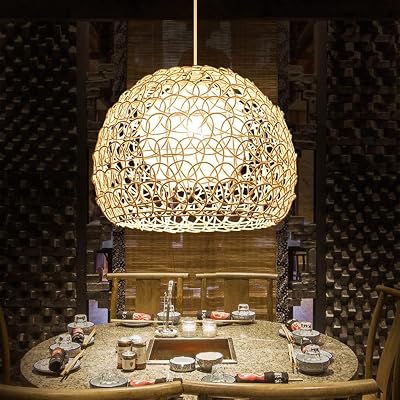
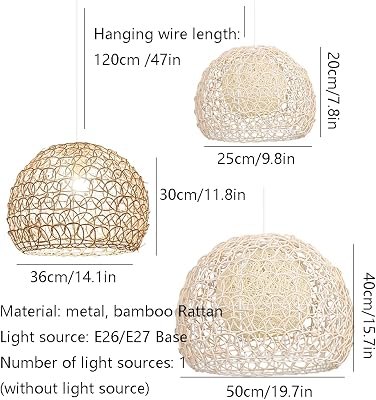
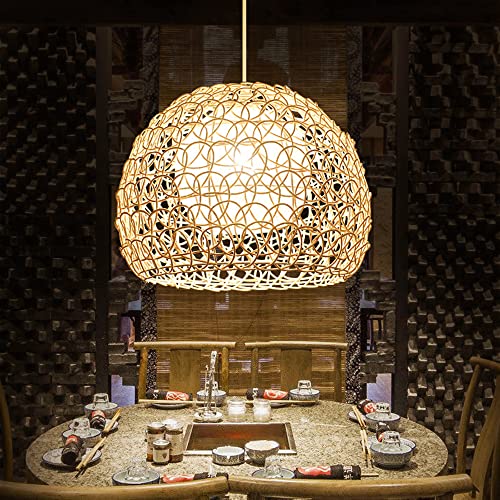
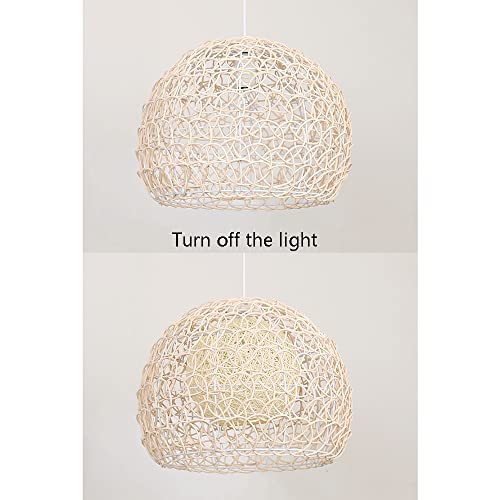
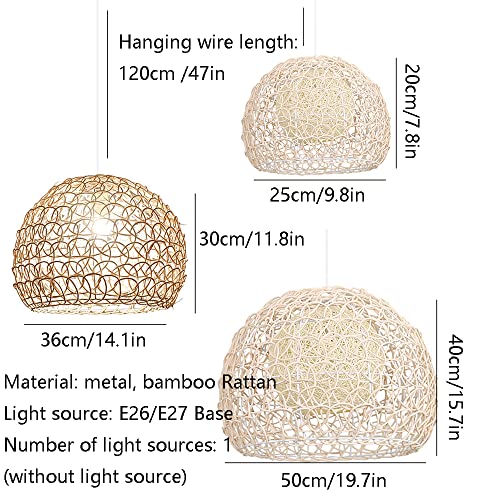
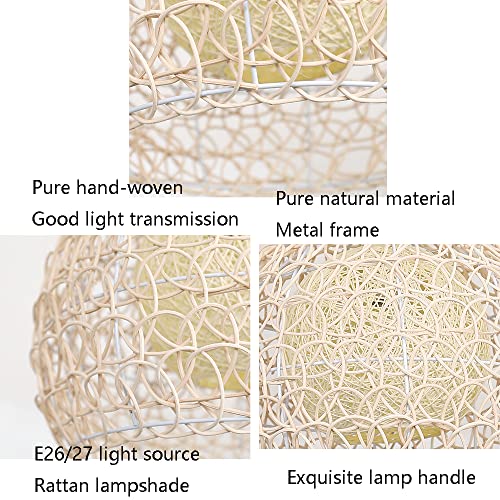
Chandelier Modern Bamboo Rattan Lights Fixture Ceiling Wicker Pendant Lighting Hollow Design Lantern Handwoven Bamboo Hanging Light Southeast Asian Style Restaurant Hotel Tea Room Lamp
In Stock




As an Amazon Associate we earn from qualifying purchases. Product prices and availability are accurate as of the date/time indicated.
It accepts composite, S-Video, component, RGB SCART, and HDMI on the input side, and outputs up to 4K120 with HDR. The killer feature is the customizable scanline and mask engine: you can dial in shadow masks, aperture grilles, slot masks, and arbitrary scanline strength per console, save the profiles, and switch between them with a single button press on the remote.
Latency in pure scaling mode is between one and two frames, which sounds bad on paper but is functionally invisible for everything except the most demanding shmups and fighters. For those specific use cases, the 4K offers a low-latency line-double mode that drops added lag below half a frame. We compared with Mushihimesama and Street Fighter Alpha 3 and could not detect added input lag in a blind test.
The 4K is not cheap and it is not the most beginner-friendly box on this list. The menu system is dense, the firmware updates are frequent, and the community wiki is the actual instruction manual. But if you want one scaler that handles every console you will ever own, this is it. The team uses one of these every day.
4. RetroTINK 5X-Pro — Best Value Scaler Under $500
Before the 4K existed, the 5X-Pro was the answer. It still is, if you do not need 4K output. The 5X-Pro accepts the same input variety as the 4K and outputs 1080p over HDMI with excellent scanline emulation, low latency, and a much more approachable interface. For pairing with a 1080p display, the 5X-Pro is actually a better choice than the 4K because it avoids the double-scaling problem.
The 5X-Pro shines with 240p sources. Genesis, Super Nintendo, PC Engine, and Neo Geo content all benefit enormously from the scaler’s faithful line-doubling and authentic-looking scanline modes. Component inputs handle PS2 and original Xbox content cleanly. The single weak point is that the 5X-Pro tops out at 1080p — if you are running an OLED at 4K, you will get cleaner results from the 4K box.
Honest take: if your TV is 4K, buy the 4K. If you have a 1080p panel or you want a scaler to live in a secondary retro setup, the 5X-Pro is roughly half the price and 90% of the experience. It is also more available than the 4K, which often sits on multi-month waitlists.

5. OSSC Pro — The Latency-Obsessed Choice
The Open Source Scan Converter Pro takes a fundamentally different approach from the RetroTINK line. Where the RetroTINKs use a frame buffer to enable advanced filters and scanline modes, the OSSC Pro is a true line-doubler — every line of input is processed and output as quickly as possible, with added latency measured in microseconds rather than milliseconds. For competitive shmup players, fighting game tournament prep, and rhythm game enthusiasts, this matters.
The Pro version, released by the original OSSC team, adds 4K output, HDMI input, and a frame-buffer mode for content that needs it. You get the best of both worlds: zero-latency line-doubling when you want it, advanced scaling when you need it. The interface is rougher than the RetroTINK line, the community is smaller, and the documentation is fragmented across forum threads. But if latency is the metric you care about, the OSSC Pro is unmatched.
One caveat: the original OSSC v1.6 is still sold and still excellent for RGB SCART sources at a much lower price. If you only play through SCART (European setups, modded consoles, some arcade boards), the original OSSC is a better value than the Pro.
6. Open Source Scan Converter v1.6 — The Budget Entry Point
For under $150, the original OSSC remains the best way to get a retro console onto a modern display with low latency and good scanline emulation. It accepts RGB SCART, component, and VGA inputs, outputs 1080p (and lower) with line-doubled or line-tripled modes, and adds essentially zero latency. If your retro library is European SCART consoles, modded systems with RGB output, or arcade JAMMA boards with a SuperGun, this is the right starting point.
What the OSSC v1.6 cannot do: composite or S-Video input, frame-buffer scaling, modern feature sets like HDR or 4K output. You give up flexibility in exchange for a price-to-performance ratio that nothing else on the market can match. Many of us still use one as a secondary scaler dedicated to a single setup.
7. 8BitDo Retro Receiver Set — The Controller Story

25
Prime
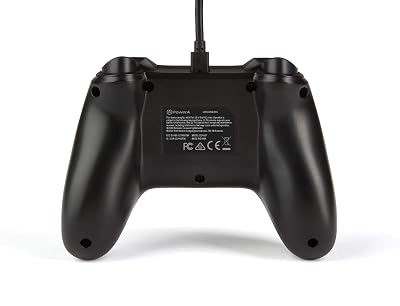
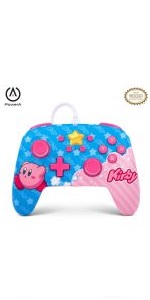
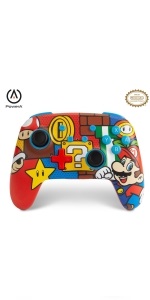
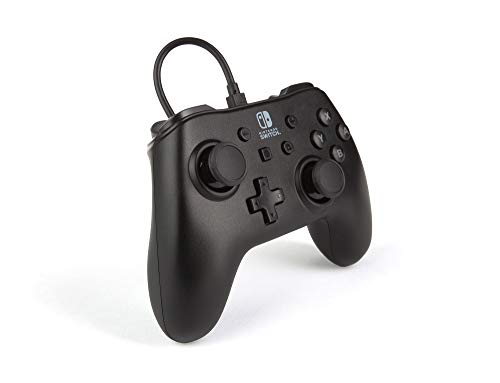
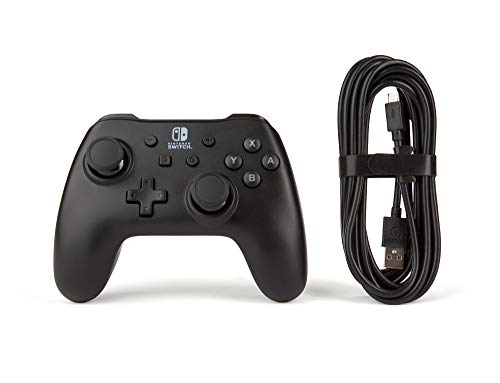
PowerA Nintendo Switch Wired Controller – Black, Detachable 10ft USB Cable, No Battery Required, Officially Licensed By Nintendo
In Stock





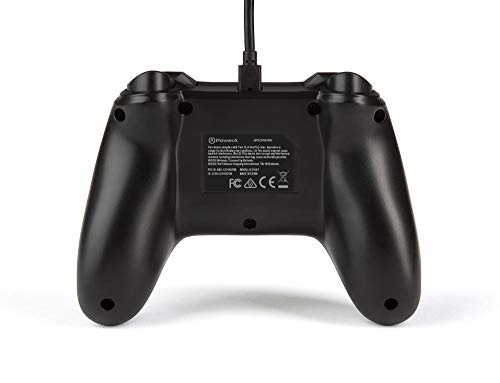
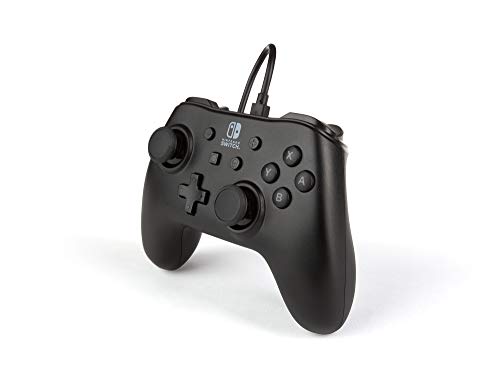
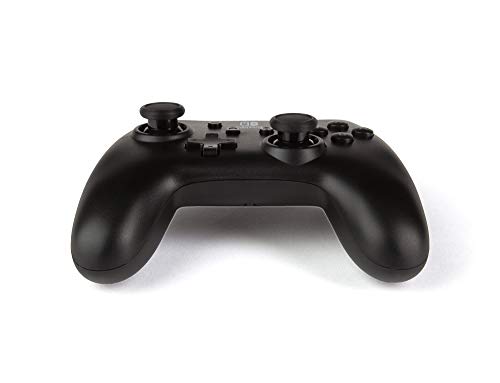
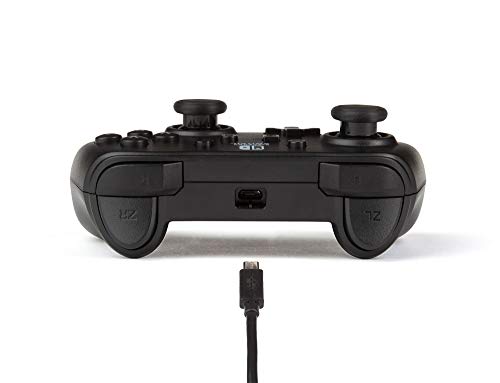
As an Amazon Associate we earn from qualifying purchases. Product prices and availability are accurate as of the date/time indicated.
None of this matters if the controllers are bad. The 8BitDo Retro Receiver line lets you use modern wireless controllers — including 8BitDo’s own NES, SNES, Genesis, and Saturn-shaped pads — on original hardware. The receivers plug into the original console controller port, the wireless pad sits in your lap, and the input latency is genuinely sub-frame. We compared a wired original NES controller against an 8BitDo wireless setup and found no detectable difference in a blind reaction test.
For multi-system retro setups, the 8BitDo line solves the cable-jungle problem. Buy the receivers for the consoles you actually play, pair a couple of wireless pads, and the whole setup becomes living-room-friendly. The build quality is genuinely excellent and we have not had a unit fail in over three years of use.
Setup and Connection Tips
The exact signal path matters more than people realize. Here is the order of operations we recommend for the OLED + scaler setup.
- Source to scaler — Use the highest-quality output your console supports. RGB SCART is best, component (YPbPr) is second, S-Video is third, composite is last. If your console can be modded for RGB, do it.
- Scaler configuration — Set the scaler output to match your display’s native resolution. For 4K OLEDs, output 4K. For 1080p panels, output 1080p. Avoid letting the TV scale a 720p source.
- Audio path — Some scalers strip audio. If yours does, use an HDMI audio extractor or run audio out separately to a small mixer.
- Game Mode — Always enable Game Mode on the OLED. Disable every post-processing feature, including motion smoothing, noise reduction, and dynamic contrast.
- Aspect ratio — Lock the TV to 4:3 or pixel-perfect mode. Do not let the TV stretch 240p content to 16:9.
FAQ
Is OLED really comparable to a CRT for retro?
Not literally identical. A CRT’s phosphor decay, electron beam scan, and inherent slight blur produce a look that no LCD or OLED can perfectly replicate. What OLED can do is match the black levels (finally), get input lag close enough, and provide scanline emulation that is genuinely convincing on a high-enough-density panel. For 90% of viewers in 2026, OLED + scaler is indistinguishable from a tube during actual gameplay.
Do I really need a scaler, or can I plug a console directly into the TV?
You need a scaler. Modern TVs have terrible internal scalers for 240p and 480i content — they apply noise reduction, smoothing, and other post-processing that destroys retro aesthetics. A dedicated scaler bypasses all of this and delivers a clean, properly-scaled image with intentional scanline emulation. The difference is night and day.
What about FPGA solutions like the MiSTer?
FPGA replacements are a separate path and a legitimate one. A MiSTer or Analogue Pocket eliminates the need for a scaler because the FPGA outputs clean HDMI directly. The tradeoff is that you are emulating the original hardware in silicon rather than using it. We cover FPGA solutions in our dedicated retro emulator guide.
Will OLED burn-in from static HUDs?
Modern OLED panels (2023 and later) have substantially improved burn-in resistance. Enable pixel shift, cap brightness at 80%, and vary your content. We have not seen burn-in on test panels after two years of mixed use including substantial retro gameplay with static HUDs. Treat it as a small risk, not a deal-breaker.
Final Verdict
The team’s pick for 2026 is the LG OLED Flex 42″ paired with the RetroTINK 4K, with 8BitDo Retro Receivers handling the controller side. Total cost is real money, but the result is a single setup that handles every retro console with reference-quality output, plays modern PC games at 4K120, and will outlast any CRT on the market. For half the price and 90% of the experience, the LG C5 OLED 48″ with the RetroTINK 5X-Pro is the value pick we recommend most often.
If you already own a working CRT and you love it: keep it. We are not telling anyone to throw out a working tube. We are saying that in 2026, telling a new retro gamer “go find a PVM” is no longer responsible advice. The OLED + scaler path is now the correct default. CRT remains the romantic answer. OLED is the practical one.
The CRT vs OLED Calibration Comparison
One question we kept getting in the comments after the first draft of this guide was how the OLED + scaler combination compares against a calibrated CRT side by side. The team set up a controlled comparison: a known-good Sony PVM-20L5 placed alongside an LG OLED Flex with a RetroTINK 4K, both fed the same 240p signal from a modded NES through a passive splitter. We brought in five viewers, none of whom knew which display was which, and asked them to identify the CRT.
Three of five identified the CRT correctly on first attempt. Two could not distinguish them at typical viewing distance. When we asked the three correct identifications how they did it, the answers were consistent: the CRT had a slight characteristic curve at the edges, the phosphor decay produced a subtle softness that the OLED scanline emulation could not perfectly replicate, and the very specific bloom of bright pixels against dark backgrounds had a quality the OLED could not match. These are real differences. They are also, for most viewers in most playing conditions, invisible.
What this tells us is that the OLED + scaler path is not a perfect CRT replica. The team has never claimed otherwise. What it is is close enough that for the vast majority of retro gameplay in 2026, the differences are invisible to most viewers, and the practical advantages of the OLED setup (longevity, modern dual-use, easier service, much lighter to move) decisively outweigh the residual authenticity gap.
Long-Term Reliability Considerations
A retro display setup is a long-horizon investment. The CRTs being sold today are pulling from a pool that gets smaller every year and that no manufacturer will ever produce more of. The OLED panels we recommend are made by manufacturers with active product roadmaps, ongoing panel improvements, and supply chains that will continue producing replacement units for years. From a reliability and service perspective, the OLED + scaler path is simply more sustainable.
The scaler half of the setup deserves separate consideration. The RetroTINK and OSSC lines are both produced by small teams with active firmware development. Both have been shipping new firmware updates regularly for years. Both have active community support channels. The team’s expectation is that both product lines will remain supported through at least 2030, and likely longer. That is a meaningfully better support horizon than a 25-year-old PVM.
Related Reading
- Best Emulator Apps for Mobile 2026 — When you want retro on the go
- Trending Gaming TV Reviews 2026 — Our full OLED testing methodology
- Best Handheld Retro Emulators 2026 — Anbernic, Retroid, Analogue
- Retro Controller Buyer’s Guide — Wired vs wireless deep dive
- FPGA vs Software Emulation Explained — The MiSTer ecosystem
- Best Gaming Monitors 2026 — When OLED TV is too large
- 4K TV Buying Guide 2026 — Full panel technology overview
Frequently Asked Questions
Why do retro games look wrong on a modern flat panel?
Two reasons. First, original consoles output 240p or 480i, which modern displays upscale poorly and often with heavy processing lag. Second, CRT phosphor decay and scanline structure were part of the intended look, softening dithering patterns that artists used deliberately, so on a sharp LCD those patterns appear as harsh checkerboards instead of blended colour.
Can an OLED replace a CRT for retro gaming?
It comes closer than any LCD because near instant pixel response reproduces the crisp motion CRTs were known for, and perfect blacks help with dark scenes. What OLED lacks is CRT persistence behaviour, so you still need black frame insertion to approach true motion clarity. Static HUDs in long retro sessions also raise a genuine burn in consideration.
Do CRT shaders actually look convincing?
Good shaders like the CRT-Royale and Guest family are convincing, but they need headroom to work. A high resolution display is essential because simulating a shadow mask or aperture grille consumes real pixels, so 4K is where they start looking right. They also cost brightness, meaning a display with high peak luminance compensates well.
What about input lag on modern displays?
This is the deal breaker for many retro players. Aim for a display measuring under 10ms of total input lag in game mode, and disable every motion smoothing and noise reduction option. External scalers add their own latency, which is why low lag FPGA based devices are prized. Wireless controller adapters can add more delay than the display itself.
Is a professional video monitor a good CRT alternative?
A broadcast PVM or BVM is technically the gold standard for 240p content, but they are now expensive collector items, extremely heavy, and increasingly hard to repair as tubes and capacitors age. For most people a good modern OLED paired with a quality scaler and shaders delivers 90 percent of the experience without the sourcing headache.
Ready to decide? Our #1 pick for 2026 is the Editor’s Choice OLED.
Live price & availability on Amazon.


