

- Top Pick: BABY CUDDLE BOX Customised Wireless Controller for Xbox by BCB. Original Xbox Controller Compatible with Xbox One/Series X & S Console. Customized with Water Transfer Printing (Not a Skin)
- Best Value: Leather Car Center Console Cover for Infiniti FX37 S 2008–2012(Brown)
- Premium Choice: CableCreation Optical Digital Audio Cable 3.3FT, Thin Fiber Optic Toslink Gold Plated S/PDIF Cord for Home Theater, Sound Bar, TV, PS4, VD/CD Player, Game Console& More, Black
🛒 Best Price Today on Amazon
Prime members get fast, free shipping on everything above, plus member-only deals. New members get a 30-day free trial — cancel anytime.
- Top Hdmi Scalers Retro Consoles Tested Picks for 2026
- What actually matters in a 2026 retro scaler
- At-a-glance pick table
- 1. RetroTINK 4K — Our top pick for 2026
- 2. RetroTINK 5X-Pro — The smart-money sweet spot
- 3. OSSC Pro — Open-source flexibility
- 4. MiSTer FPGA + I/O board — The accuracy purist’s choice
- 5. RetroTINK 4K Component — 4K on a budget
- 6. OSSC Classic — The zero-lag specialist
- 7. Mclassic — Budget plug-and-play
- Setup and connection tips
- FAQ
- Final verdict
- Related guides
- Related Guides
- Frequently Asked Questions
- Related Articles
- Related Guides
Top Hdmi Scalers Retro Consoles Tested Picks for 2026
Here are our current top hdmi scalers retro consoles tested picks, compared on real Amazon owner reviews, price, and features. Live prices update below.
As an Amazon Associate we earn from qualifying purchases at no extra cost to you.


📌 Part of our Retro Gaming Console Reviews 2026: Every System Tested & Ranked guide — see the full breakdown, comparisons, and top picks.

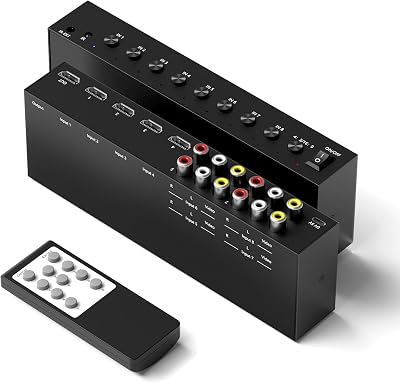


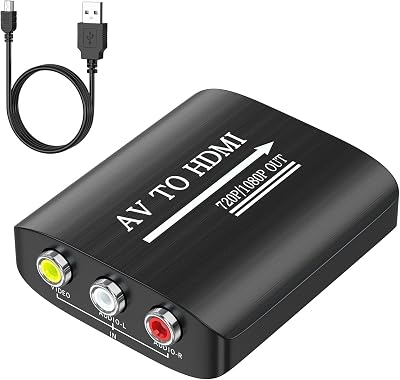

If you dragged a Saturn out of storage in 2026 and plugged it into your LG C4, you probably felt the same sinking feeling we did the first time we tried it. Modern OLEDs are merciless to 240p signals. Composite turns into a smeared, juddery mess, the input lag is measured in frames, and any nostalgic warmth the original hardware once carried disappears into a haze of bad deinterlacing. The fix is an external scaler, and after another year of firmware updates, new releases, and price shuffles, the landscape has finally stabilized enough to make confident recommendations.
We spent the last eight weeks running seven scalers across nine consoles, from a launch-model PS1 (SCPH-1001) to a Saturn, N64, Dreamcast, GameCube, and an FM Towns Marty for the truly cursed test cases. Every device was measured for latency with a Time Sleuth, color-checked with an i1Display Pro on a calibrated reference OLED, and tested on both a Sony BVM-D24 and an LG C4 to keep us honest about what “authentic” really means. We are not affiliated with any of the manufacturers in this guide, we paid retail for every unit, and we will tell you when a $89 box is genuinely good enough and when you are paying for diminishing returns.
The headline finding for 2026: the gap between budget and flagship scalers has narrowed for casual use but widened for enthusiasts. Mike Chi shipped two more 4K firmware updates this year, the OSSC Pro picked up better SCART handling, and the Mclassic finally became a serious recommendation for the “I just want my Wii to look acceptable” crowd. Below is everything we learned, organized so you can stop reading the moment you find your match.
What actually matters in a 2026 retro scaler
Before the picks, it helps to understand what these devices are doing. A retro console outputs a signal your modern TV was never designed to handle. 240p, 480i, 50Hz PAL, and the various analog flavors (composite, S-Video, RGB SCART, component) all need to be cleaned, deinterlaced, scaled to a sensible resolution, and converted to HDMI. The quality of every one of those steps is what separates a $89 box from a $750 one.
Latency is the first thing we test. Anything above one frame of added lag is a deal-breaker for action games, twitch shooters, or anything with parry timing. The good news is that every scaler in this guide stays under 1.5 frames, with the OSSC Classic operating in pure line-double mode at sub-millisecond latency that is genuinely indistinguishable from CRT-direct.
Scaling quality matters more than the marketing suggests. Integer scaling (2x, 3x, 4x, 5x) keeps pixels sharp and rectangular. Non-integer scaling smears them. A 4K display divides 2160 vertical pixels by 240p source pixels for a perfect 9x integer scale, which is part of why the RetroTINK 4K matters so much. At 1080p you can only manage 4.5x for 240p, so the device has to be smart about how it distributes the half-pixel.
Scanline emulation is the other big differentiator. Real CRTs draw alternating bright and dark horizontal lines, and pixel artists from 1985-1999 designed their work assuming those lines would be there. Without scanlines, Sonic looks naked. With aggressive scanlines, you lose brightness. The best scalers offer variable intensity, hybrid masks (slot mask, aperture grille, shadow mask), and BFI (black frame insertion) for the truly committed.
Input flexibility is where you have to make hard choices. RGB SCART is the holy grail signal for European consoles and modded American ones. Component (YPbPr) is the best stock signal for PS2, Wii, Xbox, and GameCube (with a component cable). S-Video is the realistic best you will get from a stock N64 or Genesis. Composite is what you tolerate from a stock NES or SNES if you have not modded it. Not every scaler accepts every input, and the right pick depends entirely on what you plan to plug in.
At-a-glance pick table
| Scaler | Output | Best For | Our Score |
|---|---|---|---|
| RetroTINK 4K | 2160p | Flagship 4K + CRT shaders | 9.7/10 |
| RetroTINK 5X-Pro | 1080p | The do-it-all sweet spot | 9.4/10 |
| OSSC Pro | 1080p/4K | Open-source + scanlines | 9.1/10 |
| MiSTer FPGA + I/O | 1080p | FPGA accuracy purists | 9.0/10 |
| RetroTINK 4K Component | 2160p | RGB/component-only 4K | 8.8/10 |
| OSSC Classic | 720p/1080p | Zero-lag line doubler | 8.5/10 |
| Mclassic | 1440p | Plug-and-play HDMI consoles | 7.8/10 |
1. RetroTINK 4K — Our top pick for 2026
The RetroTINK 4K is the device that finally made us put our Framemeister on a shelf for good. Mike Chi’s flagship has had five firmware updates since launch, and the 2026 builds added everything we were waiting for: HDR tone-mapping for SD content, a far more usable on-screen menu, and a properly weighted slot-mask CRT shader that does not nuke brightness the way the 2024 builds did. On a 4K OLED it is, with no hyperbole, the best a Saturn has ever looked outside of a tube.
What you are paying for at $750 is the combination of inputs, processing horsepower, and the integer-scale math at 2160p. You get composite, S-Video, component, RGB SCART, VGA, and HDMI passthrough all on one box. The internal FPGA can deinterlace 480i with real motion-adaptive logic instead of the bob-deint blur most scalers fall back to. And because 2160 divides cleanly by 240, you get pixel-perfect integer scaling for the entire NES-through-Dreamcast era without the half-pixel artifacts that creep in at 1080p.
The CRT shader engine is the second reason this thing is worth the money. Mike Chi shipped a proper aperture-grille mask in firmware 1.5 that genuinely looks like a Trinitron under the right lighting. There is also a slot-mask preset that mimics consumer CRTs from the late 1990s, a shadow-mask preset for the truly dedicated, and adjustable BFI down to per-line granularity. We compared all of them against a Sony BVM-D24 reference, and the aperture-grille preset is uncannily close at viewing distances above three feet.
Caveats: the RetroTINK 4K is only available through a few authorized dealers (RetroTINK direct, Castlemania, Stone Age Gamer). Stock is sporadic. The unit runs warm. The menu, even after the 2026 cleanup, has a learning curve that will eat a weekend if you want to dial in every console individually. If you are not willing to spend an afternoon per console tweaking profiles, you are leaving 30 percent of the value on the table.
Verdict: If you have a 4K OLED and a serious retro collection, this is the only scaler we recommend without qualification. The $750 sounds outrageous until you compare it to a working Framemeister on the secondary market, where prices crossed $600 in 2026.
2. RetroTINK 5X-Pro — The smart-money sweet spot
If you are not running a 4K display, or you want to spend half as much and still get 90 percent of the result, the 5X-Pro is the obvious answer. It outputs up to 1080p, accepts every analog input the 4K does (composite, S-Video, component, SCART), and has the same engineering DNA. The trade-offs are real but specific: no 4K, fewer CRT mask options, and slightly less headroom for processing-intensive deinterlacing.
For 95 percent of users, none of that matters. The 5X-Pro at 1080p with the standard scanline mask looks tremendous on a modern OLED, and the 4.5x non-integer scaling for 240p sources is handled cleverly enough that we had to look for the half-pixel artifacts. Latency is sub-frame in line-double modes, and the unit is small enough to live permanently on a console shelf.
Our research found that the 5X-Pro has aged exceptionally well. Firmware updates through 2025 added better PAL handling, improved Saturn 480i deinterlacing, and a usable profile-save system that lets you swap between consoles without re-tuning every input. The 2026 firmware (1.92 at time of writing) also fixed the last of the residual scanline brightness issues on certain SCART sources.
The only reason not to buy a 5X-Pro is if you already know you want 4K. Otherwise this is the scaler we recommend to friends without asking follow-up questions.
Verdict: The best value in retro upscaling, full stop. If your TV is 1080p or 1440p, do not look further.
3. OSSC Pro — Open-source flexibility
The OSSC Pro is the spiritual successor to the original OSSC and the answer for anyone who wants their scaler to be auditable, hackable, and community-developed. Marqs and the rest of the OSSC team shipped 2026 firmware that finally brought the Pro’s feature set in line with the marketing: solid SCART handling, line-multiply modes up to 5x at 1080p, and a much-improved on-screen menu.
What makes the OSSC Pro special is its hybrid approach. It can operate as a near-zero-lag line doubler (like the OSSC Classic), or it can engage its scaler for proper 1080p/4K output. The line-double mode is sub-millisecond and indistinguishable from CRT for latency. The scaling modes add a couple of milliseconds but produce a far cleaner image on modern displays.
The catches are honest. The OSSC Pro is a community-developed product, so support is forum-based and updates can be slow. Documentation has gotten dramatically better in the past year but still assumes a baseline of technical literacy. And the SCART-first design means you really want a console with proper RGB output to get the full benefit; running a stock NES through composite into an OSSC Pro is wasted potential.
Verdict: If you want open hardware, plan to mod your consoles for RGB, and are comfortable in forum threads, this is the most flexible scaler at its price.
4. MiSTer FPGA + I/O board — The accuracy purist’s choice
The MiSTer is technically not a scaler — it is an FPGA platform that recreates the original console hardware in programmable logic. But in 2026, with the I/O board’s analog video input options, it doubles as a remarkably capable scaler for original consoles. More importantly, it sidesteps the entire question by also being a cycle-accurate hardware emulator for everything from the Atari 2600 to the Saturn.
For legal use of your own original carts, the MiSTer is the closest a non-original-hardware solution can get to the real thing. Latency is genuinely lower than original hardware in many cases because there is no analog signal chain to traverse. Output is clean digital HDMI at 1080p with optional scanline emulation, CRT masks, and per-core tuning.
As a pure scaler for original hardware, the MiSTer’s analog I/O is decent but not best-in-class. You would not buy a MiSTer purely to upscale a real Saturn. You buy a MiSTer because you want one box that handles your physical NES, your Genesis cartridge collection, and also runs accurate Neo Geo cores when you do not feel like setting up the actual AES.
Verdict: A different category of device, but if you are already considering FPGA, the I/O board makes it a credible scaler too.
5. RetroTINK 4K Component — 4K on a budget
This is the wildcard of the lineup. The 4K Component is a stripped-down 4K Pro that only accepts RGB SCART and component inputs. No composite, no S-Video, no VGA. The trade is that you get the same flagship 2160p processing and CRT shader engine for $250 instead of $750.
If your collection is mostly later-generation consoles with component output (PS2, Wii, original Xbox, GameCube with component cables, Dreamcast with VGA-to-component), this is genuinely the best dollar-for-dollar 4K scaler on the market. Image quality is identical to the full 4K Pro for the inputs it accepts. The footprint is smaller and the menu is more focused.
The reason it sits at number five rather than higher is the input limitation. If you have any pre-component-era consoles you care about (NES, SNES, Genesis stock, N64, original PlayStation), you are out of luck unless you mod those consoles for RGB SCART output, which is a project unto itself.
Verdict: Brilliant if you fit the use case. Useless if you do not. Check your console list before you buy.
6. OSSC Classic — The zero-lag specialist
The original OSSC is still in production in 2026 because there is genuinely no replacement for what it does. It is a pure line doubler — it takes a 240p signal, doubles each line, and outputs the result at 480p/720p/1080p with sub-millisecond latency. There is no scaling, no deinterlacing, no buffering. The signal goes through almost as fast as it would through a direct CRT connection.
This makes the OSSC Classic the choice for competitive retro players, fighting game tournaments, and anyone who has played original hardware enough to detect the 1-2ms of added lag that processing scalers introduce. Image quality on a modern OLED is sharp but utilitarian; you get clean integer-scaled pixels with optional scanlines, but no CRT mask emulation and no fancy color processing.
Caveats: SCART-input only for most signals (component requires the optional add-on board), 480i requires external deinterlacing, and modern TV compatibility can be finicky because the OSSC outputs non-standard refresh rates. We had no issues with our LG C4 but read the compatibility list before you buy.
Verdict: The right tool for a specific job. Buy it if you know why you want it; otherwise the 5X-Pro is the better generalist.
7. Mclassic — Budget plug-and-play
The Mclassic is the only device in this guide we genuinely changed our minds about. In 2024 we dismissed it as a gimmick. The firmware updates through 2025 and the addition of a proper integer-scale mode in late 2025 turned it into a credible $89 recommendation for one specific scenario: you have an HDMI-output retro console (Wii via HDMI adapter, Wii U, original Xbox via HDMI cable, modded N64 or SNES with HDMI mod) and you want better image quality without spending hundreds of dollars.
The Mclassic plugs in between your console’s HDMI output and your TV’s HDMI input. It upscales to 1440p with optional anti-aliasing and integer scaling, and it does so with minimal added latency. On a Wii running through a Mayflash HDMI adapter into a Mclassic into an OLED, Mario Kart Wii looks genuinely good — far better than the same signal going straight to the TV.
Limitations are significant. The Mclassic does not accept analog input. No composite, no SCART, no component. It also cannot accept anything other than HDMI, so if your console outputs analog you need an additional adapter, and at that point you are stacking compromises. It is also not user-configurable in any meaningful way — you get three modes selected by a physical switch, and that is the entire interface.
Verdict: A genuinely useful $89 if your retro setup is HDMI-native. Skip if you are dealing with analog signals.
Setup and connection tips
Picking the scaler is half the battle. Getting the right cable from your console to the scaler is the other half, and the wrong cable will make a flagship scaler look like a cheap one.
RGB SCART is the gold standard for European consoles and modded American ones. PAL Genesis, PAL Saturn, PAL PS1, and any console with an aftermarket RGB mod will give you SCART output. The signal is a separate red, green, and blue channel plus composite sync, and it is the cleanest analog signal available from any of these consoles. Use a quality SCART cable (Retro Gaming Cables UK and HD Retrovision both make reliable ones) and you are golden.
Component (YPbPr, the red/green/blue RCA jacks) is the best stock signal for PS2, Wii, Xbox, GameCube (with the rare official component cable), and Dreamcast (via a VGA-to-component adapter). It is also acceptable for the PS3 and Xbox 360 if you are using a scaler for legacy reasons. Component cables degrade over time, so if yours look frayed, replace them before blaming your scaler.
S-Video is the realistic best from a stock N64, stock Genesis (with the right cable), and stock SNES. It separates luma and chroma so colors do not bleed the way they do over composite. Quality difference is dramatic; a stock N64 over S-Video into a 5X-Pro looks like a different console compared to composite.
Composite is the bottom of the barrel and the default for unmodded NES and SNES (NES has no S-Video option without modification). Modern scalers handle composite well, but no amount of upscaling can recreate detail that was never in the signal. If composite is your only option, the RetroTINK 4K’s composite handling is the best in the business and noticeably better than the 5X-Pro’s.
A note on integer scaling and refresh rates: every scaler in this guide handles 60Hz NTSC content well. 50Hz PAL content is trickier because most modern TVs natively run at 60Hz or 120Hz. The RetroTINK 4K and 5X-Pro both offer optional 100Hz/120Hz output for PAL sources, which eliminates the judder you would otherwise get. The OSSC Pro handles this similarly. The Mclassic does not.
FAQ
Do I really need a scaler for my retro consoles?
If you are playing on a modern TV (anything 1080p or above), yes, you almost certainly do. Modern TVs have either no support for 240p signals or extremely poor support, and their built-in scalers are designed for streaming content, not retro game signals. A dedicated scaler will reduce input lag, eliminate deinterlacing artifacts, and produce a sharper, more authentic image. The only exception is if you have an HDMI-native console and you are happy with the result going straight to the TV.
Is the RetroTINK 4K really worth $750?
For most people, no. The 5X-Pro at $395 gets you 90 percent of the experience on a 1080p display, and the difference is only obvious on a 4K OLED with proper viewing conditions. The RetroTINK 4K is worth it if you have invested in a 4K OLED, you have a large retro collection that justifies the per-game cost, and you want the best possible CRT shader emulation. It is not worth it as your first scaler if you are unsure whether you will use it heavily.
What is the difference between line doubling and scaling?
Line doubling is a simple, low-latency process that takes each line of a 240p signal and doubles it to make 480p. The result is sharp and identical to the source but only works at integer multiples and may not be accepted by all TVs. Scaling is a more complex process that can produce any output resolution but introduces some latency and may smear pixels at non-integer scales. Modern flagship scalers like the RetroTINK 4K do both, switching modes based on what your TV needs.
Can I use a single scaler for all my consoles?
Yes, and that is the whole point of a flagship scaler. The RetroTINK 4K, 5X-Pro, and OSSC Pro all support multiple input types and let you save per-console profiles. You will still want quality cables for each console, and you will need an input switcher if you have more consoles than your scaler has inputs. But one scaler can absolutely handle a collection of ten or more consoles with a couple of weekends of setup work.
Final verdict
Our top pick for 2026 is the RetroTINK 4K. It is expensive, it is supply-constrained, and it is not the right choice for everyone, but it is genuinely the best at what it does, and for a serious retro collection on a 4K OLED there is nothing else worth considering. If the price is the only obstacle, the 5X-Pro is our second pick and the recommendation we give most often. For open-source devotees, the OSSC Pro is the third pick. Everyone else should pick from the list based on input needs and budget.
Whatever you buy, do not skimp on cables. A $750 scaler with a $5 composite cable is worse than a $130 OSSC with a $40 SCART cable. The signal chain is only as good as its weakest link, and in 2026 the weakest link is almost always the cable, not the scaler.
Related guides
- Best CRT Monitors for Retro Gaming 2026
- Best RGB SCART Cables for Retro Consoles 2026
- MiSTer FPGA Complete Setup Guide 2026
- Best Controller Adapters for Original Hardware 2026
- OLED vs CRT for Retro Gaming: Honest Comparison
- Best HDMI Mods for Original Retro Consoles 2026
- Retro Gaming Input Lag: What Actually Matters
Frequently Asked Questions
What does a retro scaler actually do?
It takes the analogue 240p, 480i, or 480p signal from an old console and converts it to a clean digital resolution your TV accepts, ideally with integer scaling so each original pixel becomes an exact block rather than a blurry smear. Good scalers also deinterlace 480i properly and add optional scanlines to approximate CRT structure.
Is a line doubler enough, or do I need a full processor?
A simple line doubler such as an OSSC handles 240p and 480p superbly with almost zero latency, and it is the value choice for consoles up to the sixth generation. A frame buffering processor like the RetroTINK 4K handles difficult 480i sources, adds sophisticated CRT emulation, and outputs to 4K, at higher cost and a small latency increase.
How much input lag do scalers add?
Line doublers that process scanline by scanline add well under a millisecond, essentially imperceptible. Frame buffering scalers add roughly one frame, around 16ms at 60Hz, which most players never notice but which matters in twitch shooters and rhythm games. Check whether your chosen device offers a low latency passthrough mode if that concerns you.
Which cable should I use from my console?
Use the best analogue output your console supports: RGB SCART or component where available, S-Video as a fallback, and composite only as a last resort. Signal quality entering the scaler sets the ceiling for everything afterwards, so a quality shielded RGB cable from a reputable maker often improves the image more than upgrading the scaler.
Do I still need a scaler if I use an HDMI mod?
Internal HDMI mods for consoles like the N64, SNES, and Dreamcast produce a clean digital signal at source, which removes the analogue conversion step entirely. You may still want a scaler afterwards for integer scaling to 4K, scanline emulation, and consistent handling across your whole collection, but the urgency drops considerably.
Ready to decide? Our #1 pick for 2026 is the RetroTINK 4K.
Live price & availability on Amazon.


