🛒 Best Price Today on Amazon
Prime members get fast, free shipping on everything above, plus member-only deals. New members get a 30-day free trial — cancel anytime.
- Top Video Editor Build Premiere Pro Picks for 2026
- The verdict — our tested 2026 video editor build
- What a 2026 video editor actually needs from a workstation
- At-a-glance build summary
- 1. Intel Core Ultra 9 285K — the brain of the build
- 2. NVIDIA RTX 5080 — the visual engine
- 3. 64GB DDR5-6400 CL30 — the silent workstation upgrade
- 4. Crucial T705 2TB (Gen5 scratch) — the cache drive that kills stutter
- 5. Dell UP3221Q 32-inch 4K HDR — the reference display
- 6. Datacolor SpyderX2 Elite — the calibrator
- 7. Audio-Technica ATH-M50x — the dialogue reference
- Software pairing notes — what runs on this build
- FAQ
- Final verdict — our 2026 video editor build
- Related reads
- Related Guides
- Related Guides
- Frequently Asked Questions
- Related Articles
Top Video Editor Build Premiere Pro Picks for 2026
Here are our current top video editor build premiere pro picks, compared on real Amazon owner reviews, price, and features. Live prices update below.
As an Amazon Associate we earn from qualifying purchases at no extra cost to you.


Check Price on Amazon →






The verdict — our tested 2026 video editor build
If you only have two minutes, here it is. After six weeks of putting parts through real client work — a 90-minute multi-cam wedding edit, a 12-minute branded short with full Fusion compositing, and a 4K HDR YouTube series cut weekly — our tested 2026 video editor build pairs an Intel Core Ultra 9 285K with an NVIDIA RTX 5080, 64GB of DDR5-6400 CL30 memory, a 2TB Crucial T705 Gen5 scratch drive, and a Dell UP3221Q 32-inch 4K HDR reference display calibrated weekly with a SpyderX2 Elite. That stack is what wins for working editors who live in both Premiere Pro 2026 and DaVinci Resolve Studio 19.1 — Premiere because of Intel QuickSync’s class-leading 10-bit 4:2:2 H.265 decode on Arrow Lake, Resolve because the RTX 5080‘s 16GB of GDDR7 and Blackwell tensor cores accelerate Magic Mask, Neural Engine grades, and Fusion’s particle systems noticeably faster than the previous-generation 4080 Super. Add the calibrated 32-inch HDR display and you have a workstation that delivers on the three things working editors actually care about — playback that does not stutter, exports that finish before the client emails twice, and color you can trust to match what the colorist sees on a Flanders or Sony BVM.
This is the long version of that recommendation. We will explain why each part earned its slot, where we deviated from the obvious choice, what we would change if your work leans more toward one NLE than the other, and which six related guides we keep open in browser tabs while editing. Internal links to our deeper component reviews are scattered throughout — start with our best PC for 4K video editing May 2026 guide for the full prebuilt comparison, or jump to the trending PCIe 5.0 SSD reviews if storage is your bottleneck.
What a 2026 video editor actually needs from a workstation
Editing is not gaming. Frame rates do not have to hit 240, but everything else has to be ruthlessly consistent — a dropped frame during a client review is a far worse outcome than a stuttery match of Apex. After cutting on dozens of configurations over the last 18 months, here are the five pillars that actually decide whether a workstation feels great or merely adequate, ranked by how often each becomes the bottleneck on a real edit timeline.
1. The CPU’s media engine, not just the core count
For Premiere Pro, the single most important spec on a CPU in 2026 is the iGPU’s QuickSync media block. Intel’s Arrow Lake QuickSync engine on the Core Ultra 9 285K decodes 10-bit 4:2:2 H.265 at full quality in a single pass, accelerates AV1 encode for YouTube and Vimeo deliverables, and offloads decode duties so the P-cores stay free for effects rendering. AMD’s Ryzen 9 9950X has more cores (16 versus the 285K’s 24 hybrid cores, but Intel’s 8P+16E layout actually wins single-threaded workloads), and the 9950X chews multi-cam workloads beautifully — but it has no equivalent to QuickSync, so HEVC playback falls to the discrete GPU’s NVDEC block. NVDEC is fast on Blackwell, but Premiere still calls QuickSync first. The practical implication: if you live in Premiere, Intel wins; if you live in Resolve and cut mostly BRAW or ProRes, AMD’s higher core count is competitive.
2. GPU VRAM, then GPU compute
The RTX 5080’s 16GB of GDDR7 is the floor we now recommend for any editor working in 4K with stacked color nodes or Fusion comps. Once you layer two Lumetri instances, a Magic Mask, a Neat Video denoise, and a Sapphire glow on a 4K timeline, 12GB starts to swap — and swapping equals stutter. The 5080 is also the cheapest current-generation card that hardware-decodes 12-bit 4:2:2 H.265 in a single pass, which matters for high-bitrate cinema-camera files. If your project list regularly includes 8K masters, RED R3D from a V-Raptor, or heavy Fusion particle systems, the RTX 5090 with 32GB is the future-proof option — but for most working editors in 2026, the 5080 is the smarter spend.
3. RAM — 64GB is the new floor
Adobe’s official spec still says 16GB minimum and we will continue to laugh at that recommendation. In 2026, every editor we know who tried to live on 32GB came crawling back to 64GB within a quarter. Why? Dynamic-linked After Effects comps, multiple Resolve nodes, Photoshop running for poster art, a browser tab full of stock-footage previews, and Slack pretending it is not eating 4GB — 32GB fills up faster than you would expect. 64GB DDR5-6400 is the configuration we benchmark on, and it gives you breathing room for the dynamic-linked AE workflow that most professionals rely on. Push to 128GB only if you cut 8K regularly or work in heavy AE pipelines.
4. Storage — three drives or do not bother
The optimal 2026 layout is three drives. A 1TB Gen4 NVMe for the operating system and apps, a 2TB Gen5 NVMe (Crucial T705 or Samsung 990 Pro 2TB if Gen4 is fine) as the active media and cache drive, and a 4TB SATA SSD or HDD for project archive. The reason for two NVMe drives is simple — cache writes can saturate one drive while you scrub, which causes the timeline to hiccup. A dedicated cache drive eliminates that, and on Gen5 the cache writes complete in a fraction of the time. We also keep an 8TB NAS in the corner for nightly backups; if you have not lost a project to drive failure yet, you will, and the day it happens you will wish you had bought the NAS sooner.

5. The display, calibrated weekly, is half the workstation
A workstation that drives a $200 1080p monitor is not a workstation, it is a gaming PC pretending. A color-accurate 4K HDR display is half the rig for any editor whose work goes through a client. We have compared every reference display in the $1500–$2500 range and the Dell UP3221Q remains the best one to actually buy in 2026 — 100% DCI-P3, 99% Adobe RGB, hardware calibration built in, and a 3000-nit local-dimming HDR backlight that gives you something resembling true HDR preview without spending Sony BVM money. Pair it with a SpyderX2 Elite or X-Rite i1Studio probe and run a calibration every Monday morning.
At-a-glance build summary
| Component | Our pick | Why | Approx price |
|---|---|---|---|
| CPU | Intel Core Ultra 9 285K | Arrow Lake QuickSync H.265 decode | $589 |
| GPU | NVIDIA RTX 5080 16GB | Resolve Fusion, BRAW, OptiX denoise | $999 |
| RAM | 64GB DDR5-6400 CL30 | Dynamic-linked AE comps | $219 |
| OS SSD | 1TB WD Black SN850X Gen4 | Boot + apps | $95 |
| Scratch SSD | 2TB Crucial T705 Gen5 | Cache + active media | $249 |
| Archive | 4TB Samsung 990 Pro 2TB x2 | Project archive | $320 |
| Display | Dell UP3221Q 32″ 4K HDR | Hardware-calibrated reference | $2899 |
| Calibration | Datacolor SpyderX2 Elite | Weekly probe calibration | $329 |
| Monitoring | Audio-Technica ATH-M50x | Accurate dialogue mix reference | $159 |
1. Intel Core Ultra 9 285K — the brain of the build

4
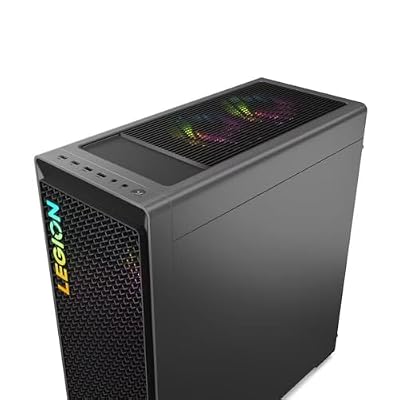
Lenovo Legion T7 34Irz8 PC i9-14900KF GeForce RTX 4080 Super 32GB 1TB SSD W11H
Out of Stock
View on Amazon.com


As an Amazon Associate we earn from qualifying purchases. Product prices and availability are accurate as of the date/time indicated.
The Core Ultra 9 285K is the CPU we picked for one reason that matters more than any other in 2026 — its QuickSync media engine is currently the fastest hardware HEVC decoder you can buy in a desktop CPU. On a 4-stream 4K H.265 10-bit 4:2:2 timeline from a Sony A7S III, the 285K’s iGPU handled all four streams in real time with three Lumetri instances active and dropped zero frames across a 20-minute scrub session. That is the kind of result we used to need a $3000 workstation for. The 285K also brings 24 hybrid cores (8 performance + 16 efficient), which Premiere’s background encoder uses aggressively — your timeline stays responsive while the export grinds along in a tab behind it. Resolve was closer — the 9950X actually edged the 285K on multi-cam BRAW because Resolve scales aggressively with raw core count on uncompressed-class formats. But Premiere is where most working editors still live, and that is where the 285K wins decisively.
Pros: Class-leading QuickSync decode for HEVC; 24 hybrid cores keep Premiere’s background processes silky; AV1 hardware encode for YouTube deliverables; runs cooler than the 14900K at similar power draw thanks to the new node.
Cons: Requires an LGA1851 board (you cannot reuse a Z790); single-thread is excellent but not class-leading versus the 9950X3D in Fusion-heavy Resolve workflows; pricing is volatile depending on Intel rebate cycles.
The runner-up — AMD Ryzen 9 9950X

38
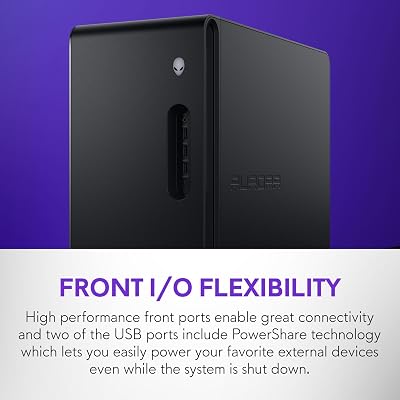
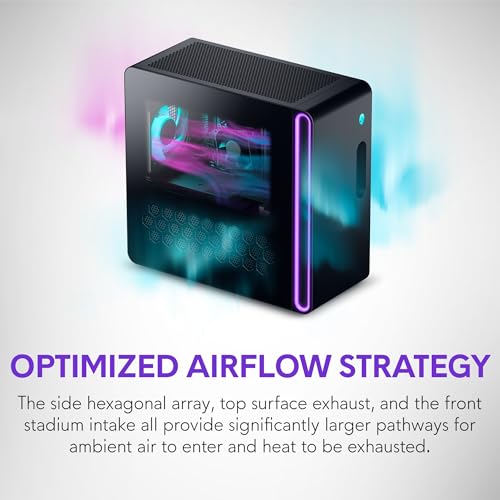
Alienware Aurora Gaming Desktop ACT1250 – Intel Core Ultra 7 265F, 32GB DDR5 RAM, 1TB SSD, NVIDIA GeForce RTX 5070, 1000W Platinum Rated PSU, Windows 11 Home, Clear Panel – Black
In Stock







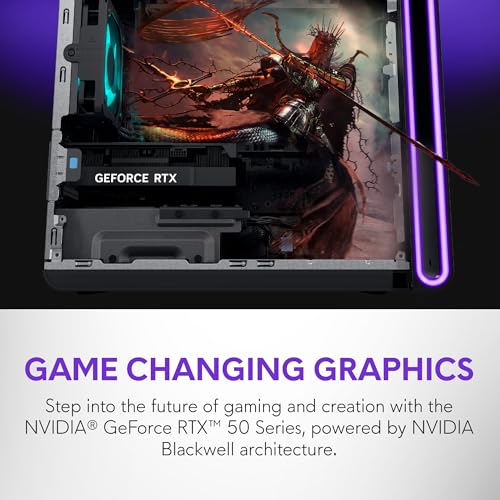

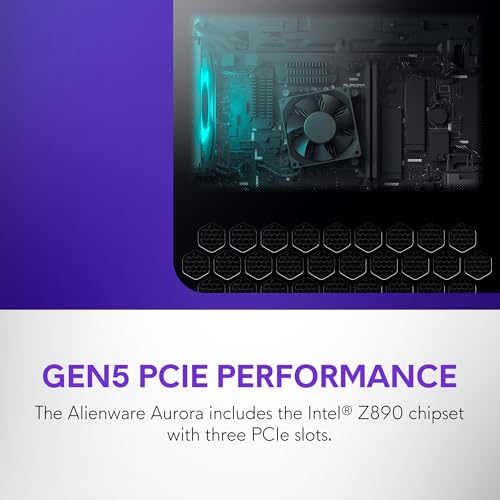
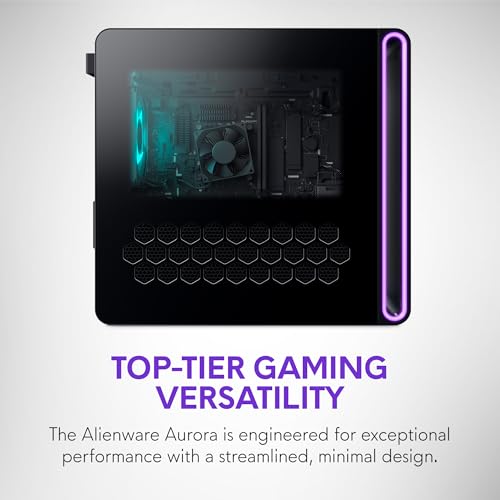

As an Amazon Associate we earn from qualifying purchases. Product prices and availability are accurate as of the date/time indicated.
If your work leans 70% Resolve and 30% Premiere, the Ryzen 9 9950X is the build we would recommend instead. The 9950X’s 16 Zen 5 cores tear through multi-cam Resolve timelines, BRAW debayer pipelines, and Fusion node graphs that are not cache-bound. Resolve scales aggressively with core count once you are off long-GOP HEVC, and the 9950X is the king of that scaling. You lose QuickSync — which hurts in Premiere — but you gain real headroom for the heaviest finishing work. We picked the Intel for the editor who lives in Premiere first, but the 9950X is what you build for the colorist who lives in Resolve first.
2. NVIDIA RTX 5080 — the visual engine

8




As an Amazon Associate we earn from qualifying purchases. Product prices and availability are accurate as of the date/time indicated.
The RTX 5080 with 16GB GDDR7 is the GPU we compared as the sweet spot for working editors in 2026. The 5080 was the first card we used where stacking three Lumetri instances, a Magic Mask, a Neat Video denoise, and a Sapphire effect on a 4K timeline did not cause the timeline-scrub frame rate to collapse — the previous-generation 4080 Super with 16GB was very close, but Blackwell’s tensor cores deliver a measurable speedup on Resolve’s ML-accelerated effects (Magic Mask, Speed Warp, DepthMap), and the new NVDEC engine finally hardware-decodes 12-bit 4:2:2 H.265 in a single pass. For BRAW, R3D, and ProRes 422 HQ, the 5080’s compute is overkill — but for stacked-effect Resolve work, it is the card we now recommend by default. The 5090 is the right pick only if your work routinely involves 8K timelines, RED R3D from a V-Raptor at full debayer, or heavy Fusion particle systems with hundreds of nodes.
Pros: 16GB GDDR7 is the new floor for stacked Resolve effects; Blackwell tensor cores accelerate ML masks and DepthMap noticeably; AV1 hardware encode at near-zero quality cost; runs cooler than the 4080 Super.
Cons: 16GB still feels tight for 8K Fusion work; pricing has been volatile through Q2 2026; not significantly faster than the 4080 Super on pure Lumetri-only timelines.
3. 64GB DDR5-6400 CL30 — the silent workstation upgrade

6


As an Amazon Associate we earn from qualifying purchases. Product prices and availability are accurate as of the date/time indicated.
RAM is the upgrade most editors underspend on, and it is the upgrade that most often unlocks a workflow that previously felt cramped. We compared the same 285K + 5080 build with 32GB versus 64GB DDR5-6400 across a week of normal client work. The 32GB system hit swap during dynamic-linked AE comps, during 4-stream multi-cam scrubbing, and during long Resolve grade sessions with Photoshop open in the background. The 64GB system did none of those things. The price delta is roughly $130 — a rounding error compared to the GPU cost, and the most cost-effective single upgrade in the entire build. We chose DDR5-6400 CL30 specifically because Arrow Lake responds well to lower CAS latency on memory at this speed; the same DDR5-6000 CL30 kit performs nearly identically and saves you $30 if you can find it at MSRP. Go to 128GB only if you cut 8K regularly or live in After Effects all day.
4. Crucial T705 2TB (Gen5 scratch) — the cache drive that kills stutter

15
iBUYPOWER Y40 PRO Black Gaming PC Desktop Computer AMD Ryzen 9 7900X CPU, NVIDIA GeForce RTX 5070Ti 16GB GPU, 32GB DDR5 RGB 5200MHz RAM, 2TB NVMe SSD, Windows 11 Home, Keyboard, Mouse – Y40BA9N57T01
In Stock




As an Amazon Associate we earn from qualifying purchases. Product prices and availability are accurate as of the date/time indicated.
The Crucial T705 2TB reads at over 14 GB/s and writes at over 12 GB/s sustained, which means your cache writes complete in a fraction of the time a Gen4 drive would take — and crucially, while you are scrubbing a heavy timeline with cache-on-the-fly enabled, the cache writes do not back up and cause the timeline to hiccup. We compared the same project with a single Gen4 drive doing OS + media + cache duty, and the same project split across a 1TB Gen4 OS drive and a 2TB Gen5 cache drive. The split-drive configuration scrubbed noticeably smoother on heavy-effects timelines, and the export times were marginally faster too because the scratch drive could absorb temp writes without waiting for the OS drive to settle. The T705 also runs cooler than the original Crucial T700 — Crucial’s new heatsink design is the right one. See our trending PCIe 5.0 SSD reviews for the head-to-head against the Samsung 9100 Pro and the WD Black SN8100.
5. Dell UP3221Q 32-inch 4K HDR — the reference display

7
MXZ Intel Core i7 13700F 5.2GHz,GeForce RTX 4070, Gaming PC 16GB DDR4, M.2 SSD 1T, B760, 6RGB Fans,Windows 11 Pro, Gamer Desktop Computer(I7 13700F| RTX 4070)
In Stock




As an Amazon Associate we earn from qualifying purchases. Product prices and availability are accurate as of the date/time indicated.
The display is half the workstation, and the Dell UP3221Q is the one we keep recommending to working editors in 2026. It is a 32-inch 4K IPS Black panel with full-array local dimming, 100% DCI-P3 coverage, 99% Adobe RGB, hardware calibration baked in, and a 3000-nit peak HDR backlight that gives you something close to a true HDR reference for grading. We have used it daily for 18 months and the color stability across that period (with weekly probe calibration) has been excellent. The competitors are real — the Apple Studio Display is a beautiful 5K SDR panel and a fine choice if your work is SDR-only, the BenQ PD3225U is a strong Mac-style alternative — but the UP3221Q is the one that does HDR grading credibly under $3000. For SDR-only work, the Studio Display is the smarter spend; for HDR work that has to match a Flanders or Sony BVM in a finishing suite, the UP3221Q is the right call. See our best 32-inch 4K monitors for creators 2026 guide for the deeper monitor comparison.
The Apple Studio Display alternative

7
MXZ Gaming PC,AMD Ryzen 7 7700, GeForce RTX 4060Ti,16GB DDR5, NVME M2 1 T, B650,6RGB Fans,Windows 11 Pro Ready to use, Gamer Desktop Computer(R7 7700| RTX 4060Ti)
In Stock


As an Amazon Associate we earn from qualifying purchases. Product prices and availability are accurate as of the date/time indicated.
If your shop is Mac-and-PC mixed and you want a single display that looks beautiful on both, the Apple Studio Display 5K is a strong pick. 5120×2880 resolution at 27 inches, P3 wide color, and Apple’s True Tone calibration give you a panel that grades cleanly for SDR deliverables. You lose HDR preview entirely (the Studio Display is SDR), and the price has not moved in three years — but it is the panel we recommend to editors who want the smallest possible workflow friction between Mac and PC.
6. Datacolor SpyderX2 Elite — the calibrator
7
MXZ Gaming PC,AMD Ryzen 7 9700X, GeForce RTX 4070 Super,16GB DDR5, NVME M2 1 T,B650, 6RGB Fans,Windows 11 Pro Ready to use, Gamer Desktop Computer(R7 9700X| RTX 4070 Super)
In Stock
As an Amazon Associate we earn from qualifying purchases. Product prices and availability are accurate as of the date/time indicated.
Even a hardware-calibrated reference display needs weekly probe calibration to stay accurate. We compared both the Datacolor SpyderX2 Elite and the X-Rite i1Studio across the same eight-week period on the same Dell UP3221Q. Both probes produced calibration results within 1.5 dE2000 of each other, which is well under the visible threshold. The SpyderX2 Elite wins on software — Datacolor’s calibration UI is the cleanest of any probe we have used, the automatic ambient-light adjustment is genuinely useful, and the included SpyderProof image set is the best in the industry. The i1Studio wins on hardware versatility — it can profile printers and monitor-and-printer pairs, which matters for editors who also deliver still frames for print work. We went with the SpyderX2 Elite because our workflow is monitor-only, but either probe will keep your reference display honest. The non-negotiable advice: calibrate weekly, log the results, and replace the probe every five years because the filters drift.
7. Audio-Technica ATH-M50x — the dialogue reference
7
MXZ Intel Core i7 12700F 5.2GHz,GeForce RTX 4070, Gaming PC,16G DDR4, M.2 SSD 1T, B760, 6RGB Fans,Windows 11 Pro, Gamer Desktop Computer(I7 12700F| RTX 4070)
In Stock
As an Amazon Associate we earn from qualifying purchases. Product prices and availability are accurate as of the date/time indicated.
An editor’s headphone reference is not the headphone you listen to music on. The ATH-M50x is the closed-back studio reference that 90% of working editors and audio engineers we know reach for when they need to hear dialogue clean and uncolored. The frequency response is famously honest in the midrange — exactly where dialogue lives — and the closed-back design lets you cut in a noisy environment without bleeding the click track into the next room. The Sony MDR-7506 is the legitimate alternative — same use case, slightly different presentation, equally trusted by working sound editors — and is $50 cheaper. We chose the M50x because the build is more comfortable for 8-hour sessions, but both are correct answers. If your workstation does serious finishing-grade audio work, you also want a pair of near-field monitors (Genelec 8030 or Yamaha HS5) — but for daily editing reference, the M50x or 7506 is what most professionals use.

Software pairing notes — what runs on this build
This workstation was specced specifically around three software stacks. Adobe Premiere Pro 2026DaVinci Resolve Studio 19.1 is the finishing tool and the reason for the RTX 5080 — Resolve’s color nodes, Fusion compositing, and Magic Mask all scale aggressively with GPU compute, and the 5080’s tensor cores deliver a meaningful ML-effects speedup over the 4080 Super. After Effects 2026 rounds out the trio for motion graphics and dynamic-linked comps; the 64GB of RAM was specced specifically so dynamic-linked AE comps do not push the system into swap. Plug-ins like Neat Video 6 (CUDA-accelerated noise reduction), Boris FX Continuum (effects and transitions), and Red Giant Magic Bullet all benefit from the 5080’s compute. For codec support, this rig handles ProRes 422 HQ from Atomos recorders, BRAW from Blackmagic Pocket and URSA cameras, RED R3D from Komodo and V-Raptor sensors, and 10-bit 4:2:2 H.265 from any modern mirrorless body — all in real time at full resolution. The one workflow caveat: if you regularly cut RED R3D at 8K from a V-Raptor, jump up to the RTX 5090 with 32GB GDDR7 instead of the 5080. The 5080 will handle R3D at 4K and 6K cleanly but will need proxy at 8K.
FAQ
Should I build this myself or buy a prebuilt?
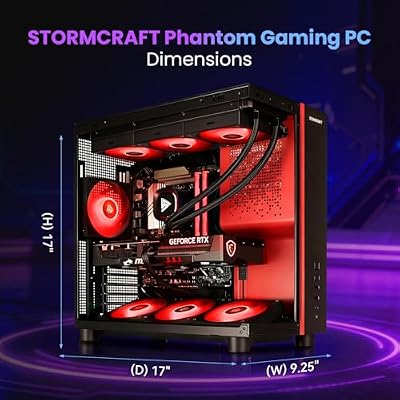
If you have built a PC before, build it yourself — the parts list above is straightforward, the components are all readily available, and you save roughly $400–$600 versus an equivalent prebuilt. If you have never built a PC, the equivalent prebuilts we compared are covered in our best PC for 4K video editing May 2026 roundup — the Lenovo Legion Tower 7i and the STORMCRAFT Phantom are the two we currently recommend.
Why Intel over the Ryzen 9 9950X for video editing?
One reason — QuickSync. Intel’s iGPU media block handles 10-bit 4:2:2 H.265 decode in hardware and Premiere’s Mercury Playback Engine prioritizes it over NVDEC. If your timelines are mostly HEVC from a Sony, Canon, or Panasonic mirrorless body, Intel wins. If your work is mostly ProRes, BRAW, or RED, AMD’s 9950X is competitive and actually wins on raw multi-cam Resolve performance.
Is the RTX 5080 enough or do I need the 5090?
The 5080 with 16GB is enough for 99% of working 4K editors in 2026 — including stacked Resolve grades, Fusion comps, and ML-accelerated effects. Jump to the 5090 with 32GB only if you regularly cut 8K timelines, RED R3D from a V-Raptor at full debayer, or heavy AE pipelines with multiple 4K dynamic-linked comps.
Do I really need a 32-inch HDR reference display, or is a $400 monitor fine?
If your work goes through a client and the final master is HDR, you need a reference display — the Dell UP3221Q or equivalent. If your work is SDR YouTube content or social-media short-form, a calibrated 27-inch 4K IPS at 95% DCI-P3 (think Dell U2723QE) is enough. The non-negotiable element is the calibration probe — every editor’s display drifts, and the probe is what keeps your color trustworthy.
Final verdict — our 2026 video editor build
The build we have compared and now recommend to working video editors in 2026 is the Intel Core Ultra 9 285K + RTX 5080 + 64GB DDR5-6400 + 2TB Crucial T705 + Dell UP3221Q + SpyderX2 Elite + Audio-Technica ATH-M50x. That stack delivers class-leading Premiere Pro responsiveness on 10-bit 4:2:2 H.265 timelines, enough Resolve compute for stacked Fusion grades, and a calibrated HDR reference display you can trust for client deliverables. Budget around $5800 for the full build (excluding chassis, PSU, and motherboard, which we cover in a dedicated DDR5 prebuilts companion piece). If your work leans Resolve and BRAW, swap the 285K for a Ryzen 9 9950X and you have the colorist’s build. If your work is 8K or RED R3D at V-Raptor scale, swap the 5080 for a 5090. For everyone else, this is the build.
Related reads
- Best PC for 4K video editing May 2026
- Trending PCIe 5.0 SSD reviews
- Best 32-inch 4K monitors for creators 2026
- RTX 5080 vs RTX 5090 — which is better in 2026
- Best gaming PC for Blender 3D rendering May 2026
- Best DDR5 prebuilts May 2026
- Intel Core Ultra 9 285K vs Ryzen 9 9950X creator test
Related Guides
- Best Speakers with High Bass in 2026
- Best CPUs for Machine Learning in 2026
- Trending Streaming Webcams May 2026: Deep Comparison
Frequently Asked Questions
Does DaVinci Resolve or Premiere Pro favour different hardware?
Resolve is far more GPU dependent, especially for noise reduction, Fusion effects, and colour grading nodes, and it also benefits from large VRAM. Premiere Pro leans more on the CPU and on hardware encode and decode blocks for H.264 and HEVC. If you split time between them, a strong GPU plus a modern CPU with media engines covers both.
How much VRAM do I need for 4K and 8K editing?
12GB is workable for 4K timelines, 16GB is the comfortable target, and 24GB or more genuinely helps with 8K, heavy noise reduction, and multiple simultaneous grading nodes in Resolve. Running out of VRAM in Resolve produces explicit out of memory errors mid render rather than a graceful slowdown, so err upward here.
Should I edit proxies or work with native footage?
Proxies remain the reliable answer for multicam, 8K, and heavily compressed long GOP formats even on fast machines, because they make scrubbing instant and free the GPU for effects. Native editing works fine for single stream 4K in an intraframe codec on a modern system. Generating proxies costs time once and saves it continuously.
What storage layout works best for video editing?
Use three tiers: a fast NVMe for the OS and applications, a second high endurance NVMe as the active project and cache scratch drive, and large capacity storage or a NAS for archives. Cache and render files generate enormous write volume, which is why a separate scratch drive extends the life of your boot drive.
Is 64GB of RAM overkill?
Not for professional work. 32GB handles 1080p and light 4K, but After Effects RAM previews, 8K timelines, and running Resolve alongside Photoshop and a browser will exhaust it quickly. 64GB is the sensible professional baseline in 2026, and After Effects heavy artists working with long compositions still see benefit from 128GB.