- Top Pick: Hosyond 10.1" IPS LCD Capacitive Touch Screen HDMI Display Portable Monitor 1024X600 Built-in Dual Speakers for Raspberry Pi 5/4/3 Xbox PS4 Windows 7/8/10
- Best Value: Generic 9 inch 1024 * 600 DIY Universal LCD Screen Display2AV HDMI-Compatible VGA Driver Control Board Car Reversing Computer Assisted Screen Monitor, black, 9C GQ-99
- Premium Choice: BIGGERFIVE Smart Watch for Kids, 1.8" Fitness Tracker Watch with Pedometer
Building a game is a multi-window job. You are reading code in one panel, wrangling a node graph or scene hierarchy in another, previewing rendered output in a viewport, and flicking to reference art and documentation — often all at once. That makes the monitor a developer’s most-used tool, and the right screen choice comes down to three things working together: enough resolution and screen space for dense editor UI, color you can broadly trust when you are tuning materials and lighting, and a comfortable size for hours of focused work. This guide rounds up the best monitors for game development in 2026 across the range developers actually shop for, from compact secondary panels to large QHD and ultrawide canvases.
- Best Monitors for Game Development at a Glance
- 1. ASUS TUF Gaming 32-inch Curved QHD (2560×1440) 165Hz Monitor
- 2. Samsung 34-inch Odyssey G5 Ultra-Wide Curved Monitor, 1000R 165Hz
- 3. ViewSonic VX3276-MHD 32-inch 1080p IPS Monitor with Screen Split
- 4. SANSUI 32-inch Curved 240Hz Gaming Monitor, FHD 1080P
- 5. Acer Nitro KG241Y Sbiip 23.8-inch Full HD VA Gaming Monitor, FreeSync
- 6. Philips 221V8LB 22-inch Thin Full HD Monitor, 100Hz
- How to Choose a Monitor for Game Development
- Frequently Asked Questions
- Related Guides
- Related Articles
- Related Guides
Our picks were chosen on what genuinely helps a game-dev workflow: usable resolution and pixel density for editor toolbars and code, color coverage for checking art and previews, screen size and aspect ratio for multitasking, and value — including how well a panel works as the second screen in a dual-monitor rig. We have included a deliberate price spread, from around $70 to around $285, because the best development monitor is the one that fits your engine, your desk, and your budget. We avoid quoting invented benchmark numbers; instead we explain where each display fits and who it is for. Below is an at-a-glance comparison of all six, then a closer look at each and a buyer’s guide built around resolution, color and dual-monitor setups.
As an Amazon Associate we earn from qualifying purchases at no extra cost to you.


🛒 Best Price Today on Amazon
Prime members get fast, free shipping on everything above, plus member-only deals. New members get a 30-day free trial — cancel anytime.
Best Monitors for Game Development at a Glance
| Monitor | Best For | Standout Spec | Approx Price |
|---|---|---|---|
| ASUS TUF 32-inch QHD Curved 165Hz | Primary engine workspace | QHD 1440p, 32-inch, 165Hz | around $285 |
| Samsung 34-inch Odyssey G5 Ultrawide | Wide timeline + node graphs | 34-inch ultrawide, 1000R, 165Hz | around $280 |
| ViewSonic VX3276-MHD 32-inch IPS | Dual-window IPS workspace | 32-inch IPS, screen-split | around $180 |
| SANSUI 32-inch Curved 240Hz FHD | Big-screen play-testing | 32-inch curved, 240Hz | around $180 |
| Acer Nitro KG241Y 23.8-inch VA | Compact secondary monitor | 23.8-inch FHD, FreeSync | around $110 |
| Philips 221V8LB 22-inch FHD | Budget reference panel | 22-inch FHD, 100Hz, thin | around $70 |
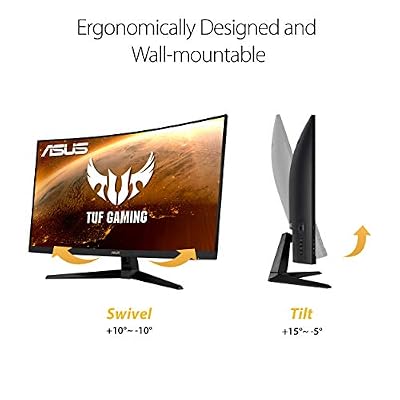
1. ASUS TUF Gaming 32-inch Curved QHD (2560×1440) 165Hz Monitor

ASUS TUF Gaming VG32VQ1B 32 Inch 1440p 165Hz HDR Curved Gaming Monitor | ELMB Sync, 1ms, 1500R Curve, HDR10, Adaptive Sync, FreeSync, HDMI, DisplayPort, FreeSync Premium, for PS5 and Xbox




As an Amazon Associate we earn from qualifying purchases. Product prices and availability are accurate as of the date/time indicated.
The ASUS TUF 32-inch QHD curved is the pick for a primary game-development workspace, and the reason is resolution. At 2560×1440 across a generous 32-inch panel, it gives you the pixels and the physical space to keep an engine editor, a code window and a preview viewport visible at once without everything feeling cramped — exactly the dense, multi-panel layout Unity and Unreal encourage. At around $285 it is the premium pick here and the most capable single screen for daily building.
This is the monitor to choose if the editor is where you live. The extra vertical and horizontal room over a 1080p panel means more lines of code, taller asset browsers and roomier node graphs, while the QHD sharpness keeps small UI text and icons crisp through long sessions. The 165Hz refresh is a bonus for smooth scrolling and play-testing, and the gentle curve helps keep the edges of a big screen in comfortable view. For a do-it-all primary development display, the TUF is the standout.
Pros: QHD 1440p sharpness on a large 32-inch canvas, 165Hz, gentle curve for multitasking.
Cons: Curve is a preference some coders dislike; not a verified color-grading panel.
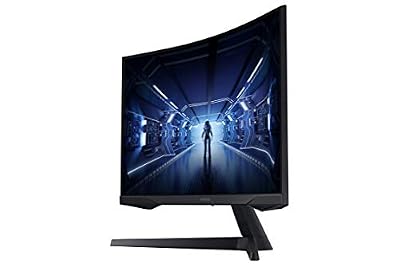
2. Samsung 34-inch Odyssey G5 Ultra-Wide Curved Monitor, 1000R 165Hz

Samsung 34' Odyssey G5 Ultra-Wide Gaming Monitor with 1000R Curved Screen | 165Hz, 1ms, FreeSync Premium, Large Display, Eye Comfort, Multiple Ports, WQHD (LC34G55TWWNXZA)




As an Amazon Associate we earn from qualifying purchases. Product prices and availability are accurate as of the date/time indicated.
The Samsung 34-inch Odyssey G5 is the ultrawide pick, and for a developer the appeal is horizontal space. A single 34-inch 21:9 panel stretches timelines, animation tracks, tile-maps and node graphs across one continuous canvas, so you can keep an engine editor open beside a code window without the bezel gap of two screens. The aggressive 1000R curve wraps that width around your view, and at around $280 it is a strong-value way into ultrawide.
This is the monitor for the developer who works in wide, horizontal tools — level editors, sequencers, behaviour trees or sprawling visual-scripting graphs. The extra width lets you compare two panels side by side or follow a long timeline without scrolling, the 165Hz refresh keeps panning and play-testing smooth, and the curve reduces head-turning across the wide panel. If your engine work spreads sideways more than it stacks, this ultrawide Odyssey G5 is the layout that suits it best.
Pros: Wide 34-inch 21:9 canvas, immersive 1000R curve, 165Hz, single-screen multitasking.
Cons: Ultrawide footprint needs a deep desk; 1440p-class density, not 4K-sharp.
3. ViewSonic VX3276-MHD 32-inch 1080p IPS Monitor with Screen Split

ViewSonic VX3276-MHD 32 Inch 1080p Widescreen IPS Monitor, HDMI, PC Display | Ultra-Thin Bezels, Screen Split Capability, DisplayPort, Entertainment, Office Work, Multitasking Desk View, Laptop Daily Use


As an Amazon Associate we earn from qualifying purchases. Product prices and availability are accurate as of the date/time indicated.
The ViewSonic VX3276-MHD is the IPS workspace pick. It is a 32-inch 1080p IPS panel — chosen here for its wide viewing angles and consistent color over the VA and FHD alternatives — and it ships with ViewSonic’s screen-split feature for tidy window tiling. At around $180 it offers a large, color-consistent surface that suits keeping engine UI and code neatly arranged side by side.
This is the monitor for the developer who wants a big, even-looking IPS panel without stepping up to QHD pricing. The IPS technology keeps colors and brightness stable across the wide 32-inch surface, which helps when you are eyeballing sprites, UI mock-ups or material previews, and the built-in screen-split makes it easy to dock an editor, a console and a browser into fixed zones. It is 1080p, so it trades pixel density for size and color consistency — a sensible balance for general engine work and asset review on a budget.
Pros: Large 32-inch IPS with consistent color and angles, screen-split tiling, fair price.
Cons: 1080p across 32 inches is low density; fine UI text looks softer.
4. SANSUI 32-inch Curved 240Hz Gaming Monitor, FHD 1080P

SANSUI 32 Inch Curved 240Hz Gaming Monitor High Refresh Rate, FHD 1080P | Gaming PC Monitor HDMI DP1.4, 1500R Curvature, 1Ms MPRT, HDR,Metal Stand,VESA Compatible(DP Cable Incl.)


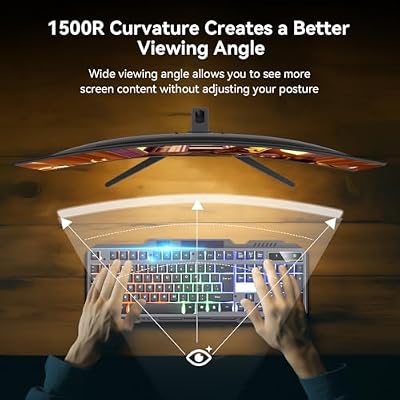


As an Amazon Associate we earn from qualifying purchases. Product prices and availability are accurate as of the date/time indicated.
The SANSUI 32-inch curved is the play-testing pick. Its headline is a fast 240Hz refresh rate on a large curved 1080p panel, which makes it less about editing pixel-perfect UI and more about how your game actually feels in motion. For a developer who spends a lot of time running builds and tuning movement, input feel and frame pacing, a high-refresh screen is a genuinely useful test surface. At around $180 it is an affordable big-screen option.
This is the monitor to choose when play-testing is a core part of your day. The 240Hz refresh shows fast motion smoothly, which helps when you are judging animation timing, camera feel and responsiveness, and the large 32-inch curved panel gives an immersive view of the running game. It works as a roomy editor screen too, though at 1080p across 32 inches the UI is less sharp than the QHD ASUS. Treat it as the build-and-test display in a dual-monitor setup, paired with a denser panel for code, and it earns its place.
Pros: Fast 240Hz for judging motion and feel, large curved screen, strong value.
Cons: 1080p on 32 inches lowers sharpness; better as a test screen than a code panel.
5. Acer Nitro KG241Y Sbiip 23.8-inch Full HD VA Gaming Monitor, FreeSync

Acer Nitro 23.8in FHD 1920x1080 180Hz Gaming Monitor KG241Y Sbiip | 1ms, AMD FreeSync Premium, 2xHDMI, DisplayPort, VESA Mountable, Bluelight Filter, Flickerless Technology


As an Amazon Associate we earn from qualifying purchases. Product prices and availability are accurate as of the date/time indicated.
The Acer Nitro KG241Y is the compact secondary-monitor pick. It is a 23.8-inch Full HD VA panel with AMD FreeSync, and at around $110 it is the affordable screen you add beside a larger main display. In a dual-monitor game-dev rig the second screen does not need to be the star — it needs to reliably hold your console output, asset browser, reference art or documentation, and the KG241Y does that job at a sensible price.
This is the monitor for the developer building out a two-screen setup on a budget. The 23.8-inch size is the classic secondary-panel sweet spot — big enough to be useful, small enough to sit beside a 32-inch primary without dominating the desk — and the VA panel gives good contrast for reading logs and docs. FreeSync keeps any gameplay on this screen tear-free. As the dependable companion display that frees your main screen for the editor, the Acer Nitro is a smart, low-cost addition.
Pros: Ideal 23.8-inch secondary size, FreeSync, good VA contrast for docs and logs, low cost.
Cons: FHD only and modest for a primary screen; VA angles trail IPS.
6. Philips 221V8LB 22-inch Thin Full HD Monitor, 100Hz

Philips 22 Inch Computer Monitor FHD 100Hz VA VESA Flicker-Free, 221V8LB | 1920×1080 LED Monitor, 4ms GtG, Adaptive Sync, HDMI 1.4, Tilt Adjust, Low Blue Light, 4yr Advance Replacement Warranty


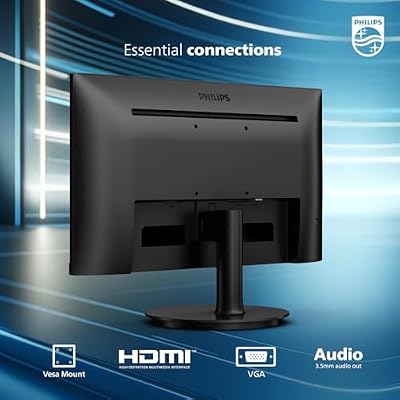


As an Amazon Associate we earn from qualifying purchases. Product prices and availability are accurate as of the date/time indicated.
Rounding out the list is the Philips 221V8LB, the budget reference-panel pick. It is a thin, no-frills 22-inch Full HD monitor with a 100Hz refresh, and at around $70 it is the cheapest display here. It is not a primary development screen, but as an inexpensive extra panel for keeping reference material, chat, documentation or a build log permanently in view, it is hard to argue with the price.
This is the monitor to choose when you want a third screen, a dedicated reference display, or a tidy spare for a secondary machine. The 22-inch FHD panel is small but perfectly readable for docs, design references and communication tools, the 100Hz refresh keeps scrolling smooth, and the thin design takes up little desk space. Treat it for what it really is — an affordable auxiliary panel rather than a main editing surface — and it is a practical, low-cost way to add another window to your workflow.
Pros: Very affordable, thin 22-inch FHD, 100Hz, handy auxiliary or reference panel.
Cons: Small and basic; an auxiliary screen, not a primary editing display.
How to Choose a Monitor for Game Development
For game development, resolution and screen space come first, because the editor is dense. Engines like Unity, Unreal and Godot fill the screen with panels — scene hierarchy, inspector, asset browser, console, viewport — and the more usable pixels you have, the less you fight for room. A QHD 1440p panel like the ASUS TUF, or a 34-inch ultrawide like the Odyssey G5, gives you noticeably more working area than 1080p, so prioritise resolution and physical size for whichever screen will host your editor and code.
Color accuracy matters more than for general office work, because you are judging art, materials and lighting. You do not necessarily need a calibrated professional reference panel, but a screen with consistent, even color — an IPS panel like the ViewSonic, for example — helps you trust what you see when tuning sprites, UI and previews. If your game lives or dies on its visuals, weight color consistency heavily; if you mostly write systems and gameplay code, raw screen space and comfort matter more.
A dual-monitor setup is the single biggest quality-of-life upgrade for most developers. The common pattern is a large, sharp primary screen for the engine editor or code, paired with a secondary panel — the 23.8-inch Acer Nitro is sized perfectly for this — that holds your running build, asset browser, reference art or documentation. Splitting your work across two screens means you stop endlessly alt-tabbing, so plan your setup as a pair: pick the best primary you can afford, then add a sensible companion display.
Finally, match refresh rate and budget to how you actually work. A high-refresh panel like the SANSUI 240Hz is genuinely useful for play-testing motion, feel and frame pacing, so consider one as the build-and-test screen if that is a big part of your day — but it is less important for pure editor work, where sharpness wins. Set your budget, decide which screen is primary and which is secondary, prioritise resolution and color for editing and refresh for testing, and pick the combination on this list that fits your engine and your desk.
Frequently Asked Questions
What resolution is best for game development?
Aim for QHD (1440p) or higher on your primary screen if you can. Game engine editors are packed with panels, and the extra pixels of a 1440p display like the ASUS TUF, or the width of a 34-inch ultrawide like the Odyssey G5, let you see more code, taller asset browsers and roomier node graphs at once. 1080p panels still work well as secondary or reference screens.
Do I really need a dual-monitor setup to develop games?
It is not mandatory, but it is the upgrade most developers notice immediately. A two-screen rig lets you keep the engine editor or code on a large primary panel while a secondary screen — a 23.8-inch like the Acer Nitro is ideal — holds your running build, documentation or reference art. That cuts constant alt-tabbing and keeps your context visible, which speeds up iteration.
How important is color accuracy for making games?
It depends on your role. If you tune art, materials, lighting or UI, a panel with consistent, even color — an IPS screen like the ViewSonic, for instance — helps you trust what you see, though hobby and indie work rarely needs a fully calibrated professional display. If you mostly write gameplay and systems code, screen space and comfort matter more than precise color.
Is a high-refresh-rate monitor worth it for game development?
For play-testing, yes. A fast panel like the SANSUI 240Hz makes it easier to judge animation timing, camera feel, input responsiveness and frame pacing in your running build. For the editing side of the job it matters far less than resolution and screen space. A practical setup pairs a sharp editor screen with a high-refresh screen for building and testing.
Related Guides
- Best Monitors for Content Creation
- Best 4K Monitors
- Best Ultrawide Monitors
- Best Gaming Monitors
- Best Monitor Arms for Your Desk
- Best Mechanical Keyboards
Affiliate Disclosure: As an Amazon Associate, we earn from qualifying purchases. If you click a link and make a purchase, we may earn a small commission at no extra cost to you. Prices and availability are accurate as of publication and may change.