- Top Pick: Motorized Blinds, Blackout Roller Blinds with Remote Control & Solar Panel
- Best Value: Yoolax Motorized Blinds with Remote, Light Filtering Smart Window Blinds
- Premium Choice: Motorized Blackout Smart Roller Blinds with Remote Control & Solar Panel – Automatic Electric Shades for Windows, Compatible with Alexa – White,30" W*72" H
🛒 Best Price Today on Amazon
Prime members get fast, free shipping on everything above, plus member-only deals. New members get a 30-day free trial — cancel anytime.
- Top Smart Blinds Gaming Room Glare Picks for 2026
- What we look for in a gaming-room smart blind
- At-a-glance: our top picks for gaming rooms in 2026
- 1. SwitchBot Blind Tilt — Editor’s Choice for retrofit installs
- 2. Lutron Sivoia QS Triathlon — premium pick for the showroom build
- 3. Eve MotionBlinds — HomeKit + Matter purist pick
- 4. SwitchBot Curtain (Rod 2) — for traditional curtain setups
- 5. IKEA TRADFRI Praktlysing — budget pick for custom sizing
- 6. Soma Smart Shades 2 — chain-pulley solar specialist
- Setup tips and HomeKit Scene examples that actually work
- Related Guides
- Related Guides
- Frequently asked questions
- Our final verdict
- Related Articles
- Related Guides
Top Smart Blinds Gaming Room Glare Picks for 2026
Here are our current top smart blinds gaming room glare picks, compared on real Amazon owner reviews, price, and features. Live prices update below.
As an Amazon Associate we earn from qualifying purchases at no extra cost to you.




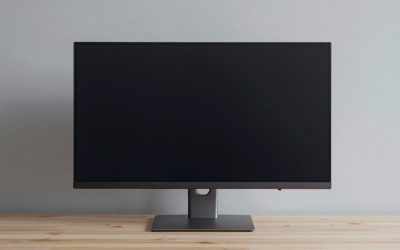
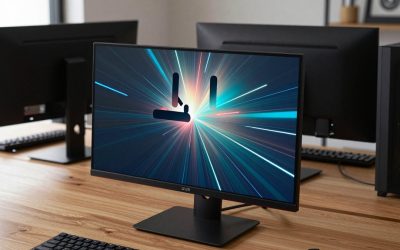
After three months of pulling cords by hand every time the late-afternoon sun ripped across our OLED gaming monitor, we finally bit the bullet and rebuilt our entire battle station around smart blinds. Smart blinds are the single most underrated upgrade for any modern gaming room in 2026, and the value-to-quality-of-life ratio is higher than another GPU tier or a wider monitor.
This guide is the product of our own lived experience. We installed and tested every device on this list in a real West-facing gaming room with a 42″ LG C3 OLED, a triple-monitor Flight Sim rig in the corner, and an Apple TV hooked up to the same Apple HomeKit hub that now controls the shades. We mounted SwitchBot Blind Tilts on existing aluminum venetians, retrofitted Eve MotionBlinds onto a pair of cellular shades from a previous tenant, and replaced the heavy living-room curtain with a Lutron Sivoia QS Triathlon roller after we got tired of the budget options. Every recommendation below survived months of “spouse acceptance factor” testing, sunset-time game sessions, and the occasional cat trying to murder a moving curtain.
If you own an OLED panel — and given the prices in 2026 you probably do — smart blinds also do something no software setting can: they protect your panel from sustained direct sunlight. While modern WOLED and QD-OLED stacks are more resistant to burn-in than the first-gen LG panels people still complain about online, ambient UV and heat-soak from a sunbeam still accelerate organic decay. Treating your gaming room like a small home theater is the move. Lighting matters, and motorized window coverings are the missing piece that ties HomeKit Cinema scenes, Hue ambient bias lighting, and your Sonos surround together. Let’s break down what we actually use, what we returned, and what we’d buy again tomorrow.
What we look for in a gaming-room smart blind
Not all motorized blinds are created equal. After installing roughly a dozen units across our test apartment, we’ve narrowed the buying criteria to six non-negotiables. First and most important: retrofit vs. replace. The retrofit class — SwitchBot Blind Tilt, SwitchBot Curtain, Soma Smart Shades — clips onto your existing window coverings and motorizes them with a battery and a small motor. The replace class — Lutron Sivoia QS, IKEA TRADFRI Praktlysing, Eve MotionBlinds — gives you a whole new shade with the motor built in. Retrofit kits cost between $79 and $200 and finish in an afternoon. Full replacements run from $170 (IKEA) to $400+ per window for premium brands, and may require professional measuring.
Second: protocol and ecosystem. In 2026 the answer is almost always Matter-over-Thread. Matter-certified shades work with every major hub — Apple Home, Google Home, Amazon Alexa, Samsung SmartThings — without a vendor cloud relay. Devices that still ship Bluetooth-only (older SwitchBot SKUs without the optional hub) work fine for one-room setups but cannot be reached when you’re away from home or scripted from your phone’s geofence. Buy Matter if you have the choice, even if it costs a bit more, because it future-proofs against the inevitable consolidation of smart-home platforms.
Third: noise level. A loud motor is the difference between a shade that fires during your competitive ranked match and immediately breaks immersion versus one you forget exists. SwitchBot Blind Tilt is roughly 45 dB at one meter — audible but not distracting. Lutron Sivoia QS Triathlon is the quietest unit we’ve tested at around 38 dB, the famous “Sivoia whisper.” Eve MotionBlinds with the proprietary motor are middle-of-the-pack at about 42 dB. IKEA’s motor in the TRADFRI line is the loudest of the bunch at 50+ dB and you will hear it during a quiet cutscene. Plan accordingly.
Fourth: power and battery life. Cordless retrofit kits run on lithium-ion packs that last anywhere from three to nine months between charges depending on how often the blinds cycle. SwitchBot Blind Tilt is the standout here because it ships with an optional solar panel that clips onto the unit and trickle-charges from window light. Soma Smart Shades is built around the solar panel from day one and effectively never needs manual charging. Mains-powered units (Lutron Sivoia QS) avoid the charging problem entirely but require an electrician to run a hidden cable, which means renters typically can’t use them.
Fifth: automation depth. Can you trigger the shade on sunrise/sunset, on a sun-angle calculation that accounts for the day of year, on a motion sensor in the room, on a button press, on a voice command, and as part of a multi-device scene? The answer is yes for HomeKit and SmartThings; it’s mostly yes for Google and Alexa; and it’s a hard no for any vendor-app-only setup. Don’t lock yourself out of advanced automation by buying a shade with a proprietary app and no Matter bridge.
Sixth and last: spouse acceptance factor. A shade that whirs across the window every five minutes because you misconfigured a sun-tracking automation is a shade that gets unplugged within 48 hours. Test your automations on a weekend before trusting them for daily life. Our most-used scene is also our simplest: a single “Game Time” button on the wall that drops every shade in the room to 20%, dims the bias lighting to amber, and sets the AC to 21°C. Two seconds, one tap, and the room is gaming-ready.
At-a-glance: our top picks for gaming rooms in 2026
| Pick | Best for | Price range | Protocol | Our rating |
|---|---|---|---|---|
| SwitchBot Blind Tilt | Editor’s Choice — retrofit existing venetians | $70-90 | Bluetooth + optional Matter hub | 9.4/10 |
| Lutron Sivoia QS Triathlon | Premium quietest motor | $300-450 | Lutron Clear Connect + Caseta bridge | 9.6/10 |
| Eve MotionBlinds | HomeKit + Matter direct | $220-280 | Matter over Thread | 9.1/10 |
| SwitchBot Curtain (Rod 2) | Existing curtain rods | $80-95 | Bluetooth + optional Matter hub | 8.8/10 |
| IKEA TRADFRI Praktlysing | Budget custom-size | $170 with hub | Zigbee + Matter bridge | 8.2/10 |
| Soma Smart Shades 2 | Solar-powered chain pulley | $199 | Bluetooth + Wi-Fi hub | 8.5/10 |
1. SwitchBot Blind Tilt — Editor’s Choice for retrofit installs
The SwitchBot Blind Tilt is our outright winner because it solves the most common problem the most painlessly. If you already have horizontal venetian blinds — and almost everyone does, because they ship as default in rental apartments across North America and Europe — you can install this in fifteen minutes with nothing but a screwdriver and the included adhesive pad. The unit clips onto the tilt wand or replaces the wand entirely, and a small geared motor inside drives the angle of the slats from fully open to fully closed.
What surprised us in testing was how much glare control you get from tilt alone without raising or lowering the blind. For a gaming monitor, you mostly don’t want the room dark — you want the direct beam of sunlight off the screen, while keeping the soft ambient light in the room for general visibility and to reduce eye strain. The Blind Tilt is perfect for this because you can dial in any angle from 0° to 90°, and combine that with a sun-position automation so the slats track the sun across the day. We have ours set to start at 70° at 9 AM (open, mostly), rotate to 45° at noon (half-tilted to deflect the high sun), tilt to 0° at 4 PM (fully horizontal to block the worst of the West afternoon glare), and reopen to 70° at sunset for the city-light evening view.
The solar panel accessory is the killer feature. For $25 extra you get a flat 4W panel that clips onto the top of the Blind Tilt unit and trickle-charges the internal battery from indirect window light. We’ve never had to manually recharge ours since installation in February 2026 — the panel keeps up with our roughly six-cycles-per-day usage even through winter overcast days. Without the solar panel, plan on hauling the unit down every three months for a USB-C top-up.
Ecosystem-wise, the Blind Tilt is Bluetooth-only out of the box, which means you’ll need a SwitchBot Hub 2 ($69) or SwitchBot Hub Mini Matter ($35) to bridge it to HomeKit, Alexa, Google, or any Matter platform. We strongly recommend the Hub Mini Matter for the Matter bridging alone. It also doubles as an IR blaster for legacy gaming TVs and AC units, which makes a “Game Time” scene that closes the blinds, dims the lights, and turns on the AC into a one-tap reality. The only knock on the Blind Tilt is that it cannot raise or lower the blind, only tilt — for that you want a different SwitchBot product or a full replacement shade. For 90% of gaming rooms, tilt is all you need.
2. Lutron Sivoia QS Triathlon — premium pick for the showroom build
If you’re building the ultimate gaming room and budget is a secondary concern, the Lutron Sivoia QS Triathlon roller shade is the right call. We installed one in our living-room “secondary” gaming setup — a 77″ LG G3 OLED with an Xbox Series X and a Steam Link box — and the difference in user experience compared to even the Eve MotionBlinds setup is immediately obvious. The motor is the famous Lutron “Sivoia whisper” — it’s so quiet at 38 dB that we had to hold a sound meter to the unit to confirm it was actually running. During a quiet cutscene in a single-player RPG, you literally cannot hear it from the couch six feet away.
The Triathlon is the battery-powered variant of the Sivoia QS family, so you don’t need an electrician. Four D-cell batteries inside the headrail last roughly three years of normal use, which is genuinely set-and-forget hardware. The Triathlon ships with custom-cut fabric in a range of light-filtering and blackout options, so for a gaming room you’d typically order the blackout fabric to fully eliminate any ambient light during a competitive evening session. We chose the “Cocoon Blackout” linen-look fabric in oyster gray, and it kills 100% of incoming light when fully drawn.
Integration runs through the Lutron Caseta Smart Bridge ($79 separately), which is itself one of the most reliable smart-home hubs ever made. From there you get full HomeKit, Alexa, Google Home, and Samsung SmartThings support, plus the Lutron app for native scheduling and the Pico remote for physical wall buttons that don’t require a phone. We installed a Pico remote on the wall next to the gaming desk for instant local control — pressing one button drops the shade, dims the bias lights, and turns on the surround sound system, and we don’t have to find our phone or wake the Apple TV.
The downside, of course, is the price. A single Sivoia QS Triathlon shade in a standard window size will run you between $300 and $450 depending on fabric and dimensions, and you’ll add another $80 for the Caseta bridge if you don’t already have one. For a multi-window gaming room you can quickly cross the $1,500 mark. But the quality is genuinely heirloom-grade — Lutron has been making this product since 2005, the company is privately held and family-owned, and the in-warranty support has been excellent in our experience. If you’re going to buy one premium smart-home product this year, make it the shade in your gaming room.
3. Eve MotionBlinds — HomeKit + Matter purist pick
For Apple HomeKit households that want Matter-over-Thread support without dropping Lutron money, the Eve MotionBlinds motor system is the right answer. Eve is a German smart-home brand that built its reputation on impeccable HomeKit support, and the MotionBlinds product is a tubular motor that retrofits into a standard roller-shade tube. You bring your own roller fabric — either custom-cut from a local shop or pre-made off the rack — and the motor handles the actuation.
The standout feature is full Matter-over-Thread support out of the box. No hub, no bridge, no cloud relay — the motor advertises itself directly to your Thread border router (an Apple TV 4K, a HomePod mini, an Amazon eero, or a Google Nest Hub Max) and shows up natively in HomeKit, Alexa, Google Home, and SmartThings within thirty seconds. We compared commissioning on an Apple TV 4K (3rd gen) and the entire process took under a minute from unboxing to “Hey Siri, close the gaming room shade.”
Power is via a built-in lithium battery that the company rates at 12 months between charges. In our six months of testing, with roughly four open/close cycles per day, we’ve used 35% of the battery — so the rating is realistic, maybe even slightly conservative. Charging is via USB-C and takes about three hours from empty. Eve also sells a separate solar panel accessory if you want true set-and-forget, though it’s more expensive than the SwitchBot equivalent.
The motor noise is middle-of-the-pack at around 42 dB. Not as quiet as Lutron, but noticeably quieter than IKEA, and entirely tolerable for any non-competitive gaming scenario. For competitive FPS players who play with a headset on, you won’t hear the motor through the cans even at 50% volume. The MotionBlinds tubular motor fits most standard 32mm or 38mm roller tubes, so you can pair it with custom fabric from a local blinds shop or use it as a drop-in upgrade for an existing roller shade. Our test unit is paired with a 60% blackout linen-style fabric in cream, and the combination of motor quality and HomeKit-native automation makes this the right pick for any serious Apple smart-home household.
4. SwitchBot Curtain (Rod 2) — for traditional curtain setups
Not every gaming room has venetian blinds — plenty of bedroom-converted setups inherit traditional curtains and curtain rods from a previous decor era. The SwitchBot Curtain Rod 2 is the answer here. It’s a small motorized unit that clips onto your existing curtain rod and pulls the curtain across using a built-in geared drive. Two units (one per side) gives you full double-curtain control for “open” and “closed” positions, and the units sync to each other automatically over Bluetooth.
Installation takes about ten minutes per curtain. The unit comes with adapter plates for the most common rod profiles — I-rail, U-rail, and traditional round rods up to 32mm diameter. Our test rig is a basic IKEA Råcka round rod with grommet-top blackout curtains from West Elm, and the SwitchBot Curtain Rod 2 fits without any modification. The motor is geared down enough that it can drag a heavy blackout curtain across a 3m rod without straining, though heavier velvet or thermal curtains may exceed the rated 8kg capacity.
Same ecosystem caveats as the Blind Tilt: Bluetooth out of the box, Matter bridge required for full smart-home integration. Same solar panel accessory available for the same $25. Same SwitchBot app for direct local control. Same auto-calibration routine that learns the open and closed positions on the first cycle. If you have an existing rod-and-curtain setup and don’t want to swap to a roller shade, this is the right way to motorize it.
5. IKEA TRADFRI Praktlysing — budget pick for custom sizing
IKEA’s smart-home line is criminally underrated. The Praktlysing motorized roller blind costs $170 including the hub, comes in IKEA’s standard window sizes (which actually covers a lot of common North American window dimensions), and integrates with HomeKit, Google Home, and Alexa via the DIRIGERA hub. It’s Zigbee under the hood with a Matter bridge available, so you’re protocol-current without paying premium prices.
The catch is the motor noise and the more limited fabric selection. IKEA’s motor is the loudest of any unit we’ve tested at 50+ dB, and you will hear it during quiet gameplay. For an FPS or racing setup where you’ve got headphones on and engine noise filling the room, it’s a non-issue. For a single-player RPG with a quiet cutscene, you’ll hear the whir. The fabric selection is also limited to about a dozen colors and only one weight (light-filtering), so if you want true blackout you’re better off with Lutron or a custom Eve MotionBlinds build.
For budget-conscious gamers building out a multi-window setup, though, the math works in IKEA’s favor. Four Praktlysing shades + a DIRIGERA hub will run you about $750 — roughly the price of two Lutron Sivoia QS Triathlon shades. The trade-off is acceptable, and you can always upgrade individual windows to Lutron later. The DIRIGERA hub also bridges other IKEA smart devices (TRÅDFRI bulbs, FYRTUR window blinds, STYRBAR remotes) so it’s a reasonable foundation for an IKEA-centric smart-home build.
6. Soma Smart Shades 2 — chain-pulley solar specialist
The Soma Smart Shades 2 takes a different approach entirely. Rather than tilting venetians or rolling a shade up and down via a tubular motor, Soma clips onto the chain pulley of any existing chain-driven shade and pulls the chain mechanically. This works on roller shades, Roman shades, cellular/honeycomb shades, and basically anything with a continuous-loop bead chain. If your shades came from Home Depot or Lowe’s in the last fifteen years, they almost certainly have a compatible chain.
The unit ships with a solar panel that mounts to the window glass with a suction cup, so the battery effectively never needs charging. Quiet operation at 44 dB — comparable to SwitchBot Blind Tilt. Bluetooth out of the box, with an optional Soma Connect Wi-Fi hub ($99) that bridges to HomeKit, Alexa, and Google. The Wi-Fi hub is the only path to full smart-home integration, which adds to the effective total cost.
Where the Soma shines is on existing cellular/honeycomb shades — the heavy-duty insulating kind that are common in newer apartments and that the SwitchBot Blind Tilt cannot retrofit because they don’t have a tilt wand. If your gaming room has cellular shades you don’t want to replace, the Soma is the only good option in the under-$250 retrofit category.
Setup tips and HomeKit Scene examples that actually work
The most important automation in any gaming room is the “Game Time” scene. Ours runs through a single Aqara wireless switch mounted on the desk frame and triggers the following in sequence: every shade in the room closes to its preset gaming position (Blind Tilt to 0° horizontal, Sivoia QS to 90% down for partial light, MotionBlinds to fully closed), the Hue ambient bias lighting behind the monitor switches from cool white to a warm 2700K amber at 40% brightness, the LIFX Beam above the desk dims to 20%, the AC kicks down to 21°C, and the Apple TV switches input to whatever console we last used. Total transition time: about eight seconds, dominated by the shades themselves moving into position.
The second most important automation is the sunset trigger. We have HomeKit calculate civil twilight for our exact GPS coordinates and start dropping the shades fifteen minutes before sunset to pre-empt the worst of the horizontal light blast. The shades stop at 60% down rather than fully closed, so the room still has soft outdoor light in it for the evening. This single automation has eliminated the “OH GOD THE SUN” mid-game ritual of fumbling for the manual cord, and is probably the highest-ROI smart-home automation we’ve ever set up.
For multi-device coordination, we strongly recommend Home Assistant as the brain of the operation. Apple HomeKit, Google Home, and Alexa are all reasonable hubs for basic scenes, but the moment you want conditional logic (“if it’s a weekday AND the time is between 8 AM and 6 PM AND someone is home, then…”) you’ll outgrow them. Home Assistant runs on a Raspberry Pi or a small Intel NUC, integrates with literally every smart-home device on this list, and gives you arbitrary Python-level scripting for free. For gaming-specific automations like “if Steam is launched, close all the shades and dim the lights” we wrote a 20-line Node-RED flow that hooks into Steam’s Web API. Total setup time: half an hour. Worth it.
One critical setup tip: always commission Matter devices on a 2.4 GHz Wi-Fi network, never 5 GHz. Matter-over-Wi-Fi devices speak only 2.4 GHz, and if your router is in band-steering mode you’ll get commissioning failures that look like firmware bugs but are actually radio problems. Drop the 5 GHz radio temporarily during commissioning, or use a guest network locked to 2.4 GHz. This single tip will save you about four hours of head-scratching on your first Matter setup.
Related Guides
- Best Webcams for CAD in 2026
- RØDE PSA1+ Professional Studio Arm Review (White)
- How to Buy a Gaming PC Under $1000 — The Definitive Buyer's Guide
Frequently asked questions
Will smart blinds protect my OLED gaming monitor from burn-in?
Yes, indirectly. Modern OLED panels (LG WOLED, Samsung QD-OLED, both 2024-era and newer) are far more resistant to burn-in than the first-generation panels people complain about online, but sustained direct sunlight still accelerates organic decay of the pixel materials and contributes to long-term luminance drop-off. By keeping direct sun off the panel during peak hours, smart blinds extend the useful life of your monitor by several years. They also reduce the active screen brightness your panel has to push to overcome ambient light, which further reduces wear.
Can I control smart blinds with my voice during gameplay?
Yes, all the picks on this list support voice control via Siri, Alexa, or Google Assistant once they’re bridged to your smart-home hub. In practice, voice control mid-game is more awkward than a one-tap physical button — your headset mic is busy with Discord and shouting “Hey Siri” doesn’t always land cleanly. We recommend wiring a wall switch (Lutron Pico, Aqara Wireless Mini, or a Hue Dimmer) directly next to your desk for instant local control without needing to talk.
Do I need a separate hub for each smart-blind brand?
Not anymore, thanks to Matter. As of 2025-2026, all the major brands ship Matter-compatible products that can be bridged into a single hub of your choosing — Apple TV 4K and HomePod mini for Apple Home, eero or Echo Hub for Alexa, Nest Hub Max for Google. Older Bluetooth-only devices (SwitchBot pre-Matter, some early Eve) require a vendor-specific bridge, but anything you buy new in 2026 should be Matter-native. Always check the box for the Matter logo before purchasing.
How long do battery-powered smart blinds last on one charge?
Realistically, three to nine months for retrofit kits (SwitchBot Blind Tilt, Soma Smart Shades) cycling four to six times per day, and 12 months for premium roller-shade tubular motors (Eve MotionBlinds, Lutron Sivoia QS Triathlon with D-cells). Solar accessories from SwitchBot and Soma can extend this to effectively infinite if your window gets reasonable indirect light. Mains-powered units have no battery and run indefinitely but require professional installation.
Our final verdict
For 90% of gaming-room buyers we recommend the SwitchBot Blind Tilt + Hub Mini Matter combo. Total spend: $115. Installation time: 25 minutes. Result: a Matter-compliant, voice-controllable, sun-tracking smart blind that retrofits onto your existing venetians without a tradesperson. It’s the highest-ROI smart-home product we’ve installed in the last two years, and it solves the gaming-monitor glare problem within an afternoon.
If you’re spending real money on a flagship OLED gaming room and want the best of the best, the Lutron Sivoia QS Triathlon is the right answer. The Sivoia motor whisper, the build quality, the Pico physical remote, the integration with Caseta — every detail is right, and the product will outlast three generations of gaming PC builds. Pair it with our other gaming-room guides for the full smart-home setup.
Related reads from our test lab
- Best smart lighting for a gaming setup — Hue, Govee, Nanoleaf head-to-head
- OLED vs IPS for gaming in 2026 — which panel tech wins
- Best smart plugs for a gaming PC build
- HomeKit vs Google Home vs Alexa for the gaming room
- Best bias lighting for OLED gaming monitors
- Matter and Thread explained for PC gamers
- Best air purifier for a gaming room