- Top Pick: ARCTIC Freezer 4U-M (Rev. 2) for AMD and Intel, 4U & UP, Server CPU Cooler
- Best Value: SHANGZHAOYUAN X99 MD8 Dual CPU Motherboard Intel LGA 2011-V3 DDR4 E-ATX
- Premium Choice: Synology DS225+ Private Cloud Media Server – Stream, Back Up Photos & Share Files, Intel CPU for Hardware Transcoding (2-Bay Diskless NAS)
🛒 Best Price Today on Amazon
Prime members get fast, free shipping on everything above, plus member-only deals. New members get a 30-day free trial — cancel anytime.
- Top Server Cpus Picks for 2026
- Best ‘Server’ CPUs at a Glance (All Consumer Desktop Chips)
- 1. AMD Ryzen 7 5800X 8-core, 16-thread unlocked desktop processor
- 2. AMD Ryzen 7 5700X 8-Core, 16-Thread Unlocked Desktop Processor
- 3. AMD Ryzen 5 5600X 6-core, 12-thread unlocked desktop processor with Wraith Stealth
- 4. Intel Core i7-9700K Desktop Processor, 8 Cores up to 4.9 GHz, unlocked LGA1151
- 5. AMD Ryzen 5 5500 6-Core, 12-Thread Unlocked Desktop Processor with Wraith Stealth
- 6. AMD Ryzen 3 3200G 4-core unlocked desktop processor with Radeon Graphics
- How to Choose a CPU for a Server (and When You Need a Real One)
- Related Guides
- Frequently Asked Questions
- Related Guides
- Related Articles
Top Server Cpus Picks for 2026
Here are our current top server cpus picks, compared on real Amazon owner reviews, price, and features. Live prices update below.
As an Amazon Associate we earn from qualifying purchases at no extra cost to you.




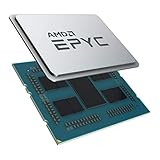


Let us be honest from the first line, because honesty is the whole point of this guide: none of the six processors below is a genuine server CPU. A true server CPU is a Xeon, an EPYC, or a Threadripper PRO — chips designed with ECC (error-correcting) memory support, very high core and thread counts, large cache, many PCIe lanes, and RAS (reliability, availability, serviceability) features built for running 24/7 in a rack. The parts we cover here are mainstream AMD Ryzen and Intel Core desktop processors. They are excellent value, but you should buy them understanding exactly what they are.
So why round them up under ‘server CPUs’ at all? Because they are what people on a budget actually deploy when they build a home lab, a NAS, a Plex or game server, a Proxmox box, or a small always-on machine — and for those light, single-socket roles a capable consumer chip is often plenty. Our job is to be straight with you about the trade-offs. We rank these picks for home-server and light-workstation use, flag that none supports validated server-grade ECC or RAS, and below the at-a-glance table we explain, chip by chip, where each one fits — followed by a buyer’s guide that spells out what real server silicon buys you and when you genuinely need it. Prices here run from around $48 to around $243.
Best ‘Server’ CPUs at a Glance (All Consumer Desktop Chips)
| Processor | Best For (Home-Server Role) | Server-Grade? | Approx Price |
|---|---|---|---|
| AMD Ryzen 7 5800X (8C/16T) | Most threaded home-server work | No — consumer AM4 desktop | around $210 |
| AMD Ryzen 7 5700X (8C/16T) | Efficient 8-core always-on box | No — consumer AM4 desktop | around $220 |
| AMD Ryzen 5 5600X (6C/12T) | Balanced small home server | No — consumer AM4 desktop | around $180 |
| Intel Core i7-9700K (8C/8T) | Reusing an old LGA1151 board | No — consumer LGA1151 desktop | around $243 |
| AMD Ryzen 5 5500 (6C/12T) | Budget light NAS / lab node | No — consumer AM4 desktop | around $84 |
| AMD Ryzen 3 3200G (4C, iGPU) | Tiny low-cost utility server | No — consumer AM4 APU | around $48 |
1. AMD Ryzen 7 5800X 8-core, 16-thread unlocked desktop processor
12


As an Amazon Associate we earn from qualifying purchases. Product prices and availability are accurate as of the date/time indicated.
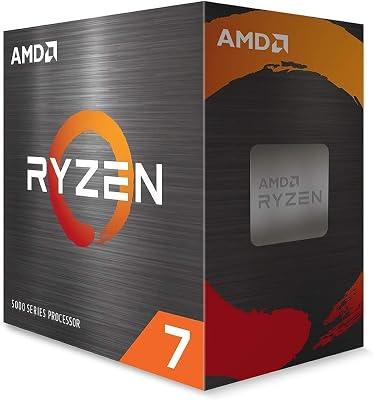
We lead with the AMD Ryzen 7 5800X because, of the six chips here, it offers the most usable threaded grunt for a home server or light workstation — but it is still a consumer AM4 desktop processor, not a server CPU. Its eight cores and sixteen threads handle parallel workloads such as several virtual machines, container stacks, or simultaneous media transcodes far better than the lower-core parts on this list, and at around $210 it is a strong value for an always-on box.
For a home lab, a Proxmox or ESXi node, a busy NAS with extra services, or a small build server, the 5800X has the headroom to keep things responsive. What it does not have is the defining feature of real server silicon: officially validated ECC memory and RAS. Standard Ryzen plus a consumer board does not give you the error-corrected, rack-grade reliability a Xeon or EPYC platform does, so treat it as a capable home-server engine rather than something to put in production for critical data. Within that honest framing, it is the pick with the most thread count for the money.
Pros: Eight cores and sixteen threads, strong multi-VM and transcoding headroom, good value.
Cons: Not a true server CPU — consumer AM4, no validated ECC/RAS, runs warm under load.
2. AMD Ryzen 7 5700X 8-Core, 16-Thread Unlocked Desktop Processor

2
As an Amazon Associate we earn from qualifying purchases. Product prices and availability are accurate as of the date/time indicated.
The AMD Ryzen 7 5700X is the efficiency-minded eight-core pick for an always-on machine — and, again, it is a consumer AM4 desktop chip, not server hardware. It carries the same eight cores and sixteen threads as the 5800X but at a lower TDP, so it runs cooler and draws less power, which genuinely matters for a box that never turns off. At around $220 it trades a little peak performance for better efficiency.
For a home server that sits in a closet humming away all day, lower heat and power add up over months, and the 5700X delivers eight full cores for virtualization, containers and media work without the thermals of the higher-wattage parts. As with every chip here, the caveat is the same: no officially validated server-grade ECC, no RAS, and a consumer platform underneath. If you want eight cores for a tidy, efficient always-on home-server or light workstation and you accept it is not rack-grade, the 5700X is an excellent fit.
Pros: Eight cores at lower TDP, cool and power-efficient for 24/7 use, sixteen threads.
Cons: Not a true server CPU — consumer AM4, no validated ECC/RAS, slightly lower peak clocks.
3. AMD Ryzen 5 5600X 6-core, 12-thread unlocked desktop processor with Wraith Stealth

10
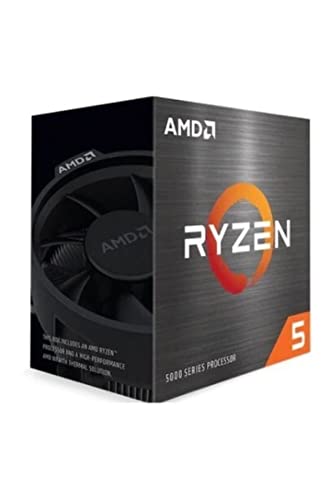
AMD Ryzen 5 5600X 6-core, 12-thread unlocked desktop processor with Wraith Stealth cooler | 6 Cores and 12 Threads, 3.7ghz Base, Up to 4.6ghz Boost, 32MB L3, 65W Tdp, AM4, Boxed Unit Includes Wraith Stealth Cooler
In Stock


As an Amazon Associate we earn from qualifying purchases. Product prices and availability are accurate as of the date/time indicated.
The AMD Ryzen 5 5600X is the balanced choice for a smaller home server, and it even ships with a Wraith Stealth cooler in the box. With six cores and twelve threads it has enough parallelism for a handful of virtual machines, a NAS with a few services, or a modest lab node, while staying affordable at around $180. It is, to be clear, a consumer AM4 desktop processor and not a server CPU.
This is the pick when eight cores would be overkill but four feels tight. The six-core, twelve-thread layout comfortably runs a Plex server, a couple of containers, or a light virtualization host, and the bundled cooler keeps the build cost down. The familiar limitation applies: no validated ECC support, no RAS, and a desktop board rather than a server platform. For a balanced, well-priced home-server brain that does not pretend to be enterprise gear, the 5600X is a sensible middle ground on this list.
Pros: Six cores and twelve threads, bundled cooler, balanced value for a small home server.
Cons: Not a true server CPU — consumer AM4, no validated ECC/RAS, fewer cores than the 5800X.
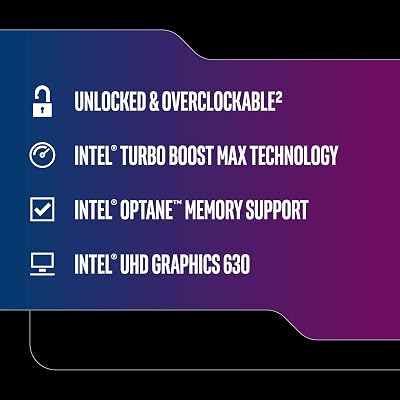
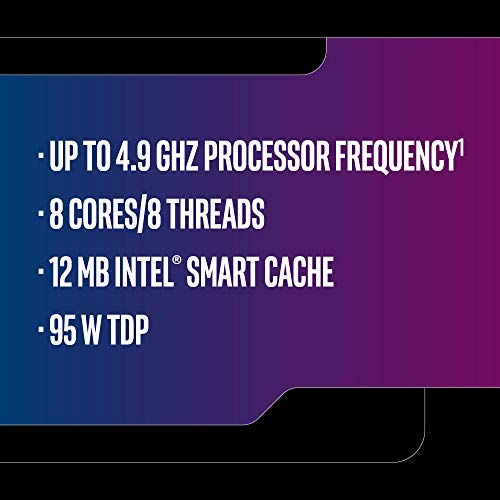
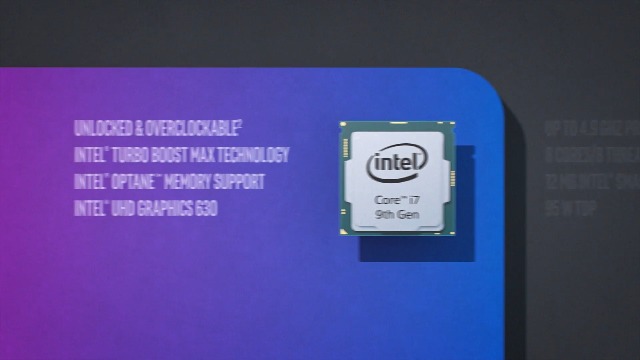
4. Intel Core i7-9700K Desktop Processor, 8 Cores up to 4.9 GHz, unlocked LGA1151
15
Prime
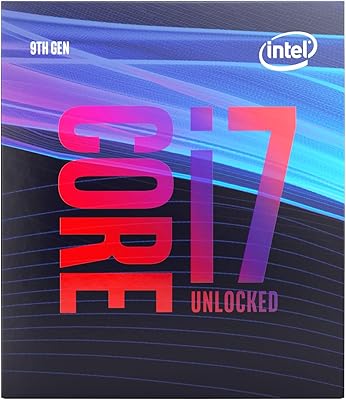
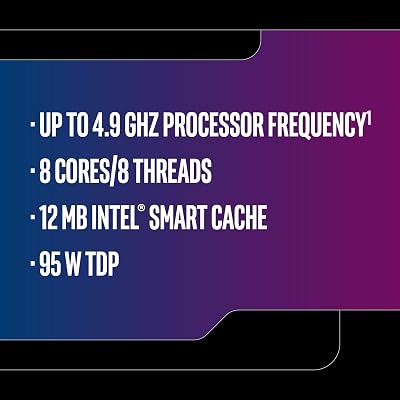
Intel Core i7-9700K Desktop Processor 8 Cores up to 4.9 GHz Turbo unlocked LGA1151 300 Series 95W
In Stock




As an Amazon Associate we earn from qualifying purchases. Product prices and availability are accurate as of the date/time indicated.
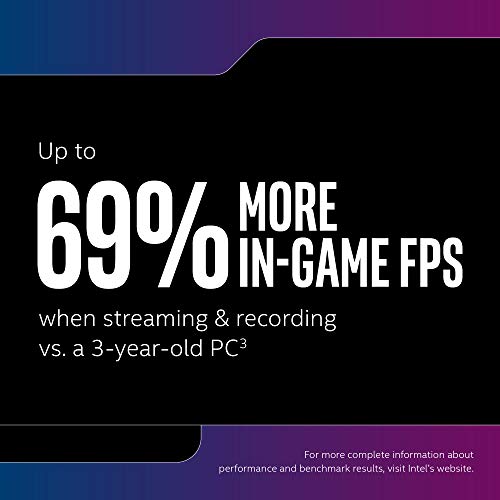
The Intel Core i7-9700K is the pick for one specific situation: you already own an LGA1151 motherboard and want to reuse it. It offers eight cores (though only eight threads, with no Hyper-Threading) and boosts up to 4.9 GHz, which gives strong single-threaded responsiveness for a light server or workstation. At around $243 it is the most expensive chip here, and it is firmly a consumer Intel desktop processor, not a server part.
If you have a compatible 300-series board sitting idle, dropping in a 9700K is a quick way to stand up a capable always-on machine without buying a new platform. Its high clocks suit lightly-threaded server tasks and general responsiveness. But the honest caveats are stronger here than for the Ryzens: eight threads rather than sixteen limit heavy parallel workloads, the LGA1151 platform is end-of-life, and there is no server-grade ECC or RAS. Buy it to breathe life into existing hardware, not as a forward-looking server build.
Pros: Eight cores up to 4.9 GHz, strong single-thread speed, reuses an existing LGA1151 board.
Cons: Not a true server CPU — consumer LGA1151, only 8 threads, end-of-life platform, priciest here.
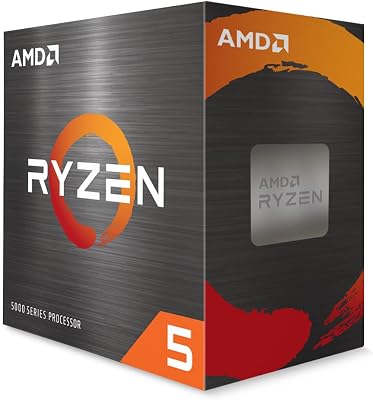
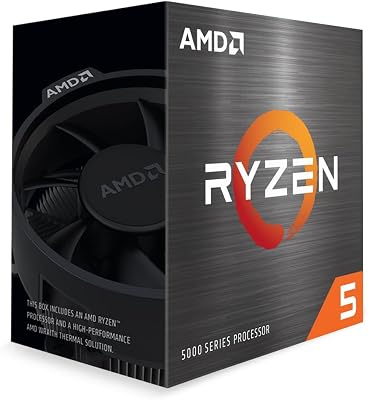
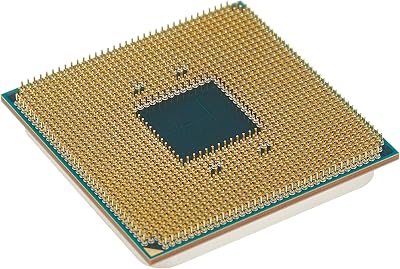
5. AMD Ryzen 5 5500 6-Core, 12-Thread Unlocked Desktop Processor with Wraith Stealth
14
Prime
AMD Ryzen 5 5500 6-Core, 12-Thread Unlocked Desktop Processor with Wraith Stealth Cooler
In Stock




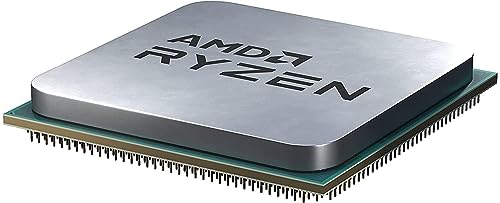

As an Amazon Associate we earn from qualifying purchases. Product prices and availability are accurate as of the date/time indicated.
The AMD Ryzen 5 5500 is the budget light-duty pick, and at around $84 with a bundled Wraith Stealth cooler it is the cheapest six-core on the list. It delivers six cores and twelve threads, which is plenty for a small NAS, a single-purpose service box, or an entry lab node, while keeping the build cost remarkably low. It is a consumer AM4 desktop processor — not a server CPU.
This is the chip to choose when you want real multi-threading on a tight budget and your workload is modest. Six cores comfortably run a file server with a couple of extra services or a low-traffic container host, and the included cooler means you do not pay extra to keep it cool. The trade-offs are the usual ones plus a note specific to this part: it lacks PCIe 4.0 and uses a smaller cache than the X-series, and like all chips here it has no validated ECC or RAS. For an affordable, capable little home-server node with no enterprise pretensions, it is excellent value.
Pros: Six cores and twelve threads, bundled cooler, lowest-cost true multi-threaded pick.
Cons: Not a true server CPU — consumer AM4, no validated ECC/RAS, no PCIe 4.0, smaller cache.
6. AMD Ryzen 3 3200G 4-core unlocked desktop processor with Radeon Graphics
2
As an Amazon Associate we earn from qualifying purchases. Product prices and availability are accurate as of the date/time indicated.
Rounding out the list is the AMD Ryzen 3 3200G, the tiny, ultra-cheap utility pick at around $48 — and the furthest of all from a real server CPU. It is a four-core APU with integrated Radeon graphics, which means you can run a headless or lightly-graphical machine without a discrete GPU. It is a consumer AM4 desktop part, and a modest one at that.
For the smallest always-on roles — a basic firewall or router VM host, a single-service utility box, a Pi-hole-style appliance, or a low-power lab node — the 3200G sips power and costs almost nothing, and its built-in graphics save you a GPU. The honest limits are significant: just four cores and no simultaneous multithreading, a small cache, no PCIe 4.0, and of course no ECC or RAS. This is not a chip for virtualization-heavy or data-critical work. But as a cheap, integrated-graphics brain for a tiny utility server, it earns its place at the bottom of the list precisely because it is so inexpensive.
Pros: Four cores with integrated Radeon graphics, very cheap, no discrete GPU required.
Cons: Not a true server CPU — consumer AM4 APU, only 4 cores, no SMT, no ECC/RAS, weakest here.
How to Choose a CPU for a Server (and When You Need a Real One)
Start by being honest with yourself about the workload, because that single question decides whether any of the chips above will do or whether you need genuine server silicon. If you are building a home lab, a NAS, a media or game server, or a small always-on box for personal use, a capable consumer desktop CPU like the Ryzen 7 5800X or 5700X is frequently all you need. If you are running production services, storing data you cannot afford to silently corrupt, or hosting workloads for others, you should be looking at a real server platform instead.
The single most important feature that separates true server CPUs from everything on this list is ECC memory support — error-correcting memory that detects and fixes bit errors before they corrupt data or crash a long-running process. Xeon, EPYC and Threadripper PRO platforms support and validate ECC end to end; standard consumer Ryzen and Core chips on consumer boards do not provide that validated, rack-grade guarantee. For a 24/7 box that touches important data, ECC alone is a strong reason to step up to proper server hardware.
Cores, threads and platform longevity come next. Server silicon scales to dozens of cores, offers far more PCIe lanes for NVMe arrays and network cards, and adds RAS features for reliability and remote management. Among the consumer chips here, prioritise core and thread count for parallel work — the eight-core, sixteen-thread 5800X and 5700X lead, the six-core 5600X and 5500 are the balanced and budget middle, and the four-core 3200G suits only the lightest duties. Note that the Intel 9700K, despite eight cores, has only eight threads and sits on an end-of-life platform.
Finally, weigh power, cooling and total cost over the machine’s life. An always-on server runs every hour of every day, so the lower-TDP 5700X can save meaningful electricity over a higher-wattage part, and chips that bundle a cooler (the 5600X, 5500 and 3200G here) reduce upfront cost. Decide your workload first, demand ECC and RAS if your data matters, then — if a consumer chip genuinely fits your home-server role — pick the part on this list with the right core count and efficiency for the job. Just never mistake any of them for the real server CPU they are not.
Frequently Asked Questions
Are any of these actually server CPUs?
No. Every processor in this guide is a consumer desktop chip — AMD Ryzen on AM4 or an Intel Core on LGA1151. True server CPUs are Xeon, EPYC or Threadripper PRO, which add validated ECC memory, far higher core counts, more PCIe lanes, and RAS reliability features. We rank these for home-server and light-workstation use only, and we are upfront that none is rack-grade server silicon.
Can I run a home server on a consumer Ryzen or Core CPU?
Yes, very effectively for personal workloads. A NAS, Plex or game server, Proxmox lab node or small always-on box runs well on a chip like the Ryzen 7 5800X or 5700X. The catch is that you give up validated ECC memory and server-grade RAS, so treat consumer-based builds as home-lab or hobby infrastructure rather than something for critical production data.
Why does ECC memory matter for a real server?
ECC (error-correcting) memory detects and corrects bit-level errors automatically, preventing the silent data corruption and random crashes that can plague machines running continuously for weeks. Genuine server platforms (Xeon, EPYC, Threadripper PRO) validate ECC end to end. If your server stores data you cannot afford to lose, that alone is a strong reason to choose real server hardware over any consumer chip here.
Which chip here is best for a small home server, and which is cheapest?
For the most threaded headroom, the eight-core, sixteen-thread Ryzen 7 5800X leads, with the cooler-running 5700X close behind for 24/7 efficiency. For a balanced small server the Ryzen 5 5600X fits, while the Ryzen 5 5500 is the cheapest true multi-threaded option at around $84. The Ryzen 3 3200G is the absolute lowest-cost pick at around $48, but only for the lightest utility roles — and none of them is a real server CPU.
Related Guides
- Best CPUs for Any Build
- Best CPUs for Workstations
- Best AM5 CPUs
- Best Motherboards
- Best NVMe SSDs for Storage
- Best Power Supplies
Affiliate Disclosure: As an Amazon Associate, we earn from qualifying purchases. If you click a link and make a purchase, we may earn a small commission at no extra cost to you. Prices and availability are accurate as of publication and may change.