- Top Pick: SanDisk 32GB Ultra 100MBs SDHC Memory Card | Up to 100MB/s read, Water-resistant design, Impact-resistant build
- Best Value: SanDisk Ultra 64GB Class 10 SDXC UHS-I Memory Card up to 80MB/s (SDSDUNC-064G-GN6IN)
- Premium Choice: 【5-Years Data Recovery】GIGASTONE 128GB SD Card 4K Camera Pro, 150MB/s Read | UHS-I A1 V30 U3 Class 10 SDXC Memory Card 4K UHD Video Compatible with Digital Camera, Full-Sized SD Card, with 1 Mini Case
Nikon bodies are not fussy about brands, but they are particular about what they can read and how fast they can write. A card that is fine for family snapshots can stall a burst of RAW frames or choke on 4K clips, and an old DSLR may not accept the newest capacity tiers at all. Before comparing ten listings, the real decision is how you shoot: casual stills, fast action sequences, or video-heavy projects that need sustained write speed.
This 2026 roundup is for Nikon owners picking a full-size SD card, from entry-level DSLR shooters to mirrorless users filling a secondary slot. The ten cards below span 32GB to 256GB across SanDisk, Lexar, and Gigastone. Everything comes from the product titles: capacity, UHS bus, video speed class, read speeds, and the Nikon mention that appears on two Lexar listings. Where a title is silent, the write-up flags what to confirm in your camera manual. Capacity tiers matter too: 32GB cards are SDHC, while 64GB and above are SDXC, a distinction that decides whether an older body can read them.
Quick Picks
As an Amazon Associate we earn from qualifying purchases at no extra cost to you.




| Product | Best for | Key spec from the title |
|---|---|---|
| SanDisk Ultra 32GB SDHC | Entry-level stills | 32GB, up to 100MB/s, water-resistant |
| SanDisk Ultra 64GB SDXC | Older DSLR bodies | 64GB, Class 10, up to 80MB/s |
| Gigastone 128GB 4K Camera Pro | Budget-tier 4K | 150MB/s read, A1, V30, U3 |
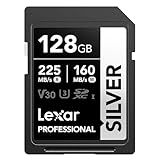
| Lexar 128GB Silver | Nikon-named mid-size card | 225MB/s read, V30, U3, 4K |
| SanDisk Extreme PRO 64GB | Fast bursts, small size | 200MB/s read, 90MB/s write, V30 |
| SanDisk Ultra 128GB | Compact to mid-range bodies | 195MB/s read, U1, Full HD |
| Gigastone 256GB 4K Camera Pro | Large capacity on a budget | 170MB/s, A1, V30, 4K |
| Gigastone 32GB 2-Pack | Spare cards | Two SDHC cards, U1, 100MB/s |
| SanDisk Extreme PRO 256GB | Heavy video and bursts | 200MB/s read, 140MB/s write, V30 |
| Lexar 256GB Silver | Large Nikon-named card | 225MB/s read, V30, U3, 4K |
How to Choose
Check which cards your body accepts
Many Nikon DSLRs take SD, SDHC, and SDXC, but older models can stop at 32GB or lack UHS-I support, which means a 256GB card may simply not be recognized. Some mirrorless bodies pair an SD slot with a CFexpress or XQD slot, and a few professional bodies skip SD entirely. Confirm the slot type and the largest supported capacity in the manual before you shop.
Video speed class for 4K
V30 means a guaranteed minimum sustained write of 30MB/s, which is the usual floor for 4K recording. U3 is the older label for a similar promise. A U1 or Class 10 card is fine for stills and Full HD video, but it is the wrong choice for 4K clips, where recording can stop when the card cannot keep up.
Read speed versus write speed
Big read figures such as 225MB/s speed up transferring photos to a computer. What the camera needs while shooting is write speed, and only the two SanDisk Extreme PRO titles state it. Because every card here uses the UHS-I bus, whose standard ceiling is about 104MB/s, the largest read numbers are best treated as headline figures, and paying extra for them brings little on the camera side.
Capacity, spares, and what to ignore
Smaller cards limit the damage if one fails, so two 64GB cards can beat a single 256GB card for important shoots. Skip marketing on water resistance and recovery programs when comparing speed; they are bonuses, not performance specs. Also ignore the mini cases that come with some listings when you are weighing cards against each other.
The 10 Best Options
SanDisk Ultra 32GB SDHC
A basic 32GB SDHC card with up to 100MB/s read, plus water-resistant and impact-resistant construction in the title. It fits a beginner Nikon DSLR used for family photos and travel stills, where the main goal is simply to have a reliable card in the slot. The SDHC format also keeps compatibility wide for bodies that predate SDXC.
- Strength: 32GB is accepted by almost every camera body.
- Strength: the durability claims suit outdoor carrying.
- Trade-off: no V30 or U3 label, so it is not suited to 4K video.
Skip it if you shoot long bursts or any 4K footage.
SanDisk Ultra 64GB SDXC
A Class 10, UHS-I SDXC card with up to 80MB/s read and the SDSDUNC model code. The modest speed fits older bodies and casual shooters who want twice the room of a 32GB card without paying for headline numbers they will not use.
- Strength: 64GB doubles the capacity of the 32GB option.
- Strength: Class 10 handles Full HD recording.
- Trade-off: the lowest read figure of the ten, so card-to-computer transfers take longer.
Skip it if you offload large shoots often and want faster transfers.
Gigastone 128GB 4K Camera Pro
This SDXC card lists 150MB/s read, UHS-I, A1, V30, U3, and Class 10, with a 5-year data recovery offer and a mini case. It targets budget-tier 4K shooters who still want a V30 label on the card.
- Strength: V30 and U3 at 128GB.
- Strength: the recovery offer and carrying case come with the listing.
- Trade-off: no write speed is stated beyond the V30 class.
Skip it if you want the larger-brand reassurance of a card that names Nikon, or if you would rather see a stated write speed.
Lexar 128GB Silver
The title lists 225MB/s read, 4K, V30, U3, and UHS-I, and names Canon, Sony, and Nikon compatibility along with professional photographers and videographers. It is a straightforward mid-size pick for a Nikon shooter who wants brand and bus speeds spelled out.
- Strength: Nikon is named directly in the title.
- Strength: V30 and U3 cover 4K recording.
- Trade-off: write speed is not listed.
Skip it if you need a published write figure for burst planning. Pairing it with the 256GB version gives a matched set for a two-card routine.
SanDisk Extreme PRO 64GB
Up to 200MB/s read and up to 90MB/s write, UHS-I, V30, U3, C10, with 4K UHD and Full HD support and the SanDisk app for backup and transfer. It is a small card with strong stated speeds, aimed at sports and action work.
- Strength: both read and write speeds are stated.
- Strength: V30 and U3 for 4K.
- Trade-off: 64GB runs out quickly once video is involved.
Skip it if you prefer large capacity on a single card.
SanDisk Ultra 128GB
This Ultra card lists up to 195MB/s read, UHS-I, U1, C10, and Full HD, and the title says it is ideal for compact to mid-range cameras and camcorders. It fits stills-focused Nikon shooters who want ample space.
- Strength: 128GB with a high read figure.
- Strength: the SanDisk app handles backup and transfer.
- Trade-off: U1 only, so there is no V30 guarantee for 4K.
Skip it if you record 4K video or fast bursts of large files, since the U1 class makes no promise at those loads.
Gigastone 256GB 4K Camera Pro
The 256GB version of the Gigastone line: UHS-I, A1, V30, SDXC, 4K UHD, up to 170MB/s, with a mini case and a 5-year recovery offer. It suits video-heavy shoots where capacity matters and the buyer is watching the budget tier.
- Strength: V30 at 256GB.
- Strength: a case and recovery offer are included.
- Trade-off: no write number in the title.
Skip it if you prefer to spread risk across smaller cards.
Gigastone 32GB 2-Pack
Two 32GB SDHC cards, UHS-I, U1, Class 10, Full HD, up to 100MB/s, with two mini cases. It works as a pair of spares for a stills shooter, with one card in the camera and one in the bag.
- Strength: two cards arrive in one purchase.
- Strength: the cases keep them organized.
- Trade-off: U1 and 32GB each, so 4K is out of reach.
Skip it if you need large capacity on one card.
SanDisk Extreme PRO 256GB
Up to 200MB/s read and up to 140MB/s write, UHS-I, V30, U3, C10, 4K UHD, with QuickFlow technology listed. It carries the strongest stated write speed in the group, which is the number a burst shooter cares about most. The QuickFlow wording is a brand feature name, so judge the card by the stated speeds.
- Strength: 140MB/s write is stated in the title.
- Strength: 256GB paired with V30.
- Trade-off: it sits in the premium tier among these ten.
Skip it if you shoot only casual stills.
Lexar 256GB Silver
The larger Lexar listing: 225MB/s read, 4K, V30, U3, UHS-I, with Nikon, Canon, and Sony named. It suits long shoots where a single big card is convenient and fewer swaps are wanted.
- Strength: 256GB with Nikon named in the title.
- Strength: V30 and U3 cover 4K.
- Trade-off: no write number is listed.
Skip it if you would rather use several smaller cards, or if your camera body caps card capacity below 256GB.
Which One Fits Your Situation
Casual stills on an entry-level DSLR
The SanDisk Ultra 32GB or 64GB will do the job, and the 64GB gives extra room for a vacation without any speed overkill. Add the Gigastone 32GB 2-Pack if you like carrying a spare.
Fast bursts and 4K video
The SanDisk Extreme PRO 64GB or 256GB state write speeds directly, which makes them the most predictable picks when sequences and clips are demanding.
Large capacity on a tight budget
The Gigastone 256GB 4K Camera Pro offers V30, a case, and a recovery offer in one listing.
You want Nikon spelled out
The Lexar 128GB or 256GB Silver cards name Nikon in the title, a small but useful signal for a buyer who wants explicit compatibility wording.
Common Mistakes
- Buying a card the camera cannot read, such as a capacity beyond what an older body supports.
- Choosing a U1 card for 4K video and then seeing recording stop.
- Judging cards by read speed alone when the camera depends on write speed.
- Putting a whole trip on one big card instead of rotating a few smaller ones.
- Skipping an in-camera format after moving a card between devices.
Related guides
- Aio Liquid Coolers For High Performance Gaming
- How To Lower Input Delay In Competitive Shooters
- Wireless Gaming Headsets Under 100 For Pc
Frequently Asked Questions
Do all Nikon cameras use SD cards?
No. Many DSLRs do, but some mirrorless and professional bodies use CFexpress or XQD for at least one slot. Check the manual for slot types and capacity limits, and note that every card in this roundup is a full-size SD card rather than a microSD.
What does V30 mean?
It is a video speed class that guarantees a minimum sustained write speed of 30MB/s. It is the usual floor for 4K recording on a camera.
Is a 256GB card too large?
It depends on how you shoot. A big card means fewer swaps, but a failure puts more footage at risk, so many photographers split shoots across two or three smaller cards.
Should I format the card in the camera?
Yes. Formatting in the Nikon body sets up the file structure the camera expects, and it clears the card. Copy files off first, and avoid deleting images on a computer to free space, since an in-camera format is cleaner.