- Top Pick: Lexar 256GB Silver SD Memory Card, 225MB/s Read, 4K, V30, U3, UHS-I | Compatible w/ Canon, Sony, Nikon, Ideal for Professional Photographer, Videographer, Enthusiast, LSDSILV256G-BNNNU
- Best Value: SANDISK 64GB Extreme PRO SD Memory Card, Up to 200MB/s Read Speeds, UHS-I | V30, U3, C10, 4K UHD, Full HD, Up to 90MB/s Write Speeds, Backup + Transfer with SANDISK App – SDSDXXU-064G-GSCIN
- Premium Choice: SANDISK 256GB Extreme PRO SD Memory Card, Up to 200MB/s Read Speeds, UHS-I | V30, U3, C10, 4K UHD, Up to 140MB/s Write Speeds, SANDISK QuickFlow Technology – SDSDXXD-256G-GN4IN
A mirrorless body asks more of an SD card than a point-and-shoot ever did. Burst shooting fills the buffer in seconds, 4K video writes a constant stream of data, and a card that stalls mid-clip can ruin a take. The decision here is therefore about sustained write behavior and capacity, not just the big read-speed number printed on the front of the package.
This guide is for photographers upgrading from a kit card, hobby videographers moving to 4K, and anyone who wants a spare card that fits the slot of a Canon, Sony, or Nikon body. The nine cards below span 32GB to 256GB and include both video-rated and stills-oriented options. Every comment relies on the title text, such as the V30 and U3 labels, so use them to build a shortlist and then check your camera manual for the suggested card class in 2026.
Quick Picks
As an Amazon Associate we earn from qualifying purchases at no extra cost to you.




| Product | Best for | Key spec from the title |
|---|---|---|
| Lexar 256GB Silver | Long 4K shoots | 225MB/s read, V30, U3 |
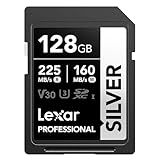
| Lexar 128GB Silver | Everyday 4K and stills | 225MB/s read, V30, U3 |
| SanDisk 256GB Extreme PRO | Sustained video writing | 200MB/s read, up to 140MB/s write, V30 |
| SanDisk 64GB Extreme PRO | Bursts on a smaller card | 200MB/s read, up to 90MB/s write, V30 |
| Gigastone 256GB | Large capacity with recovery | Up to 170MB/s, A1, V30, 5-year data recovery |
| Gigastone 128GB | Backup card for 4K | 150MB/s read, V30, U3, A1 |
| SanDisk 128GB Ultra | Full HD and stills | 195MB/s read, U1, Class 10 |
| SanDisk Ultra 64GB | Light stills use | Class 10 SDXC, up to 80MB/s |
| SanDisk 32GB Ultra | Spare or entry card | Up to 100MB/s, water-resistant |
How to Choose
Match the video speed class to your recording
V30 guarantees a minimum sustained write speed of 30MB/s, which is the usual floor for 4K at moderate bitrates. U3 offers the same 30MB/s floor under the older labeling. U1 and plain Class 10 promise only 10MB/s, which suits stills and Full HD. High-bitrate 4K, such as 10-bit or 120fps modes, may need a faster class, so read the camera manual.
Read speed versus write speed
Big numbers like 225MB/s describe how fast files move to a computer, which helps at the import stage. They do not guarantee how fast the camera can save. When a title lists a write speed, such as up to 140MB/s, treat it as the more relevant number for burst shooting and large raw files.
Capacity and the number of cards
A 64GB card holds a decent day of raw stills but fills quickly with 4K video. Many shooters prefer two or three 128GB cards over one 256GB card, since a failure or loss then affects less footage. Cameras with dual slots can write to both at once, so match the two cards if you can.
UHS-I and what budget cards trim
All the cards here are listed as UHS-I, which tops out around 104MB/s of real bus speed regardless of the label. Bodies with UHS-II slots are able to use faster cards, but those are a separate tier. Budget models cut corners on sustained write speeds and rarely come with extras like recovery software or cases, so check what the listing includes.
The 9 Best Options
Lexar 256GB Silver SD Card
The title lists 225MB/s read, 4K, V30, U3, UHS-I, and compatibility with Canon, Sony, and Nikon, aimed at professionals, videographers, and enthusiasts. The large capacity suits a full day of video or a long trip where offloading is not an option. The Canon, Sony, and Nikon mention in the title signals that it targets mainstream mirrorless bodies from those makers.
- Strength: V30 and U3 labels cover typical 4K recording.
- Strength: The 225MB/s read figure speeds up file transfers to a computer.
- Trade-off: No write speed is stated, so burst performance is unclear from the title.
Skip it if you prefer many smaller cards over one large one, because a single failure would then affect a full day of work.
Lexar 128GB Silver SD Card
The same line in a smaller size, with the identical 225MB/s read, V30, U3, and UHS-I listing. It makes sense for photographers who shoot raw stills with occasional 4K clips and want a mid-capacity card. It also makes a sensible pair with a second identical card in a dual-slot body, since matching cards simplify backup and file naming.
- Strength: V30 and U3 handle 4K without a cap on the card class.
- Strength: Capacity is enough for a long day of stills.
- Trade-off: Like its larger sibling, the write speed is not listed.
Skip it if you record long video clips and need a lot of space, because 128GB of 4K footage disappears faster than most people expect.
SanDisk 256GB Extreme PRO
This card lists up to 200MB/s read, up to 140MB/s write, V30, U3, C10, 4K UHD, and QuickFlow Technology. The stated write speed is the highest in the group, which matters for sustained video and rapid bursts. Buyers who watch the camera’s buffer light during action sequences are the audience for a figure like that.
- Strength: A listed write speed up to 140MB/s is the best stated here.
- Strength: 256GB gives enough room for a long 4K shoot.
- Trade-off: Large capacity concentrates risk in a single card.
Skip it if you would rather split footage across several smaller cards, or if your camera body only writes at slower speeds, in which case the extra headroom goes unused.
SanDisk 64GB Extreme PRO
A smaller Extreme PRO with up to 200MB/s read, up to 90MB/s write, V30, U3, C10, and 4K UHD, plus the SanDisk app for backup and transfer. It suits those who want a fast card for bursts while keeping each card to a modest size. Splitting a shoot across several of these also limits what you lose if one card fails or goes missing.
- Strength: Up to 90MB/s write supports burst shooting.
- Strength: V30 and 4K UHD labeling cover standard video.
- Trade-off: 64GB fills fast with 4K footage.
Skip it if you shoot extended video without a way to swap cards, since 64GB runs out quickly at 4K bitrates.
GIGASTONE 256GB SD Card
The title lists up to 170MB/s, UHS-I, A1, V30, 4K UHD video, a five-year free data recovery offer, and a mini case. It is a large-capacity alternative that adds a protective case in the package. Shoppers who like having recovery coverage on a big card will find the listing reassuring.
- Strength: V30 with 4K UHD support is stated.
- Strength: A five-year data recovery offer and case add value.
- Trade-off: The title does not list a write speed or U3 on this version.
Skip it if you want a more established name for critical shoots, or if you want a stated U3 label and a listed write speed.
GIGASTONE 128GB SD Card
This SDXC card lists 150MB/s read, A1, V30, U3, Class 10, 4K UHD compatibility, a five-year data recovery offer, and a mini case. It works as a backup card for a camera bag, ready to drop in when the main card fills. The included case also protects it in a pocket or pouch.
- Strength: V30 and U3 are both stated, with a case included.
- Strength: Data recovery coverage is listed in the title.
- Trade-off: The 150MB/s read speed is lower than the Lexar and SanDisk Extreme PRO figures.
Skip it if you want the fastest transfers to a computer, because the other V30 cards in this list advertise higher read figures.
SanDisk 128GB Ultra
The title lists up to 195MB/s read, U1, C10, and Full HD, and describes it as ideal for compact to mid-range cameras and camcorders, with the SanDisk app for backup. It suits stills and 1080p video rather than 4K. Owners of an older or entry-level mirrorless body who shoot casually will find the capacity and read speed more than adequate.
- Strength: High read speed for quick imports.
- Strength: 128GB provides room for a day of stills.
- Trade-off: U1 and Full HD labeling mean it is not meant for 4K recording.
Skip it if you shoot 4K video on your mirrorless body, since U1 and Full HD labeling point to lighter video use.
SanDisk Ultra 64GB SDXC
A Class 10 SDXC UHS-I card listed at up to 80MB/s. The sparse title gives few details, but the speed and class suit stills photography with a modest burst rate. It is a straightforward choice for a travel camera that rarely records video.
- Strength: Class 10 and UHS-I cover general stills use.
- Strength: 64GB is plenty for a day of casual shooting.
- Trade-off: No video speed class is listed, so 4K is a risk.
Skip it if you shoot video or large raw bursts, because the title gives no sign it can sustain the writes those modes need.
SanDisk 32GB Ultra SDHC
This SDHC card lists up to 100MB/s read, a water-resistant design, and an impact-resistant build. The small capacity makes it a spare card or a starter option for casual shots. The title emphasizes durability, which can matter if a card sits loose in a pocket or bag.
- Strength: Water-resistant and impact-resistant build.
- Strength: Up to 100MB/s read for easy imports.
- Trade-off: 32GB runs out quickly with raw files or video.
Skip it if you are shooting raw or video regularly, since 32GB offers little room and the SDHC format may limit compatibility with some bodies.
Which One Fits Your Situation
You shoot long 4K clips
The SanDisk 256GB Extreme PRO lists the highest write speed here, and the Lexar 256GB Silver adds V30 and U3 labeling.
You photograph events and weddings
Use several Lexar 128GB Silver cards, which let you rotate cards and avoid putting an entire event on one.
You want a protected backup card
The GIGASTONE 128GB includes a five-year data recovery offer and a case, so it works well in a camera bag.
You mostly take stills with an older body
The SanDisk 128GB Ultra offers Full HD labeling and plenty of room for a day of photos.
Common Mistakes
- Judging a card by read speed alone and ignoring the write speed or video class.
- Putting a 32GB or U1 card in a body used for 4K recording.
- Buying one huge card instead of spreading footage across two or three.
- Skipping a format in the camera after copying files to a computer.
- Ignoring the manual’s suggested card class for high-bitrate video modes.
Related guides
- Combination Smoke And Carbon Monoxide Detectors
- Aio Liquid Coolers For High Performance Gaming
- Graphics Cards For Low Wattage Power Supplies
Frequently Asked Questions
Do I need UHS-II for a mirrorless camera?
Only if your camera has a UHS-II slot and you shoot heavy bursts or high-bitrate video. UHS-I cards like those here work in any compatible SD slot.
What does V30 mean?
V30 means a minimum sustained write speed of 30MB/s. It is a common baseline for 4K video at standard bitrates.
Is 64GB enough?
It suffices for a day of stills, but 4K video will fill it quickly. Carry spares or choose 128GB or more.
Should I format a new card in the camera?
Yes. Formatting in the camera sets up the file structure the body expects and reduces the chance of errors.