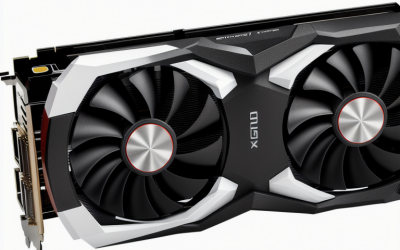
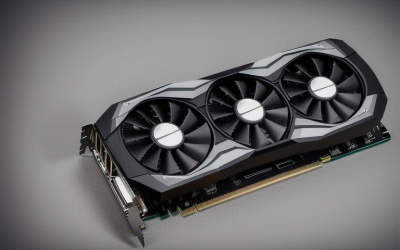
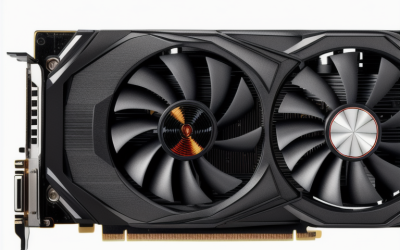
- Top Pick: QTHREE GeForce GT 210 Graphics Card,1024 MB DDR3 64 Bit,HDMI,VGA,Low Profile Video Card for PC,GPU,PCI Express 2.0 x16,SFF,Low Power
- Best Value: 51RISC Radeon RX 550 LP Graphics Card, Low Profile 4GB GDDR5 Small Form Factor Video Card for Gaming 4K Display Desktop/Mini PC SFF Video Card (RX 550 4GB Low Profile)
- Premium Choice: msi Gaming GeForce GT 1030 4GB DDR4 64-bit HDCP Support DirectX 12 DP/HDMI Single Fan OC Graphics Card (GT 1030 4GD4 LP OC)
A prebuilt office tower with a small power supply is the classic home for this kind of upgrade. The supply may have no spare PCIe power cable at all, or the wattage label may be so modest that a mainstream gaming card would trip it the moment a game loads. In that situation the sensible goal is a graphics card that lives entirely on slot power, fits a short, narrow case, and delivers more than the integrated graphics it replaces.
This 2026 guide covers nine low-profile and low-power cards, from basic display adapters to entry-level gaming parts, written for small-form-factor builders, office-PC upgraders and home theater users. Titles rarely list full power draw, so the entries below lean on what the listings say: low profile, small form factor, no power connector in one case, and memory type and size. One power-cable adapter from the original list was left out because it is an accessory, not a graphics card. Always compare the card’s stated power needs with your supply label before buying.
Quick Picks
As an Amazon Associate we earn from qualifying purchases at no extra cost to you.





| Product | Best for | Key spec taken from the product title |
|---|---|---|
| QTHREE GT 210 | Basic display output in tiny PCs | 1024MB DDR3, 64-bit, HDMI and VGA, low profile |
| 51RISC Radeon RX 550 LP | Light gaming in small cases | 4GB GDDR5, low profile, 4K display support |
| MSI GeForce GT 1030 4GD4 LP OC | Quiet single-fan builds | 4GB DDR4, 64-bit, DisplayPort and HDMI, DirectX 12 |
| ARDIYES GT 740 | Multi-monitor office desks | 4GB GDDR5, four HDMI ports, PCIe 3.0 x16 |
| MAXSUN Radeon R5 230 | Legacy monitors with DVI or VGA | 2GB GDDR3, HDMI, VGA and DVI, ITX SFF ready |
| MAXSUN Radeon RX 550 4GB | Compact gaming and HTPC builds | 4GB GDDR5, 128-bit, HDMI and DisplayPort |
| Dell Radeon R5 240 (Renewed) | Replacing an OEM card | 1GB DDR3, DVI and D-Port outputs |
| Vandossy Radeon R7 350 | Supplies with no GPU connector | 4GB GDDR3, 55W TDP, no power connector needed |
| MAXSUN GeForce GT 730 4GB | Quad-screen display walls | 4GB, four HDMI ports, 4K quad monitor |
How to Choose
Know your supply and your slot
A PCIe x16 slot can deliver up to 75 watts to a card, so many entry-level cards need no extra cable. Read the sticker on your power supply for its total wattage and its 12V output line, and open the case to see whether a 6-pin PCIe lead exists. The Vandossy R7 350 title says outright that no power connector is needed, which is the clearest answer for a bare supply, and the 55W TDP it lists is useful as a ceiling figure.
Check the bracket and the case
Low profile cards ship with short brackets, and many include a full-height one in the box. Measure the card slot height and the clearance next to the expansion bay. Some slim cases only fit single-slot cards, and the GT 730 and RX 550 entries here are described as single slot or ITX-friendly. Confirm a slot count rather than assuming a card will slide in.
Match the outputs to your display
Old monitors may need VGA or DVI, and a modern 4K television needs HDMI or DisplayPort. The Dell R5 240 uses DVI and D-Port connectors that may need adapters, while the ARDIYES GT 740 and the MAXSUN GT 730 each add four HDMI ports for multi-screen desks. Do not assume HDMI means 4K at 60Hz; check the card’s supported refresh rate, and remember that driving several 4K screens at once is far more demanding than driving several 1080p ones.
Be realistic about what the memory numbers mean
More memory does not mean faster graphics. A 4GB DDR3 card with a narrow bus can lag behind a 2GB GDDR5 card, so look at memory type and bus width. GDDR5 and 128-bit, as on the RX 550 titles, point to a stronger design than the 64-bit DDR3 cards. Budget models save by using older memory, so older entries here suit office work and video playback more than recent games.
The 9 Best Options
QTHREE GT 210
A low-profile card with 1GB of DDR3 memory on a 64-bit bus, HDMI and VGA outputs, and a PCI Express 2.0 x16 interface. It is built for small form factor PCs that only need a basic display. Think of an older office tower whose integrated output has failed, or a media PC that just has to push a picture to a monitor or television without drawing much power.
- Strength: Low-power, low-profile design suits small cases.
- Strength: HDMI and VGA cover both old and new monitors.
- Trade-off: DDR3 on a 64-bit bus limits it to light desktop duties.
Skip it if you want to play modern games.
51RISC Radeon RX 550 LP
A low-profile RX 550 with 4GB of GDDR5 memory and a small form factor design aimed at gaming and 4K displays. It is one of two RX 550 cards in this group and fits mini PCs. Buyers who want a visible step up from integrated graphics in a compact case, without moving to a card that needs a dedicated cable, are the natural audience.
- Strength: GDDR5 memory is a step up from DDR3 cards in this list.
- Strength: Marketed for 4K displays and small builds.
- Trade-off: The title lists no outputs or power draw, so check those details.
Skip it if the supply is too weak for any GPU upgrade.
MSI GeForce GT 1030 4GD4 LP OC
A 4GB DDR4 card with a 64-bit bus, DirectX 12 support, DisplayPort and HDMI outputs, and a single fan. It targets quiet, compact builds and light gaming. The naming points to a low-profile version of a familiar entry-level design, so it suits someone replacing integrated graphics in a living room PC where fan noise would be noticed.
- Strength: A recognized board partner and a single-fan layout.
- Strength: DisplayPort plus HDMI offers flexible display options.
- Trade-off: DDR4 memory on a 64-bit bus trails GDDR5 designs.
Skip it if you want the strongest performance in this group.
ARDIYES GT 740
A low-profile GT 740 with 4GB of GDDR5, four HDMI ports and silent cooling. It is pitched at office use and home theater, and it targets multi-monitor desks. A receptionist station, a trading-style monitor row or a digital signage player are the kinds of jobs the four-output layout is meant for, rather than gaming.
- Strength: Four HDMI ports drive multi-screen setups.
- Strength: GDDR5 and a PCIe 3.0 x16 interface are listed.
- Trade-off: The GT 740 is an older architecture.
Skip it if you only use one monitor and want modern features.
MAXSUN Radeon R5 230
A 2GB GDDR3 card with HDMI, VGA and DVI, labeled ITX and small form factor ready. It is meant for legacy monitors and slim cases. If your display still has a blue VGA plug or a white DVI port, the output mix removes the need for adapters, which is a quiet convenience in an older office setup.
- Strength: Three common outputs fit older displays.
- Strength: Marketed for ITX and small form factor.
- Trade-off: GDDR3 memory is the oldest type here.
Skip it if you play games.
MAXSUN Radeon RX 550 4GB
A low profile RX 550 with 4GB of GDDR5, 128-bit memory, DirectX 12, PCIe 3.0, plus HDMI and DisplayPort. It is for small gaming PCs and home theater builds. Of the two RX 550 listings, this one names its connectors and its bus width, which makes it easier to judge against a monitor and a case before you order.
- Strength: A 128-bit bus and GDDR5 are the strongest memory specs in the group.
- Strength: HDMI plus DisplayPort cover modern screens.
- Trade-off: The title does not say whether it needs extra power.
Skip it if your supply has no spare connector and you cannot confirm the draw.
Dell Radeon R5 240 (Renewed)
A renewed Dell OEM card with 1GB of DDR3 memory and DVI and D-Port outputs. It replaces a worn or missing card in a Dell desktop. It is the sort of part a technician keeps around for repairs, and the renewed label signals refurbished stock rather than a brand-new board.
- Strength: Made for OEM systems in the first place.
- Strength: Renewed status can suit short-term fixes.
- Trade-off: Output connectors are less common today and may need adapters.
Skip it if you want HDMI or new hardware.
Vandossy Radeon R7 350
A low-profile R7 350 with 4GB of GDDR3, 55W TDP, two HDMI ports, PCIe 3.0 x16 and no power connector needed. It targets small form factor and OEM business PC upgrades. Shoppers with a slim business desktop and a supply label that offers no spare leads will find its title the most reassuring of the group.
- Strength: The title is explicit about no power connector and a 55W TDP.
- Strength: Two HDMI ports support dual displays.
- Trade-off: GDDR3 limits its gaming ability.
Skip it if you want strong 3D performance.
MAXSUN GeForce GT 730 4GB
A single-slot GT 730 with 4GB of memory and four HDMI ports for 4K quad-monitor use. It targets display walls and multi-screen office stations. Dashboards, status screens and shop-floor monitors are a better fit than any kind of 3D work, and the single-slot shape helps in tight cases.
- Strength: Four HDMI outputs on a single-slot card.
- Strength: Suited to many screens at once.
- Trade-off: Memory type and bus are not named in the title.
Skip it if you need DisplayPort or serious frame rates.
Which One Fits Your Situation
The supply has no spare cable
Start with the Vandossy Radeon R7 350, because it is the only listing that states no power connector is needed.
You want light gaming in a small case
Choose the MAXSUN Radeon RX 550 4GB or the 51RISC RX 550 LP, with the MSI GT 1030 as a quiet alternative.
You run several monitors for work
The ARDIYES GT 740 and the MAXSUN GT 730 each provide four HDMI outputs, which is easier than stacking adapters.
You just need to get a picture on a Dell desktop
The Dell Radeon R5 240 or the QTHREE GT 210 get a display working without much fuss.
Common Mistakes
- Reading only the total wattage of a power supply and ignoring whether it has a PCIe power lead.
- Buying a full-height card for a slim case and discovering the bracket will not fit.
- Choosing by memory size alone, when type and bus width matter more.
- Ignoring monitor inputs and ending up with a card that needs adapters.
- Forgetting to uninstall old drivers before switching between AMD and NVIDIA cards.
Frequently Asked Questions
Can I run a graphics card on a small power supply?
Often yes, if the card draws power only from the slot. Cards with no external connector, like the Vandossy R7 350 listing, are designed for this, but confirm the stated draw against your supply.
Is GDDR5 really better than DDR3?
For graphics work, yes. It offers much more bandwidth, which helps games and video, although the bus width also matters.
Do low-profile cards come with both brackets?
Many do, but check the listing. If a full-height bracket is not mentioned, you may need one separately for a standard case.
Will these cards play modern games?
The RX 550 and GT 1030 can handle lighter or older titles at modest settings. The GT 210, R5 230 and similar cards are primarily for display output.