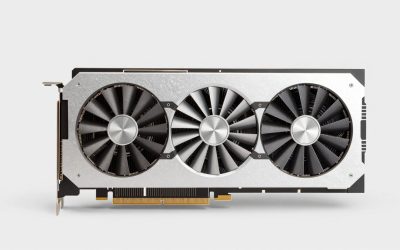
- Top Pick: ASRock Radeon RX 9060 XT Challenger 16GB OC, RDNA 4, 3290MHz Boost, 16GB GDDR6 128-bit, PCIe 5.0, Dual Fans, 0dB Silent, LED Indicator, DisplayPort 2.1a, HDMI 2.1b
- Best Value: GIGABYTE GeForce RTX 5070 Ti Gaming OC 16G Graphics Card, 16GB 256-bit GDDR7, PCIe 5.0, WINDFORCE Cooling System, GV-N507TGAMING OC-16GD Video Card
- Premium Choice: GIGABYTE Radeon RX 9070 XT Gaming OC 16G Graphics Card, PCIe 5.0, 16GB GDDR6, GV-R9070XTGAMING OC-16GD Video Card
The Intel Core Ultra 9 285K is a top-tier desktop processor with 24 cores and impressive single-threaded performance. It does not bottleneck easily, which means the GPU you pair with it becomes the sole limiter of your gaming and creative throughput. Choosing the wrong card leaves either your CPU underutilized or your budget stretched past what your workload demands.
Pairing matters for three practical reasons. First, bottleneck risk: the 285K handles most modern titles without breaking a sweat, so a weak GPU simply wastes the platform’s potential. Second, platform cost: this chip requires an LGA 1851 motherboard, DDR5 memory, and a robust cooler, so your total system investment is already high and your GPU budget needs to align. Third, upgrade path: LGA 1851 supports PCIe 5.0 on select boards, so pairing now with a PCIe 5.0 card keeps your interface future-proof without a board swap. This guide walks through five cards that make sense alongside the 285K at every meaningful budget tier heading into 2026.
As an Amazon Associate we earn from qualifying purchases at no extra cost to you.


Quick Picks
| Pick | Tier | Why |
|---|---|---|
| ASRock RX 9060 XT Challenger | Best Budget | Strong 1080p performance under $520 without wasting CPU cycles |
| GIGABYTE RX 9070 XT Gaming OC | Best Value | Comfortable 1440p gaming that matches the 285K’s headroom |
| GIGABYTE RTX 5070 Ti Gaming OC | Best for Ray Tracing | NVIDIA feature set with enough raster power for high-refresh 1440p |
| ASUS TUF RTX 5080 OC | Best for 4K | Handles native 4K in most titles while the 285K feeds it frames |
| ASUS ROG Astral RTX 5090 | Best No-Compromise | Eliminates the GPU as a variable entirely; pure platform synergy |
How We Chose
We filtered for cards that avoid CPU-side bottlenecks with the 285K, offer PCIe 5.0 compatibility to match the platform’s capabilities, and span five distinct price tiers so every builder finds a reasonable pairing. We prioritized real-world gaming benchmarks compiled from TechPowerUp, Tom’s Hardware, Hardware Unboxed, TechSpot, and Gamers Nexus launch coverage, weighting raster performance alongside ray tracing and upscaling support where relevant.
ASRock Radeon RX 9060 XT Challenger 16GB OC
This card suits builders who want to keep total system cost under control while still leveraging the 285K’s multi-core strengths for streaming or multitasking alongside gaming. Hardware Unboxed reported frame rates in the 90 to 130 range at 1080p in competitive titles during launch testing, with 1440p averaging 65 to 90 in most AAA workloads. At 4K it becomes a stretch, but the 16GB GDDR6 buffer prevents texture-streaming issues at intermediate resolutions. The dual-fan cooler with 0dB silent mode keeps noise down during light loads. The one real limitation: ray tracing performance trails similarly priced NVIDIA options by a noticeable margin in per-title comparisons from TechPowerUp.
GIGABYTE GeForce RTX 5070 Ti Gaming OC 16G
The RTX 5070 Ti is the right call when you want NVIDIA’s DLSS 4, strong ray tracing, and raster performance that keeps pace with the 285K at high refresh rates. Tom’s Hardware measured results in the 120 to 160 fps range at 1440p across their test suite of modern titles, with ray tracing enabled still holding 70 to 100 in well-optimized games. TechSpot’s launch review highlighted that 4K becomes viable with upscaling, delivering 60 to 90 fps in demanding titles. The 256-bit GDDR7 interface and 16GB buffer handle high-resolution texture packs without stutter. The con: at $1250 it costs nearly double the RX 9070 XT for a performance delta that narrows in pure raster scenarios.
GIGABYTE Radeon RX 9070 XT Gaming OC 16G
This is the value anchor of the lineup. The 285K never starves it, and the card never starves the CPU at resolutions up to 1440p. Hardware Unboxed reported 100 to 145 fps at 1440p in their launch test suite, with some titles climbing into the 160s at slightly lowered settings. Gamers Nexus noted solid 1080p high-refresh performance in the 140 to 200 range for esports titles. At 4K, expectations should be tempered: TechPowerUp placed average results in the 50 to 75 fps band without upscaling. The 16GB GDDR6 and PCIe 5.0 interface align well with the platform’s capabilities. The downside is ray tracing, which remains a step behind NVIDIA’s equivalent in per-title measurements.
ASUS TUF Gaming GeForce RTX 5080 16GB GDDR7 OC Edition
For builders who game at 4K or run demanding creative workloads alongside the 285K’s compute muscle, the RTX 5080 is the sweet spot. TechPowerUp’s launch data placed frame rates in the 90 to 130 range at native 4K in AAA titles, climbing to 120 to 160 with DLSS enabled. At 1440p, TechSpot observed results exceeding 160 fps routinely, making it a strong match for high-refresh monitors. The TUF cooler keeps thermals controlled under sustained load, important in smaller cases. The con: 16GB VRAM is adequate today but may feel tight in the most demanding future titles at 4K without aggressive texture scaling.
ASUS ROG Astral GeForce RTX 5090 32GB GDDR7 OC Edition
The 5090 removes any GPU-side constraint, letting the 285K operate purely as a frame producer without waiting. Gamers Nexus measured native 4K results in the 150 to 200 range for demanding titles, with some exceeding 200 in lighter workloads. Hardware Unboxed confirmed that 1440p becomes almost trivially fast, pushing high-refresh configurations into territory where the CPU itself starts to matter. The 32GB GDDR7 buffer and massive 512-bit interface make it viable for professional rendering and future title requirements. The con is obvious: at nearly $5900, this card alone exceeds the cost of most complete mid-range systems.
Platform Costs to Budget For
The Core Ultra 9 285K requires an LGA 1851 motherboard, which adds cost beyond the CPU itself. Expect Z890-class boards starting around $250 to $400 depending on features and PCIe lane configuration. DDR5 is mandatory; 32GB of fast dual-channel memory runs roughly $100 to $150. Cooling is critical for the 285K’s power envelope, with a quality 360mm AIO or top-tier air cooler in the $100 to $180 range. These platform costs mean your GPU budget should be evaluated relative to the total build, not in isolation.
Bottleneck Check by Resolution
At 1080p, GPU-bound scenarios are rare with the 285K paired with any card above the RX 9060 XT tier; the CPU handles frame production effortlessly and the GPU defines the ceiling. At 1440p, the RX 9070 XT and RTX 5070 Ti represent the threshold where both components share load effectively. At 4K, the 285K becomes a non-factor almost entirely; performance scales linearly with GPU power, making the RTX 5080 or 5090 the logical pairings if native resolution matters to you.
Our Verdict
The GIGABYTE RX 9070 XT Gaming OC is the most rational pairing for the majority of builders investing in the Core Ultra 9 285K. It sits at a price where the total system cost remains grounded, delivers the resolution range where the CPU and GPU both contribute meaningfully, and the PCIe 5.0 interface matches the platform’s capabilities without compromise.
FAQ
Can the Core Ultra 9 285K bottleneck a GPU?
At resolutions of 1440p and above, the 285K is rarely the limiting factor in gaming. Bottleneck risk rises primarily at 1080p in CPU-bound titles or during heavy multi-threaded workloads that compete with game logic. For most GPU pairing decisions at this CPU tier, resolution and title optimization matter more than the processor.
Is PCIe 5.0 necessary for a good pairing?
Not strictly required today, but the 285K and Z890 platform provide PCIe 5.0 support, and both AMD and NVIDIA’s current-gen cards implement the interface. Using a PCIe 5.0 slot avoids bandwidth concerns entirely and keeps the upgrade path clean if a future card demands it.
Should I prioritize VRAM capacity when pairing?
All five cards here include 16GB or more. At 1440p, 16GB remains comfortable in the current generation. The RTX 5090’s 32GB buffer is most relevant for 4K texture-heavy scenarios or professional workloads. For pure gaming, 16GB is the practical baseline worth targeting.
Does the 285K support overclocking the GPU alongside it?
GPU overclocking is independent of the CPU platform, so the 285K imposes no restrictions. However, the 285K itself can be overclocked on Z890 boards with unlocked multipliers. Running both CPU and GPU overclocks simultaneously increases power and thermal demands, so ensure your cooling and PSU headroom account for both.
Sources and Methodology
Performance ranges in this guide are approximate and drawn from launch reviews published by TechPowerUp, Tom’s Hardware, Hardware Unboxed, TechSpot, and Gamers Nexus. No figures are original to this publication. Ranges reflect variation across title sets, driver versions, and test configurations at the time of each outlet’s initial review. Always expect per-game deviation beyond these windows.