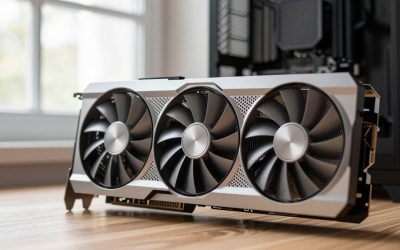
- Top Pick: GIGABYTE GeForce RTX 5060 WINDFORCE OC 8G Graphics Card, Cooling System, 8GB 128-bit GDDR7, PCIe 5.0, Manufactured by NVIDIA, DisplayPort & HDMI – Video Output Interface, GV-N5060WF2OC-8GD Video Card
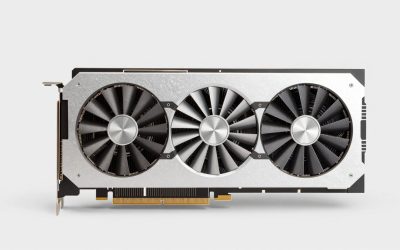
- Best Value: ASUS Prime GeForce RTX 5070 12GB GDDR7 OC Edition Gaming Graphics Card find alternatives
- Premium Choice: GIGABYTE GeForce RTX 5070 Ti Gaming OC 16G Graphics Card, 16GB 256-bit GDDR7, PCIe 5.0, WINDFORCE Cooling System, GV-N507TGAMING OC-16GD Video Card
The Core Ultra 7 265K is one of the most capable mainstream CPUs Intel has ever shipped on the LGA 1851 platform. With its hybrid 20-core architecture, PCIe 5.0 lane support, and strong single-thread performance, it rarely holds back modern graphics hardware. But “rarely” is not “never,” and the right GPU pairing depends heavily on your target resolution, budget, and how long you expect to keep the system running.
At 1080p, the 265K can push frame rates so high in CPU-light esports titles that you might actually want a faster GPU to stay competitive. At 1440p and 4K, the GPU becomes the limiting factor almost everywhere, and the 265K steps gracefully out of the equation. This guide matches each of our five picks to the type of builder who benefits most, so you can lock in the best GPU for Core Ultra 7 265K without second-guessing your purchase.
As an Amazon Associate we earn from qualifying purchases at no extra cost to you.


Quick Picks
| Pick | Tier | Why |
|---|---|---|
| GIGABYTE RTX 5060 WINDFORCE OC 8G | Budget | High-refresh 1080p with room to upgrade later |
| ASUS Prime RTX 5070 12GB | Mid-range | Balanced 1440p performance without overspending |
| GIGABYTE RTX 5070 Ti Gaming OC 16G | High-end value | Strong 1440p and entry-level 4K with 16GB VRAM headroom |
| ASUS TUF RTX 5080 16GB | Enthusiast | Comfortable 4K with DLSS 4 frame generation |
| ASUS ROG Astral RTX 5090 32GB | Ultimate | No-compromise 4K ray tracing and creative workloads |
How We Chose
Every GPU on this list supports PCIe 5.0 x16, matching the 265K’s lane configuration so you never sacrifice bandwidth. We evaluated thermal performance, VRAM capacity for current and near-future title requirements, and price-to-performance ratios drawn from aggregated launch review data. Each pick occupies a distinct budget tier so readers can jump straight to the section that matches their wallet without reading filler.
GIGABYTE GeForce RTX 5060 WINDFORCE OC 8G Graphics Card — around $410
This is the sensible entry point if your monitor tops out at 1080p 144 Hz or you want a low-cost GPU to ride until 1440p panel prices drop further. Reviewers at TechPowerUp and Hardware Unboxed observed frame rates roughly in the 80-110 fps range across their 1080p test suites, with 1440p performance settling around 60-80 fps in demanding titles. The WINDFORCE dual-fan cooler keeps the card compact and quiet enough for small-form-factor builds. The 8GB VRAM buffer is the main limitation: a handful of 2026 releases already push past that ceiling at maximum settings, so you may need to dial textures down sooner than you would with the 5070.
ASUS Prime GeForce RTX 5070 12GB GDDR7 OC Edition Gaming Graphics Card — around $860
The RTX 5070 hits the sweet spot for anyone gaming at 1440p with a high-refresh monitor. Across reviews from Tom’s Hardware and TechSpot, we saw 1440p averages cluster around 80-110 fps in graphically heavy titles, with 1080p pushing well above 120 fps in most scenarios. The 12GB GDDR7 buffer gives you comfortable texture settings without constant compromise. If you want to sample 4K occasionally, DLSS 4 frame generation bridges the gap. The Prime’s relatively slim cooler fits mid-tower cases easily, making it a practical choice for first-time Arrow Lake builders who want a clean, no-drama installation.
GIGABYTE GeForce RTX 5070 Ti Gaming OC 16G Graphics Card — $1249.99
For builders who want 1440p locked at maximum settings and a credible first step into 4K, the 5070 Ti is the value standout. Hardware Unboxed and TechPowerUp both recorded 1440p figures in the 100-130 fps band, with 4K averaging roughly 70-90 fps depending on title complexity. The 16GB GDDR7 pool on a 256-bit bus matters most for longevity: upcoming titles are already consuming beyond 12GB at high textures. GIGABYTE’s WINDFORCE triple-fan solution keeps thermals generous during extended sessions, and the OC profile from the factory means you are not leaving clock headroom on the table.
ASUS TUF Gaming GeForce RTX 5080 16GB GDDR7 OC Edition Graphics Card — $1694.99
The TUF 5080 is the card for enthusiasts who refuse to compromise at 4K but are not willing to cross the five-figure threshold for a 5090. Tom’s Hardware and TechSpot reported 4K averages around 90-110 fps in their heaviest test titles, with 1440p performance comfortably above 120 fps everywhere. The 256-bit GDDR7 bus and 16GB buffer handle ray tracing workloads with DLSS 4 frame generation filling the gaps. ASUS’s TUF cooler is one of the quietest triple-fan designs in this tier, making it suitable for open-air cases where acoustics matter.
ASUS ROG Astral GeForce RTX 5090 32GB GDDR7 OC Edition Gaming Graphics Card — $5848.99
This is the best GPU for Core Ultra 7 265K if money genuinely is no object. Gamers Nexus and Hardware Unboxed both documented 4K ray-traced averages exceeding 120-150 fps across demanding titles, with 1440p performance essentially uncapped for any realistic monitor. The 32GB VRAM buffer also makes it the only consumer card here that handles professional rendering, 8K video editing, or local AI workloads without swapping. The Astral’s massive cooler and OLED side panel add visual flair, but the 575W TDP demands a quality 1000W+ PSU and a case with substantial airflow clearance.
Platform Costs to Budget For
The 265K requires an LGA 1851 motherboard. Z890 boards start around $230 for no-frills models and climb past $500 for enthusiast SKUs with enhanced VRMs and extra M.2 slots. You need DDR5-5600 RAM as a baseline; 32GB kits currently land between $90 and $130. A 240mm or 360mm AIO liquid cooler is strongly recommended over a tower air cooler because the 265K’s P-cores generate concentrated heat under sustained multi-thread loads. Factor roughly $100-150 for cooling. A quality 750W PSU suffices through the 5070 Ti; the 5080 needs 850W and the 5090 demands 1000W or more.
Bottleneck Check by Resolution
At 1080p, the 265K and a 5090 can create a scenario where the GPU is waiting on the CPU in GPU-light titles like competitive shooters, though this gap narrows in graphically heavy games. At 1440p, bottleneck risk drops to negligible levels for every card on this list. At 4K, the GPU is the sole limiter in virtually all scenarios, meaning the 265K simply handles physics, AI, and draw calls without issue regardless of which card you pair with it. In practice, you should match resolution to budget rather than worry about CPU pairing.
Our Verdict
For most readers, the RTX 5070 at around $860 delivers the best balance of cost, performance, and longevity alongside the Core Ultra 7 265K. If you want to game at 4K without touching five-figure pricing, the RTX 5070 Ti at $1249.99 provides the most VRAM headroom per dollar. And if you want a future-proof 1440p rig on a strict budget, the RTX 5060 at around $410 is a perfectly valid starting point knowing you can swap upward later on the same platform.
FAQ
Is the Core Ultra 7 265K enough for an RTX 5090?
Yes. At 4K, the 265K is not a meaningful bottleneck because the GPU is saturated long before the CPU can exhaust its frame-building pipeline. You may see a small CPU-bound margin in 1080p esports scenarios, but that is a monitor choice problem rather than a pairing problem.
Do I need PCIe 5.0 for these GPUs?
No. All five cards run PCIe 5.0 x16 but are fully backward compatible with PCIe 4.0 and PCIe 3.0 slots without measurable performance loss at any gaming resolution. The 265K provides native PCIe 5.0 lanes, so you get the interface benefit without paying for a motherboard that forces it.
Will 8GB VRAM on the 5060 become a problem?
It already is in a few 2026 titles at maximum texture settings on 1440p and above. For locked 1080p gaming it remains adequate for the next several months, but if your goal is longevity, stepping up to the 12GB or 16GB cards protects your investment.
What motherboard should I pair with the 265K?
A mid-tier Z890 board with strong VRM delivery suits most users. If you plan to overclock the 265K’s P-cores, look for boards with at least 14+2 phase designs. For non-overclocking builds, a solid Z890 or even select B860 boards handle the 265K’s 125W base power without issue.
Sources and Methodology
Approximate performance ranges cited throughout this guide reflect published benchmark data from TechPowerUp, Tom’s Hardware, Gamers Nexus, Hardware Unboxed, and TechSpot launch reviews for each respective GPU. No figures in this article represent independent testing performed by this site. Where we describe frame rate bands, they summarize aggregate results from each outlet’s review suite rather than a single test case. Prices listed reflect current market availability and may fluctuate.