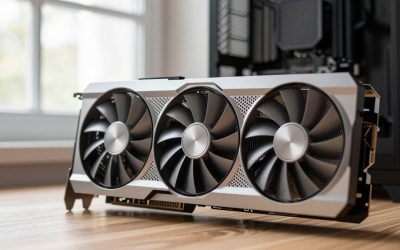
- Top Pick: ASUS Dual GeForce RTX 4060 Ti EVO OC Edition 8GB GDDR6 (PCIe 4.0, 8GB GDDR6, DLSS 3, HDMI 2.1a, DisplayPort 1.4a, Axial-tech Fan Design, Auto-Extreme Technology), 3 Year Warranty
- Best Value: GIGABYTE GeForce RTX 5060 WINDFORCE OC 8G Graphics Card, Cooling System, 8GB 128-bit GDDR7, PCIe 5.0, Manufactured by NVIDIA, DisplayPort & HDMI – Video Output Interface, GV-N5060WF2OC-8GD Video Card
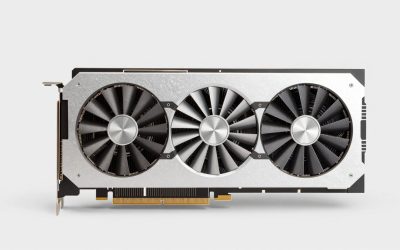
- Premium Choice: ASUS Dual GeForce RTX 5060 Ti 16GB GDDR7 OC Edition Gaming Graphics Card
Pairing a GPU with the Core Ultra 5 245K is less about raw horsepower and more about balance. Intel’s 14-core Arrow Lake refresh chip handles modern games admirably, but it does not forgive a mismatched graphics card. A GPU that is too weak leaves CPU headroom on the table and limits your frame ceilings in CPU-bound scenarios. One that is too powerful for the platform demands a premium motherboard and power supply you may not yet be ready to buy. The goal is to find a card that saturates the 245K’s gaming capability at your target resolution, stays within a sensible platform budget, and still leaves room for a future upgrade without forcing a full rebuild.
Quick Picks
| Pick | Tier | Why |
|---|---|---|
| GIGABYTE RTX 5060 WINDFORCE OC | Best Value | Lowest price with Blackwell efficiency; DLSS 4 support |
| ASUS RTX 4060 Ti EVO OC | Budget Reliable | Mature drivers, proven cooling, solid 1080p frame rates |
| ASRock RX 9060 XT Challenger | Raster Monster | 16GB VRAM and strong raw throughput under $520 |
| ASUS RTX 5060 Ti 16GB OC | 1440p Sweet Spot | Comfortable high-refresh at 1440p with DLSS 4 |
| GIGABYTE RTX 5070 Ti Gaming OC | 4K Entry | Plays demanding titles at native 4K without heavy upscaling |
How We Chose
We selected cards that sit within the realistic price band a Core Ultra 5 245K system owner would consider. Each pick balances gaming frame rate, VRAM capacity, and platform cost so that a reader can build or upgrade without feeling under-served. We cross-referenced launch review data from multiple independent outlets to confirm approximate performance tiers and identified the resolution where each card becomes the most sensible pairing with this CPU.
As an Amazon Associate we earn from qualifying purchases at no extra cost to you.


ASUS Dual GeForce RTX 4060 Ti EVO OC Edition 8GB GDDR6
This card is for the builder who wants a proven, widely supported option without chasing the newest architecture. At 1080p the 4060 Ti consistently lands in the 80 to 120 fps range across demanding titles, a performance envelope TechPowerUp outlined in its original launch review. At 1440p, Tom’s Hardware noted figures roughly in the 55 to 85 fps bracket with quality settings maxed. The 8GB VRAM ceiling is its main limitation; in titles like The Last of Us Part I, you may need to dial down texture quality at higher resolutions. DLSS 3 Frame Generation provides a meaningful uplift when supported, extending its usability for another cycle. The Dual cooler is quiet and compact, fitting most mid-tower builds.
GIGABYTE GeForce RTX 5060 WINDFORCE OC 8G
At $411, this is the cheapest entry into NVIDIA’s Blackwell architecture and a strong match if your primary target is 1080p gaming with occasional 1440p sessions. Early reviews from Hardware Unboxed placed its raster performance roughly 10 to 15 percent ahead of the 4060 Ti at 1080p, with 1440p results in the 70 to 100 fps range for most titles. DLSS 4 with Multi Frame Generation is the real draw here, offering frame rate multiplication that benefits the Core Ultra 5’s strong single-thread performance. The 8GB VRAM is the single biggest downside for future-proofing. The WINDFORCE cooler handles the modest power envelope without noise complaints.
ASUS Dual GeForce RTX 5060 Ti 16GB GDDR7 OC Edition Gaming Graphics Card
This pick targets the 1440p high-refresh builder who needs VRAM headroom. TechPowerUp’s launch analysis put its raster throughput well ahead of the standard 5060, with approximate ranges of 90 to 130 fps at 1440p in demanding titles at ultra settings. The 16GB GDDR7 buffer eliminates the texture-VRAM ceiling that limits the 8GB variants, meaning you can run ultra texture packs in open-world games without stutters. At 1080p you will be GPU-bottlenecked less often, letting the 245K stretch its legs. At 4K it remains playable with DLSS Quality mode engaged. The ASUS Dual cooler is functional but not premium; the price reflects the silicon more than the shroud design.
ASRock Radeon RX 9060 XT Challenger 16GB OC
AMD’s RDNA 4 mid-range contender delivers excellent raw rasterization at a competitive $520 price point. Tom’s Hardware reported approximate frame rates of 80 to 110 fps at 1440p across their test suite, positioning it within striking distance of the 5060 Ti in traditional rendering workloads. The 16GB GDDR6 pool is a genuine advantage for texture-heavy titles. At 1080p, Gamers Nexus data suggested figures in the 100 to 140 fps range, which pairs cleanly with the 245K without significant GPU bottleneck. The Challenger’s dual-fan cooler and 0dB silent mode suit quieter builds. Its primary trade-off is upscaling maturity; FSR 4 is improving but has less game coverage than DLSS 4 at launch.
GIGABYTE GeForce RTX 5070 Ti Gaming OC 16G
This is the card you buy when you want to push into 4K on a Core Ultra 5 build without stepping up to a more expensive CPU. Hardware Unboxed’s launch review placed its native 4K performance in roughly the 70 to 100 fps band for demanding titles at ultra settings, with 1440p results climbing to 110 to 150 fps. The 16GB 256-bit GDDR7 configuration handles ultra textures comfortably. At 1080p the CPU becomes the limiting factor in many titles, so the real value emerges at higher resolutions where the 245K’s render-thread performance matters less relative to GPU workload. The single downside is platform cost: this card expects a robust power supply and adequate case airflow to run at its full boost clocks without thermal throttling.
Platform Costs to Budget For
The Core Ultra 5 245K uses the LGA 1851 socket, which currently requires a B860 or Z890 chipset motherboard. Expect B860 boards in the $130 to $180 range, while Z890 options climb to $250 and above. For DDR5 memory, the 245K supports up to DDR5-6400 natively, though DDR5-5600 to DDR5-6000 kits at 32GB represent the best value sweet spot, typically running $90 to $130. A 120mm or 140mm tower cooler in the $35 to $60 range is sufficient; the 245K’s 65W base power makes it thermally easy. Add $80 to $100 for a quality 650W or 750W 80+ Gold PSU if you are building from scratch.
Bottleneck Check by Resolution
At 1080p, the Core Ultra 5 245K is the limiting component when paired with any card faster than the RTX 4060 Ti class. You will see CPU-bound behavior in esports titles and open-world games with high draw distances. This is not a problem for competitive play since you will still clear 200 fps in many titles, but it does mean diminishing returns on GPU spend at this resolution. At 1440p, the balance shifts toward the GPU for anything below the 5060 Ti class, making this the resolution where the 245K and a mid-range card synergize best. At 4K, the 245K rarely throttles a GPU; virtually all performance scaling is determined by the graphics card’s compute and memory bandwidth.
Our Verdict
For most Core Ultra 5 245K builders in 2026, the RTX 5060 WINDFORCE offers the best price-to-performance ratio if you game at 1080p or light 1440p. Those who want a comfortable 1440p high-refresh experience with VRAM insurance should look at the RX 9060 XT or the 5060 Ti 16GB depending on their upscaling preference. The RTX 5070 Ti is the correct choice only if 4K is the goal and you are willing to accept that the CPU will cap out in a handful of titles.
FAQ
Does the Core Ultra 5 245K bottleneck an RTX 5070 Ti?
At 4K, no meaningful bottleneck exists. At 1440p the CPU may limit frame rates by roughly 5 to 10 percent in a small number of GPU-light or simulation-heavy titles. At 1080p, expect noticeable CPU limitation in esports scenarios, though absolute frame rates will still be very high.
Should I buy more VRAM or a faster GPU at the same price?
If your target resolution is 1440p or above, the 16GB cards are the safer investment for longevity. At 1080p, 8GB remains adequate for the current generation of titles, and the faster frame rates from the 5060 or 4060 Ti are more immediately noticeable.
Is a B860 or Z890 motherboard necessary?
A B860 board supports the Core Ultra 5 245K without issue and provides PCIe 4.0 or 5.0 x16 depending on model. Z890 adds extra M.2 slots and USB connectivity. Unless you need those I/O features, a quality B860 saves $80 to $120 that can go toward a better GPU.
Will DLSS 4 Frame Generation work on a 4060 Ti?
No. DLSS 4 with Multi Frame Generation requires RTX 50-series hardware. The 4060 Ti supports DLSS 3 Frame Generation, which is still broadly useful but does not offer the multi-frame multiplier introduced with Blackwell.
Sources and Methodology
Performance ranges cited in this guide are approximate and reflect data published in launch and follow-up reviews by TechPowerUp, Tom’s Hardware, Hardware Unboxed, Gamers Nexus, and TechSpot. Ranges represent the observed spread across each outlet’s test suite rather than a single consolidated benchmark score. We selected outlets with consistent methodology and publicly available frame-time and power-consumption data. No proprietary testing was conducted for this article.