Star Wars Zero Company landed on PC on August 27, 2026, built by Bit Reactor with support from Respawn Entertainment and published by EA. It is a single-player, turn-based tactics game set in the closing phase of the Clone Wars, with former Republic officer Hawks leading a ragtag squad through a permadeath campaign. Because missions play out in turns from a top-down view, the game asks far less of a graphics card than a fast-paced shooter does, and EA has published full PC requirements that confirm it: the floor is modest, the recommended tier is last-generation flagship hardware, and there is no Ultra tier at all.
That makes the GPU decision refreshingly simple. If your card matches or beats the models EA names in its own spec sheet, you are set. The five picks below are mapped directly to those published targets: one card that is the named minimum, one modern value pick for high settings at 1080p, the exact recommended AMD card, a current-generation Nvidia card in the recommended performance class with DLSS 4 on board, and a flagship-grade Radeon for 4K headroom.
As an Amazon Associate we earn from qualifying purchases.
The official PC requirements
EA and Bit Reactor published the full requirements on the game’s Steam page and in the launch FAQ. Here is what they ask for.
Minimum (1920×1080, 30 frames per second, Low preset):
- Operating system: 64-bit Windows 10 or 11, with Windows 11 recommended
- Processor: Intel Core i5-8400 or AMD Ryzen 5 2600X
- Memory: 16 GB of RAM
- Graphics: Nvidia GeForce GTX 1080, AMD Radeon RX 5600 XT, or Intel Arc B580
- DirectX: Version 12
- Storage: 50 GB of available space
Recommended (2560×1440, 60 frames per second, High preset):
- Operating system: 64-bit Windows 10 or 11, with Windows 11 recommended
- Processor: Intel Core i7-10700K or AMD Ryzen 7 3700X
- Memory: 32 GB of RAM
- Graphics: Nvidia GeForce RTX 3080 or AMD Radeon RX 7800 XT
- DirectX: Version 12
- Storage: 50 GB of available space
What the requirements mean for your GPU choice
Three details in the launch FAQ shape the buying decision. First, Bit Reactor notes that the game leans harder on the processor than on the graphics card, so once your GPU clears the tier you are aiming at, a stronger CPU and the recommended 32 GB of system memory do more for smoothness than another GPU step up. Second, there is no published Ultra specification, which means the recommended tier is the ceiling the developers tuned for: a card at RTX 3080 or RX 7800 XT level is the fully realised version of the game at 1440p. Third, EA specifically advises Intel Arc owners to enable Resizable BAR in their system BIOS, since Arc cards gain meaningful performance from it in this title.
Respawn’s previous release followed a similar pattern of modest minimums and a demanding recommended tier, and our breakdown of the Star Wars Jedi: Survivor PC requirements shows how that game scaled. Zero Company is kinder: it is a tactics game, it caps its ambitions at the High preset, and its recommended GPUs are cards many players already own.
The picks
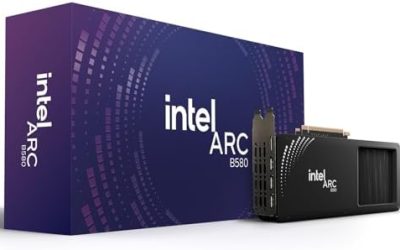
1. Intel Arc B580 Limited Edition — the named minimum

EA lists the Arc B580 by name in the minimum specification, which makes Intel’s own Limited Edition card the most literal answer to the question of what runs this game. The B580 carries 12 GB of GDDR6 memory on a 192-bit bus, well beyond the framebuffer of the GTX 1080 it sits beside in the spec sheet, and it supports DirectX 12 Ultimate, hardware ray tracing, and XeSS upscaling. For 1080p play at the Low preset it is the exact hardware the developers targeted, and its generous memory gives it room to push texture settings higher than the floor preset. Remember the Resizable BAR note above: Arc cards need it switched on.
Specs
- : 12 GB GDDR6, 192-bit memory bus, 456 GB/s bandwidth, 20 Xe cores, boost clock up to 2,670 MHz, 190 W board power, PCIe 4.0 x8, one HDMI 2.1 and three DisplayPort 2.1 outputs, 600 W power supply recommended by Intel.
2. MSI GeForce RTX 5060 Ti 16G Ventus 3X OC — 1080p High and beyond

The 16 GB version of the RTX 5060 Ti is the sensible modern step up from the minimum tier. Its framebuffer doubles the GTX 1080’s, it sits comfortably above the minimum spec in raw throughput, and DLSS 4 with Multi Frame Generation gives it a second lever to pull if you want high settings at 1080p or a move up to 1440p. The Ventus 3X OC is MSI’s triple-fan take on the card, with a factory overclock and a compact dual-slot footprint that suits smaller cases. Of the two RTX 5060 Ti memory configurations, the 16 GB card is the one to buy for a game whose recommended tier assumes a large framebuffer.
Specs
- : 16 GB GDDR7, 128-bit memory bus, 4,608 CUDA cores, extreme performance clock of 2,617 MHz in MSI Center, 180 W power draw, PCIe 5.0 x8, three DisplayPort 2.1a and one HDMI 2.1b output, 600 W power supply recommended by MSI.
3. Sapphire Pulse Radeon RX 7800 XT — the recommended card itself

If you want the precise experience EA describes in the recommended column, this is the card printed in it. The RX 7800 XT targets 2560×1440 at 60 frames per second on the High preset in the publisher’s own testing targets, and Sapphire’s Pulse model delivers it with a dual-fan cooler, a metal backplate, and no lighting extras inflating the package. Its 16 GB of GDDR6 on a 256-bit bus matches the recommended tier’s appetite, and because Zero Company has no Ultra preset above High, this card is not a compromise pick: it is the ceiling, delivered exactly as specified.
Specs
- : 16 GB GDDR6, 256-bit memory bus, 3,840 stream processors, boost clock up to 2,430 MHz, game clock of 2,124 MHz, 263 W board power, two 8-pin power connectors, PCIe 4.0 x16, 700 W power supply recommended by Sapphire.
4. ASUS Prime GeForce RTX 5070 — the current-generation recommended tier

The RTX 5070 is Nvidia’s current card in the performance class the recommended spec describes, trading blows with the RTX 3080 generation while adding the Blackwell feature set: DLSS 4 with Multi Frame Generation, improved ray tracing cores, and GDDR7 memory. ASUS’s Prime model is a clean triple-fan design built to the SFF-Ready guideline, so it fits compact builds as well as full towers. For a player buying new today who wants the recommended 1440p High experience plus headroom for the rest of their library, this is the straightforward choice. Its 12 GB framebuffer is the one figure that trails the RX 7800 XT, though Zero Company’s High preset was tuned around cards of this class.
Specs
- : 12 GB GDDR7, 192-bit memory bus, 6,144 CUDA cores, boost clock of 2,512 MHz, 250 W power draw, single 16-pin power connector, PCIe 5.0 x16, 750 W power supply recommended by ASUS.
5. Sapphire Pulse Radeon RX 9070 XT — headroom for 4K

Nothing in the published requirements demands this much card, and that is exactly the point of the pick. The RX 9070 XT brings RDNA 4 architecture, 16 GB of GDDR6, and FSR 4 upscaling to bear on a game whose top published target is 1440p High, which leaves it with the muscle to run Zero Company at 4K, to drive high-refresh 1440p monitors, and to handle far heavier games between campaigns. Sapphire’s Pulse version keeps the design restrained: triple fans, dual 8-pin power, and a boost clock just under 3 GHz. Buy it if Zero Company is one stop on a wider 4K itinerary rather than the whole journey.
Specs
- : 16 GB GDDR6, 256-bit memory bus, 4,096 stream processors, boost clock up to 2,970 MHz, game clock of 2,400 MHz, 304 W board power, two 8-pin power connectors, PCIe 5.0 x16, 750 W power supply recommended by Sapphire.
How to choose
Match the card to the monitor. At 1080p, the Arc B580 meets the published minimum outright, and the RTX 5060 Ti 16 GB adds high settings and upscaling headroom. At 1440p, the RX 7800 XT is the developers’ own recommended hardware and the RTX 5070 is its current-generation counterpart; pick Radeon for the larger framebuffer, Nvidia for DLSS 4 and Multi Frame Generation. At 4K, or on a high-refresh 1440p panel, the RX 9070 XT is the pick with room to spare. Whatever you choose, pair it with 32 GB of system memory if you can, since the recommended spec doubles the minimum’s RAM figure, and check your power supply against the figures in each card’s spec block before ordering.
FAQ
Does Star Wars Zero Company need a powerful GPU?
No. The minimum spec is a GTX 1080, RX 5600 XT, or Arc B580 for 1080p at the Low preset, and the developers describe the game as leaning harder on the processor than the graphics card.
What GPU does EA recommend for 1440p?
The recommended specification names the Nvidia GeForce RTX 3080 and the AMD Radeon RX 7800 XT, targeting 2560×1440 at 60 frames per second on the High preset.
Is there an Ultra preset to build for?
No Ultra specification has been published. High is the top preset in the official requirements, so a recommended-tier card delivers the full intended experience.
Anything Intel Arc owners should know?
Yes. EA advises Arc users to enable Resizable BAR in the BIOS, and the Arc B580 is named directly in the minimum requirements.
Final verdict
Zero Company’s published requirements make this an easy shortlist. The Intel Arc B580 is the named floor, the MSI RTX 5060 Ti 16 GB is the modern value step, the Sapphire Pulse RX 7800 XT is the recommended card word for word, the ASUS Prime RTX 5070 brings that tier up to the current generation, and the Sapphire Pulse RX 9070 XT covers 4K ambitions. Pick by resolution, keep the processor and memory recommendations in view, and every card here will run Hawks and his squad without drama.
Product and ASIN Reference
| Product | ASIN |
|---|---|
| Intel Arc B580 Limited Edition | B0DPM9923G |
| MSI GeForce RTX 5060 Ti 16G Ventus 3X OC | B0F45Y77MH |
| Sapphire Pulse Radeon RX 7800 XT | B0CFWM1LNH |
| ASUS Prime GeForce RTX 5070 | B0DS6V1YSY |
| Sapphire Pulse Radeon RX 9070 XT | B0DTHMPWFR |