- Top Pick: ASUS Dual NVIDIA GeForce RTX 5060 8GB GDDR7 OC Edition (PCIe 5.0, 8GB GDDR7, DLSS 4, HDMI 2.1b, DisplayPort 2.1b, 2.5-Slot Design, Axial-tech Fan Design, 0dB Technology), 3 Year Warranty
- Best Value: PNY NVIDIA GeForce RTX™ 5060 Ti 16GB OC Dual-Fan Graphics Card | 16GB G7, 128-bit, Boost Speed: 2692 MHz, SFF-Ready, PCIe® 5.0, HDMI®/DP 2.1, 2-Slot, NVIDIA Blackwell Architecture, DLSS 4.5
- Premium Choice: ASUS Dual GeForce RTX 5060 Ti 8GB GDDR7 OC Edition Gaming Graphics Card | PCIe 5.0, HDMI 2.1b, DisplayPort 2.1b, 2.5-slot, Axial-tech Fans, 0dB Technology, Dual BIOS
Shopping for a GeForce card in 2026 means choosing between two generations on the same shelf. Newer RTX 5060 and 5060 Ti boards bring GDDR7 memory, PCIe 5.0, and DLSS 4 features, while older RTX 3060 and 3050 cards remain available with their own memory layouts. The real decision behind the keyword “best Nvidia GeForce graphics cards” is how much video memory, which generation, and which cooler design fits the case and monitor you already own.
This guide is for builders and upgraders putting together a 1080p or 1440p gaming PC, and for anyone swapping out an aging card. Eight GeForce boards are compared using only their listed specs: memory size, bus width, interface, display outputs, cooler design, and boost clocks where given. Nothing here is based on measured frame rates, so treat the comparisons as spec-sheet reading, and verify your power supply and case clearance before ordering.
Quick Picks
As an Amazon Associate we earn from qualifying purchases at no extra cost to you.


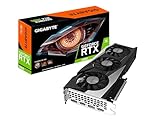

| Product | Best for | Key spec from the title |
|---|---|---|
| ASUS Dual RTX 5060 8GB | 1080p builds with new features | 8GB GDDR7, PCIe 5.0, DLSS 4, 3 year warranty |
| PNY RTX 5060 Ti 16GB | Small cases wanting more memory | 16GB, 128-bit, 2692 MHz boost, SFF-Ready, 2-slot |
| ASUS Dual RTX 5060 Ti 8GB | Quiet mid-range builds | 8GB GDDR7, 0dB technology, Dual BIOS |
| ASUS Dual RTX 5060 Ti 16GB White | White-themed builds | 16GB GDDR7, white edition, 2.5-slot |
| MSI RTX 3050 Ventus 2X 6G | Entry-level or upgrade projects | 6GB GDDR6, 96-bit, Ampere |
| GIGABYTE RTX 5060 WINDFORCE OC 8G | Straightforward new-generation upgrade | 8GB GDDR7, 128-bit, PCIe 5.0 |
| GIGABYTE RTX 3060 Gaming OC 12G | Memory-conscious mid-range | 12GB GDDR6, 192-bit, 3X WINDFORCE fans |
| MSI RTX 3060 Ventus 2X 12G OC | Compact twin-fan 12GB card | 12GB GDDR6, 15 Gbps, 1807 MHz boost |
How to Choose
Video memory and bus width
Capacity sets how high you can push textures, and bus width influences bandwidth. The range here runs from 6GB on the RTX 3050 to 16GB on two 5060 Ti models. For 1080p, 8GB is a common working level; 12GB or 16GB gives breathing room for higher texture settings and 1440p. A narrow 96-bit or 128-bit bus is one of the places budget cards save money, so read it alongside capacity rather than alone. When two cards share a model name but differ in memory size, as the 5060 Ti listings here do, the memory figure in the title is the first thing to compare.
Generation and features
RTX 50 series titles mention PCIe 5.0, GDDR7, and DLSS 4 or DLSS 4.5, the upscaling and frame generation toolkit. RTX 30 series cards are on the Ampere architecture with GDDR6 and PCIe 4.0. Upscaling support is the practical dividing line between generations, so check which version the listing names. If you want the newest upscaling features and a longer support runway, choose from the 50 series; if memory capacity matters more than newer features, an older 12GB card is worth considering.
Cooler size, slots, and ports
Slot thickness decides case fit: the titles list 2-slot, 2.5-slot, and dual-fan or triple-fan layouts. Look for HDMI 2.1b and DisplayPort 2.1b if you run a high-refresh or high-resolution monitor, and note that some titles list only HDMI and DP without versions. Features like 0dB mode, which stops the fans at low load, and Dual BIOS affect noise and flexibility.
Where budget models cut corners
Budget GeForce boards usually limit the memory bus, trim cooler mass, and skip extras such as dual BIOS. Mid-range boards add more memory, stronger cooling, and newer connectivity; premium boards add larger heatsinks and tuned clocks. Warranty terms differ too: only the ASUS RTX 5060 title states a term, so look up coverage for the others on the manufacturer page. Always check your power supply connector and wattage guidance on that page, since titles rarely list them. The same advice applies to monitor connections: confirm the display you own has an input matching the card, or plan for an adapter.
The 8 Best Options
ASUS Dual GeForce RTX 5060 8GB OC
This card pairs 8GB of GDDR7 with PCIe 5.0, DLSS 4, HDMI 2.1b, DisplayPort 2.1b, a 2.5-slot design, Axial-tech fans, 0dB technology, and a three year warranty.
- Strength: current-generation features and modern display outputs.
- Strength: three year warranty is stated.
- Trade-off: 8GB of memory can feel tight for demanding textures.
It suits 1080p builders who want the newest features and a long warranty window without stepping up to a larger memory pool. The 2.5-slot body is worth measuring against neighboring slots in a compact case. Skip it if you want more than 8GB.
PNY GeForce RTX 5060 Ti 16GB OC
PNY lists 16GB of G7 memory on a 128-bit bus, a 2692 MHz boost, SFF-Ready sizing, PCIe 5.0, HDMI and DP 2.1, a 2-slot body, Blackwell architecture, and DLSS 4.5.
- Strength: 16GB of memory in a 2-slot, SFF-Ready size.
- Strength: DLSS 4.5 and Blackwell architecture are named.
- Trade-off: the dual-fan cooler is compact, so airflow in tiny cases still matters.
It suits small-form-factor builds where a 16GB card has to share a short case with a tight airflow path, and it also suits anyone who wants the DLSS 4.5 label in the title. Skip it if you prefer a large cooler.
ASUS Dual GeForce RTX 5060 Ti 8GB OC
This ASUS board carries 8GB of GDDR7, PCIe 5.0, HDMI 2.1b, DisplayPort 2.1b, a 2.5-slot design, Axial-tech fans, 0dB technology, and Dual BIOS.
- Strength: Dual BIOS provides a fallback setting.
- Strength: 0dB mode keeps fans quiet at light loads.
- Trade-off: only 8GB despite the Ti name.
It suits quiet builds with moderate memory needs, such as a living-room PC where fan noise at idle matters. Compare it against the 16GB sibling before buying, since the memory is the main difference. Skip it if you want 16GB.
ASUS Dual GeForce RTX 5060 Ti 16GB White OC
The white edition lists 16GB of GDDR7, PCIe 5.0, HDMI 2.1b, DisplayPort 2.1b, a 2.5-slot design, Axial-tech fans, and 0dB technology.
- Strength: 16GB of GDDR7 with a matching white finish.
- Strength: current display outputs and quiet-mode fans.
- Trade-off: the 2.5-slot body needs case room.
It suits white-themed PCs where the card is visible through a glass panel and a matching color scheme is part of the plan. The 16GB capacity also leaves more room for higher texture settings. Skip it if your case is cramped.
MSI Gaming RTX 3050 Ventus 2X 6G OC
MSI lists NVIDIA RTX 3050 on Ampere, 6GB of GDDR6 at 14 Gbps, a 96-bit bus, a 1492 MHz boost, and HDMI and DP outputs.
- Strength: the entry-tier choice among these boards.
- Strength: dual-fan Ventus design in a simple package.
- Trade-off: 6GB and a 96-bit bus limit headroom.
It suits light gaming and upgrades where an older system needs a modern GeForce card with a modest footprint. The Ampere design supports ray tracing features at the entry level. Skip it for high-resolution play.
GIGABYTE GeForce RTX 5060 WINDFORCE OC 8G
This card lists 8GB of 128-bit GDDR7, PCIe 5.0, DisplayPort and HDMI outputs, and a WINDFORCE cooling system. The model code is GV-N5060WF2OC-8GD.
- Strength: new-generation memory and interface.
- Strength: straightforward cooler branding.
- Trade-off: the title leaves out HDMI and DP versions.
It suits upgraders wanting a simple RTX 5060 from a familiar brand, with the manufacturer model code in the title making it easy to look up the full specification sheet. Skip it if you need the port versions confirmed.
GIGABYTE GeForce RTX 3060 Gaming OC 12G
This REV2.0 board has 12GB of 192-bit GDDR6 and 3X WINDFORCE fans.
- Strength: a wide 192-bit bus with 12GB.
- Strength: triple-fan cooling.
- Trade-off: older Ampere architecture without the newest features.
It suits memory-minded 1080p players who want a large buffer and a cooler with three fans for sustained sessions. Skip it if you want DLSS 4 branding.
MSI Gaming GeForce RTX 3060 Ventus 2X 12G OC V1
MSI lists 12GB of 15 Gbps GDDR6, a 1807 MHz boost, a 192-bit bus, HDMI and DP outputs, PCIe 4, and a Torx twin-fan design on Ampere.
- Strength: 12GB with a 192-bit bus.
- Strength: twin-fan cooler.
- Trade-off: Ampere-era features only.
It suits compact mid-range builds that want 12GB of memory and a twin-fan design rather than a large triple-fan cooler. The V1 designation in the title suggests checking the exact revision when comparing listings. Skip it if you want PCIe 5.0.
Which One Fits Your Situation
You are building a small case
The PNY RTX 5060 Ti 16GB is the one board that lists SFF-Ready and a 2-slot body together with 16GB. Anyone with a bigger case could also consider the white ASUS 16GB card for the same memory in a larger body.
You want the quietest feel
The ASUS Dual RTX 5060 Ti 8GB lists 0dB technology and Dual BIOS, which suit a quiet desktop. The white 5060 Ti 16GB lists 0dB technology as well if you want more memory.
You care about memory over generation
Buyers upgrading from a much older card often care more about memory than labels. The GIGABYTE RTX 3060 Gaming OC 12G and the MSI RTX 3060 Ventus 2X offer 12GB on a 192-bit bus.
You want the newest features on a short list
The ASUS Dual RTX 5060 8GB and the GIGABYTE RTX 5060 WINDFORCE both bring GDDR7 and PCIe 5.0 at the 8GB level. The ASUS adds a three year warranty and DLSS 4 to its title, while the GIGABYTE keeps its listing brief.
Common Mistakes
- Choosing by name alone; an 8GB 5060 Ti and a 16GB 5060 Ti are different buys, and the same goes for 8GB and 16GB variants from different brands.
- Ignoring slot thickness until the card will not fit beside other hardware.
- Forgetting that PCIe 5.0 cards still work in older slots at reduced link speed, which makes the interface a lower priority than memory for most buyers.
- Skipping power supply checks; the listing titles rarely mention connectors, so read the manufacturer sheet before ordering.
- Expecting DLSS 4 features on older cards whose titles name only the Ampere architecture.
Related guides
- Aio Liquid Coolers For High Performance Gaming
- How To Lower Input Delay In Competitive Shooters
- External Hard Drives For Music Production
Frequently Asked Questions
Is 8GB enough for current games?
For 1080p at moderate settings, often yes. Newer games with heavy textures benefit from 12GB or 16GB, which is why the memory figure deserves more attention than the model number.
What does 0dB mean?
The fans stop at low load, reducing noise during light tasks. It does not mean the card is silent under load, and the fans spin up once temperatures rise.
Is PCIe 5.0 required?
Not strictly. The cards use the slot you have, though older slots may run at a lower link speed. Check that the motherboard has a free x16 slot with enough clearance for a 2.5-slot cooler.
Is a 12GB RTX 3060 still sensible?
It remains a memory-rich option, with 12GB on a 192-bit bus in both listings here, though it lacks the 50 series feature set. Buyers who value longer software support may lean toward the newer boards.