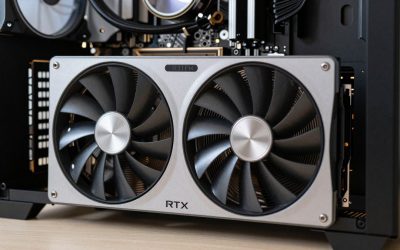
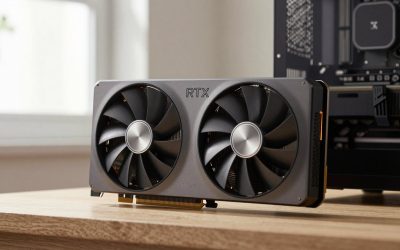
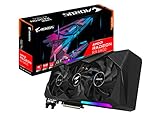
- Top Pick: GIGABYTE AORUS Radeon RX 6800 Master 16G Graphics Card, MAX-Covered Cooling, 16GB 256-bit GDDR6, GV-R68AORUS M-16GD Video Card
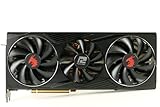
- Best Value: PowerColor Red Dragon AMD Radeon RX 6800 Gaming Graphics Card with 16GB GDDR6 Memory, Powered by AMD RDNA 2, Raytracing, PCI Express 4.0, HDMI 2.1, AMD Infinity Cache (Renewed)
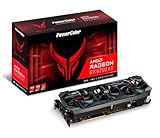
- Premium Choice: PowerColor Red Devil AMD Radeon RX 6750 XT Graphics Card with 12GB GDDR6 Memory
The Radeon RX 6800 is the better card for most buyers: it is roughly 11-18% faster at 1440p in published reviews, carries 16 GB of VRAM instead of 12 GB, and uses the same 250 W power budget, so the RX 6750 XT only makes sense when it is clearly cheaper or is the only one of the two available. Although the RX 6750 XT launched about 16 months later, it is a refreshed RX 6700 XT, not a successor to the RX 6800, and calling it an upgrade would be misleading.
Both cards belong to AMD’s RDNA 2 family, which is now two generations old. The current Radeon line is the RX 9000 series (RX 9060 XT, RX 9070, RX 9070 GRE, RX 9070 XT), so anyone weighing these two is almost always shopping on the used or clearance market. That makes price per frame and VRAM headroom more important than launch-day positioning.
As an Amazon Associate we earn from qualifying purchases at no extra cost to you.
Why a Newer Name Does Not Mean a Faster Card
The RX 6800 uses the large Navi 21 chip with 3840 stream processors on a 256-bit bus. The RX 6750 XT uses the smaller Navi 22 chip with 2560 stream processors on a 192-bit bus. AMD pushed the RX 6750 XT to a much higher 2600 MHz boost clock and paired it with faster memory, but clock speed cannot fully replace a 50% larger shader array. The higher clocks are also why the smaller chip ends up with the same 250 W rating as the bigger one, which hurts its efficiency.
Specification Comparison
| Specification | Radeon RX 6800 | Radeon RX 6750 XT |
|---|---|---|
| Architecture | RDNA 2.0 | RDNA 2.0 |
| Release date | 28 October 2020 | 3 March 2022 |
| Launch MSRP | $579 | $549 |
| Stream processors | 3840 | 2560 |
| Boost clock | 2105 MHz | 2600 MHz |
| Process | 7 nm | 7 nm |
| Typical board power | 250 W | 250 W |
| Memory | 16 GB GDDR6 | 12 GB GDDR6 |
| Memory bus | 256-bit | 192-bit |
| Memory bandwidth | 512.0 GB/s | 432.0 GB/s |
| L2 / Infinity Cache (L3) | 4 MB / 128 MB | 3 MB / 96 MB |
| Interface | PCIe 4.0 x16 | PCIe 4.0 x16 |
| Power connectors | 2x 8-pin | 1x 6-pin + 1x 8-pin |
| Length / width (reference) | 267 mm / 2-slot | 267 mm / 2-slot |
| Display outputs | 1x HDMI, 2x DisplayPort, 1x USB Type-C | 1x HDMI 2.1, 3x DisplayPort 1.4a |
Gaming Performance: Raster and Ray Tracing
Rasterized games
According to TechPowerUp’s review of an MSI RX 6750 XT Gaming X Trio, the RX 6800 was about 11% faster at 1440p, and that comparison already used a factory-overclocked RX 6750 XT. Tom’s Hardware’s GPU benchmarks hierarchy shows a similar picture: in its 2022-2024 test suite the RX 6800 leads by roughly 11% at 1080p ultra, about 15-16% at 1440p ultra and around 18% at 4K ultra. At 1080p medium the gap shrinks to a few percent because both cards run into CPU limits.
In practical terms, if the RX 6750 XT averages somewhere in the 70s fps in a demanding modern game at 1440p high settings, the RX 6800 tends to land in the mid-to-high 80s. Exact frame rates vary heavily with game, settings, CPU and driver version, so treat these as broad ranges rather than guarantees.
Ray tracing
RDNA 2 was AMD’s first architecture with hardware ray tracing, and neither card is strong at it. The wider chip still matters: Tom’s Hardware’s ray tracing results put the RX 6800 roughly 19-22% ahead of the RX 6750 XT at 1080p and 1440p ultra. Even so, heavy ray traced titles push both cards toward the 25-40 fps range at 1440p without upscaling, so ray tracing is a “nice extra at 1080p” feature here, not a reason to buy either card.
Upscaling and frame generation
Both cards have identical feature support. They run FSR 3.1 upscaling and FSR 3 frame generation in supported games, and both can use AMD Fluid Motion Frames at the driver level. FSR 4 launched only for the RX 9000 series; AMD has announced official FSR 4.1 support for RDNA 2 cards for early 2027, with community testing of the INT8 path suggesting a noticeable performance cost compared with FSR 3. Because the feature set is the same, upscaling does not change the ranking: the RX 6800 stays ahead.
VRAM: 16 GB vs 12 GB
The VRAM gap is the RX 6800’s longest-lasting advantage. As a rough guide for current games:
- 1080p high/ultra: about 8-10 GB is usually enough; both cards are comfortable.
- 1440p ultra with high-resolution textures: 10-12 GB is common, and a few recent releases go beyond 12 GB. The RX 6750 XT sits right at the edge.
- 4K or heavy ray tracing: 12-16 GB, where the RX 6800’s extra 4 GB prevents texture downgrades or stutter.
Twelve gigabytes is still a reasonable amount in 2026, much safer than the 8 GB found on many entry-level cards. The difference is that the RX 6800 should keep ultra textures available for longer.
Price per Frame: A Worked Calculation
Using launch prices and the 1440p ultra averages from Tom’s Hardware’s 2022-2024 hierarchy (about 89 fps for the RX 6800 and about 77 fps for the RX 6750 XT):
- RX 6800: $579 / 89 fps = about $6.50 per frame
- RX 6750 XT: $549 / 77 fps = about $7.10 per frame
At launch pricing the RX 6800 delivered about 9% better value despite costing $30 more. The same logic applies to used prices: the RX 6800 is the better deal unless it costs more than roughly 15% above the RX 6750 XT. Used listings tend to fall in broad ranges such as roughly $250-$330 for an RX 6800 and roughly $200-$270 for an RX 6750 XT, depending on model, condition and region.
Power, PSU and Case Fit
Both cards are rated at 250 W, so PSU sizing is the same. A simple formula is GPU power plus CPU power plus about 150 W of headroom:
- 250 W (GPU) + 125 W (typical gaming CPU) + 150 W = about 525 W
A quality 550-650 W unit covers either card, and AMD’s own guidance for this class was 650 W. The connector difference is minor: the RX 6800 reference design uses two 8-pin plugs, while the RX 6750 XT uses one 6-pin and one 8-pin, so check that your PSU has the right cables before buying a used card. Factory-overclocked partner models may add a third connector or draw more power.
Reference cards measure 267 mm and occupy two slots, which fits most mid-tower cases. Many partner versions of both cards are longer and thicker (often 2.5 to 3 slots), so measure the case clearance for the specific model you are considering. Used buyers should also ask whether a card was used for mining and check fan noise and temperatures, since these cards are now several years old.
Which One to Pick by Resolution and Budget
| Situation | Better pick | Why |
|---|---|---|
| 1080p high-refresh, tight budget | RX 6750 XT | The gap shrinks to a few percent when CPU-bound; take it if it is clearly cheaper. |
| 1440p ultra, keeping the card 3+ years | RX 6800 | About 11-18% faster and 4 GB more VRAM. |
| 4K with upscaling | RX 6800 | Wider bus, larger cache and 16 GB handle high resolutions better. |
| Ray tracing curiosity | RX 6800 | Roughly 20% faster in RT, though both are weak. |
| PSU with only 6-pin + 8-pin cables | RX 6750 XT | Matches reference connector layout without adapters. |
| Same price for both | RX 6800 | No scenario where the RX 6750 XT wins on equal money. |
How These Compare With Current Cards
Before buying either one, it is worth comparing against new current-generation cards at similar money. The RX 9060 XT 16GB and Intel Arc B580 offer modern features such as FSR 4 or XeSS frame generation, full warranties and lower power draw. An older RDNA 2 card mainly makes sense when its used price undercuts those options meaningfully, and in that context the RX 6800 is the stronger long-term pick of the two.
Frequently Asked Questions
Is the RX 6750 XT faster than the RX 6800?
No. Published reviews place the RX 6800 roughly 11-18% ahead at 1440p and further ahead at 4K. The RX 6750 XT only gets close at 1080p in CPU-limited games. Its newer release date reflects a refresh of the RX 6700 XT, not a higher tier.
Is 12 GB of VRAM enough in 2026?
For 1080p and most 1440p gaming, 12 GB is still adequate. A handful of recent games can exceed it at 1440p or 4K with maximum textures, which forces a texture setting reduction. The RX 6800’s 16 GB gives more margin for future releases.
What power supply do these cards need?
Both are rated at 250 W, so a good 550-650 W power supply is enough for a typical gaming build. The RX 6800 reference card needs two 8-pin connectors, while the RX 6750 XT needs one 6-pin and one 8-pin. Overclocked partner models may need more.
Can these cards use FSR 4?
Not officially yet. FSR 4 launched for RX 9000 cards, and AMD has announced FSR 4.1 support for RDNA 2 in early 2027. Today both cards run FSR 3.1 upscaling and FSR 3 frame generation in supported games.
Should I buy either one over an RX 9060 XT?
Only if the used price is clearly lower. The RX 9060 XT brings newer features, a warranty and better efficiency. A used RX 6800 at a meaningful discount remains a strong raster performer with 16 GB of VRAM.