

- Top Pick: GIGABYTE PowerColor Red Devil AMD Radeon™ RX 6900 XT Gaming Graphics Card with 16GB GDDR6 Memory, Powered by AMD RDNA™ 2, Raytracing, PCI Express 4.0, HDMI 2.1, AMD Infinity Cache
- Best Value: GIGABYTE Radeon RX 6900 XT Gaming OC 16G Graphics Card, WINDFORCE 3X Cooling System, 16GB 256-bit GDDR6, GV-R69XTGAMING OC-16GD Video Card
- Premium Choice: ASUS TUF Gaming NVIDIA GeForce RTX 3070 Ti OC Edition Graphics Card (PCIe 4.0, 8GB GDDR6X, HDMI 2.1, DisplayPort 1.4a, Dual Ball Fan Bearings, Military-Grade Certification, GPU Tweak II) (Renewed)
The RX 6900 XT is the better gaming card for most buyers: it is clearly faster in rasterized games at 1440p and 4K and has double the VRAM at 16 GB, which keeps it relevant far longer than the 8 GB RTX 3070 Ti. The RTX 3070 Ti only makes sense if ray tracing and DLSS matter more to you than raw frame rate and memory, or if it is substantially cheaper on the used market.
On launch pricing these cards were not rivals. The RX 6900 XT was AMD’s $999 RDNA 2 flagship, while the RTX 3070 Ti launched in mid-2021 at $599 as a GDDR6X refresh of the RTX 3070. In 2026 they share the same used-market price brackets far more often, which is why buyers compare them now.
As an Amazon Associate we earn from qualifying purchases at no extra cost to you.

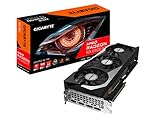


Core Specifications
| Specification | Radeon RX 6900 XT | GeForce RTX 3070 Ti |
|---|---|---|
| Architecture | RDNA 2.0 | Ampere |
| Release date | 28 October 2020 | 31 May 2021 |
| Launch MSRP | $999 | $599 |
| Shaders | 5120 stream processors | 6144 CUDA cores |
| Boost clock | 2250 MHz | 1770 MHz |
| Process | 7 nm | 8 nm |
| TDP | 300 W | 290 W |
| VRAM | 16 GB GDDR6 | 8 GB GDDR6X |
| Memory bus | 256-bit | 256-bit |
| Bandwidth | 512.0 GB/s | 608.3 GB/s |
| Cache | 4 MB L2 + 128 MB Infinity Cache | 4 MB L2 |
| Interface | PCIe 4.0 x16 | PCIe 4.0 x16 |
| Power connectors | 2x 8-pin | 12-pin on Founders Edition; partner cards usually 2x 8-pin |
| Length / width (reference) | 267 mm, 3-slot | 267 mm, 2-slot |
| Display outputs | 1x HDMI 2.1, 2x DisplayPort 1.4a, 1x USB Type-C | 1x HDMI, 3x DisplayPort |
The RTX 3070 Ti has more raw memory bandwidth from GDDR6X, but the RX 6900 XT’s 128 MB Infinity Cache more than compensates in games. The VRAM line is the one that matters most for a card bought in 2026.
Raster Performance: A Tier Apart
In TechSpot/Hardware Unboxed’s RTX 3070 Ti launch review, the 3070 Ti trailed the RX 6800 XT by about 18% at 1440p and 22% at 4K, and was only around 7% faster than the regular RTX 3070. The RX 6900 XT sits above the 6800 XT, so the gap to the 3070 Ti is larger again. Combining published reviews, the RX 6900 XT is roughly 20-30% faster on average in rasterized games, with the lead growing at 4K. Some aggregate comparison sites show smaller margins in CPU-limited test mixes, which is why a range is the fairest summary.
Approximate expectations, varying with settings, CPU and game patch:
- 1080p: both cards are frequently CPU-limited. The 6900 XT still leads, but many games run well above 100 fps on either.
- 1440p: the 6900 XT’s natural home. Demanding AAA titles at high settings often land around 90-130 fps, with the 3070 Ti noticeably lower.
- 4K: the 6900 XT handles many games at 60 fps or close to it at high settings; the 3070 Ti more often needs DLSS and can run short of memory.
Ray Tracing: Nvidia’s Ground
Turn ray tracing on and the situation changes. Ampere’s second-generation RT cores are considerably stronger than RDNA 2’s first-generation ray accelerators. In RT-heavy games, the RTX 3070 Ti matches or beats the RX 6900 XT, and with DLSS enabled it can pull clearly ahead. The catch is VRAM: ray tracing raises memory use, and in several recent games the 3070 Ti’s 8 GB becomes the limiting factor at 1440p with RT and high textures, forcing settings down.
Upscaling and Frame Generation
- RTX 3070 Ti: DLSS Super Resolution with the DLSS 4 transformer model, which generally gives the best image quality of the upscalers available to these two cards. DLSS Frame Generation is not supported; that requires RTX 40 or newer.
- RX 6900 XT: FSR 2 and FSR 3, including FSR 3 frame generation, plus AMD Fluid Motion Frames at the driver level. FSR 4 is aimed at RX 9000 cards, so the 6900 XT relies on the older, less sharp FSR versions.
- Both: can use FSR 3 frame generation in supported games, and XeSS through its DP4a path.
DLSS quality partly offsets the 6900 XT’s raster lead. At 1440p with DLSS Quality, a 3070 Ti can approach the 6900 XT’s native frame rate with comparable image quality. But that only works while the game fits in 8 GB.
VRAM: 16 GB vs 8 GB
This is the decisive factor for a card bought today. A practical VRAM guide for current releases:
- 1080p high: 8 GB usually works, with exceptions at ultra textures.
- 1440p high/ultra: 10-12 GB is comfortable. The 3070 Ti often needs lower texture settings in newer games.
- 4K or ray tracing at 1440p: 12-16 GB is preferable. Only the 6900 XT has that headroom.
The RTX 3070 Ti is a fast GPU paired with too little memory for its class, which has been one of the most consistent criticisms of it since launch. The RX 6900 XT does not have that problem.
Power, PSU and Case Fit
Despite their differing performance, both cards draw a lot of power: 300 W for the RX 6900 XT and 290 W for the RTX 3070 Ti. The 3070 Ti’s GDDR6X raises its draw for its performance level, making the 6900 XT the more efficient card per frame. Connector notes: the 6900 XT uses two 8-pin connectors, the RTX 3070 Ti Founders Edition uses Nvidia’s 12-pin with an adapter, and most partner 3070 Ti cards use two 8-pin connectors.
PSU sizing with a typical gaming CPU:
- RX 6900 XT: 300 W + ~125 W + ~150 W headroom = about 575 W, so a quality 650-750 W unit.
- RTX 3070 Ti: 290 W + ~125 W + ~150 W = about 565 W, so a quality 650-750 W unit.
Physical fit differs: the reference RX 6900 XT is a 3-slot card at 267 mm, while the reference 3070 Ti is 2-slot at the same length. Many partner 6900 XT models are longer and thicker still, so small cases and some micro-ATX builds favour the 3070 Ti.
Cost per Frame
Using an index of RX 6900 XT = 100 and RTX 3070 Ti = about 80 (midpoint of a 20-30% raster gap):
- RX 6900 XT at launch: $999 / 100 = about $9.99 per point
- RTX 3070 Ti at launch: $599 / 80 = about $7.49 per point
At launch the 3070 Ti was better value. In the used market the picture flips: a used RX 6900 XT usually sells for around $320-$400, while a used RTX 3070 Ti tends to go for around $220-$290. If the 6900 XT costs no more than about 25% extra, it matches the 3070 Ti on raster value and adds twice the VRAM.
Used-Market Condition Checks
Both cards were widely used for cryptocurrency mining during 2021. On the RTX 3070 Ti, GDDR6X memory runs hot, so ask for memory junction temperatures under load; very high readings suggest worn thermal pads that may need replacing. On the RX 6900 XT, check the hotspot temperature and fan behaviour, as some reference coolers run warm after years of use. A short benchmark run showing stable clocks is a reasonable request from any seller.
Pick This If
| Situation | Pick |
|---|---|
| 1440p or 4K, mostly raster games | RX 6900 XT |
| Long ownership, new AAA releases | RX 6900 XT |
| Ray tracing at 1080p with DLSS | RTX 3070 Ti |
| Small case needing a 2-slot card | RTX 3070 Ti |
| Nvidia-specific software (CUDA, NVENC workflows) | RTX 3070 Ti |
| Prices within ~25% of each other | RX 6900 XT |
For buyers considering a new card at similar money, the Radeon RX 9070 and GeForce RTX 5070 offer stronger ray tracing, newer upscaling and warranty, and are worth checking before settling on a used high-end card from 2020-2021.
Frequently Asked Questions
Is the RX 6900 XT faster than the RTX 3070 Ti?
Yes, in rasterized games it is roughly 20-30% faster on average according to published reviews, with the biggest lead at 4K. In ray-traced games, the RTX 3070 Ti is competitive or faster, especially with DLSS enabled.
Is 8 GB enough on the RTX 3070 Ti in 2026?
For 1080p and many 1440p games at medium-high textures, it is workable. In newer demanding releases, especially with ray tracing, 8 GB often forces lower texture settings. The RX 6900 XT’s 16 GB avoids that.
What power supply do I need for either card?
A quality 650-750 W power supply covers either card with a mainstream CPU. The 6900 XT needs two 8-pin connectors, and most partner RTX 3070 Ti cards also use two 8-pin connectors.
Does the RTX 3070 Ti support DLSS 4?
It supports DLSS 4 Super Resolution using the transformer model. It does not support DLSS Frame Generation or Multi Frame Generation, which need RTX 40 or RTX 50 hardware.
Will the RX 6900 XT fit in my case?
The reference card is 267 mm long and occupies three slots. Many partner versions are larger, so measure GPU length and slot clearance before buying. Compact cases may be better suited to a 2-slot RTX 3070 Ti.
Ready to decide? Our #1 pick for 2026 is the Architecture.
Live price & availability on Amazon.












