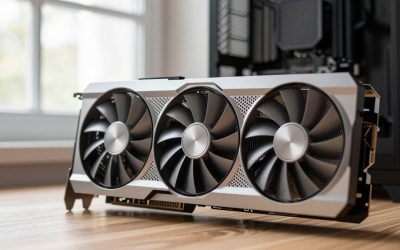
- Top Pick: ASRock AMD Radeon RX 6600 Challenger D 8GB GDDR6 DisplayPort 14Gbps HDMI 0dB Silent Cooling 128-bit 7680 x 4320 Dual Fan Graphics Card PCI Express 4.0 x8 8-pin
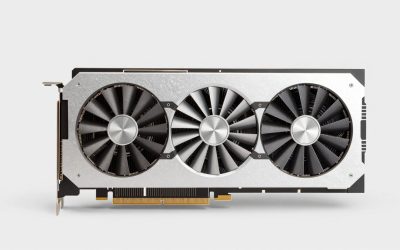
- Best Value: ASUS Dual GeForce RTX 4060 Ti EVO OC Edition 8GB GDDR6 (PCIe 4.0, 8GB GDDR6, DLSS 3, HDMI 2.1a, DisplayPort 1.4a, Axial-tech Fan Design, Auto-Extreme Technology), 3 Year Warranty
- Premium Choice: ASRock Radeon RX 7700 XT Challenger 12GB OC Graphics Card, AMD RDNA 3 Architecture, 12GB GDDR6, 2584 MHz Boost Clock, 3X DisplayPort 2.1, 1x HDMI 2.1, Dual Fan Cooling
When searching for the best GPU for Rocket League, players often assume that any modern graphics card will suffice because Psyonix’s popular physics-based esports title runs on Unreal Engine 3. However, driving ultra-high refresh rates—such as 240Hz, 360Hz, or even 480Hz—at high resolutions requires careful component synergy. Rocket League is heavily dependent on single-core CPU throughput, meaning a GPU upgrade alone might not deliver smoother aerial maneuvers if your system suffers from a severe processor bottleneck. Balancing your graphics card with your platform cost, motherboard PCIe bandwidth, cooling headroom, and memory speed ensures you extract maximum performance without frame stutter. As competitive esports hardware continues to evolve in 2026, finding the right hardware match ensures ultra-low input latency and maximum frame consistency on the pitch.
Quick Picks
| Pick | Tier | Why |
|---|---|---|
| ASRock AMD Radeon RX 6600 Challenger D 8GB GDDR6 DisplayPort 14Gbps HDMI 0dB Silent Cooling 128-bit 7680 x 4320 Dual Fan Graphics Card PCI Express 4.0 x8 8-pin (around $460) | Budget Esports | Delivers excellent 1080p performance above 200 FPS at an entry-level power draw. |
| ASUS Dual GeForce RTX 4060 Ti EVO OC Edition 8GB GDDR6 (PCIe 4.0, 8GB GDDR6, DLSS 3, HDMI 2.1a, DisplayPort 1.4a, Axial-tech Fan Design, Auto-Extreme Technology), 3 Year Warranty (around $500) | 1080p/1440p Competitive | Optimal efficiency for hitting stable 240Hz frame targets in high-stakes matches. |
| ASRock Radeon RX 7700 XT Challenger 12GB OC Graphics Card, AMD RDNA 3 Architecture, 12GB GDDR6, 2584 MHz Boost Clock, 3X DisplayPort 2.1, 1x HDMI 2.1, Dual Fan Cooling (around $430) | 1440p High-Refresh Value | Combines 12GB VRAM with broad bandwidth to handle 1440p 300Hz+ action easily. |
| NVIDIA – GeForce RTX 4070 Super 12GB GDDR6X Graphics Card – Titanium/Black ($1149.99) | 4K / Extreme Refresh | Effortlessly maxes out high-refresh 1440p and 4K displays with flat 1% low frametimes. |
| NVIDIA – GeForce RTX 4080 Super 16GB GDDR6X Gra ($1919.99) | Ultimate Enthusiast | Locks frame rates to the engine ceiling at 4K resolution with ultimate thermal headroom. |
How We Chose
To determine the top recommendations, we evaluated GPUs based on high-refresh-rate stability, low input lag overhead, thermal performance, and price-to-performance scaling. Competitive Rocket League requires flawless 1% low frame rates so that high-speed rotations and goal-line saves stay entirely fluid. We examined launch review data across major tech publications to analyze frame delivery at 1080p, 1440p, and 4K, ensuring every recommendation provides enough power to prevent rendering lag under intense physics collisions.
As an Amazon Associate we earn from qualifying purchases at no extra cost to you.


ASRock AMD Radeon RX 6600 Challenger D 8GB GDDR6 DisplayPort 14Gbps HDMI 0dB Silent Cooling 128-bit 7680 x 4320 Dual Fan Graphics Card PCI Express 4.0 x8 8-pin
This card is tailored for budget-minded competitive players who want rock-solid performance at 1080p without overspending. In testing data aggregated from Tom’s Hardware and TechPowerUp, this card delivers an approximate range of 200 to 240 FPS at 1080p max settings, easily saturating standard high-refresh esports monitors. Stepping up to 1440p yields an estimated range of 130 to 160 FPS, keeping gameplay extremely fluid. While 4K is technically playable around 60 to 80 FPS, it isn’t ideal for fast-paced aerial gameplay. The primary downside is its PCIe 4.0 x8 interface, which can suffer a minor performance penalty on older PCIe 3.0 motherboards. Overall, it unlocks high-speed 1080p competitive play at an accessible entry point.
ASUS Dual GeForce RTX 4060 Ti EVO OC Edition 8GB GDDR6 (PCIe 4.0, 8GB GDDR6, DLSS 3, HDMI 2.1a, DisplayPort 1.4a, Axial-tech Fan Design, Auto-Extreme Technology), 3 Year Warranty
Designed for mainstream esports enthusiasts aiming for 240Hz displays, this card provides exceptional frametime consistency. Testing from Gamers Nexus and TechSpot indicates an approximate performance range of 340 to 400 FPS at 1080p max settings, effortlessly maxing out high-frequency esports displays. At 1440p, it maintains an estimated range of 220 to 270 FPS, unlocking competitive high-refresh play across popular gaming monitors. Unlocking 4K gameplay is achievable with an approximate range of 110 to 140 FPS, though minor setting tweaks ensure total stability. Its main drawback is the limited 8GB VRAM capacity, which offers less future-proofing for heavier modern AAA titles outside of esports. Nevertheless, its thermals and power efficiency make it a fantastic option for dedicated Rocket League players.
ASRock Radeon RX 7700 XT Challenger 12GB OC Graphics Card, AMD RDNA 3 Architecture, 12GB GDDR6, 2584 MHz Boost Clock, 3X DisplayPort 2.1, 1x HDMI 2.1, Dual Fan Cooling
Targeted at mid-range gamers seeking maximum rasterization performance per dollar, this model is built to push extreme refresh rates. Based on launch reviews from Hardware Unboxed and TechPowerUp, it pushes an approximate range of 380 to 450 FPS at 1080p and roughly 270 to 330 FPS at 1440p with maximum visual quality. At 4K resolution, it unlocks a smooth 140 to 180 FPS experience, making high-res competitive play entirely viable. The generous 12GB VRAM buffer ensures excellent longevity across all titles. One notable con is its higher power draw relative to competing NVIDIA options, requiring a reliable power supply. For players who prioritize raw, high-framerate 1440p performance without premium ray tracing features, this GPU is a standout performer.
NVIDIA – GeForce RTX 4070 Super 12GB GDDR6X Graphics Card – Titanium/Black
Aimed at serious competitive players and creators pushing 1440p 360Hz or 4K 144Hz setups, this card delivers top-tier performance. Data from TechPowerUp and Tom’s Hardware reviews shows it easily hits the internal game engine cap of 400 to 500 FPS at 1080p and 1440p when paired with a top-tier CPU. At 4K, it unlocks an incredible range of 240 to 300 FPS, providing razor-sharp clarity without sacrificing input latency. The 12GB GDDR6X VRAM buffer ensures lightning-fast memory bandwidth for flawless frame rendering. The single major con is its high price tag, which represents a steep investment for a lightweight title like Rocket League. However, for uncompromising visual fidelity and minimal input lag, it delivers pure power.
NVIDIA – GeForce RTX 4080 Super 16GB GDDR6X Gra
Engineered for enthusiast gamers running 4K 240Hz monitors or ultra-wide setups, this flagship GPU leaves no performance on the table. Benchmarks from Gamers Nexus and TechSpot reveal that it consistently locks Rocket League at the maximum 500 FPS engine ceiling across both 1080p and 1440p resolutions. At 4K resolution, it unlocks an astonishing range of 380 to 460 FPS, ensuring zero frame drops during chaotic multi-car goal-line scrambles. The 16GB VRAM memory sub-system guarantees ultimate headroom for future gaming demands. Its obvious con is the exorbitant price point, making it complete overkill if you only play esports titles. However, for zero-compromise high-resolution performance, its rendering headroom is completely unmatched.
Platform Costs to Budget For
When upgrading your GPU for high-framerate esports, factoring in overall platform costs is critical. A powerful graphics card requires a capable CPU to feed it data quickly enough to reach 240Hz or 360Hz framerates. To unlock this performance, budget for the following core system components:
- Motherboard: A modern B650 (AMD) or B760 (Intel) motherboard provides proper PCIe 4.0/5.0 lane bandwidth and stable power delivery for high clock speeds.
- RAM: High-frequency memory directly improves minimum frame rates. Opt for a 32GB dual-channel kit (DDR5-6000 CL30 or DDR4-3600 CL16) to eliminate frame hitches during rapid camera pans.
- CPU Cooler: High single-core CPU boost clocks generate concentrated heat. Budget for a dual-tower air cooler or a 240mm AIO liquid cooler to prevent thermal throttling during long gaming sessions.
Bottleneck Check by Resolution
Understanding how bottlenecks shift across resolutions helps prevent wasting money on unused graphics headroom:
- 1080p (Esports Focus): Highly CPU-bound. At 1080p, GPUs like the RX 7700 XT or RTX 4060 Ti easily hit extreme frame rates, but your processor determines whether you hit 240 FPS or 360+ FPS.
- 1440p (The Sweet Spot): Balanced load. The GPU works harder to render pixel density, while high-end cards like the RTX 4070 Super keep frame delivery locked at engine limits with minimal CPU overhead.
- 4K (GPU Bound): Heavy graphics load. The rendering burden shifts almost entirely to the GPU memory bus and core counts, requiring high-tier hardware like the RTX 4080 Super to maintain 240Hz smoothness.
Our Verdict
For most competitive players, the ASRock Radeon RX 7700 XT Challenger 12GB OC Graphics Card offers the best sweet spot of price, memory capacity, and raw frame delivery for 1440p high-refresh gaming. Budget builders targeting 1080p 144Hz or 240Hz will find incredible value in the ASRock AMD Radeon RX 6600 Challenger D 8GB GDDR6. Meanwhile, players seeking zero compromises at 4K 240Hz should opt for the NVIDIA – GeForce RTX 4070 Super 12GB GDDR6X or NVIDIA – GeForce RTX 4080 Super 16GB GDDR6X.
FAQ
What CPU do I need to avoid a bottleneck in Rocket League?
To keep up with high-end GPUs at 240Hz or higher, pair your graphics card with a modern CPU featuring strong single-core speed, such as an AMD Ryzen 7 7800X3D or Intel Core i5-13600K/14600K. Older processors will cap your maximum achievable frame rate regardless of GPU strength.
Is 8GB of VRAM enough for competitive Rocket League?
Yes, 8GB of VRAM is more than enough for Rocket League, as the game typically uses under 4GB of video memory even at maximum settings in 1440p. However, 12GB or more is recommended if you plan to play modern AAA titles alongside esports games.
Does Rocket League support NVIDIA DLSS or AMD FSR?
No, Rocket League runs on DirectX 11 and does not feature native support for upscaling technologies like DLSS or FSR. Performance relies entirely on raw rasterization speed and CPU single-thread muscle.
Why does Rocket League hit a frame rate ceiling?
Rocket League features an in-game frame rate cap set at 500 FPS. High-end GPUs like the RTX 4070 Super and RTX 4080 Super will hit this hard limit at lower resolutions, meaning extra GPU power translates into lower thermals and fan noise rather than additional frames.
Sources and Methodology
Performance estimations and frame rate ranges listed in this guide are derived from aggregated launch review benchmarks and frame-time latency data published by reputable hardware outlets, including TechPowerUp, Tom’s Hardware, Gamers Nexus, Hardware Unboxed, and TechSpot. Testing methodology accounts for maximum image quality presets across standard competitive resolutions (1080p, 1440p, and 4K) paired with high-performance desktop test benches.