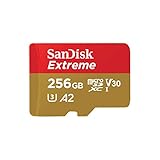
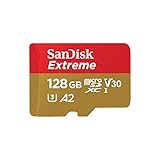
- Top Pick: SANDISK 128GB Extreme microSD Card + Adapter, Up to 245MB/s Read Speeds | UHS-I, V30, 5K & 4K UHD, U3, C10, A2, Up to 120MB/s Write Speeds, Ideal for Action Cams+Drones, Android- SDSQXH9-128G-GZ6MA
- Best Value: SANDISK 256B Extreme microSD Card + Adapter, Up to 245MB/s Read Speeds | UHS-I, V30, 5K & 4K UHD, U3, C10, A2, Up to 170MB/s Write Speeds, Ideal for Action Cams+Drones, Android- SDSQXH9-256G-GZ6MA
- Premium Choice: SANDISK 256GB Extreme microSD Card + Adapter, Up to 190MB/s Read Speeds | UHS-I, V30, 5K & 4K UHD, U3, C10, A2, Up to 130MB/s Write Speeds, Ideal for Action Cam, Drone, Smartphone- SDSQXAV-256G-GN6MA
A drone is unforgiving about memory cards. Footage is recorded in real time, the aircraft is often far away, and a card that cannot keep up with the video stream can drop frames or stop recording in the middle of a flight. Picking from the best SD cards for drones therefore starts with sustained write speed, not the biggest number on the package. Capacity and a sensible warranty come next, since flights produce large files and a failed card can take a whole session with it.
This 2026 guide is for pilots of consumer camera drones, pocket gimbal cameras, and action cams who want a microSD card that matches 4K or 5K recording. Ten cards are covered, ranging from 32GB to 512GB. All are judged from their listings alone, so use the notes to choose a speed tier, then check your drone’s manual for the maximum card size and the minimum speed class it asks for.
Quick Picks
As an Amazon Associate we earn from qualifying purchases at no extra cost to you.






| Product | Best for | Key spec from the title |
|---|---|---|
| SanDisk Extreme 128GB (245MB/s) | High-bitrate 4K and 5K flights | 245MB/s read, 120MB/s write, V30, A2 |
| SanDisk Extreme 256GB (245MB/s) | Long sessions at the top speed tier | 245MB/s read, 170MB/s write |
| SanDisk Extreme 256GB (190MB/s) | Large capacity at the mid tier | 190MB/s read, 130MB/s write |
| Silicon Power 128GB | A simple DJI Pocket or drone card | U3, up to 100MB/s |
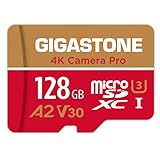
| Gigastone 128GB 2-Pack | Two cards for swapping mid-flight | A1, V30, 95MB/s, two adapters |
| SanDisk Extreme 128GB (190MB/s) | A proven 128GB middle option | 190MB/s read, 90MB/s write |
| Basics 128GB microSDXC | Straightforward 4K-class storage | A2, U3, up to 100MB/s read |
| 32GB High-Speed microSD | Short clips and spare card duty | 90MB/s read, 25MB/s write |
| Gigastone 128GB (5-year recovery) | Backup-minded 4K pilots | 100/50MB/s read/write, U3, A2, V30 |
| Gigastone 512GB | All-day shoots without swapping | 150/120MB/s read/write, A2, V30 |
How to Choose
Sustained write speed beats the headline read number
Video recording is a write task. The V30 and U3 markings promise at least 30MB/s of sustained writing, which is the usual floor for 4K. The “up to” read number matters when you copy footage to a computer, but it tells you little about recording. Compare the write figures when a listing gives them: 25MB/s is a low number for a drone, while 90MB/s and above leave plenty of headroom. If your drone records at very high bitrates, check its manual for a specific class requirement. Remember too that a card’s write speed is a ceiling, and the drone’s own bitrate decides how much of it gets used, so a faster card gives margin rather than better-looking video.
Capacity: plan around flight time and file size
A single battery of flying can generate several gigabytes of 4K video. A 128GB card is a comfortable size for a day of casual flights, while 256GB and 512GB cards suit multi-battery shoots or 5K recording. Smaller 32GB cards fill quickly, so they work better as a spare. Remember that very large cards must be supported by the drone, so confirm its limit before buying. Having two modest cards is sometimes smarter than one huge one. Swapping cards also forces a pause that lets you check the battery, propellers, and gimbal, which is a habit worth keeping on long outings.
Reliability features and application class
The A1 and A2 markings describe small-file performance, which matters little for recording but helps if you use the same card in a phone. More relevant for a drone are durability and recovery promises. The Gigastone cards advertise five years of free data recovery, which is a reassuring note for footage you cannot reshoot. A2 is a plus, not a requirement. Format every card in the drone itself before the first flight, and again after you copy footage off, so the file system stays clean and the drone never has to cope with leftover files.
What to ignore and where budget cards cut corners
Ignore marketing phrases like “high-speed” without a class marking, and be wary of listings that skip the write speed. Unbranded or short-title cards may meet U3 on paper, yet they give you less information to verify. Budget cards often have lower write speeds, shorter warranty coverage, and minimal documentation. Do not chase headline read speeds you will never use while flying. Keep a small card case, because an unprotected card is easy to lose in the field, and label each card so you always know which one holds unreviewed footage. If a listing is vague about the card’s real capacity or class, treat that vagueness as the warning it is.
The 10 Best Options
SanDisk Extreme 128GB (245MB/s)
Built for pilots recording high-bitrate 4K or 5K. The title lists up to 245MB/s read, up to 120MB/s write, UHS-I, V30, U3, C10, A2, an adapter, and use with action cams and drones.
- 120MB/s write is generous for sustained video.
- 5K and 4K UHD support are stated.
- Trade-off: 128GB can fill during a long multi-battery day.
Skip it if you need the biggest capacity per card. It is best for shorter outings where you copy footage off between flights.
SanDisk Extreme 256GB (245MB/s)
The same top speed tier with double the capacity. The listing shows 245MB/s read and up to 170MB/s write, with V30, U3, A2, and an adapter. The title writes the size as 256B, but the model number points to 256GB.
- 170MB/s write is the highest stated here.
- 256GB suits long sessions without swapping.
- Trade-off: the typo in the title means you should verify the capacity before purchase.
Skip it if your drone caps card size below 256GB, or if the odd capacity wording in the title makes you uneasy about the listing.
SanDisk Extreme 256GB (190MB/s)
A mid-tier option for large storage. The title lists up to 190MB/s read, up to 130MB/s write, UHS-I, V30, U3, A2, and the adapter, for action cams, drones, and smartphones.
- 130MB/s write is plenty for consumer drone video.
- 256GB gives hours of 4K footage.
- Trade-off: slower write than the 245MB/s version.
Skip it if you want the fastest tier. It suits pilots who want large capacity and consider the very top write speed unnecessary for their aircraft.
Silicon Power 128GB
A simple card for DJI Pocket and drone owners. The title lists U3, up to 100MB/s, and use with cams, DJI Pocket, and drones.
- The U3 marking meets a typical 4K requirement.
- Short, plain listing with the use case named.
- Trade-off: no V30, A1, or write speed is given.
Skip it if you want detailed write figures before buying, since the title gives only the read ceiling and the U3 class.
Gigastone 128GB 2-Pack
Two cards in one pack for pilots who swap between flights. The title lists A1, V30, 4K recording, 95MB/s, UHS-I Class 10, and two SD adapters, and it names drones, dash cams, and security cameras.
- Two cards give you a spare and a clear way to separate flights.
- V30 marking supports 4K recording.
- Trade-off: no write speed beyond V30 is listed.
Skip it if you only need one card, or if you want a stated write figure to compare against your drone’s requirements.
SanDisk Extreme 128GB (190MB/s)
A familiar 128GB pick. The listing shows up to 190MB/s read, up to 90MB/s write, V30, U3, A2, 5K and 4K UHD, and an adapter.
- 90MB/s write handles consumer 4K.
- 5K video is named in the title.
- Trade-off: write speed sits below the other Extreme cards.
Skip it if you shoot long takes at high bitrates, where the higher-write Extreme cards give more margin.
Basics 128GB microSDXC
A plain, no-nonsense card for pilots who want 4K-class storage. The listing shows A2, U3, up to 100MB/s read, 128GB, and a full-size adapter.
- U3 and A2 markings are both stated.
- Clear, simple specification.
- Trade-off: no V30 or write figure appears.
Skip it if you need explicit video-class markings such as V30 stated in the title, because a missing marking leaves you to confirm it on the card.
32GB High-Speed microSD
A small card for short clips and spares. The title lists 90MB/s read, 25MB/s write, and compatibility with DSLR, drone, and action cameras, plus one adapter.
- Handy as a backup in a drone bag.
- An adapter is included.
- Trade-off: 25MB/s write is low for high-bitrate drone video.
Skip it if you plan to record 4K for long periods, since the other cards on this list state far higher write figures.
Gigastone 128GB (5-year recovery)
For pilots who value a safety net. The title lists 5-year free data recovery, 4K video for GoPro, action cameras, DJI, drones, and Nintendo Switch, with 100/50MB/s read/write, U3, A2, V30, and C10.
- Data recovery coverage is part of the listing.
- V30 and U3 both appear.
- Trade-off: 50MB/s write is lower than the SanDisk Extreme cards.
Skip it if you want the highest write tier, because the SanDisk Extreme cards list a faster write speed.
Gigastone 512GB
The largest card here, for all-day shoots. The title lists 150/120MB/s read/write, A2, V30, U3, C10, an adapter, and 5-year free data recovery.
- 512GB removes most mid-shoot swaps.
- 120MB/s write is listed.
- Trade-off: many drones cap supported card size, so check first.
Skip it if putting all your footage on one card worries you, or if your drone’s manual caps the card size lower.
Which One Fits Your Situation
High-bitrate 5K and 4K
The SanDisk Extreme 256GB at 245MB/s lists the highest write speed here, and the 128GB version is the smaller alternative.
Swapping cards between flights
The Gigastone 128GB 2-Pack gives two cards in one box, so you can keep a flight per card and always have a fresh one ready when the first fills, with two adapters included for the laptop.
Full-day shoots
The Gigastone 512GB or the SanDisk Extreme 256GB gives the room you need, provided the drone supports the size.
Spare card in the bag
The 32GB High-Speed microSD or the Basics 128GB microSDXC works as a backup when your main card fills.
Common Mistakes
- Choosing a card on read speed alone and ignoring the write figure.
- Buying more capacity than the drone can read.
- Skipping a format in the drone before the first flight.
- Using a low-write card for high-bitrate video and then blaming the aircraft.
- Carrying a single card with no spare and no case.
Related guides
- Aio Liquid Coolers For High Performance Gaming
- How To Lower Input Delay In Competitive Shooters
- Wireless Gaming Headsets Under 100 For Pc
Frequently Asked Questions
What speed class does a drone need?
For 4K, U3 or V30 is the usual minimum. Your drone’s manual may list a higher requirement for its top-quality mode.
Is a bigger card always better for drones?
Not necessarily. Large cards must be supported by the drone, and a single failure loses more footage. Two mid-size cards can be safer.
Do I need A2 for a drone?
No. Application class helps apps and small files. For recording, the video and U classes matter more.
Should I format the card in the drone?
Yes. Formatting in the drone sets the file system the aircraft expects and reduces the chance of recording errors. Do it with the card installed and the battery well charged, and back up any footage first because formatting erases everything.