- Top Pick: Build Your Own Gaming PC: The step-by-step manual to building the ultimate computer (Haynes Manuals)
- Best Value: Learning XNA 4.0: Game Development for the PC, Xbox 360, and Windows Phone 7
- Premium Choice: Gaming Keyboard and Mouse and Mouse pad and Gaming Headset, Wired LED RGB Backlight Bundle for PC Gamers and Xbox and PS4 Users – 4 in 1 Edition Hornet RX-250
Game development asks more of a single machine than almost any other creative field, because you do everything on it. You author assets, run a real-time engine viewport, compile shaders and code, bake lighting, and then playtest the very game you are building — often all in one session. That makes a strong, balanced gaming PC the natural development box: it needs CPU cores for compiling and engine work, a capable GPU for the editor viewport and for running your builds at a realistic frame rate, and plenty of RAM so the engine, your tools and the running game can all coexist. This guide rounds up the best gaming PCs for game development in 2026, ranked for build-and-iterate performance.
- Best Gaming PCs for Game Development at a Glance
- 1. ZOTAC MEK Gaming PC, NVIDIA GeForce RTX 5080 16GB GDDR7, AMD Ryzen 7 9800
- 2. Skytech Gaming O11 Vision, AMD Ryzen 7 7700X, NVIDIA RTX 5070
- 3. Skytech Gaming Azure 3 Desktop, Ryzen 7 7700X (5.4GHz boost), RTX 50-series
- 4. Skytech Gaming Archangel, Intel i5-14400F, NVIDIA RTX 5060
- 5. Skytech Gaming Azure 3, AMD Ryzen 7 5700 3.7GHz, NVIDIA RTX 5060
- 6. Skytech Gaming O11 Vision, AMD Ryzen 7 7800X3D, NVIDIA RTX 5060
- How to Choose a Gaming PC for Game Development
- Frequently Asked Questions
- Related Guides
- Related Articles
- Related Guides
Our picks were chosen on what a developer actually feels day to day: CPU power for compiling code and shaders and for engines like Unreal and Unity; a GPU strong enough to keep the editor viewport fluid and to playtest your game the way players will experience it; and generous RAM so a heavyweight engine, browser, art tools and a running build do not choke the system. We have spread the list from around $1,199 to around $3,148 and led with the build that best balances raw CPU and GPU muscle for serious development. These are gaming desktops, and that is the point — you build on hardware that runs games well. Below is an at-a-glance comparison, then a closer look at each and a buyer’s guide for development intent.
As an Amazon Associate we earn from qualifying purchases at no extra cost to you.





🛒 Best Price Today on Amazon
Prime members get fast, free shipping on everything above, plus member-only deals. New members get a 30-day free trial — cancel anytime.
Best Gaming PCs for Game Development at a Glance
| Gaming PC | Best For | Standout Spec | Approx Price |
|---|---|---|---|
| ZOTAC MEK (RTX 5080 / Ryzen 7 9800) | Heavy engine + GPU work | RTX 5080 16GB, strong Ryzen 7 | around $3,148 |
| Skytech O11 Vision (7700X / RTX 5070) | Balanced dev workhorse | Ryzen 7 7700X, RTX 5070 | around $1,999 |
| Skytech Azure 3 (7700X / RTX 50-series) | Value engine + viewport | Ryzen 7 7700X (5.4GHz boost) | around $1,799 |
| Skytech Archangel (i5 14400F / RTX 5060) | Entry indie dev | Intel i5-14400F, RTX 5060 | around $1,199 |
| Skytech Azure 3 (Ryzen 7 5700 / RTX 5060) | Budget all-rounder | Ryzen 7 5700, RTX 5060 | around $1,299 |
| Skytech O11 Vision (7800X3D / RTX 5060) | Fast iteration + testing | Ryzen 7 7800X3D, RTX 5060 | around $1,899 |
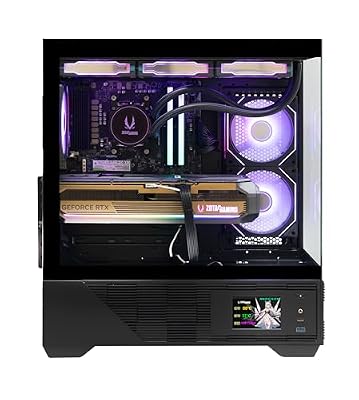
1. ZOTAC MEK Gaming PC, NVIDIA GeForce RTX 5080 16GB GDDR7, AMD Ryzen 7 9800

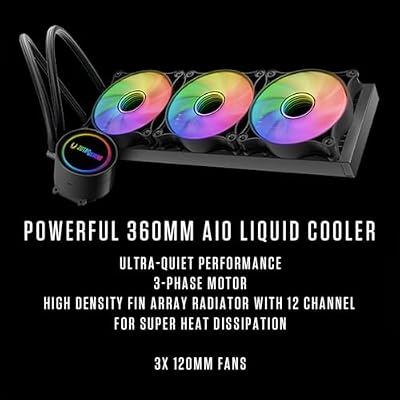
ZOTAC MEK Gaming PC Desktop, Ryzen 7 9800X3D, NVIDIA GeForce RTX 5080 16GB | 32GB DDR5, 2TB NVMe SSD, 850W 80+ Gold PSU, WiFi 6E, Windows 11 Pro, GDDR7, up to 5.2GHz






As an Amazon Associate we earn from qualifying purchases. Product prices and availability are accurate as of the date/time indicated.
The ZOTAC MEK with an RTX 5080 and a strong Ryzen 7 9800-series CPU leads our development list because it has the muscle for the heaviest engine work. The RTX 5080 with 16GB of fast GDDR7 keeps a demanding Unreal viewport fluid, accelerates lighting bakes and GPU-driven tooling, and runs your in-progress builds at the kind of frame rate players will expect. Backed by a capable Ryzen 7 for compiling and engine tasks, it makes a powerful dev box at around $3,148.
This is the build for the developer working on a graphically ambitious project — a high-fidelity Unreal scene, heavy real-time lighting, or VR — where the GPU is exercised hard both in the editor and at playtest. The 16GB of VRAM gives headroom for large scenes and high-resolution assets, the strong CPU keeps compiles and engine logic moving, and you will want to pair it with plenty of RAM. As the most GPU-capable pick here, the MEK is the choice when your engine viewport is the bottleneck.
Pros: RTX 5080 16GB for heavy engine viewports and playtesting, strong Ryzen 7, ample VRAM headroom.
Cons: Premium price; pair with generous RAM for large projects.
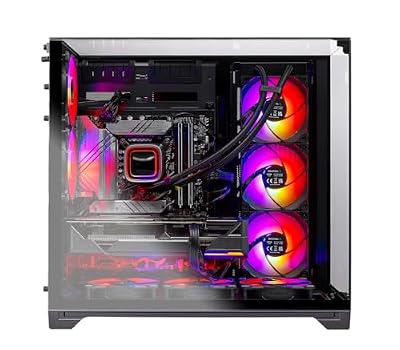
2. Skytech Gaming O11 Vision, AMD Ryzen 7 7700X, NVIDIA RTX 5070
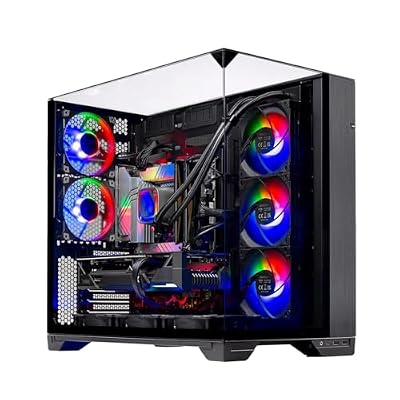
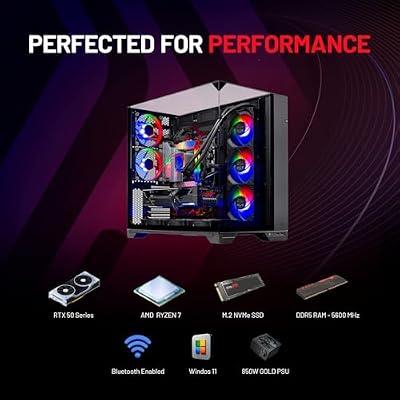
Skytech Gaming O11 Vision Gaming PC, AMD Ryzen 7 7700X 4.5GHz, NVIDIA RTX 5070 12GB, X670 Board, 1TB Gen4 NVMe SSD, 32GB DDR5 RAM 5600, 850W Gold ATX 3 PSU, 360 ARGB AIO, Wi-Fi, Win 11, Desktop







As an Amazon Associate we earn from qualifying purchases. Product prices and availability are accurate as of the date/time indicated.
The Skytech O11 Vision with the Ryzen 7 7700X and RTX 5070 is the balanced development workhorse. It pairs a strong eight-core CPU — well suited to compiling code, building shaders and driving engine tools — with a capable RTX 5070 that keeps the editor viewport smooth and playtests your game properly. At around $1,999 it lands in the sweet spot where CPU and GPU are both genuinely strong for dev work.
This is the build for the developer who wants a do-everything machine without overspending. The 7700X handles iterative compiles and engine workloads briskly, the RTX 5070 keeps Unreal and Unity viewports fluid and runs your builds at a realistic frame rate, and the striking O11 chassis is a bonus on a creator’s desk. Add ample RAM so the engine, tools and a running build coexist comfortably, and this is one of the most sensible all-round development machines on the list.
Pros: Strong eight-core 7700X for compiling, capable RTX 5070 viewport and playtesting, great balance.
Cons: Add RAM for heavy engines; eight cores rather than a higher-core chip.
3. Skytech Gaming Azure 3 Desktop, Ryzen 7 7700X (5.4GHz boost), RTX 50-series

Skytech Gaming PC Azure 3, Ryzen 7, RTX 5070 Ti, 32GB RAM, 1TB SSD | Windows 11, AMD 7800X3D, NVIDIA 5070 Ti, Gen4 NVMe SSD, DDR5 5600, 850W GOLD ATX 3 PSU, 360 ARGB AIO , Wi-Fi 5


As an Amazon Associate we earn from qualifying purchases. Product prices and availability are accurate as of the date/time indicated.
The Skytech Azure 3 with the high-boosting Ryzen 7 7700X and a modern RTX 50-series GPU is the value engine-and-viewport pick. It carries the same excellent eight-core 7700X — boosting to 5.4GHz — that handles compiling and engine work well, paired with a capable RTX 50-series card, in a tidy chassis at around $1,799. For developers who want strong fundamentals at a keener price, it is a smart choice.
This is the build for the indie or solo developer who needs a responsive engine experience without the flagship cost. The fast-boosting 7700X keeps single-threaded editor responsiveness high and compiles moving, the RTX 50-series GPU drives the viewport and playtests your builds, and the savings versus the pricier picks can go toward more RAM or storage — both valuable to a developer. As a value-focused dev box that still feels quick, the Azure 3 delivers.
Pros: Fast-boosting eight-core 7700X, capable RTX 50-series GPU, strong value for engine work.
Cons: Confirm exact GPU and RAM at purchase; smaller chassis limits expansion.
4. Skytech Gaming Archangel, Intel i5-14400F, NVIDIA RTX 5060

Skytech Gaming PC Desktop, Intel i5 14400F, RTX 5060, 16GB RAM, 1TB SSD | Windows 11, NVMe SSD, DDR5 6000, 750W GOLD PSU, Wi-Fi 5, Archangel 5 Series


As an Amazon Associate we earn from qualifying purchases. Product prices and availability are accurate as of the date/time indicated.
The Skytech Archangel with the Intel i5-14400F and RTX 5060 is the entry indie development pick. It offers a capable modern ten-core i5 and a solid RTX 5060 GPU at around $1,199 — the most affordable way onto this list — making it a realistic starting point for hobbyist and small-scale game development.
Be honest about its place: with the RTX 5060 and a mainstream i5, this is an entry-level box rather than a heavy-engine powerhouse, so very large Unreal scenes or long, complex compiles will tax it more than the higher picks. But for learning an engine, building 2D and lighter 3D games in Unity or Godot, and iterating on smaller projects, it is plenty. The i5-14400F handles everyday compiles, the RTX 5060 runs the viewport and playtests at sensible settings, and the low price gets you developing today. For starting out, the Archangel is a sound entry point.
Pros: Affordable entry into dev, capable ten-core i5-14400F, RTX 5060 for lighter engine work.
Cons: Entry-level GPU; large scenes and heavy compiles tax it more than higher picks.
5. Skytech Gaming Azure 3, AMD Ryzen 7 5700 3.7GHz, NVIDIA RTX 5060
The Skytech Azure 3 with the Ryzen 7 5700 and RTX 5060 is the budget all-rounder. It pairs an eight-core AMD CPU with a modern RTX 5060 GPU at around $1,299, offering more CPU threads than the entry i5 build for handling parallel compiles and background tasks, while keeping the cost low.
This is the build for the developer who values extra cores on a budget — useful when shader compiles, asset imports and engine tasks can spread across threads. The eight-core 5700 gives that headroom, the RTX 5060 drives the editor viewport and playtests lighter-to-moderate projects, and the price leaves room for a RAM upgrade. It is an older-generation CPU paired with a current GPU, so be realistic about the heaviest engine scenes, but as an affordable, thread-friendly dev box for indie work it makes good sense.
Pros: Eight CPU cores for parallel tasks on a budget, modern RTX 5060, room to add RAM.
Cons: Older-generation CPU and entry GPU cap the heaviest engine workloads.
6. Skytech Gaming O11 Vision, AMD Ryzen 7 7800X3D, NVIDIA RTX 5060
Skytech Gaming O11 Vision Gaming PC, AMD Ryzen 7 7700X 4.5GHz, NVIDIA RTX 5070 12GB, X670 Board, 1TB Gen4 NVMe SSD, 32GB DDR5 RAM 5600, 850W Gold ATX 3 PSU, 360 ARGB AIO, Wi-Fi, Win 11, Desktop
As an Amazon Associate we earn from qualifying purchases. Product prices and availability are accurate as of the date/time indicated.
Rounding out the development list is the Skytech O11 Vision pairing the Ryzen 7 7800X3D with an RTX 5060 — the fast-iteration pick. The 7800X3D is one of the most responsive desktop CPUs available, and that snappiness shines in development: editor responsiveness, hot-reloads and iterative compiles all feel quicker on a high-cache chip. At around $1,899 it puts that CPU front and center.
This is the build for the developer who prioritizes a fast, responsive iteration loop over maximum GPU horsepower. The 7800X3D keeps the engine editor feeling immediate and accelerates the build-test-tweak cycle, while the RTX 5060 is capable for viewport work and playtesting moderate projects — just not for the most graphically punishing scenes. If your bottleneck is CPU-bound editor responsiveness and quick iteration rather than rendering a heavyweight scene, this X3D-led O11 Vision is a clever choice.
Pros: Highly responsive 7800X3D for fast iteration, premium chassis, snappy editor experience.
Cons: RTX 5060 GPU is the lesser part here; not for the heaviest graphical scenes.
How to Choose a Gaming PC for Game Development
Game development is unusual in stressing both the CPU and the GPU hard, so balance is the watchword. The CPU does the compiling — code, shaders, lighting bakes — and runs much of the engine’s logic and editor, so cores and responsiveness both matter. A high-cache chip like the Ryzen 7 7800X3D keeps the editor and iteration loop feeling instant, while a strong all-rounder like the 7700X or a higher-core part handles parallel compiles well. Decide whether your pain point is interactive responsiveness or long batch compiles, and lean accordingly.
The GPU matters for two distinct jobs, and developers sometimes forget the second. First, it drives the editor viewport — a fluid Unreal or Unity scene keeps you productive. Second, and just as important, it runs your in-progress game, so you experience and tune performance the way players will. A capable card like the RTX 5070 or the RTX 5080 in the ZOTAC MEK gives both a smooth viewport and realistic playtesting; an RTX 5060 is fine for lighter projects but will work harder on graphically ambitious scenes.
RAM is non-negotiable for development because of how much runs at once. A heavyweight engine, your code editor or IDE, art and audio tools, a browser of documentation, and a running build of your game can all be open simultaneously, and each wants memory. Generous RAM keeps that whole environment fluid; running short forces constant swapping that wrecks your iteration speed. If a build’s stock memory looks tight for your engine and toolset, plan to add more — it is one of the most cost-effective upgrades for a developer.
Finally, weigh storage, expansion and budget, and remember these are gaming desktops — which is exactly why they suit development, since you build on the same hardware that runs games well. A fast NVMe drive speeds engine loads, asset imports and compiles, and project sizes balloon, so plan for capacity or a second drive. Match the machine to your project’s scale: a big GPU for ambitious 3D, a responsive X3D chip for fast iteration, or an affordable build to start out. Pick the development machine here that fits the games you are making.
Frequently Asked Questions
Is a gaming PC good enough for game development?
Yes — in fact it is ideal, because you develop on the same hardware that runs games well. Game development needs a strong CPU for compiling and engine work, a capable GPU for the editor viewport and realistic playtesting, and plenty of RAM, which is exactly what these gaming desktops provide. The builds here range from entry indie machines to GPU-heavy boxes for ambitious 3D projects.
Do I need a powerful CPU or GPU more for game development?
You genuinely need both, which is why balance matters. The CPU drives compiling, shader builds and much of the engine and editor, so responsiveness and cores both count — a 7800X3D excels at fast iteration. The GPU drives the viewport and runs your game at a realistic frame rate. For graphically ambitious projects lean toward a stronger GPU like the RTX 5080; for fast iteration on lighter games, prioritise a responsive CPU.
How much RAM do I need for Unreal or Unity development?
More than for gaming alone, because so much runs at once. A heavyweight engine, your IDE, art and audio tools, documentation and a running build all consume memory simultaneously. Aim for generous RAM with headroom; if a build’s stock memory looks tight for your engine and toolset, adding more is one of the most cost-effective ways to keep your iteration loop fast.
Which pick is best for an indie developer on a budget?
The Skytech Archangel with the i5-14400F and RTX 5060 at around $1,199 is the most affordable entry point, ideal for learning an engine and building 2D and lighter 3D games. If you want more CPU threads for parallel tasks at a similar price, the eight-core Ryzen 7 5700 Azure 3 is a strong budget all-rounder. Both handle indie-scale development well, with headroom to add RAM later.
Related Guides
- Best Gaming PCs
- Best CPUs for Your Build
- Best RAM for Your Build
- Best NVMe SSDs
- Best Monitors for Content Creation
- Best Mechanical Keyboards
Affiliate Disclosure: As an Amazon Associate, we earn from qualifying purchases. If you click a link and make a purchase, we may earn a small commission at no extra cost to you. Prices and availability are accurate as of publication and may change.