- Top Pick: MSI Radix AXE6600 WiFi 6E Tri-Band Gaming Router, AI QoS, RGB, 1.8GHz Quad-Core Processor, MU-MIMO, Tri Band Gigabit Wireless, 8-Stream, High Speed Long Range Gaming Router
- Best Value: HYPEREV AX3000 Gaming Router WiFi Booster for PS5, PC & Consoles – Dual Band WiFi 6 Game Accelerator, Low Ping & Lag Reduction, 2402Mbps, Includes 90-Day GearUP VIP Core Plan
- Premium Choice: Banana Pi BPI-R4 WiFi 7 Wireless Dual-Band WiFi Router Board OpenWRT, with MediaTek MT7988A (Filogic 880) SoC, Support 2X 10GbE SFP and 4X GbE Gigabit Ethernet for NAS Smart Home Gateway (Bundle3)
🛒 Best Price Today on Amazon
Prime members get fast, free shipping on everything above, plus member-only deals. New members get a 30-day free trial — cancel anytime.
- Top Routers Game Development Picks for 2026
- Best Routers for Game Development at a Glance
- 1. ASUS AC2900 WiFi Gaming Router (RT-AC86U) Dual Band Gigabit
- 2. Amazon eero Pro 6E mesh wifi router (single)
- 3. Amazon eero 6+ mesh wifi router (single)
- 4. TP-Link AX1800 WiFi 6 Router (Archer AX21 V5) Dual Band
- 5. Amazon eero 6 mesh wifi router (single)
- 6. TP-Link AC1200 Gigabit WiFi Router (Archer A6) Dual Band MU-MIMO
- How to Choose a Router for Game Development
- Frequently Asked Questions
- Related Guides
- Related Articles
- Related Guides
Top Routers Game Development Picks for 2026
Here are our current top routers game development picks, compared on real Amazon owner reviews, price, and features. Live prices update below.
As an Amazon Associate we earn from qualifying purchases at no extra cost to you.


Game development is a networking workload disguised as a creative one. A single workstation might be pulling a multi-gigabyte engine update, syncing a version-control repo, pushing a build to a test phone, streaming a co-op playtest, and running a local server all at once — and every one of those tasks suffers if the router stutters. For a dev setup the priority is not raw headline speed but stability: consistent throughput, low jitter, sane Quality of Service (QoS) so a background download cannot choke a live test, and enough capacity to keep dozens of devices connected at the same time. This guide rounds up the best routers for game development in 2026 across the options that actually fit a busy workspace: whole-home mesh systems for blanketing a studio in coverage, dependable Wi-Fi 6 single units, and a dedicated gaming router with the deepest QoS controls.
Our picks were chosen on what genuinely matters when you build and test all day: rock-solid stability, useful QoS and traffic prioritisation, the number of devices a unit can sensibly handle, and coverage across a room or a whole office. We have kept a broad price spread — from around $40 up to around $200 — because the right router depends on the size of your space and how many phones, consoles, dev kits and PCs you keep online. Below you will find an at-a-glance comparison of all six, then a closer look at each and a buyer’s guide built around QoS, coverage and device capacity, the criteria that actually keep a development network calm under load.
Best Routers for Game Development at a Glance
| Router | Best For | Standout Spec | Approx Price |
|---|---|---|---|
| ASUS RT-AC86U AC2900 Gaming Router | Deep QoS for build + test | Adaptive QoS, dual-band gaming | around $113 |
| Amazon eero Pro 6E Mesh Router | Largest multi-device studio | Wi-Fi 6E, up to 2.5 Gbps plans | around $200 |
| Amazon eero 6+ Mesh Router | Gigabit mesh coverage | Gigabit plans, mesh expandable | around $140 |
| TP-Link Archer AX21 V5 Wi-Fi 6 | Value Wi-Fi 6 dev desk | AX1800 Wi-Fi 6, dual band | around $52 |
| Amazon eero 6 Mesh Router | Simple stable mesh | Up to 900 Mbps, easy mesh | around $90 |
| TP-Link Archer A6 AC1200 | Budget secondary network | AC1200 MU-MIMO dual band | around $40 |
1. ASUS AC2900 WiFi Gaming Router (RT-AC86U) Dual Band Gigabit

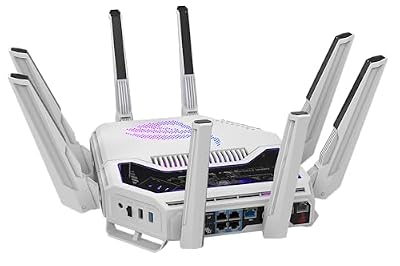
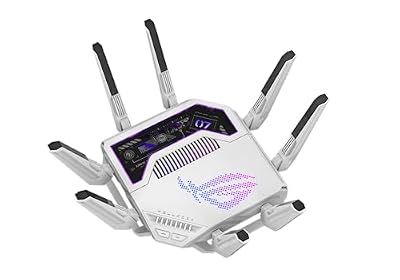
ASUS GT-BE19000AI Tri-Band WiFi 7 AI Gaming Router - 10G, Game Boost | Coverage up to 3,500 Sq. Ft., 10G Port x2, 2.5G Port x4. Game Boost for Low Latency Gaming & Streaming. VPN support








As an Amazon Associate we earn from qualifying purchases. Product prices and availability are accurate as of the date/time indicated.
The ASUS RT-AC86U leads this list because game development lives and dies by traffic control, and this is the router that gives you the most of it. It is a dual-band AC2900 gaming router with ASUS’s Adaptive QoS, which lets you prioritise specific traffic — a live playtest, a remote build server, voice chat — over bulk transfers like an engine download or a cloud backup. At around $113 it is the pick for a developer who wants granular control rather than a hands-off appliance.
For a build-and-test workflow this control is exactly the point. You can keep a multi-gigabyte asset sync running in the background while a packaged build still streams to a test device without lag, because the router decides what matters. The dual gigabit-class bands separate fast desk PCs from the swarm of phones and dev kits, the AiProtection features add a layer of network security, and the wired gigabit ports give a workstation a stable, predictable link. If your studio is one or two rooms and you want a router you can actually tune, the RT-AC86U is the standout.
Pros: Deep Adaptive QoS for prioritising live tests, strong dual-band performance, gigabit wired ports, tunable.
Cons: Wi-Fi 5 rather than Wi-Fi 6; single unit covers a room or two, not a whole large studio.
2. Amazon eero Pro 6E mesh wifi router (single)

Amazon eero Pro 6E mesh wifi router - Supports internet plans up to 2.5 Gbps, Coverage up to 2,000 sq. ft., Connect 100+ devices, 1-pack


As an Amazon Associate we earn from qualifying purchases. Product prices and availability are accurate as of the date/time indicated.
The eero Pro 6E is the pick when a development setup sprawls across a whole office and connects a lot of hardware. It is a Wi-Fi 6E mesh node that supports internet plans up to 2.5 Gbps and adds the 6GHz band, giving congestion-free airtime for the newest phones, laptops and dev kits. At around $200 it is the premium option here, and the extra spectrum is the reason — a 6E setup keeps a crowded device list responsive far better than older standards.
This is the router for the team or solo developer running many simultaneous connections: build machines, test phones, a couple of consoles, smart displays and the rest of an office. The tri-band design and 6GHz channel give modern clients clear lanes so a heavy transfer on one device does not drag everyone else down, and because it is a true mesh node you can add more units to blanket a large space in stable coverage. The trade-off is that eero’s QoS is automatic rather than hands-on, so you get effortless stability instead of manual prioritisation. For sheer device capacity and reach, it is the top choice.

Pros: Wi-Fi 6E with extra 6GHz spectrum, handles many simultaneous devices, expandable mesh, supports up to 2.5 Gbps plans.
Cons: Most expensive here; QoS is automatic with little manual tuning; full mesh benefit needs extra nodes.
3. Amazon eero 6+ mesh wifi router (single)

Amazon eero 6+ mesh wifi router - Supports internet plans up to a Gigabit, Coverage up to 1,500 sq. ft., Connect 75+ devices, 1-pack


As an Amazon Associate we earn from qualifying purchases. Product prices and availability are accurate as of the date/time indicated.
The eero 6+ is the gigabit mesh pick — the sweet spot for a developer who wants whole-area coverage and full gigabit speeds without paying for 6E. It is a Wi-Fi 6 mesh node rated for internet plans up to a gigabit, and like all eeros it can be expanded with extra units to push stable Wi-Fi into every corner of a studio. At around $140 it balances reach, speed and price neatly.
For game development this is a strong everyday backbone. A gigabit link keeps engine updates, repo pulls and cloud builds moving quickly, the Wi-Fi 6 radios handle a healthy device count without choking, and the mesh design means a back-room test bench gets the same solid signal as the main desk. The automatic band steering and self-managing QoS keep things smooth without fiddling, which suits developers who would rather spend their time on the game than the network. If you want dependable, expandable gigabit coverage and can live without manual traffic rules, the eero 6+ is an easy recommendation.
Pros: Full gigabit mesh coverage, Wi-Fi 6, expandable with more nodes, self-managing and reliable.
Cons: Automatic QoS only, no granular per-app rules; tops out at gigabit, not multi-gig.
4. TP-Link AX1800 WiFi 6 Router (Archer AX21 V5) Dual Band
The TP-Link Archer AX21 is the value Wi-Fi 6 pick, and it is the smart choice for a single-room dev desk that wants modern wireless on a tight budget. It is a dual-band AX1800 Wi-Fi 6 router that brings OFDMA and improved multi-device efficiency to a price point — around $52 — that undercuts almost everything else with the same standard. For most one-workstation setups it covers the essentials very well.
Wi-Fi 6 is the reason to choose it for development work: the standard is built to keep many devices responsive at once, which matters when a dev keeps phones, a console, a laptop and a desktop all online. The Archer AX21 has a simple but usable QoS to favour priority traffic, gigabit wired ports for a stable workstation link, and TP-Link’s straightforward app for setup. It is a single router rather than a mesh, so it suits one room or a small apartment rather than a sprawling office, but as an affordable, capable Wi-Fi 6 base for a focused dev space it is hard to beat on value.

Pros: Modern Wi-Fi 6 efficiency, very affordable, gigabit wired ports, simple QoS and easy app setup.
Cons: Single-unit coverage suits one room; QoS is basic compared with the ASUS gaming router.
5. Amazon eero 6 mesh wifi router (single)

Amazon eero 6 mesh wifi router - Supports internet plans up to 900 Mbps, Coverage up to 1,500 sq. ft., Connect 75+ devices, 1-pack


As an Amazon Associate we earn from qualifying purchases. Product prices and availability are accurate as of the date/time indicated.
The eero 6 is the simple, stable mesh pick for developers who value reliability and zero fuss over speed records. It is a Wi-Fi 6 mesh node that supports internet plans up to 900 Mbps and, like every eero, expands into a full mesh by adding units. At around $90 it is an affordable entry into the eero ecosystem and a dependable backbone for a modest workspace.
For a build-and-test routine this is the no-drama option. The Wi-Fi 6 radios keep a normal device load — laptops, phones, a test handset or two, a console — connected smoothly, the mesh design lets you grow coverage as your space does, and eero’s hands-off management quietly handles band steering and stability so the network simply stays up. You do not get the 6GHz spectrum of the Pro 6E or full gigabit of the 6+, but for a developer whose internet plan is sub-gigabit and whose priority is a connection that never needs babysitting, the eero 6 delivers exactly that.
Pros: Reliable Wi-Fi 6 mesh, easy expansion, hands-off stability, affordable entry to the eero system.
Cons: Caps at 900 Mbps rather than full gigabit; no manual QoS controls.
6. TP-Link AC1200 Gigabit WiFi Router (Archer A6) Dual Band MU-MIMO

TP-Link AC1200 Gigabit Dual Band WiFi Router (Archer A6) | MU-MIMO Wireless Internet Router, 4 x Antennas, OneMesh and AP Mode, Long Range Coverage


As an Amazon Associate we earn from qualifying purchases. Product prices and availability are accurate as of the date/time indicated.
Rounding out the list is the TP-Link Archer A6, the budget pick and the most affordable router here at around $40. It is a dual-band AC1200 router with MU-MIMO and gigabit wired ports — an older Wi-Fi 5 design, but a proven, low-cost one. For a developer it is best understood not as a primary powerhouse but as a cheap, reliable way to add a network or hand off basic duties.
Honesty matters here: this is Wi-Fi 5, so it lacks the multi-device efficiency of the Wi-Fi 6 units above and is not the router to centre a busy, many-device dev studio on. Where it shines is as a secondary or isolated network — for example a dedicated subnet for test devices or IoT hardware, a guest network for visiting playtesters, or a simple spare for a small room. The MU-MIMO support helps it serve a handful of clients at once, the gigabit ports keep wired links solid, and the rock-bottom price makes it an easy addition. As a budget supporting router rather than the star of the network, the Archer A6 is genuinely useful.

Pros: Very cheap, gigabit wired ports, MU-MIMO, dependable for a secondary or test network.
Cons: Wi-Fi 5 only, so weaker with many simultaneous devices; better as a secondary router than a main one.
How to Choose a Router for Game Development
Start with QoS, because traffic control is what separates a router that survives a dev workload from one that buckles. Game development means heavy background transfers — engine updates, repo syncs, cloud builds — running alongside latency-sensitive tasks like a live playtest or a build streamed to a test device. A router with strong QoS, like the ASUS RT-AC86U’s Adaptive QoS, lets you prioritise the traffic that must stay smooth so a big download cannot ruin a test. Mesh systems like the eeros handle this automatically instead; decide whether you want manual control or effortless management.
Device capacity is the next priority, and it favours the newer wireless standards. A dev space is rarely just one PC: it is workstations, phones, tablets, consoles, dev kits and smart devices, often all online together. Wi-Fi 6 — on the Archer AX21 and the eero 6 and 6+ — is specifically designed to keep many devices responsive at once, and Wi-Fi 6E on the eero Pro 6E adds a whole extra 6GHz band for the newest clients. The more hardware you keep connected, the more the standard matters, so match it to your real device count.
Coverage and form factor decide whether one unit is enough or you need a mesh. A single router like the ASUS or the Archer AX21 comfortably covers a room or a small apartment, which is fine for a solo developer at one desk. If your work spreads across a larger office — a main rig here, a test bench there, a playtest area down the hall — a mesh system like the eero line is the right tool, because you can drop in extra nodes to blanket the whole space in stable signal rather than fighting dead spots from a single box.
Finally, weigh wired connectivity and budget together. Whatever the wireless story, your primary workstation benefits from a stable wired gigabit link, so check the ethernet ports — every router here offers gigabit wired. Then set your budget against your space: the budget Archer A6 makes an excellent cheap secondary or test network, the Archer AX21 is the value Wi-Fi 6 base for one room, the eero 6 and 6+ scale coverage affordably, and the ASUS gaming router and eero Pro 6E sit at the top for control and capacity respectively. Match QoS needs, device count and coverage to your workspace, and pick the router that keeps your builds and tests flowing.
Frequently Asked Questions
Why does game development need a good router rather than just a fast one?
Because development is about stability under mixed load, not peak speed. You routinely run heavy transfers — engine updates, repo syncs, cloud builds — at the same time as latency-sensitive tasks like live playtests or builds streamed to a device. A router with solid QoS, like the ASUS RT-AC86U, prioritises the traffic that must stay smooth, while a router that only advertises high top speed can still stutter when everything competes at once.
How important is QoS for a build-and-test setup?
It is one of the most useful features. QoS lets the router favour important traffic — a remote build server, a co-op playtest, voice chat — over bulk background downloads, so a large asset sync cannot choke a live test. The ASUS gaming router offers granular Adaptive QoS for hands-on control, while the eero mesh systems manage prioritisation automatically. Choose based on whether you want to tune rules yourself or let the router handle it.
Do I need a mesh system or will a single router do?
It depends on your space. A single router like the ASUS RT-AC86U or TP-Link Archer AX21 covers one room or a small apartment well, which suits a solo developer at one desk. If your work spreads across a larger office with a main rig, a separate test bench and a playtest area, a mesh system such as the eero 6, 6+ or Pro 6E lets you add nodes to blanket the whole space in stable coverage and avoid dead spots.
Can a budget router handle a development network?
It can as a supporting role rather than the centrepiece. The Wi-Fi 5 TP-Link Archer A6 is excellent value as a secondary or isolated network — a subnet for test devices, a guest network for visiting playtesters, or a spare for a small room — but it lacks the multi-device efficiency of the Wi-Fi 6 units. For the main network in a busy, many-device studio, a Wi-Fi 6 or 6E router is the better foundation.
Related Guides
- Best Gaming Routers
- Best Mesh Wi-Fi Systems
- Best Wi-Fi 6 Routers
- Best Network Switches
- Best NVMe SSDs for Faster Builds
- Best Gaming and Workstation PCs
Affiliate Disclosure: As an Amazon Associate, we earn from qualifying purchases. If you click a link and make a purchase, we may earn a small commission at no extra cost to you. Prices and availability are accurate as of publication and may change.