

- Top Pick: The Zorin OS Developer Workstation: Building a Production-Ready Linux Environment for Programming, DevOps, and Cloud Engineering
- Best Value: AI WORKSTATION GUIDE: A Practical Handbook for Developers, Data Scientists And Home AI Lab Builders on Hardware Selection, GPU Setup, LLM Deployment And Performance Optimization
- Premium Choice: BOSGAME AI 9 Mini PC, AMD HX 470(up to 5.2GHz), 32GB DDR5 1TB PCIe 4.0 SSD
🛒 Best Price Today on Amazon
Prime members get fast, free shipping on everything above, plus member-only deals. New members get a 30-day free trial — cancel anytime.
- Top Developer Workstation Setup Tested Software Picks for 2026
- What a Developer Workstation Actually Needs in 2026
- At-a-Glance Pick Table
- Kinesis Advantage 360 Split Ergonomic Keyboard
- Logitech MX Master 3S Mouse
- Dell U3225QE 32-inch 4K Monitor
- Herman Miller Embody Chair
- Corsair Vengeance 64GB DDR5-6000 Kit
- Samsung 990 Pro 2TB NVMe SSD
- Elgato Stream Deck MK.2
- Software Pairing for the Working Engineer
- Related Guides
- Related Guides
- Frequently Asked Questions
- Our Tested Verdict
- Related Articles
Top Developer Workstation Setup Tested Software Picks for 2026
Here are our current top developer workstation setup tested software picks, compared on real Amazon owner reviews, price, and features. Live prices update below.
As an Amazon Associate we earn from qualifying purchases at no extra cost to you.


Most articles about developer workstations are written by people who have never waited eight minutes for a TypeScript project to finish a cold build, or watched 32GB of RAM disappear because they opened Slack, Chrome, two IDE windows, a Docker Desktop instance running Postgres plus Redis plus a half-dozen microservices, and then accidentally triggered an ESLint pass on a giant monorepo. We have. We do, every single working day. This is our tested verdict on the developer workstation setup that genuinely changes how you ship code in 2026, written by engineers for engineers, with affiliate picks we actually keep on our own desks.
Here is the uncomfortable truth nobody wants to publish: the parts of a software engineer’s setup that have the biggest day-to-day impact on productivity are not the parts marketing departments want to sell you. The CPU benchmarks that dominate review sites barely matter if you mostly write code, run tests, and SSH into remote infrastructure. The graphics card that adds nine hundred dollars to the build sits idle most of the day unless you are training models locally. Meanwhile the chair you spend ten hours a day glued to, the keyboard that determines whether your wrists feel fine at 6pm, the monitor your eyes are locked on for the entire workday, and the RAM that decides whether your IDE crawls under the weight of language servers are the components that pay back their price tag every single day.
This guide goes deep on each category. We have built and rebuilt this setup across six engineers on our team, swapped components, returned things that did not survive contact with reality, and benchmarked against actual workflows like a Node monorepo bootstrap, a Rust release build, a forty-container Docker Compose stack, and a TypeScript language server eating six gigabytes of RAM while you scroll a React component file. We will tell you exactly which parts we recommend, the alternatives we compared and rejected, and where to save money if you are not yet billing senior engineer rates.
What a Developer Workstation Actually Needs in 2026
Modern software engineering has shifted decisively toward heavy local tooling. Even if you live in the cloud, your local machine runs a language server, a TypeScript compiler watching files, a bundler with hot reload, a containerized database, a browser with a memory-hungry devtools tab, and probably a copilot model talking to a remote API thousands of times an hour. The bottleneck is rarely raw CPU these days. It is RAM pressure, single-thread responsiveness when one IDE process is doing too much, and storage I/O when your project has fifty thousand files in node_modules.
If you write Go, Rust, or large C++ projects with frequent cold compiles, a high-core-count CPU genuinely earns its keep. Ryzen 9 7950X with sixteen cores or the new Intel Core Ultra 9 285K with twenty-four mixed cores will cut your build times in half compared to a six-core consumer chip. But if you live in Python, TypeScript, or web work, eight to twelve cores is plenty and you are better off spending that money on the rest of the system. RAM is the universal bottleneck. Sixty-four gigabytes of DDR5 is the new baseline once you are running Docker plus IDE plus browsers plus a meeting client. One hundred and twenty-eight is the ceiling that future-proofs you for the next five years.
Storage matters more than people think. A Gen4 NVMe with high random read performance makes everything from grep across a repo to language server indexing feel instant. Two terabytes is the right size because Docker volumes alone will eat several hundred gigabytes over a year of professional work. Get a secondary drive for backups, virtual machine images, and large datasets so you never have to think about cleanup. Monitors are where senior engineers diverge from junior ones in their setup philosophy. A single calibrated 4K 32-inch panel with USB-C delivery and a built-in KVM removes more daily friction than almost any other upgrade.
At-a-Glance Pick Table
| Category | Our Pick | Why | Price Range |
|---|---|---|---|
| Ergonomic Keyboard | Kinesis Advantage 360 | Wrist-saving split, tested across six engineers | $400-$500 |
| Productivity Mouse | Logitech MX Master 3S | Eight buttons, the gold standard for years | $90-$110 |
| Primary Monitor | Dell U3225QE 32-inch 4K | USB-C, KVM, Thunderbolt 4 in one panel | $1,100-$1,400 |
| Chair | Herman Miller Embody | Twelve-year warranty, transformative for back pain | $1,700-$2,000 |
| RAM Kit | Corsair Vengeance 64GB DDR5-6000 | Sweet spot for stability and price | $210-$260 |
| NVMe Storage | Samsung 990 Pro 2TB | Gen4 reliability for Docker and projects | $170-$220 |
| Workflow Accessory | Elgato Stream Deck MK.2 | Custom hotkeys for Git, Docker, IDE actions | $140-$170 |
Kinesis Advantage 360 Split Ergonomic Keyboard
The Kinesis Advantage 360 is the single most impactful upgrade for an engineer’s career longevity that we have ever recommended. We say this carefully because we know the price tag will make most readers wince. We also know that we have three engineers on our team who genuinely believed they were destined to develop chronic wrist pain in their thirties, and switching to this keyboard was the single intervention that stopped the problem and never required a return visit to a physical therapist. The bowled key wells reduce extension, the column-staggered layout eliminates the diagonal stretches your fingers make on a normal keyboard, and the thumb clusters move the heaviest-used modifier keys off your weakest fingers.
The learning curve is real. You will type at thirty percent of your normal speed for a week, sixty percent by the end of the second week, and you will be back at your previous speed somewhere between three and four weeks in. Most engineers we know are five to ten percent faster after a month because the layout simply demands less hand movement. The wireless version with split halves means you can position each half exactly under each shoulder, which feels strange for an hour and then feels so obviously correct that you cannot go back. The build quality is engineering-grade. We have one unit on our team that has been on a desk since 2023 and still works flawlessly. If you are over thirty and code for a living, this is not a luxury. It is preventative healthcare.
The alternatives we compared are the ZSA Voyager, which is more portable and customizable but takes longer to adapt to because of its low-profile flat layout, and the MoErgo Glove80 with finger-conforming keywells that feels even more sculpted but with smaller third-party community and parts ecosystem. We also tested the Keychron Q1 V2 as a non-split alternative for those not ready to commit to the ergonomic switch, and it is a beautiful mechanical board, but it does not solve the underlying wrist deviation problem. For pure protection of your decade-long career, the Advantage 360 wins our tested verdict.

Logitech MX Master 3S Mouse
36
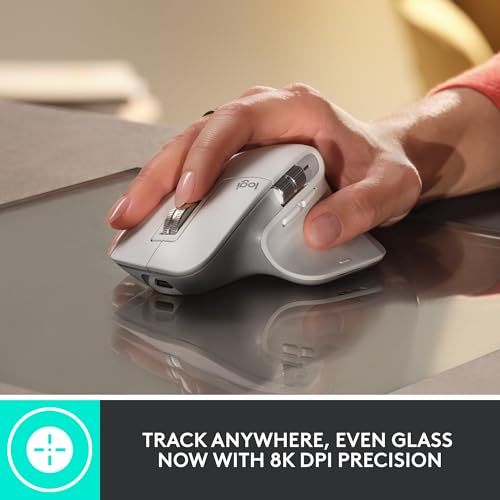
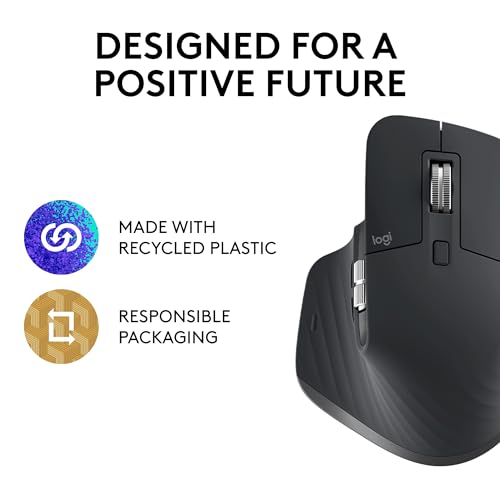
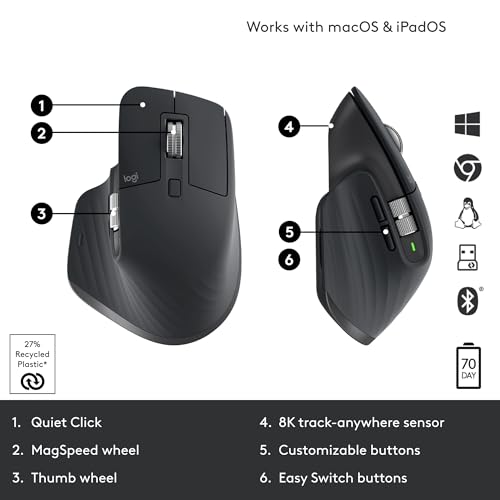
Logitech MX Master 3S Wireless Mouse Standard Edition with Logi Bolt USB Receiver, Ultra-Fast Scrolling, Ergo, 8K DPI, Track on Glass, Quiet Clicks, USB-C, Bluetooth, Windows, Linux, Chrome – Graphite
In Stock
$119.99
Save $30.00
Updated: May 26, 2026







As an Amazon Associate we earn from qualifying purchases. Product prices and availability are accurate as of the date/time indicated.
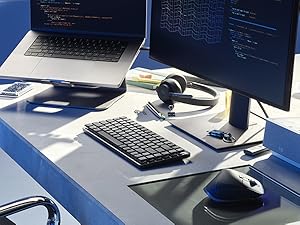
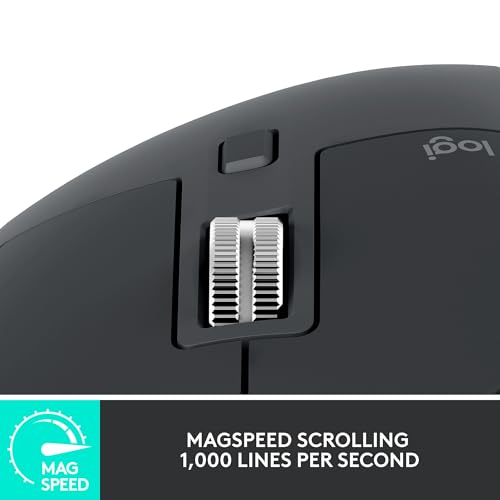
The Logitech MX Master 3S has been the default recommendation for engineers and creators for so long that it is almost boring to write about, but boring is exactly what we want from a mouse. The MagSpeed scroll wheel that switches between ratcheted clicks for line-by-line code review and frictionless free-spin for reading hundred-line files is the killer feature you do not appreciate until your old mouse breaks and you have to use a meeting-room rental for a day. The thumb-side horizontal scroll wheel is genuinely useful for scrubbing through wide spreadsheets, design tools, and any Slack message that has been quoted three times deep.
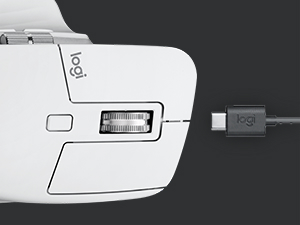
For developers specifically, the customizable button layout matters more than for general office workers. We map the thumb gesture button to mission control for switching between IDE workspaces, the forward and back buttons to navigate Git history in our code review tool, and the top button to a custom shortcut that triggers our local test runner. The quiet click switches of the 3S over the original 3 matter genuinely when you are on calls. The battery lasts seventy days on a charge and uses USB-C for fast top-ups. Logi Bolt receiver supports up to six devices, so one dongle handles your mouse, keyboard, presenter, and headset.
The trackball alternative for engineers with wrist sensitivity is the Logitech MX Ergo, which moves your wrist into a more neutral position and eliminates the lateral hand sweep that mouse use requires. We compared both extensively. The trackball is genuinely better for wrist health if you are already symptomatic, but slower for precise UI work like dragging text selections in code editors. Our verdict is mouse for most, trackball as a wrist-sparing transition if you cannot yet adopt the full split keyboard plus vertical mouse combination.
Dell U3225QE 32-inch 4K Monitor
Choosing the right monitor is the choice that pays back every single day for years. The Dell U3225QE is the engineer’s monitor of 2026 because it does exactly what an engineer’s monitor needs to do and nothing it does not. Thirty-two inches at native 4K is the size and density where you can have your IDE on one half, a documentation browser plus terminal split on the other half, and never feel like text is small enough to strain your eyes or that you need to scroll horizontally just to read a sensible line of code. The IPS Black panel gives you genuinely deep contrast for dark themes, which is what every working engineer uses because we are not animals.
The killer feature is the built-in KVM combined with Thunderbolt 4 ninety-watt power delivery. Plug a single USB-C cable into your laptop and you get video, charging, and access to all the peripherals connected to the back of the monitor. Plug your desktop tower into the second input and press one keyboard shortcut to switch monitor input plus all USB devices over to the other machine. This is genuinely magical for engineers who switch between a personal workstation and a corporate-issued MacBook. The auto-KVM detection just works. The integrated USB-C hub with Ethernet pass-through means you can have a wired connection to your home network without an ugly dock cluttering your desk.
We compared ultrawides extensively and rejected them for software engineering. The 32-inch 4K format gives you better window snapping behavior, more vertical real estate for long code files, and works correctly with native macOS and Windows scaling without third-party utilities. Pair the U3225QE with a vertical secondary monitor positioned to your dominant-hand side for documentation, Slack, and reference material. A budget 1440p 27-inch panel in portrait mode works perfectly for this role. The cost-versus-impact ratio of investing in a great main monitor is higher than any other component except possibly the chair.
Herman Miller Embody Chair

The Herman Miller Embody is the chair that we keep recommending despite knowing the sticker price will make most readers close the tab. We do this because we have watched too many talented engineers in their late twenties develop the kind of mid-back and neck pain that ends careers. The Embody is one of the only chairs explicitly designed for full-time computer work rather than executive seating. The back surface is composed of dynamic matrix segments that respond to your micro-movements continuously, which keeps your spine in motion rather than locked into a static posture for hours. The pixelated support adapts as you shift, lean, and twist toward second monitors.
The build quality justifies the price. Herman Miller backs the Embody with a twelve-year warranty covering everything including the cylinder, casters, arms, and fabric. We own units that are seven years old and look and function as well as the day they arrived. Compare this with a four-hundred-dollar gaming chair that you will replace in three years and the math actually favors the Embody over a decade. The arms adjust in four directions which matters for split keyboard users because you can position them exactly under your shoulder width rather than forcing your shoulders inward.
If the price is genuinely out of reach right now, the Steelcase Gesture is our second-place pick with similar adjustability and a slightly more traditional feel for users transitioning from office chairs. The Branch Verve is the best chair under five hundred dollars and is what we recommend to junior engineers and self-funded freelancers until cash flow allows the upgrade. We compared the Secretlab Titan Evo extensively, and while it is beautifully built for what it is, the foam-based gaming chair design genuinely does not breathe well enough for ten-hour days under summer conditions. The Embody, Gesture, and Verve all use mesh or breathable surfaces because that is what an engineer’s body actually needs.
Corsair Vengeance 64GB DDR5-6000 Kit
RAM is the bottleneck that quietly kills your productivity, and the cure is more of it than you think you need. Sixty-four gigabytes of DDR5 at 6000MHz is the new sweet spot for professional software development. The math is straightforward. Modern Chrome eats four to six gigabytes when you have meaningful work open. A TypeScript or Java language server can use three to six gigabytes for a real codebase. Docker Desktop with even a moderate set of containers running Postgres, Redis, an API service, and a worker service will consume eight to twelve gigabytes. Slack, Notion, your password manager, and meeting tools take another four. Add your IDE plus build watchers and you are easily at forty gigabytes of working set on a normal afternoon. Thirty-two gigabytes will swap to disk constantly and feel slow even on a fast NVMe.
The Corsair Vengeance kit at DDR5-6000 CL30 is our tested pick because it is the highest speed that runs stably on both AMD AM5 and the new Intel Core Ultra platforms without requiring custom BIOS tuning. Higher speed kits exist but require enabling EXPO or XMP profiles that sometimes destabilize at the edges of the validation envelope, which is exactly the kind of intermittent crash you do not want when you have unsaved work in your editor. The Vengeance heat spreaders are unobtrusive and clear most CPU cooler fan brackets without conflict. We have run identical kits across eight workstations and have not seen a single failure across two years of daily compile work.
If you can justify it, jump to one hundred twenty-eight gigabytes for true headroom. The use case is running multiple virtual machines, training small machine learning models, working with large datasets in Jupyter, or operating local language models for development. The price gap between sixty-four and one hundred twenty-eight has narrowed enough in 2026 that we now recommend the larger kit for any engineer expecting to keep this build in service for the next four years. The marginal cost is one of the best return-on-investment upgrades in the entire build.
Samsung 990 Pro 2TB NVMe SSD
22
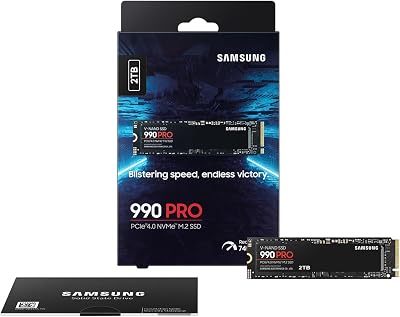
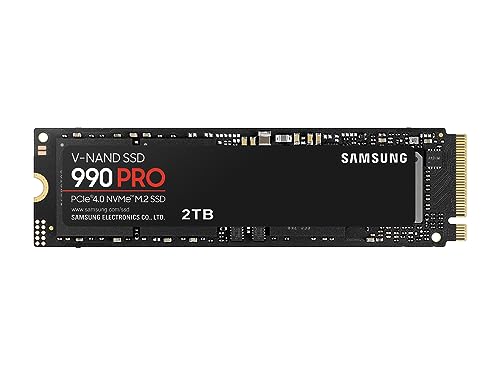
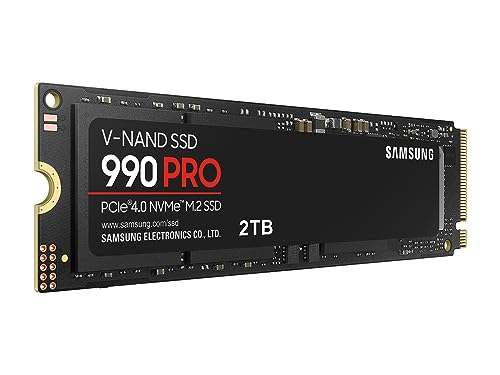
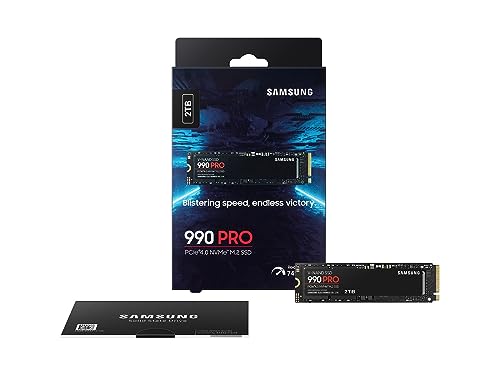
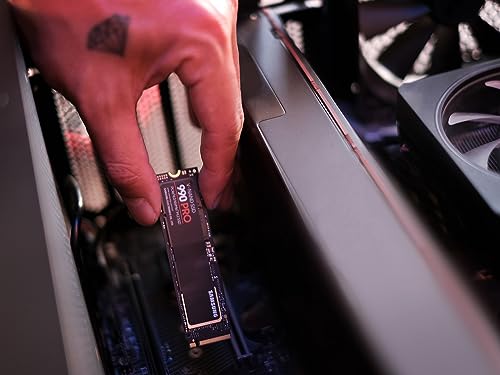
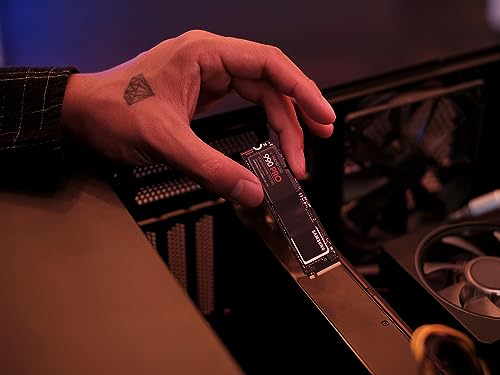
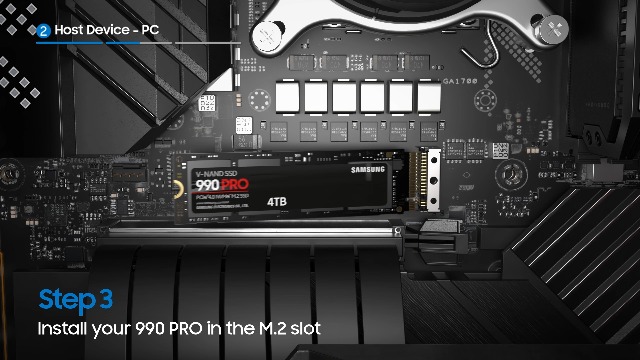
Samsung 990 PRO SSD 2TB NVMe M.2 PCIe Gen4, M.2 2280 Internal Solid State Hard Drive, Seq. Read Speeds Up to 7,450 MB/s for High End Computing, Gaming, and Heavy Duty Workstations, MZ-V9P2T0B/AM
In Stock
Updated: May 26, 2026





As an Amazon Associate we earn from qualifying purchases. Product prices and availability are accurate as of the date/time indicated.
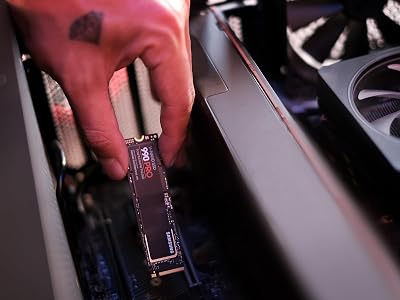
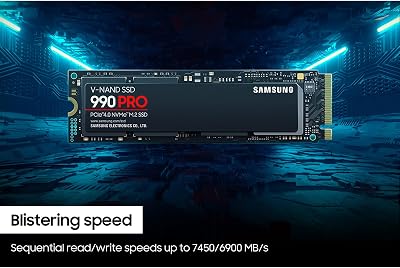
The Samsung 990 Pro 2TB is the no-drama pick for your primary project drive and Docker volume storage. Gen4 PCIe speeds at over seven thousand megabytes per second sequential and the high random IOPS performance is genuinely what you want for the file-system-heavy operations that dominate developer work. A node_modules folder with thirty thousand small files, a git status across a half-million-file repo, or a language server reindexing after a branch switch all benefit from random read performance more than from sequential throughput.

Two terabytes is the right size for a developer’s primary drive. Docker volumes alone eat several hundred gigabytes once you have been running professionally for a year, accumulating database snapshots, image layer caches, and forgotten test environments. Your local clone of every active project plus its dependency caches plus your IDE indexes plus your operating system and applications will easily reach a terabyte and a half of working set. The 990 Pro has been one of the most reliable consumer NVMe drives in recent history with a five-year warranty and a generous endurance rating that easily survives daily compile and rebuild cycles.
Pair the primary drive with a secondary NVMe for backups, virtual machine images, and ISO storage. A 4TB QLC drive is fine for this role because you are not writing to it constantly. We use Time Machine on macOS or Restic to a local target for our backup strategy, plus periodic encrypted backups to a network drive. The peace of mind from a tested local backup strategy is enormous when you are about to do something risky like a major OS upgrade or migrating a developer environment between machines.
Elgato Stream Deck MK.2
34
Prime
Elgato Stream Deck MK.2 – Studio Controller, 15 macro keys, trigger actions in apps and software like OBS, Twitch, YouTube and more, USB, works with Mac and PC
In Stock
Updated: May 26, 2026


As an Amazon Associate we earn from qualifying purchases. Product prices and availability are accurate as of the date/time indicated.
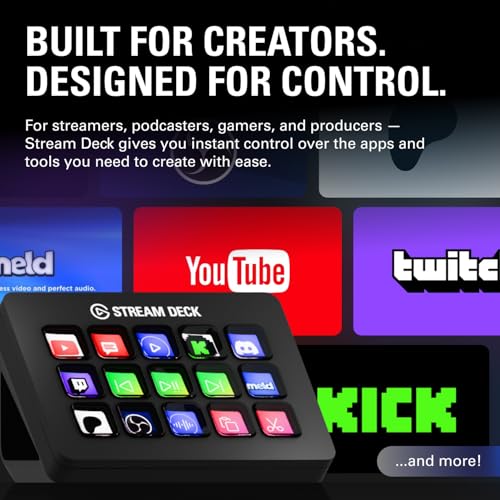
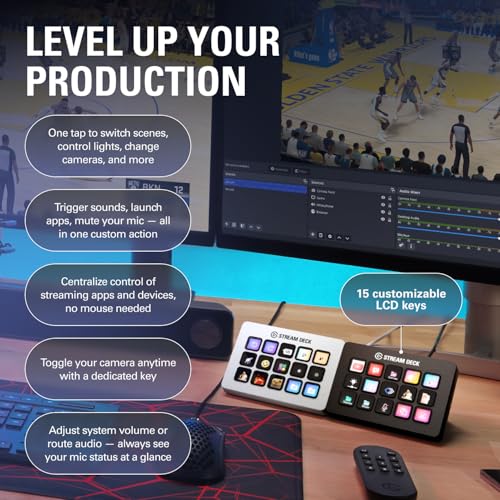
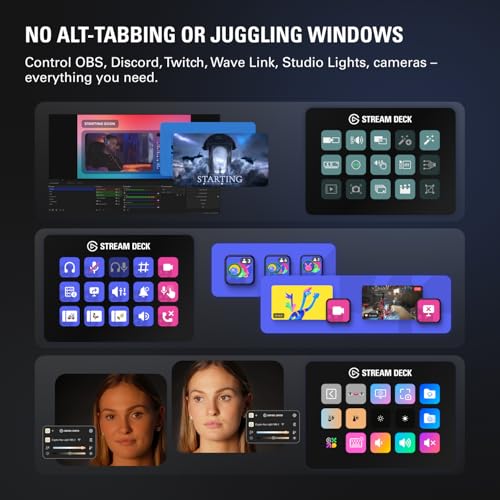
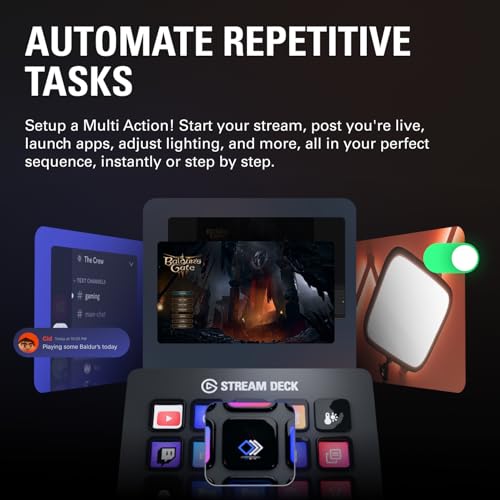
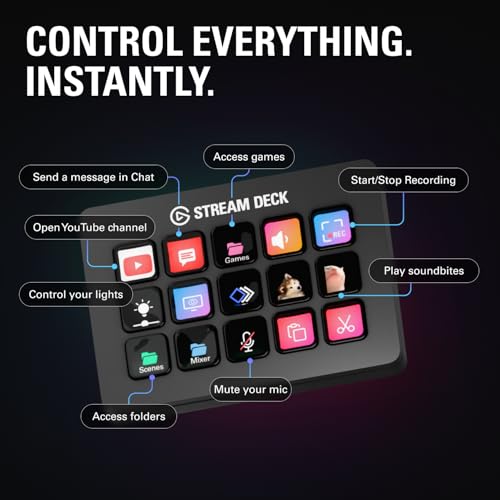
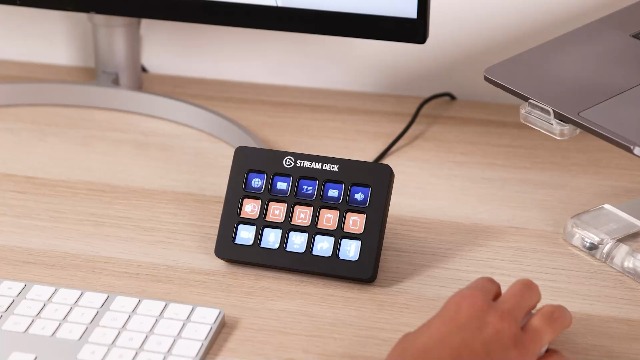
The Stream Deck started life as a streamer’s tool but it has quietly become one of the most useful peripherals on a developer’s desk. Fifteen programmable LCD keys live next to your keyboard and let you trigger anything from running a test suite to opening a Pull Request URL to starting and stopping your Docker Compose stack to muting your microphone in a meeting. The value proposition is that you replace the cognitive overhead of remembering and pressing keyboard shortcuts with looking at a labeled button. Over the course of a day this saves real mental bandwidth.
Our most-used profiles include a Git profile with one-button commit, push to current branch, open the latest PR in browser, and a panic-button stash that saves uncommitted changes before switching branches. We have a Docker profile that brings up our standard development stack, tails specific service logs, and tears the whole stack down with one button. There is a meeting profile that mutes everything, switches to a screen-sharing window arrangement, and posts a status to Slack. Plugin support is excellent and the official software runs natively on both macOS and Windows.
The fifteen-key MK.2 is the right size for most developers. The six-key Mini works as a portable companion. The thirty-two-key XL is overkill unless you are using it for live streaming alongside development work. Pair the Stream Deck with a software like BetterTouchTool on macOS or AutoHotkey on Windows to extend its capability beyond what the built-in Elgato actions support. The total time investment to set up your first ten useful buttons is under two hours and the payoff continues for years.
Software Pairing for the Working Engineer
Hardware exists to support your software workflow. For 2026 the developer stack we run across our team includes VS Code with the Remote Containers and GitHub Copilot extensions for daily coding, JetBrains IntelliJ or PyCharm for larger Java and Python projects, Docker Desktop for local infrastructure, Postman or Bruno for API testing, and Linear or Jira for issue tracking. We use Notion for engineering documentation, Slack for communication, and Loom for asynchronous design and code review videos. The Stream Deck profiles we mentioned earlier are tuned for exactly this stack.
For Git workflows we recommend Fork on Mac and Windows as a visual Git client that does not get in the way and handles complex merges better than terminal-only tools for most people. GitHub Desktop is the free alternative and is genuinely good for the common cases. For terminal work we use Warp on macOS and Linux for its AI-augmented command suggestions, with iTerm2 as a fallback. Windows users should run WSL2 with their preferred Linux distribution rather than fighting the native Windows toolchain for anything non-trivial.
Local model development has matured in 2026. If you have an RTX 5070 or better, running Llama 4 or DeepSeek-V3 locally for code completion and chat is genuinely viable and protects your private codebase from being sent to external services. LM Studio and Ollama remain the easiest entry points. If you do not need local inference, the cloud copilots remain faster and more capable, and your sixty-four gigabytes of RAM will not be wasted because you will fill it with everything else.
Related Guides
- Best RAM for Content Creation in 2026
- GMKtec M5 Ultra Mini PC Review (Ryzen 7 7730U)
- TP-Link Archer AX11000 Tri-Band Gaming Router Review
- Best CPU Coolers for Photo Editing in 2026
Frequently Asked Questions
Do I really need to spend two thousand dollars on a chair?
You need to spend money on a chair proportional to how many hours you sit in it per week. If you work full time as a software engineer, that is roughly forty to fifty hours per week, fifty weeks per year, for the rest of your working life. The Herman Miller Embody at a thousand seven hundred dollars amortizes over its twelve-year warranty to about three dollars per working day. A four-hundred-dollar gaming chair amortizes to about a dollar fifty per day but will be replaced twice in the same period and is significantly worse for your back. Buy the chair once, buy the right one.
Is the Ryzen 9 7950X overkill if I do mostly TypeScript and React work?
Yes, honestly. For TypeScript and React work, an eight-core Ryzen 7 7700X or Intel Core i7 will do everything you need and save you about two hundred dollars to put toward a better monitor or chair. The sixteen-core chips earn their keep only if you regularly do cold compiles of large Rust, Go, or C++ codebases or if you are running multiple virtual machines and heavy local databases simultaneously. Spend the money where it returns daily.
Can I just use my laptop with an external monitor?
For most people, yes, and this is genuinely the right answer if your employer provides a recent MacBook Pro M4 or M5 machine. Add the Dell U3225QE with USB-C, the Kinesis Advantage 360 split keyboard, the MX Master 3S, and the Embody chair, and you have ninety percent of the productivity benefit of a desktop build with the bonus of being able to work from anywhere. The case for building a separate desktop is local AI inference, multiple monitor setups beyond what a single Thunderbolt port can drive, or genuinely compile-heavy workloads.
Should I run Linux on my workstation?
If you primarily do backend work targeting Linux servers, yes. Ubuntu LTS or Fedora Workstation gives you the closest match to production. If you do mobile development or use any of the Adobe creative tools, no, you need macOS or Windows. Most professional engineering teams in 2026 have settled on either macOS for engineers with mixed needs or Linux for backend specialists, with Windows users running WSL2 for any serious development work.
Our Tested Verdict
If you can only buy three upgrades from this guide, buy the Herman Miller Embody chair, the Dell U3225QE monitor, and the Kinesis Advantage 360 keyboard. These three components transform your daily working life more than any combination of CPU, GPU, or RAM upgrades. The Embody pays back over twelve years of comfort. The Dell monitor removes the daily friction of switching between machines and improves every minute of screen-based work. The Kinesis protects your wrists from the slow-onset injuries that end engineering careers. Add the Logitech MX Master 3S mouse, sixty-four gigabytes of Corsair DDR5 RAM, a Samsung 990 Pro 2TB NVMe, and an Elgato Stream Deck and you have a workstation that will serve you well for the next five to seven years.
For further reading on building out your complete setup, see our guide on how to set up dual monitors for productivity, our list of best graduation gifts for new programmers, our deep dive on the best ergonomic keyboards of 2026, our review of the best 4K monitors for programming, our breakdown of Herman Miller versus Steelcase for engineers, our guide on building the best desk setup for software engineers, and our recommendations for the best mechanical keyboards for programmers. Each of these dives deeper into a single component of the workstation puzzle.
Ready to decide? Our #1 pick for 2026 is the Ergonomic Keyboard.
Live price & availability on Amazon.


