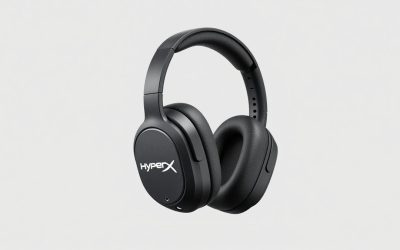
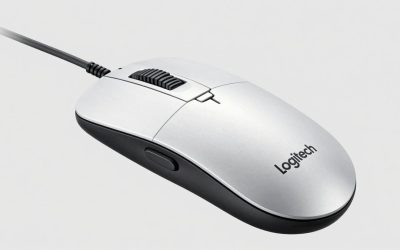
- Top Pick: Razer Viper V3 Pro Wireless Esports Gaming Mouse, 54g Lightweight, Black
- Best Value: Logitech G502 Hero Wired Gaming Mouse – Black
- Premium Choice: Rapoo VT7 Wireless Gaming Mouse, True 8K Wireless Polling Rate, 53g Lightweight, Up to 750 Hr Battery, Nordic nRF54L15 MCU, 100-Million Mechanical Switch, 10 Programmable Buttons, White
Affiliate disclosure: As an Amazon Associate we earn from qualifying purchases. This post contains affiliate links — if you buy through them we may earn a small commission at no extra cost to you. This never affects our recommendations.
As an Amazon Associate we earn from qualifying purchases at no extra cost to you.



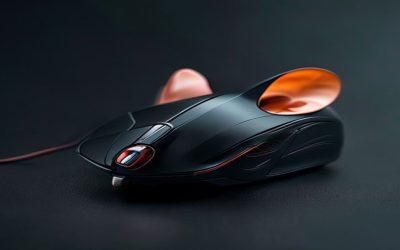
Polling rate is how often your mouse reports its position to your PC — measured in Hz. At 125Hz, your mouse checks in every 8ms. At 1000Hz, every 1ms. At 4000Hz, every 0.25ms. That quarter-millisecond update cycle is what separates standard gaming mice from the new class of high-polling-rate hardware dominating pro play in 2026.
The jump from 1000Hz to 4000Hz is not just a spec sheet flex. In fast-paced competitive shooters like Valorant, CS2, and Apex Legends, a lower-latency input chain directly translates to tighter tracking, crisper flicks, and more predictable cursor behavior — especially at high DPI settings where even tiny timing gaps introduce micro-stutters. CPU and GPU pipelines have gotten fast enough that the bottleneck is increasingly the peripheral side. Razer, Logitech, Pulsar, and newer challengers have responded with a wave of 4000Hz-plus wireless mice that weigh under 65 grams. This guide cuts through the noise and ranks the five best high polling rate gaming mice you can buy right now.
In a hurry? See the top-rated High Polling Rate Gaming Mouse deals available right now:
🛒 Check High Polling Rate Gaming Mouse Prices on Amazon →🛒 Best Price Today on Amazon
Prime members get fast, free shipping on everything above, plus member-only deals. New members get a 30-day free trial — cancel anytime.
Start 30-Day Prime Free Trial →See Today’s Amazon DealsQuick Comparison Table
| Mouse | Polling Rate | Weight | Sensor | Price (approx.) |
|---|---|---|---|---|
| Razer Viper V3 Pro | 4000Hz (HyperPolling) | 74g | Focus Pro 35K | ~$159 |
| Logitech G Pro X Superlight 2 DEX | 4000Hz (LIGHTSPEED) | 60g | HERO 2 25K | ~$169 |
| Pulsar X2H | 4000Hz | 54g | PAW3395 | ~$99 |
| Razer DeathAdder V3 HyperSpeed | 4000Hz (HyperPolling) | ~82g | Focus Pro 30K | ~$99 |
| Endgame Gear XM2we | 8000Hz (wired) / 4000Hz (wireless) | 63g | PAW3395 | ~$89 |
Our Top Picks
1. Razer Viper V3 Pro — Best Overall
The Razer Viper V3 Pro is the complete package for competitive players who refuse to compromise. Running Razer’s HyperPolling at 4000Hz wirelessly, it pairs that responsiveness with the class-leading Focus Pro 35K optical sensor — delivering sub-pixel accuracy at virtually any DPI setting. At 74 grams, it sits slightly heavier than the ultralight competition but rewards you with a premium symmetrical shell that holds up across marathon sessions.
Pros:
- 4000Hz HyperPolling wireless — no dongle latency compromise
- Focus Pro 35K sensor with best-in-class tracking consistency
- Symmetrical shape suits both grip styles
- Excellent Razer HyperSpeed Wireless connection stability
- Gen-3 optical switches rated 90 million clicks
Cons:
- 74g is heavier than competitors at this price tier
- HyperPolling receiver required (included, not universal)
- Premium price for those on a budget
2. Logitech G Pro X Superlight 2 DEX — Best Premium
Logitech’s G Pro X Superlight 2 DEX is what happens when you take an already legendary esports mouse and push it further. The DEX variant unlocks 4000Hz LIGHTSPEED polling over Logitech’s renowned wireless protocol, while the HERO 2 25K sensor delivers zero-smoothing accuracy that pro players have trusted for years. At 60 grams with the extended cable option for wired-mode enthusiasts, it is one of the most versatile high-polling mice available — and the shape, refined across pro feedback cycles, remains among the finest in the industry.
Pros:

- LIGHTSPEED 4000Hz wireless — one of the most stable connections available
- HERO 2 25K sensor with proven pro-level accuracy
- 60g weight hits the ultralight threshold without sacrificing structural rigidity
- Extended cable option for those preferring wired 4000Hz
- Broad shape compatibility — the symmetrical PRO shape works for most hand sizes
Cons:
- Among the most expensive mice on this list
- HERO 2 sensor, while excellent, trails the Focus Pro 35K at extreme CPI ranges
- Limited RGB customization compared to Razer’s ecosystem
3. Pulsar X2H — Best Value 4000Hz
The Pulsar X2H is the value story of the high-polling-rate era. At 54 grams, it is the lightest mouse on this list, and at around $99 it delivers a genuine 4000Hz wireless experience alongside the PAW3395 sensor — the same chip powering mice twice its price. Pulsar’s attention to detail shows in the premium PTFE feet and the non-slip coating that stays consistent even during long sessions. For budget-conscious competitors who refuse to trade core performance, the X2H is the answer.
Pros:
- 54g — lightest on this list, exceptional for wrist-aiming styles
- PAW3395 sensor matches performance of sensors in higher-priced options
- True 4000Hz wireless at a $99 price point
- Premium stock feet and coating out of the box
- Compact symmetrical shell suits small-to-medium hand sizes
Cons:
- Compact shape may not suit large hands or palm grip
- Smaller brand means less widespread availability in some regions
- Battery life shorter than Razer/Logitech at 4000Hz polling
4. Razer DeathAdder V3 HyperSpeed — Best Ergonomic 4000Hz
Not every competitive player wants a symmetrical mouse. The Razer DeathAdder V3 HyperSpeed brings 4000Hz HyperPolling to the iconic right-handed ergonomic DeathAdder shell — a shape that has been refined through decades of pro and consumer feedback. The Focus Pro 30K sensor provides ample tracking fidelity for all competitive scenarios, and Razer has trimmed the classic DeathAdder silhouette to a lightweight build that erases the bulk traditionally associated with ergonomic designs.
Pros:

- Only 4000Hz ergonomic wireless option on this list — fills a real gap
- Focus Pro 30K sensor — accurate and consistent across all surfaces
- The DeathAdder shell is among the most comfortable right-hand ergonomic shapes ever made
- Lightweight redesign sheds the bulk of older DeathAdder generations
- HyperSpeed wireless at competitive-grade latency
Cons:
- Right-handed only — left-handed players need not apply
- Slightly heavier than the symmetrical ultralight competition
- Fewer CPI steps than the Viper V3 Pro’s Focus Pro 35K
5. Endgame Gear XM2we — Best Budget Entry High Hz
The Endgame Gear XM2we is the dark horse entry. In wired mode it pushes an extraordinary 8000Hz polling rate — double what any other mouse on this list offers — making it the choice for players who want the absolute lowest possible input latency when tethered. Switch to wireless and it still delivers 4000Hz. Kailh GM 8.0 switches provide a crisp, tactile click, and at 63 grams the XM2we sits comfortably in the ultralight category. At roughly $89, it is the most affordable gateway into high-polling wireless gaming.
Pros:
- 8000Hz in wired mode — highest polling rate on this list
- 4000Hz wireless — no penalty for going cordless
- PAW3395 sensor — same chip as the Pulsar X2H at a similar or lower price
- Kailh GM 8.0 switches with excellent tactile feedback
- 63g keeps it firmly in ultralight territory
Cons:
- 8000Hz wired mode has higher CPU overhead — requires a capable system
- Less refined software ecosystem compared to Razer or Logitech
- Shape is straightforward but lacks the ergonomic refinement of larger-brand options
Does High Polling Rate Actually Matter for Gaming?
Yes — with important caveats about where and when it matters most.
The core benefit of 4000Hz over 1000Hz is reduced motion-to-photon latency. At 1000Hz your mouse reports position every 1ms. At 4000Hz, every 0.25ms. Over a full input chain — mouse, USB, CPU driver, game engine, GPU render — that 0.75ms savings compounds with other latency reductions from high-refresh monitors and low-latency game settings. For most players the difference is subtle but measurable.

Where high polling rate delivers the most tangible benefit is in micro-movement tracking. At 1000Hz, very fast flicks can produce interpolation artifacts — the driver fills in missing positional data between reports. At 4000Hz, the sensor captures enough data points that even the fastest human movements are represented accurately with no interpolation gap. This is especially relevant for claw-grip players who flick aggressively, and for anyone playing at 1600 DPI or above where cursor speed amplifies any tracking inaccuracy.
The real-world evidence from esports supports the adoption curve. In 2024 and 2025, 4000Hz mice became standard issue for top Valorant and CS2 pros. By 2026, most tier-1 players competing at LAN events use 4000Hz or higher hardware. The performance delta may not be visible to a casual player, but at the highest levels of competition — where reactions are measured in single-digit milliseconds — every link in the latency chain matters.
One genuine consideration: 4000Hz polling increases CPU overhead compared to 1000Hz. On modern CPUs this overhead is negligible, typically under 1% additional load. On older or lower-end systems it can occasionally cause micro-stutters if the CPU is already bottlenecked. If you are running a CPU older than 2020-generation hardware, it is worth benchmarking before committing to 4000Hz polling mode.
How to Choose a High Polling Rate Mouse
Consider Your Grip Style and Hand Size
Polling rate is only one axis of mouse selection. A mouse that does not fit your hand will hurt your performance regardless of its Hz rating. Claw and fingertip grip players typically prefer lighter, more compact shapes — the Pulsar X2H and Endgame Gear XM2we are strong fits. Palm grip players benefit from larger, more contoured shells — the DeathAdder V3 HyperSpeed is the standout ergonomic option, while the Viper V3 Pro’s deeper symmetrical shell accommodates larger palms better than the flatter Superlight 2 DEX.
Wired vs. Wireless at 4000Hz
The conventional wisdom that wired always beats wireless for latency no longer holds at 4000Hz. Both Razer’s HyperPolling and Logitech’s 4000Hz LIGHTSPEED wireless protocols demonstrate latency on par with or better than wired 1000Hz connections in controlled testing. Unless you are specifically chasing the 8000Hz wired ceiling of the Endgame Gear XM2we, wireless at 4000Hz is a genuine competitive option — not a compromise. The primary remaining advantage of wired is the elimination of battery management.
Software Ecosystem and Sensor Compatibility
All five mice on this list use top-tier sensors, but your surface matters. The PAW3395 (Pulsar X2H, Endgame Gear XM2we) performs exceptionally well on cloth pads but may exhibit slightly more jitter on hard surfaces at very high DPI. The Focus Pro 35K (Viper V3 Pro) and HERO 2 25K (Superlight 2 DEX) include advanced surface calibration in their software suites, which can compensate for non-standard mousepads. If you use hard or unusual surfaces, prioritize mice with surface-calibration software support.
Final Verdict
For most competitive players in 2026, the Razer Viper V3 Pro is the easiest recommendation: 4000Hz wireless, the best sensor on this list, and a shape that works for the widest range of hand sizes and grip styles. If budget is a priority, the Pulsar X2H delivers the core 4000Hz experience at a $99 price point that is genuinely competitive with mice costing 60% more. Players who want the absolute lowest wired latency possible should look at the Endgame Gear XM2we — its 8000Hz wired mode is a category of its own, and the $89 price makes it an exceptional entry point.
The right choice depends on your hand, your grip, and your budget — but all five mice on this list represent the legitimate leading edge of gaming peripheral technology in 2026.
Frequently Asked Questions
Q: Is 4000Hz polling rate worth it over 1000Hz for casual gaming?
For casual and mid-level competitive play, the difference between 1000Hz and 4000Hz is genuinely small — most players will not notice it in everyday gaming. The upgrade becomes more meaningful if you play at 1600+ DPI, compete at a high level, or run a high-refresh monitor (240Hz+) where the overall input chain latency is already optimized and the peripheral side becomes the remaining variable. If you are upgrading from a 500Hz or 125Hz mouse, the jump to 4000Hz will feel more significant than going from an existing 1000Hz mouse.
Q: Do I need a special USB port or receiver for 4000Hz mice?
Wireless 4000Hz mice (Razer HyperPolling, Logitech LIGHTSPEED 4000Hz) include a proprietary USB receiver that handles the high-frequency wireless protocol — standard Bluetooth cannot support 4000Hz. For wired 4000Hz mice, a USB 2.0 or higher port is sufficient; no special hardware is required. The Endgame Gear XM2we’s 8000Hz wired mode works over standard USB but benefits from a direct motherboard USB port rather than a USB hub to minimize any additional latency in the chain.
Q: Will a 4000Hz mouse increase CPU usage noticeably?
On any CPU from 2020 or newer, the additional CPU overhead from 4000Hz polling versus 1000Hz is negligible — typically less than 1% additional load. On older or budget CPUs already running near capacity during gaming, there can be occasional micro-stutters introduced by the higher polling interrupt rate. If you have an older CPU, it is worth testing 4000Hz mode in-game and comparing frame-time graphs to 1000Hz mode before committing. Most users will see no difference, but the edge case is worth knowing about.
Related Articles
Looking for more on this topic? Browse the hand-picked guides below — each one applies the same scoring rubric used in this review.
Ready to decide? Our #1 pick for 2026 is the Mouse.
Live price & availability on Amazon.