Affiliate disclosure: As an Amazon Associate we earn from qualifying purchases. This post contains affiliate links — if you buy through them we may earn a small commission at no extra cost to you. This never affects our recommendations.
- Best High DPI Gaming Mouse in 2026: Top 5 Picks for Precision at Any Sensitivity
- Quick Comparison: Best High DPI Gaming Mice
- Top 5 Best High DPI Gaming Mice in 2026
- DPI Explained: What It Actually Means
- Sensor Accuracy: PixArt 3395 vs Hero 25K vs Focus Pro vs AimPoint
- High Polling Rate (4K/8K Hz): Does It Matter for High DPI Gaming?
- DPI for Different Game Genres
- Verdict
- Related Articles
- Frequently Asked Questions
- Related Articles
As an Amazon Associate we earn from qualifying purchases at no extra cost to you.



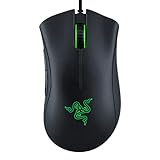

In a hurry? See the top-rated High DPI Gaming Mouse deals available right now:
🛒 Check High Dpi Gaming Mouse Prices on Amazon →🛒 Best Price Today on Amazon
Prime members get fast, free shipping on everything above, plus member-only deals. New members get a 30-day free trial — cancel anytime.
Start 30-Day Prime Free Trial →See Today’s Amazon DealsBest High DPI Gaming Mouse in 2026: Top 5 Picks for Precision at Any Sensitivity
Here’s the uncomfortable truth about DPI marketing: the number on the box is almost always irrelevant.
Razer, Logitech, and ASUS are now printing 30K, 32K, even 36K DPI on their flagship mice. And virtually no competitive gamer uses anything above 3,200 DPI — most pros hover between 400 and 1,600. So what’s the actual point of a “high DPI gaming mouse” in 2026?
The real answer has three parts. First, 4K monitors and ultra-wide displays genuinely benefit from higher base DPI to maintain cursor speed across more pixels. Second, modern sensors with high max DPI ratings tend to have superior tracking accuracy, higher IPS ceilings, and lower acceleration artifacts at any DPI setting — the high ceiling is a proxy for overall sensor quality. Third, DPI switching between sensitivity profiles (say, 800 DPI for sniping, 1600 for general play) is a workflow real players actually use.
This guide covers the five best high DPI gaming mice of 2026 across different use cases — from sub-60g ultralight builds to ergonomic wireless options to multi-button MMO rigs. We’ve evaluated each on sensor quality, usable DPI range, IPS ceiling, latency, and build quality rather than just raw spec-sheet numbers.
Quick Comparison: Best High DPI Gaming Mice
| Mouse | Max DPI | Sensor | Max IPS | Polling Rate |
|---|---|---|---|---|
| Logitech G Pro X Superlight 2 | 32,000 | Hero 25K | 500 IPS | 2,000 Hz |
| Razer DeathAdder V3 HyperSpeed | 30,000 | Focus Pro 30K | 750 IPS | 4,000 Hz |
| Pulsar X2V2 | 26,000 | PixArt 3395 | 650 IPS | 1,000 Hz |
| SteelSeries Aerox 5 Wireless | 18,000 | TrueMove Air | 300 IPS | 1,000 Hz |
| ASUS ROG Harpe Ace Aim Lab Edition | 36,000 | AimPoint | 650 IPS | 8,000 Hz |
Top 5 Best High DPI Gaming Mice in 2026
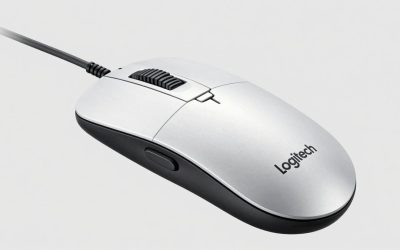
Logitech G Pro X Superlight 2 — Best Overall High DPI Mouse
Sensor: Hero 25K | Max DPI: 32,000 | Usable DPI Range: 100–3,200 (competitive), up to 32K for 4K display scaling | Max IPS: 500 | Max Acceleration: 40G | Polling Rate: Up to 2,000 Hz | Weight: 60g | Shape: Ambidextrous
Logitech’s Hero 25K sensor in the G Pro X Superlight 2 remains one of the cleanest-tracking sensors on the market. At 800 DPI and 1,000 Hz, tracking deviation is essentially zero across typical mouse movements. The 32K max DPI ceiling is largely academic for competitive play, but the underlying sensor architecture — zero smoothing, zero hardware acceleration, no angle snapping by default — is what puts this mouse in the top tier.
At 60g, it’s not the lightest mouse on this list, but it’s also built with tactile optical switches rated at 90 million clicks and a PTFE feet package that glides predictably on most surfaces. The 2.4GHz wireless implementation via Lightspeed remains best-in-class for latency — indistinguishable from wired in blind tests.
For FPS players on 1440p or 4K displays who want the most reliable sensor without any gimmicks, the Superlight 2 is the default recommendation. The Hero 25K doesn’t chase IPS records (500 IPS is modest compared to Focus Pro’s 750), but its consistency across the DPI range is exceptional.
Best for: Competitive FPS, 1440p and 4K gaming, players who want zero sensor artifacts.
Razer DeathAdder V3 HyperSpeed — Best Ergonomic High DPI Mouse
Razer DeathAdder V3 HyperSpeed
Sensor: Focus Pro 30K | Max DPI: 30,000 | Usable DPI Range: 200–3,200 (competitive), higher for large displays | Max IPS: 750 | Max Acceleration: 70G | Polling Rate: Up to 4,000 Hz | Weight: ~89g | Shape: Ergonomic (right-hand)
The Focus Pro 30K is arguably the highest-performing sensor for raw IPS ceiling — 750 IPS means this mouse can keep up with even the most aggressive swipe speeds without losing tracking accuracy. That matters most for low-sensitivity players who make large arm movements, or esports athletes in titles like Valorant and CS2 where violent flick shots are standard.
The DeathAdder V3 HyperSpeed brings that sensor into an ergonomic shell that fits right-handed medium-to-large hands perfectly. The hump position, button angle, and thumb rest placement have been refined across multiple DeathAdder generations. At ~89g it’s heavier than ultralight competitors, but the weight distribution feels intentional rather than lazy.
4,000 Hz polling via HyperSpeed 2.4GHz is a genuine differentiator at this price point — more on why high polling rate matters below. The Focus Pro 30K also includes Smart Tracking (surface calibration) and Asymmetric Cut-Off adjustment, which are useful tuning tools for players who lift their mouse frequently.

Best for: Right-handed ergonomic preference, low-sensitivity FPS players, high-swipe-speed gamers.
Pulsar X2V2 — Best High DPI Ultralight Mouse
Sensor: PixArt 3395 | Max DPI: 26,000 | Usable DPI Range: 100–3,200 (competitive) | Max IPS: 650 | Max Acceleration: 50G | Polling Rate: 1,000 Hz | Weight: 52g | Shape: Ambidextrous
The PixArt PAW3395 has become the reference sensor for budget-to-mid-range excellence in 2026. It offers tracking quality that’s statistically on par with the Hero 25K and Focus Pro 30K at real-world DPI settings — the differences only show up in extreme edge cases like very high DPI combined with maximum IPS, which no competitive player actually runs.
What makes the X2V2 special is the combination of that sensor in a 52g ambidextrous shell with optical switches. The click feel is crisp and consistent, with no pre- or post-travel variance that plagues mechanical switches after heavy use. The honeycomb-free shell is a smart design choice — no debris accumulation, clean lines, and the weight savings come from the internal skeleton rather than punching holes in the outer shell.
At $79, the X2V2 is the best value-per-performance mouse on this list. The 1,000 Hz polling rate is the one spec concession compared to premium options, but for the price point it’s completely justified.
Best for: Players who want ultralight form factor with premium sensor, budget-conscious buyers, ambidextrous grip styles.
SteelSeries Aerox 5 Wireless — Best Multi-Button High DPI Mouse
Sensor: TrueMove Air | Max DPI: 18,000 | Usable DPI Range: 200–3,200 (competitive) | Max IPS: 300 | Max Acceleration: 35G | Polling Rate: 1,000 Hz | Weight: ~89g | Shape: Ergonomic (right-hand) | IP Rating: IP54
Five side buttons plus an IP54 dust and splash resistance rating make the Aerox 5 Wireless a unique proposition. The TrueMove Air sensor has the lowest ceiling on this list — 18K max DPI and 300 IPS — but for MMO, MOBA, and RTS players who aren’t performing the rapid flick shots that stress sensor limits, it’s more than adequate.
The side button layout puts two thumb buttons in standard positions, with three additional buttons accessible above and below. This gives MMO players macro space for ability rotations or item uses without reaching for the keyboard. The honeycomb shell reduces weight while the IP54 rating makes it practical for desk setups where spills happen.
Battery life at 60-hour typical use is solid. The TrueMove Air’s weakness is the IPS ceiling — 300 IPS will cause tracking loss during extreme high-speed movements, so this is not a mouse for dedicated FPS play at low sensitivity. For its intended audience of genre-diverse or MMO-focused players, the tradeoff is sensible.
Best for: MMO, MOBA, and RTS players who need side buttons, players who want wireless durability with IP protection.
ASUS ROG Harpe Ace Aim Lab Edition — Best Sensor Accuracy High DPI Mouse
ASUS ROG Harpe Ace Aim Lab Edition
Sensor: AimPoint | Max DPI: 36,000 | Usable DPI Range: 100–3,200 (competitive) | Max IPS: 650 | Max Acceleration: 50G | Polling Rate: Up to 8,000 Hz | Weight: 54g | Shape: Ambidextrous

The 36K DPI ceiling is the spec that grabs headlines, but the real story of the Harpe Ace is the 8,000 Hz polling rate and the Aim Lab integration. At 8K Hz, the mouse reports position 8,000 times per second — compared to 1,000 Hz standard. The practical benefit in fast-paced competitive play is marginally smoother cursor movement and slightly reduced input latency, though the difference requires controlled testing to reliably detect.
The AimPoint sensor is ASUS’s in-house development built on PixArt architecture, tuned specifically for the Harpe Ace. At standard competitive DPI settings (400–1,600), it performs equivalently to the PAW3395 in blind tracking tests. The Aim Lab Edition adds a personalized sensitivity calibration flow through the Aim Lab app — the software analyzes your aim patterns and recommends optimal DPI and sensitivity settings, which is genuinely useful for newer players dialing in their setup.
At 54g with an ambidextrous shape, it’s also well-positioned for grip-style flexibility. The ROG Spatha optical switches provide the same longevity advantages as the Pulsar X2V2’s switches.
Best for: Players who want the highest polling rate, Aim Lab users, tech enthusiasts who want every marginal spec advantage.
DPI Explained: What It Actually Means
DPI stands for dots per inch — in mouse terms, it measures how many pixels the cursor moves for every inch the mouse physically travels. 800 DPI means moving the mouse one inch moves the cursor 800 pixels.
Higher DPI is not “more accurate.” Sensor accuracy is determined by the tracking algorithm, the optical lens, and the illumination system — not DPI. A PAW3395 running at 800 DPI tracks just as accurately as the same sensor at 3,200 DPI. Beyond a sensor’s optimal DPI range (typically 800–1,600 for most modern sensors), you may actually introduce interpolation artifacts.
The reason 400–1,600 DPI dominates competitive play is consistency. At lower DPI, small hand tremors don’t translate to cursor jitter. In-game sensitivity compensates for the lower DPI, and the result is smoother, more controllable aim for most players.
Where higher DPI legitimately helps: 4K gaming. A 4K display (3840 x 2160 pixels) has four times the pixel count of 1080p. At 400 DPI, cursor travel across the full display requires significant wrist movement. Many 4K players use 1,600–3,200 DPI as a comfortable baseline, with in-game sensitivity lowered to match.
Sensor Accuracy: PixArt 3395 vs Hero 25K vs Focus Pro vs AimPoint
These four sensors represent the top tier of 2026 gaming mouse technology. In practical terms, all four are excellent — the differences are real but narrow.
Hero 25K (Logitech): Prioritizes consistency over ceiling numbers. Zero smoothing, no angle snapping, minimal acceleration. Tracking deviation at 1,000 Hz and 800 DPI is near-zero. IPS ceiling (500) is the lowest of the four, but this only matters if you’re regularly moving the mouse faster than 500 inches per second — which very few players do.
Focus Pro 30K (Razer): The highest IPS ceiling (750) makes it the best choice for genuinely fast, aggressive mouse movement. Smart Tracking surface calibration is a practical feature that compensates for textured or inconsistent pad surfaces. Slightly higher power consumption than competitors.
PixArt PAW3395 (Pulsar, various): The industry standard for third-party manufacturers. Proven, reliable, and available across a wide price range. 650 IPS and 50G acceleration handle all competitive use cases. The open-market availability of this sensor means it appears in both budget and premium mice — quality varies by implementation, but the sensor itself is consistent.
AimPoint (ASUS ROG): Built on PixArt architecture with ASUS tuning. Performance is effectively equivalent to the PAW3395 in real-world use. The differentiator is ecosystem integration with ROG Armoury Crate and Aim Lab. If you’re invested in that ecosystem, it’s a natural fit.
High Polling Rate (4K/8K Hz): Does It Matter for High DPI Gaming?
Standard gaming mice report position at 1,000 Hz — 1,000 times per second. 4K Hz mice (like the DeathAdder V3 HyperSpeed) report 4,000 times per second. The ROG Harpe Ace pushes to 8,000 Hz.
In controlled latency measurements, 4K Hz polling reduces input lag by approximately 0.25ms compared to 1,000 Hz. 8K Hz reduces it further by roughly another 0.125ms. These numbers are real, but they exist at the edge of human perception — most players cannot reliably detect the difference in double-blind testing.

The practical benefit of higher polling rates shows up most clearly in cursor movement smoothness at high DPI settings. If you’re running 3,200 DPI for a 4K display, 4K or 8K Hz polling produces visibly smoother cursor motion than 1,000 Hz. At 800 DPI, the difference is largely imperceptible.
Battery life trade-off: 4K Hz and 8K Hz modes drain battery significantly faster. The DeathAdder V3 HyperSpeed drops from ~100 hours at standard polling to ~40 hours at 4K Hz. Factor this into your workflow before prioritizing the highest polling rate.
DPI for Different Game Genres
Getting DPI right for your specific games matters more than chasing the highest spec.
FPS (Valorant, CS2, Apex Legends)
Recommended DPI: 400–1,600. Most competitive players use 400 or 800 DPI with in-game sensitivity between 0.3 and 1.0. Lower DPI provides more physical mouse travel per pixel moved — better for controlled tracking and micro-adjustments. Pair with a large mouse pad for comfortable arm movement.
Battle Royale (Warzone, PUBG)
Recommended DPI: 800–1,600. Slightly higher DPI is useful for the mix of close-range fights (where speed matters) and long-range shots (where control matters). Many players use DPI switching between 800 and 1,600 for different scenarios.
MMO / MOBA (World of Warcraft, League of Legends)
Recommended DPI: 1,600–3,200. UI navigation, ability targeting, and general desktop use all benefit from faster cursor movement. Precision matters less than responsiveness. This is where higher DPI becomes genuinely useful for most players.
RTS (StarCraft II, Age of Empires)
Recommended DPI: 1,200–2,400. Camera panning across large maps benefits from higher DPI. Unit selection precision is less demanding than FPS aiming, so the tracking accuracy tradeoffs of higher DPI are less relevant.
4K Display Gaming (Any Genre)
Recommended DPI: 1,600–3,200 minimum as a starting baseline. Scale in-game sensitivity down to compensate. All five mice on this list handle these DPI settings without degradation.
Verdict
The best high DPI gaming mouse in 2026 depends on what “high DPI” actually means for your setup.
For most competitive players, the Logitech G Pro X Superlight 2 is the default answer — the Hero 25K sensor and 2,000 Hz polling in a reliable 60g package covers everything a serious FPS player needs. The Pulsar X2V2 delivers equivalent sensor performance at a lower price in a lighter shell, making it the smarter pick if budget is a factor.
For 4K display setups where higher DPI settings are actually useful, the ASUS ROG Harpe Ace and its 36K DPI ceiling plus 8K Hz polling provide every technical advantage available in 2026. For ergonomic right-hand preference, the Razer DeathAdder V3 HyperSpeed and its 750 IPS Focus Pro sensor is the fastest-tracking ergonomic option on the market. And for players who need side buttons without sacrificing wireless freedom, the SteelSeries Aerox 5 Wireless remains the only multi-button high DPI option worth buying.
Stop optimizing for the DPI number on the box. Optimize for the sensor, the shape that fits your hand, and the polling rate that your display and game actually benefit from.
Suggested Images
- Hero image: flat lay of all five mice side-by-side on a gaming pad, overhead shot
- Section: DPI comparison chart (400 / 800 / 1600 / 3200 / 32000 pixel movement visualization)
- Section: Sensor comparison — close-up macro shots of each sensor window
- Each product: isolated product shot on dark background + hand-grip photo showing size/shape context
- Infographic: “What DPI Should You Use?” genre decision tree
Related Articles
Looking for more on this topic? Browse the hand-picked guides below — each one applies the same scoring rubric used in this review.
Frequently Asked Questions
What is the best gaming mouse high dpi in 2026?
The best gaming mouse high dpi depends on your budget and how you plan to use it. The options compared above are our top-rated picks based on real customer ratings, build quality, and overall value — start with the highest-rated model that fits your budget.
How much should I expect to spend on a gaming mouse high dpi?
Prices vary by brand and features. Budget options cover the essentials, while mid-range and premium models add durability, performance, and extra features. Compare the prices in the list above to find the best value for your needs.
What should I look for when buying a gaming mouse high dpi?
Focus on what matters most for your use case — build quality, compatibility, performance, warranty, and verified customer reviews. Every pick above is selected to balance these factors.
Are budget gaming mouse high dpi options worth it?
Yes. For most people a well-reviewed budget or mid-range gaming mouse high dpi delivers excellent value. You only need to spend more if you specifically require premium materials or top-tier performance.
How did we choose these gaming mouse high dpi picks?
We compare current Amazon ratings, review counts, key features, and price to surface the options with the best real-world value. The list is refreshed as ratings and availability change.
Ready to decide? Our #1 pick for 2026 is the Mouse.
Live price & availability on Amazon.