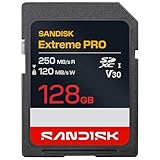
- Top Pick: SanDisk 128GB Extreme PRO SD UHS-I Card, Up to 250MB/s Read and 120MB/s Write, 4K UHD, Full HD, U3, V30, SDSDXXJ-128G-GSCIN
- Best Value: SANDISK 64GB Extreme PRO SDXC UHS-I Memory Card – C10, U3, V30, 4K UHD, SD Card – SDSDXXU-064G-GN4IN
- Premium Choice: SANDISK 256GB Extreme PRO SD Memory Card, Up to 200MB/s Read Speeds, UHS-I | V30, U3, C10, 4K UHD, Up to 140MB/s Write Speeds, SANDISK QuickFlow Technology – SDSDXXD-256G-GN4IN
A fast SD card is not just a bigger number on the label. Burst shooting on a mirrorless body, 4K clips that never drop a frame, and a card reader that empties a shoot without a coffee break all depend on three separate specs: the bus (UHS-I or UHS-II), the sustained video class (V30, V60, V90), and the headline read speed. The best fast SD cards are the ones where those numbers line up with what your camera can actually write.
This roundup is for hobbyists upgrading from a basic card, event shooters who need wide sustained writes, and anyone building a workflow around a UHS-II reader on a desktop. All ten cards here come from the details in their listing titles, so speeds quoted are the maximums the sellers print. In 2026, the key question is whether your camera has a UHS-II slot at all, because a card that outruns the slot simply runs at the slot’s pace.
Quick Picks
As an Amazon Associate we earn from qualifying purchases at no extra cost to you.


| Product | Best for | Key spec from the title |
|---|---|---|
| SanDisk Extreme PRO 128GB UHS-I | Dependable 4K on UHS-I cameras | 250MB/s read, 120MB/s write, V30 |
| SanDisk Extreme PRO 64GB | Light shooters | SDXC, UHS-I, C10, U3, V30 |
| SanDisk Extreme PRO 256GB UHS-I | Long UHS-I sessions | 200MB/s read, 140MB/s write, QuickFlow |
| SanDisk Extreme PRO 128GB V90 | Top sustained writes | UHS-II, 300MB/s read and write, 8K |
| Lexar Silver PRO 128GB 2-Pack | Two bodies or a spare card | 280MB/s read, V60, UHS-II, two cards |
| SanDisk Extreme PRO 256GB V60 | High capacity with UHS-II | 280MB/s read, 150MB/s write, 6K |
| ProGrade Iridium 128GB | Professional workflows | V90, 300MB/s read, 200MB/s write |
| Lexar Silver 256GB | UHS-I with space to spare | 225MB/s read, V30, 4K |
| Lexar 2000x 256GB | Cinema-style capture | 300MB/s read, V90, 8K, UHS-II |
| Lexar Silver PRO 128GB | Single-card UHS-II | 280MB/s read, V60, 4K |
How to Choose
Check the bus before the megabytes
UHS-II cards carry a second row of pins and a faster bus, with the cards here listing 280 to 300MB/s read, while UHS-I cards sit on the older interface. A UHS-II card in a UHS-I camera still works, but it falls back to the older bus. Look in your camera manual for a UHS-II logo before moving up to the faster tier.
Use the V class for video, not the read speed
V30 guarantees 30MB/s of sustained writing, V60 guarantees 60MB/s, and V90 guarantees 90MB/s. High-bitrate 4K, 6K, and 8K recording needs those floors, while the headline read speed only affects offloading. Match the class to your codec bitrate and add some headroom.
Pick capacity around your shoot, not the maximum
A 64GB card fills quickly with raw stills or high-bitrate clips. For events or travel, 128GB is a practical baseline, and 256GB suits long recordings. Two smaller cards give you redundancy, so a single failure does not swallow an entire day.
Watch where listings cut corners
Some titles omit write speeds, which is the number that matters for recording. Counterfeit listings exist for popular cards, so buy from the brand or an authorized seller and read the full model number. Do not assume a V30 card will keep up with a V60 requirement just because both are labeled 4K.
The 10 Best Options
SanDisk Extreme PRO 128GB UHS-I
This 128GB card lists up to 250MB/s read and 120MB/s write, with U3 and V30 for 4K UHD and Full HD video. It is aimed at cameras that use the UHS-I bus, which describes a huge share of mainstream bodies still in use. Think of it as the sensible default for someone leaving a basic card behind.
- Strength: both read and write maximums are printed, so the sustained figure is not a mystery.
- Strength: V30 covers common 4K recording.
- Trade-off: the UHS-I bus sits below the UHS-II cards for offload speed.
Skip it if your camera has a UHS-II slot and you record at high bitrates, or if you need V60 or V90 as a guaranteed floor.
SanDisk Extreme PRO 64GB
A 64GB SDXC card from the UHS-I family, labeled C10, U3, and V30 for 4K UHD. The title carries no speed figures at all, so the class markings are your only guide. That makes it a straightforward pick for a casual shooter who just wants a recognized name and a clear video floor.
- Strength: V30 gives a defined sustained-write minimum for 4K.
- Strength: the smaller capacity suits light weekend use and holds a modest number of clips.
- Trade-off: no printed read or write maximum, and 64GB disappears quickly with raw bursts.
Skip it if you shoot long events, record extended video, or want a number to compare against other cards.
SanDisk Extreme PRO 256GB UHS-I
The title quotes up to 200MB/s read and up to 140MB/s write on a 256GB card, alongside V30, U3, C10, and 4K UHD, and it mentions QuickFlow Technology. This is the roomy option for UHS-I bodies, where a single card has to carry a full day of shooting without a swap.
- Strength: a 140MB/s write figure is higher than the 128GB UHS-I model above.
- Strength: 256GB lets long sessions run without changing cards.
- Trade-off: the UHS-I bus still cannot match UHS-II offload speeds.
Skip it if your workflow needs a V60 or V90 guarantee, or if you would rather split footage across two smaller cards for safety.
SanDisk Extreme PRO 128GB V90
An UHS-II card with up to 300MB/s read and up to 300MB/s write, marked V90, U3, and C10, with 8K and 4K UHD support. SanDisk positions it for prosumers and professionals, and the printed write figure is the highest of any card in this list.
- Strength: V90 is the top sustained-write class here, leaving headroom for demanding codecs.
- Strength: matching 300MB/s read and write figures are easy to plan around.
- Trade-off: 128GB is modest for 8K footage, and you need a UHS-II slot to reach the headline numbers.
Skip it if your camera is UHS-I only, or if you are shooting stills where a V90 floor adds nothing.
Lexar Silver PRO 128GB 2-Pack
This listing bundles two 128GB UHS-II cards, each with 280MB/s read, V60, U3, and 4K, and the title names compatibility with Canon, Sony, and Nikon cameras. The pairing appeals to anyone running two bodies, or to a shooter who wants a spare ready before a trip.
- Strength: a second card in the same listing doubles your safety margin.
- Strength: V60 and UHS-II suit demanding 4K video.
- Trade-off: no write speed is printed, so compare the V60 floor rather than a maximum.
Skip it if you only need one card or you require the V90 class for the highest bitrates.
SanDisk Extreme PRO 256GB V60
A 256GB UHS-II card listing up to 280MB/s read and up to 150MB/s write, with V60, U3, C10, and 6K and 4K UHD. It combines large capacity with the UHS-II bus, which makes it a natural fit for long video days and fast desktop offloads.
- Strength: 256GB on UHS-II is a strong pairing for extended shoots.
- Strength: both read and write maximums are printed.
- Trade-off: V60 and 150MB/s write sit below the V90 cards in this roundup.
Skip it if you record at the very highest bitrates or if your camera only has a UHS-I slot.
ProGrade Iridium 128GB
This SDXC UHS-II V90 card lists read speeds up to 300MB/s and write speeds up to 200MB/s. The seller pitches it at fast capture, file transfers, and professional workflows, so it is meant for people who value consistent behavior over a recognizable mass-market name.
- Strength: V90 combined with a printed 200MB/s write maximum.
- Strength: a brand built around professional workflows rather than casual use.
- Trade-off: 128GB only, with no multi-pack option in the listing.
Skip it if you shoot with a UHS-I camera or want several cards in one purchase.
Lexar Silver 256GB
A 256GB UHS-I card with 225MB/s read, V30, U3, and 4K, and the title notes compatibility with Canon, Sony, and Nikon. It suits enthusiasts who want plenty of space on the simpler bus without moving to the UHS-II class.
- Strength: large capacity for long recording sessions.
- Strength: V30 handles everyday 4K clips.
- Trade-off: no write speed is listed, and there is no UHS-II bus to speed up offloads.
Skip it if you need sustained writing above the V30 floor or plan to use it in a UHS-II reader every day.
Lexar 2000x 256GB
The 2000x card lists 300MB/s read, 8K, V90, U3, and UHS-II, and it remains backward compatible with UHS-I devices. The title points to DSLRs and cinema-quality video cameras, which gives it the most demanding positioning among the Lexar models.
- Strength: V90 and 8K positioning arrive with 256GB of space.
- Strength: backward compatibility lets it serve older cameras too.
- Trade-off: no write speed is printed, so the V90 class is the figure to trust.
Skip it if casual photography is your only use, since the capability will go largely unused.
Lexar Silver PRO 128GB
The single-card version of the Silver PRO line: 128GB, 280MB/s read, V60, U3, UHS-II, and 4K, with Canon, Sony, and Nikon compatibility stated. It is a tidy choice if you want UHS-II without buying extra capacity or a pair.
- Strength: V60 and UHS-II in a manageable capacity.
- Strength: brand compatibility is spelled out in the title.
- Trade-off: no write figure is printed, and the 2-pack offers a spare for a similar spec.
Skip it if you would rather have two cards in one purchase or a V90 guarantee.
Which One Fits Your Situation
You shoot 4K on an older UHS-I body
The SanDisk Extreme PRO 128GB UHS-I has printed read and write numbers and V30. Move to the 256GB UHS-I version if you record long clips, since its listing quotes a higher write maximum and twice the space. Either card keeps the setup simple and skips a bus your body cannot use.
You shoot high-bitrate video on a UHS-II camera
The SanDisk Extreme PRO 128GB V90 or the ProGrade Iridium 128GB give you the V90 guarantee. The Lexar 2000x 256GB adds capacity and a V90 label, though its title leaves out a write figure, so compare that gap before you commit.
You want a backup card in the bag
The Lexar Silver PRO 128GB 2-Pack covers two slots or a spare in one listing, which also means a card failure mid-trip does not end the shoot.
You offload to a desktop reader often
Any UHS-II card helps if your reader supports it. The Lexar Silver PRO and SanDisk Extreme PRO 256GB V60 both list 280MB/s reads.
Common Mistakes
- Buying UHS-II for a camera with only a UHS-I slot.
- Reading the megabytes per second figure as a write speed.
- Choosing 64GB for raw bursts and discovering it fills in minutes.
- Ignoring the V class when recording high-bitrate video.
- Skipping a second card and leaving no backup on location.
Related guides
- Aio Liquid Coolers For High Performance Gaming
- How To Lower Input Delay In Competitive Shooters
- Wireless Gaming Headsets Under 100 For Pc
Frequently Asked Questions
Does UHS-II help in a UHS-I camera?
The card will work, but at the older bus speed. You only gain from UHS-II if your camera or card reader supports it.
What does V90 mean?
It means the card guarantees a minimum sustained write of 90MB/s. That floor matters for video, not for photo offloading.
Do I need 256GB?
Not unless you record long or high-bitrate clips. A 128GB card is a balanced choice for most shooters.
Can I use these in a laptop slot?
Yes, standard SD slots accept them, though built-in readers are often slower than a dedicated UHS-II reader.