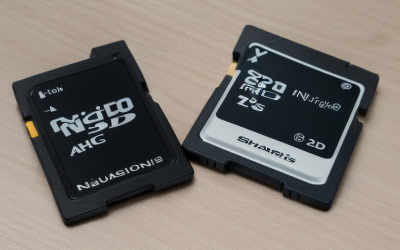
- Top Pick: SanDisk 32GB Ultra 100MBs SDHC Memory Card | Up to 100MB/s read, Water-resistant design, Impact-resistant build
- Best Value: GIGASTONE 32GB SD Card 5-Pack UHS-I U1 Class 10 SDHC Memory Card High-Speed up to 80MB/s Full HD Video Compatible with Digital Camera, SPYPOINT TACTACAM WOSPORTS Trail Camera, with 5 Mini Cases
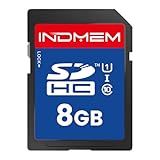
- Premium Choice: INDMEM SD Card 8GB, 1 Pack UHS-I U1 Class 10 SDHC SLC Flash Memory Cards | Compatible with Digital Camera, DSLR, Trail Cam, Legacy Devices
Shopping for cheap SD cards usually means one of three jobs: stocking a trail camera that eats cards, keeping a drawer of spares for an older DSLR, or feeding a point-and-shoot that only needs to record photos and short clips. None of those jobs needs a flagship card, and buying one just adds capacity and speed that the camera will never use. What they do need is a card that formats cleanly, writes at a steady Class 10 or U1 pace, and arrives in the quantity you need.
This guide ranks nine budget-tier options for 2026 using only the facts printed in each listing title: capacity, pack size, speed class, and the devices the seller names. The lineup swings from tiny 4GB legacy cards to a 64GB SanDisk, so the decision is less about which brand wins and more about which capacity and pack size match your camera. Use the thresholds below to rule cards in or out before you compare names.
Quick Picks
As an Amazon Associate we earn from qualifying purchases at no extra cost to you.




| Product | Best for | Key spec from the title |
|---|---|---|
| SanDisk 32GB Ultra SDHC | Reliable single spare | Up to 100MB/s read, water-resistant, impact-resistant |
| Gigastone 32GB 5-Pack | Trail cameras | Up to 80MB/s, U1, Class 10, five cases |
| INDMEM 8GB SLC | Legacy devices | 8GB, SLC flash, U1, Class 10 |
| EASTBULL 4GB 5-Pack | Bulk tiny cards | 4GB, U1, V30, 100MB/s, five cases |
| 16GB 5-Pack SDHC (unbranded) | Multi-camera households | 16GB, up to 90MB/s, U1, Class 10 |
| PNY 32GB Elite 5-Pack | Brand-name multi-pack | Up to 100MB/s read, V10, U1, Class 10 |
| INLAND 32GB 2-Pack | Hunting and trail use | 60MB/s read, 10MB/s write, Class 10 |
| 4GB 3-Pack Class 4 (unbranded) | Old cameras and audio gear | Class 4, MLC, SDHC |
| SanDisk 64GB Ultra SDXC | More room for Full HD | 100MB/s, C10, U1, 64GB |
One listing from the original shortlist, a three-pack of 32GB microSD cards, was set aside because it is a different form factor and would need an adapter for a standard SD slot.
How to Choose
Start with the capacity ceiling of your device
Cards up to 32GB are SDHC, and anything above that is SDXC. Many older cameras, card readers, and trail cams only understand SDHC, so a 64GB SDXC card can fail to mount even though it is physically the right shape. Check the manual for a maximum supported capacity. If it says 32GB, the five-pack and two-pack options at 32GB or below are the safe lane.
Class 10 and U1 are the realistic floor
Class 10 and U1 both indicate a minimum sustained write speed of 10MB/s, which is enough for Full HD video and everyday photography. Class 4, the lowest label in this group, promises roughly 4MB/s, which can struggle with high-resolution bursts and Full HD recording. If your device records video at all, skip Class 4.
Look at pack size against your actual need
Multi-packs help with the number that matters to hobbyists: how many hundreds of photos you can shoot before swapping. Count the cameras you run, add one spare per camera, and the right pack size usually becomes obvious. Packs that bundle cases are a bonus for anyone who stores cards loose in a pocket or a drawer. Five cards in a case lets you rotate through a long hunting season or keep one in every bag. A single card is the better call if you only need a spare for one camera.
Treat unusual labels and no-name brands with care
Some budget titles stack impressive markings on very small capacities, such as V30 on a 4GB card. A label is not proof of a speed, and unbranded packs offer less certainty than names like SanDisk, PNY, or INLAND. For anything holding irreplaceable footage, copy files off the card promptly and treat any single card as disposable.
The 9 Best Options
SanDisk 32GB Ultra SDHC
A single 32GB card listed at up to 100MB/s read with water-resistant and impact-resistant construction. The title is short and plain, which suits a spare that lives in a camera bag or glove box for the day an older camera needs a fresh card.
- Brand-name card in a capacity that most older cameras and readers accept.
- Water and impact resistance are named right in the title.
- Trade-off: only one card in the listing, so it does not cover rotation or multi-camera use.
Skip it if you want several cards in one purchase or a pack with cases included.
Gigastone 32GB 5-Pack
Five 32GB SDHC cards with UHS-I, U1, Class 10, and up to 80MB/s, plus five mini cases. The listing names trail cameras from SPYPOINT, TACTACAM, and WOSPORTS, which tells you who the seller has in mind: people who deploy several units and swap cards on a schedule.
- Five cards cover a full set of trail cameras or a season of rotation.
- Included cases keep each card protected and easy to label.
- Trade-off: the stated read figure is lower than the SanDisk and PNY listings.
Skip it if you only need one card or want the quickest transfers to a computer.
INDMEM 8GB SLC
A single 8GB SDHC card with UHS-I, U1, Class 10, and SLC flash, aimed at digital cameras, DSLRs, trail cams, and legacy devices. SLC is a memory type named in the title, and it points to a card chosen for steadiness in older gear more than for capacity.
- SLC flash is called out, which sets it apart from typical consumer cards.
- Small capacity suits hosts that cannot read larger cards.
- Trade-off: 8GB fills quickly with Full HD video or large photo files.
Skip it if you shoot video or want room for thousands of images before offloading.
EASTBULL 4GB 5-Pack
Five 4GB SDHC cards, each with its own case, listed with U1, V30, Class 10, and 100MB/s. It is the quantity play for people who need many tiny cards, such as a classroom set of cameras or a kit of single-purpose gadgets.
- Five cases make organization simple and keep cards from tangling in a drawer.
- Class 10 with U1 meets the basic sustained-write floor for Full HD.
- Trade-off: 4GB is small, and the generous markings deserve some skepticism at this capacity.
Skip it if you need to store long clips or large RAW photo sessions.
16GB 5-Pack SDHC (Unbranded)
Five 16GB SDHC cards with UHS-I, U1, Class 10, and up to 90MB/s. The title names point-and-shoot cameras, HD camcorders, DSLRs, and PCs as compatible hosts, so it reads like a general-purpose bundle for a household with several devices.
- 16GB per card is a comfortable middle capacity for photos and short clips.
- Five cards support rotation across several cameras without constant offloading.
- Trade-off: no brand name appears in the title, which leaves less certainty about the maker.
Skip it if you want a recognizable brand stamped on every card.
PNY 32GB Elite 5-Pack
Five PNY Elite SDHC cards, each 32GB, with up to 100MB/s read, C10, U1, and V10. The title lists DSLR and video cameras, and the V10 mark adds a video speed class that some bargain listings leave out entirely.
- Brand-name multi-pack with a stated 100MB/s read figure.
- V10 gives a video class marking alongside U1 and Class 10.
- Trade-off: it is built around Full HD recording rather than 4K.
Skip it if you need 4K video support or only want a single card.
INLAND 32GB 2-Pack
Two 32GB SDHC cards from Micro Center with Class 10, UHS-I, U1, 60MB/s read, and 10MB/s write. The title lists trail cameras, hunting cameras, and DSLRs, and it spells out both read and write numbers instead of leaving the second one vague.
- The listing states read and write figures openly, which makes comparison easier.
- Two-card quantity suits one or two cameras without a drawer full of spares.
- Trade-off: 60MB/s read is the lowest read figure among the 32GB cards.
Skip it if quick file offloads matter to your routine.
4GB 3-Pack Class 4 (Unbranded)
Three 4GB SDHC cards with Class 4 and MLC flash, positioned for photos, video, music, voice files, and DSLR cameras. They fit the oldest gear on the shelf, from early digital cameras to voice recorders that never needed more than a few gigabytes.
- Three cards in one listing, handy for older cameras and audio recorders.
- Small capacity works with legacy hosts that reject larger SDHC sizes.
- Trade-off: Class 4 is the slowest class in this group and can strain Full HD video.
Skip it if you record video or shoot fast bursts of large photos.
SanDisk 64GB Ultra SDXC
A single 64GB SDXC card with 100MB/s, Class 10, U1, and Full HD. It offers the most space in this group and carries the same Ultra naming as the 32GB SanDisk, so it suits someone who wants a bigger card from a name they already know.
- Twice the capacity of the 32GB cards in the lineup.
- Well-known brand with the C10 and U1 pair for Full HD.
- Trade-off: SDXC may not work in older hosts that only read SDHC.
Skip it if your device caps out at 32GB or your manual lists SDHC only.
Which One Fits Your Situation
You run several trail cameras
The Gigastone 32GB 5-Pack or the PNY 32GB Elite 5-Pack gives you one card per camera plus spares. Pick the PNY for the higher stated read figure and the Gigastone if the named trail camera brands match your gear.
You need one dependable spare
The SanDisk 32GB Ultra SDHC is the simplest answer. It lists water and impact resistance and sits inside the capacity range that older cameras accept.
You own a very old camera
The INDMEM 8GB SLC or the 4GB 3-Pack fits devices that cannot read larger cards. Use the INDMEM if you want U1 and Class 10 speeds, and the 4GB pack only for still photos or audio.
You want more room for Full HD clips
Move up to the SanDisk 64GB Ultra SDXC, after confirming your camera supports SDXC. It doubles the capacity of the 32GB options with the same Class 10 and U1 markings.
Common Mistakes
- Putting a 64GB SDXC card in a camera that only reads SDHC and assuming the card is faulty.
- Choosing Class 4 for video and then seeing recording stop mid-clip.
- Trusting speed claims on tiny capacities without checking the class marking.
- Buying a microSD card for a full-size slot and forgetting that an adapter is required.
- Leaving footage on one card for weeks instead of copying it off after each outing.
Related guides
- Combination Smoke And Carbon Monoxide Detectors
- Aio Liquid Coolers For High Performance Gaming
- Graphics Cards For Low Wattage Power Supplies
Frequently Asked Questions
Is a cheap SD card safe for important photos?
It works fine for everyday shooting, but any card can fail. Copy important photos to a computer or drive soon after shooting rather than leaving them on the card.
What is the difference between SDHC and SDXC?
SDHC covers cards up to 32GB, while SDXC covers larger ones. Devices must support the standard, so check the manual before buying a 64GB card.
Do I need U3 for a trail camera?
Usually not. Most trail cameras record Full HD or photos, which Class 10 and U1 handle comfortably. U3 matters more for 4K video.
Are multi-packs a good idea?
They are practical when you own several cameras or rotate cards on long trips. A single card is simpler if you only need one spare.