4K ultrawide isn’t a real standard, it’s shorthand people use loosely, and that causes confusion when shopping. True 4K is 3840×2160 at a 16:9 ratio. Ultrawide monitors are 21:9 or 32:9, and the resolutions that actually exist in that shape are 3440×1440, 5120×1440, and increasingly 5120×2160 (which some brands market as “5K2K” or “4K ultrawide” because the vertical pixel count matches 4K). If you want the sharpness of 4K in a wide format, 5120×2160 at 21:9 is the real target. Everything below walks through what that costs you in GPU load, what panel type to pick, and where to actually spend money.
What resolution you actually want
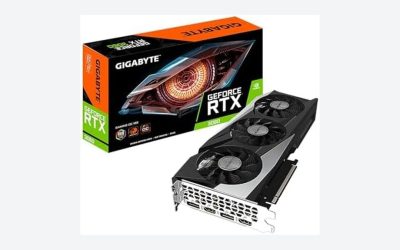
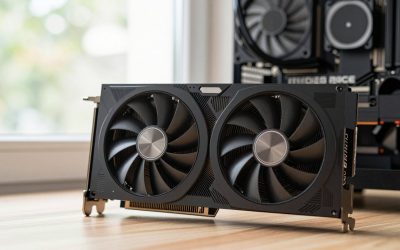
5120×2160 has roughly 11 million pixels, about 33% more than standard 4K’s 8.3 million. That’s a heavy load. A 4080 or 4090-class card can hold 100+ fps in competitive titles but will dip into the 50s-60s in demanding single-player games at max settings. If you’re gaming on anything below an RTX 4070 Ti or RX 7900 GRE, you’ll spend most of your time leaning on DLSS or FSR upscaling just to keep frame rates playable, which partially defeats the point of buying that many pixels.
3440×1440 is the more sensible default for most people. It’s a 23% pixel increase over standard 1440p, GPUs handle it comfortably, and the panels are cheaper and more mature. Unless you specifically want 4K-level pixel density in a wide format for sim racing or flight sim cockpit views, 3440×1440 ultrawide gives you 90% of the immersion for a lot less GPU strain and a lot less money.
Panel type matters more than the resolution label
On ultrawides specifically, panel choice affects you more than it does on standard 16:9 monitors because these screens sit closer to your face and cover more peripheral vision, so uniformity flaws are harder to ignore.
- IPS is the safe choice. Good color accuracy, wide viewing angles, minimal glow at normal brightness. Weakness is black depth, dark scenes look gray rather than black, and IPS glow is noticeable in dark corners on cheaper panels.
- VA gives you much better contrast, often 3000:1 to 5000:1 native versus IPS’s 1000:1, so blacks actually look black. The tradeoff is slower pixel response in dark-to-dark transitions, which shows up as smearing behind fast-moving dark objects. Most curved ultrawides use VA because the curve and the contrast pair well for immersion.
- OLED ultrawides (mostly 3440×1440 and 5120×2160 now) have essentially infinite contrast and response times under 0.1ms. The real-world catch is burn-in risk with static UI elements (health bars, minimaps, taskbars) and a price premium that’s still substantial. If you game varied content and aren’t leaving a game paused for hours at a time, modern OLEDs handle this fine. If you also use the monitor for spreadsheet work all day with a static taskbar, that’s where burn-in risk actually lives.
Refresh rate: don’t overbuy
Ultrawide panels at 3440×1440 commonly come in 144Hz, 165Hz, and 240Hz. At 5120×2160, most panels top out around 120Hz-144Hz because driving more pixels faster is harder on both the panel and the GPU. The honest take: past 144Hz, returns diminish fast for anything other than competitive shooters, and if you’re buying a 5120×2160 panel for visual fidelity in single-player games, you likely won’t sustain 240fps on it anyway, so a 240Hz spec is wasted. Match the refresh rate claim to what your GPU can realistically push at your target resolution, not the number on the box.
| Resolution | Aspect | GPU needed for 60fps+ ultra settings | Best panel match |
|---|---|---|---|
| 3440×1440 | 21:9 | RTX 4060 Ti / RX 7700 XT | IPS or VA, 144-165Hz |
| 5120×1440 | 32:9 | RTX 4070 Ti / RX 7900 XT | VA, 120-144Hz |
| 5120×2160 | 21:9 | RTX 4080 / RX 7900 XTX | IPS or OLED, 120-144Hz |
HDR claims are mostly marketing
Look for VESA DisplayHDR600 or higher, or an OLED panel, before trusting an HDR badge. DisplayHDR400 certification requires only 400 nits peak brightness with no local dimming requirement, which looks barely different from SDR in a bright room. Real HDR impact needs either full-array local dimming (common on higher-end VA ultrawides) or per-pixel dimming (OLED). If a budget monitor advertises “HDR10 support” with no brightness or dimming spec listed, assume it’s checkbox HDR, not something that’ll noticeably improve your games.
Curved or flat
At 3440×1440 and wider, a curve isn’t just aesthetic, it compensates for the fact that a flat wide panel puts the edges farther from your eyes than the center, distorting straight lines at the periphery. Common curve radii are 1800R and 1000R, with 1000R being noticeably more aggressive and better suited to desks where you sit close (under 80cm). If your desk setup has you sitting farther back, or you do photo/video work alongside gaming, a gentler curve or flat panel keeps lines straighter for productivity work.
Where to actually put your money
If your budget is tight, spend it on panel quality over resolution. A well-reviewed 3440×1440 IPS panel will give you a better day-to-day experience than a cheap, poorly-uniform 5120×2160 panel with weak local dimming and mediocre factory calibration. Browsing a 34 inch curved gaming monitor lineup will cover the mainstream sweet spot for most buyers. If you’ve got the GPU to feed it and want the sharper, wider format, look at a 49 inch 5120×1440 ultrawide monitor for the 32:9 route, or an OLED ultrawide gaming monitor if contrast and response time matter more to you than avoiding burn-in risk entirely.
One more practical note: check your desk depth and GPU output before buying. A 49-inch 32:9 panel needs about 100cm of clearance to sit at a comfortable viewing distance, and driving one well at high settings realistically needs a current-gen high-end GPU, not a card you’re planning to upgrade “eventually.”