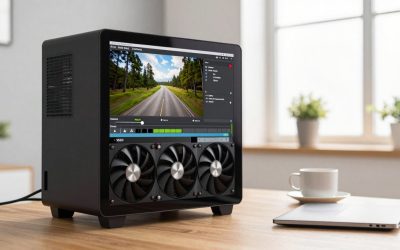
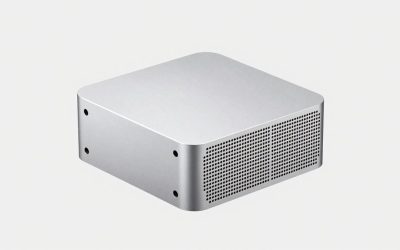
“Durable” means different things depending on what breaks your current PC. For some people it’s a toddler or a dog. For others it’s dust, heat, and five years of neglect. For a smaller group it’s actual drops, spilled coffee, or a garage workshop with metal shavings in the air. There’s no single most durable desktop, but there are clear categories of build that survive specific abuse, and knowing which threats apply to you will save you from overpaying for ruggedization you don’t need.
What actually fails first
In a normal desktop, the components that die are rarely the ones people worry about. Fans and spinning hard drives wear out mechanically. Power supplies degrade from heat cycling, especially cheap ones with low-quality capacitors. Dust accumulation chokes airflow and raises temperatures across the board, which quietly shortens the life of everything else. Physical impact damage is actually uncommon for a desktop that just sits on or under a desk, because it’s not getting dropped the way a laptop or phone does.
So “durable” for most buyers really means: fewer moving parts, better thermals, a quality power supply, and a case that keeps dust and pets out. For a smaller set of buyers, it means an actual rugged or industrial chassis built for vibration, dust ingress, or temperature extremes.
The three durability categories
It helps to think in terms of three distinct buyer profiles rather than one ranked list.
| Profile | Main threat | What matters most | Overkill for them |
|---|---|---|---|
| Home/office user | Dust, heat, old age | Good PSU, solid-state storage, decent case airflow | MIL-STD rugged chassis |
| Household with kids/pets | Spills, knocks, cables yanked | Sturdy case placement, sealed ports, surge protection | Industrial fanless design |
| Workshop/warehouse/field use | Dust ingress, vibration, temperature swings | Fanless or filtered rugged enclosure, industrial-grade board | Standard gaming case, even a good one |
Most readers of a site like this fall into the first category and sometimes the second. Very few actually need true industrial hardware, and buying it when you don’t need it means paying a premium for things like extended temperature ranges and shock mounting that solve a problem you don’t have.
The single biggest durability upgrade: no moving parts
If you want one change that measurably extends a desktop’s working life, it’s storage. Spinning hard drives are the most common point of mechanical failure in an otherwise healthy PC. They have a motor, read heads, and spinning platters, all of which wear and are sensitive to vibration and heat. An SSD has none of that. For most home and office builds, moving to an NVMe SSD does more for long-term reliability than almost any other single component choice, and it also makes the machine noticeably faster, which is a nice side effect rather than the main point.
The second biggest factor is the power supply. A cheap PSU is a common cause of early desktop death, either outright failure or slow voltage instability that corrupts data and crashes the system under load. This is not a place to save money. A quality unit from a known brand, ideally 80 Plus Bronze or better with a multi-year warranty, is cheap insurance. If you’re building or upgrading, look at a mid-range 80 Plus Gold power supply rather than whatever came bundled with a budget case.
Case and cooling: the quiet durability factors
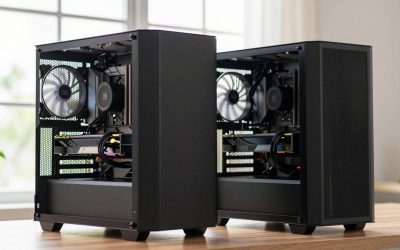
Dust is the enemy nobody thinks about until a machine starts thermal throttling two years in. A case with washable dust filters on the intake fans adds maybe $20-30 to the price and meaningfully extends component life by keeping internal temperatures lower and more stable. If you have pets, this matters even more, since pet hair clogs filters and radiators far faster than household dust alone.
If your situation genuinely involves dust, debris, or an unconditioned space (garage, workshop, warehouse floor), that’s when a sealed or fanless industrial PC earns its higher price. These use passive cooling through a finned metal chassis instead of fans, so there’s no intake to clog and no bearing to wear out. They cost more per unit of performance and are usually not worth it for a living room or office, but for a dusty shop environment they outlast a standard gaming case by years. A search for a fanless industrial mini PC will turn up this category if that’s genuinely your use case.
Where spending more is not worth it
Rugged, MIL-STD-rated full desktop towers exist, but they’re built for mobile field use, military contracts, and extreme environments, and they’re priced accordingly. For a desk in a house or office, that money is much better spent on a quality PSU, an SSD, and a case with good filtration. Similarly, “durable” marketing on consumer cases (reinforced steel, thicker panels) mostly protects against shipping damage and flex, not long-term failure. It doesn’t hurt, but it’s not where reliability actually comes from.
The honest baseline: a mid-range case, a reputable power supply, an SSD instead of a spinning drive, and basic dust filters will outlast the vast majority of desktops in normal home or office use, often running fine for seven to ten years with nothing more than occasional cleaning. Spend your durability budget there before anything else.
FAQ
Does a more expensive PC always last longer?
Not automatically. Price often reflects performance (CPU, GPU) rather than longevity. A $1,500 gaming PC with a cheap power supply can fail sooner than a $700 office PC with a good one. Check the specific components, not just the price tag.
Are all-in-one desktops less durable than towers?
They have less airflow and the display is tied to the computer, so if either fails you often lose both. Towers are easier and cheaper to repair piecemeal, which matters more for long-term durability than raw component quality.
Is liquid cooling less durable than air cooling?
Air cooling has fewer failure points and nothing to leak, so it’s the safer long-term bet for most users. Liquid cooling can last for years without issue, but when it does fail, pump failure or a slow leak, the consequences are worse than a dead fan.
How much does dust actually shorten a PC’s life?
There’s no precise universal number since it depends on environment, but heavy dust buildup raises component temperatures, and sustained higher temperatures are well understood to accelerate wear on fans, capacitors, and thermal paste. Cleaning filters every few months is a low-effort way to avoid this entirely.