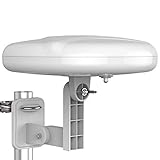
- Top Pick: TV Antenna for Smart TV Indoor, Digital TV Antenna for Local Channels | HD Digital Antenna with Amplifier Signal Booster for Local Channels Supports 4K 1080p-16.5 ft Long Cables
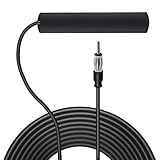
- Best Value: Digital TV Antenna for Smart TV Indoor,TV Antenna with 3M Stick Base | Support 4K 1080p&Long Range Reception,HDTV Antenna for Local Channels,Easy Installation Antenna For TV without Cable
- Premium Choice: TV Antennas for Smart TV Indoor, HD Digital TV Antenna for Local Channels | TV Antenna-360°Signal Reception,TV Antenna Indoor Support 4K 1080p for All Type of HDTV Digital TV's
Shopping for the best 4K TV antennas opens with a small surprise: no antenna is truly a 4K device. Broadcast signals reach a 4K television the same way they reach a 1080p set, so the “supports 4K” line on a listing really means the antenna will feed your new panel without trouble. What decides the picture is whether the antenna can pull in the local ABC, NBC, FOX, CBS and PBS transmitters from where you live, and whether it fits the room you have.
This 2026 roundup compares nine indoor-focused models for cord-cutters, apartment renters, dorm rooms, and anyone adding free local channels to a gaming-room or bedroom TV. Every judgment below is based on the listed specs in each product title, so use the sections on cable length, amplifiers and placement to match a model to your own setup.
Quick Picks
As an Amazon Associate we earn from qualifying purchases at no extra cost to you.




| Product | Best for | Key spec from the title |
|---|---|---|
| Intelbras amplified antenna | TVs far from a window | Amplifier plus 16.5 ft cable |
| ApexWaveTV indoor antenna | Renters who dislike tools | 3M stick base |
| Bwxsyws indoor antenna | Mixed-direction towers | 360-degree reception |
| HIDB indoor antenna | Metal shelving and frames | Magnetic base, 10 ft cable |
| DAANT long range antenna | Far-from-the-window TVs | 16 ft coax cable |
| BEIMQN indoor/outdoor antenna | Attic or balcony mounting | Indoor/outdoor, amplifier |
| ATVFuture indoor antenna | Quick, simple setups | 360-degree, long range |
| GE Portable antenna 81843 | RVs, camping, tailgating | VHF and UHF, magnetic base |
| ZCSSQZ amplified antenna | USB-powered TV setups | USB powered booster |
How to Choose
Match the antenna to your signal, not the resolution
Standard over-the-air broadcasts top out at 1080i or 720p, with a small but growing set of next-generation stations carrying 4K. An antenna that lists 4K, 8K and 1080p support is simply telling you it will not bottleneck any of them. Before buying, enter your address in a free signal map from the FCC or a broadcaster directory and note how far the towers are and which direction they sit. Towers within about 25 miles suit a plain indoor model; farther than that, favor an amplified design or an outdoor-capable one.
Decide whether you need an amplifier
An amplifier adds gain, which helps when you have a long cable run or a weak signal. It can also overload the tuner when towers are close, producing dropouts rather than extra channels. Amplified models in this list use either an inline booster or USB power, so confirm you have a free USB port on the TV or a wall adapter handy. If you live near the transmitters, an unamplified antenna may deliver a cleaner result.
Check cable length and placement flexibility
Signal quality rises with height and window proximity, so cable length is a practical spec. Titles in this group list 10 ft, 16 ft and 16.5 ft leads. A TV in the middle of the room usually needs at least 15 ft to reach a window. Mounting method matters too: stick bases suit smooth walls, magnetic bases suit metal surfaces, and portable designs suit moving between spaces. Wide coax leads are fine, but avoid kinking them behind furniture.
Ignore range slogans and read the fine print
Range claims such as “long range” or a percentage of wider reach are marketing phrases with no common measurement standard behind them. Treat them as hints, not guarantees. Budget antennas often cut corners on shielding, connector quality and cable thickness, which can show up as pixelation on a weak channel. Look for a clear statement of VHF and UHF coverage, because some local stations broadcast on VHF and an antenna that only favors UHF will miss them.
The 9 Best Options
Intelbras Amplified Indoor Antenna
The Intelbras listing pairs an amplifier signal booster with a 16.5 ft cable, which makes it a fit for a TV that sits well away from a window. The title also lists support for 4K and 1080p televisions. In a bedroom or den where the set faces away from the outer wall, that extra cable and the signal boost are the two features that matter most.
- Strength: the longest cable listed in this roundup gives room to reach a window.
- Strength: the built-in amplifier helps with weaker local signals.
- Trade-off: the amplifier can overload the tuner when towers are very close.
Skip it if you live near the broadcast towers, where a simple unamplified lead is steadier.
ApexWaveTV Indoor Antenna
ApexWaveTV highlights a 3M stick base and a promise of easy installation without cable service. It suits renters who want something on a wall in minutes without drilling. Pick a spot near the top of a window, press it flat, then run a channel scan to see what the tuner finds.
- Strength: adhesive mounting means no screws or brackets.
- Strength: listed support for 4K, 1080p and long-range reception covers modern sets.
- Trade-off: adhesive placement limits you to smooth surfaces and repositioning is awkward.
Skip it if your walls are textured or if you expect to move the antenna around to hunt for channels.
Bwxsyws 360-Degree Indoor Antenna
The Bwxsyws title promises 360-degree signal reception and compatibility with all types of digital HDTVs. That wording appeals to buyers whose local towers sit in different directions, since a panel that does not need precise aiming forgives a placement mistake. It is a sensible pick for a shared living room where the antenna may get nudged.
- Strength: omnidirectional positioning reduces the need to aim precisely.
- Strength: the listing covers 4K and 1080p televisions.
- Trade-off: the title gives no cable length or amplifier detail, so you must verify those yourself.
Skip it if you want clear specs on cable length and gain before you buy.
HIDB Magnetic Base Antenna
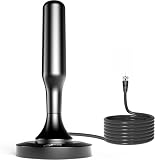
HIDB lists a magnetic base and a 10 ft cable for easy setup, aimed at OTA digital HD reception. The magnet sticks to metal surfaces such as window frames, radiators or file cabinets. That makes it handy in a dorm or office where drilling is off limits but steel furniture is everywhere, and moving it a foot or two takes seconds.
- Strength: the magnetic base makes repositioning simple.
- Strength: no tools or adhesive are needed when metal is nearby.
- Trade-off: the 10 ft lead is the shortest in the group, limiting placement from the TV.
Skip it if the TV is more than a few steps from any window or metal surface.
DAANT Long Range Indoor Antenna
DAANT pairs a long-range pitch with a 16 ft HDTV coax cable and 4K plus 1080p smart TV support. It is a sensible option when a window sits across the room from the TV. Because the listing keeps things simple, buyers who already know their towers are reasonably close can pair it with a stable window spot and skip extra boosters.
- Strength: 16 ft of coax gives practical reach to a window.
- Strength: the straightforward title suggests a no-frills indoor design.
- Trade-off: the listing does not mention an amplifier, so weak signals get no boost.
Skip it if your signal is marginal and you want built-in gain.
BEIMQN Indoor/Outdoor Amplified Antenna
BEIMQN is the only model here that lists both indoor and outdoor use, along with an amplifier signal booster and support for 4K, 8K and 1080p. The listing also claims a wider reach than the maker’s earlier designs. For a house with an exposed porch, balcony rail or attic, the flexibility to move the antenna outside is the main reason to consider it.
- Strength: outdoor suitability opens attic, balcony or eave mounting for better height.
- Strength: an amplifier is part of the package.
- Trade-off: the percentage reach claim is a slogan with no stated standard behind it.
Skip it if you only want a tidy indoor option with no mounting hardware.
ATVFuture Indoor Antenna
ATVFuture emphasizes easy setup for TVs without cable, 360-degree reception and long-range pickup, with 4K and 1080p support. It reads as a general-purpose indoor choice for a bedroom or apartment. Think of it as the default option for a secondary TV where you simply want local news and weather without a monthly bill.
- Strength: the setup-focused listing suits first-time cord-cutters.
- Strength: omnidirectional wording helps when towers sit in different directions.
- Trade-off: the title offers no cable length or amplifier information.
Skip it if you want to compare cable length and gain details side by side.
GE Portable HD Antenna 81843
GE lists a compact travel design with a magnetic base, VHF and UHF coverage, and suitability for RVs, camping and tailgating. It supports 1080p, 4K and 8K televisions. Pack-and-go owners often want a second antenna for a camper or a game-day parking lot, and this listing is aimed squarely at that role rather than a living room.
- Strength: explicit VHF and UHF coverage matters for stations on either band.
- Strength: compact, magnetic design travels well between sites.
- Trade-off: a portable build suggests a modest footprint, so remote locations may need a larger model.
Skip it if you need a permanent whole-house solution in a weak-signal area.
ZCSSQZ USB-Powered Amplified Antenna
ZCSSQZ names the five major networks and lists an amplified signal booster powered through USB, with long-range reception for 4K Ultra HD sets. Many modern TVs have a USB port that can run the booster. That simplifies cable clutter behind a wall-mounted screen, since one short lead can supply power while the coax carries the signal.
- Strength: USB power avoids an extra wall adapter on most TVs.
- Strength: it names ABC, NBC, FOX, CBS and PBS, so the aim is clear.
- Trade-off: it depends on a nearby USB port staying powered when the TV is off.
Skip it if your TV has no free USB port or switches USB off between sessions.
Which One Fits Your Situation
Small apartment with one window across the room
The DAANT or the Intelbras, both with 16 ft or longer cables, let you place the antenna on the glass while the TV stays where it belongs. Choose the Intelbras if the signal is weak, DAANT if it is strong.
Renter who cannot drill or damage walls
The ApexWaveTV stick base is the cleanest answer. If you have a metal window frame or shelf instead, the HIDB magnetic base removes even that adhesive step.
RV, camper or tailgate setup
The GE Portable 81843 is built around exactly that use, with compact dimensions, a magnetic base and listed VHF and UHF coverage that helps when you move between towers.
Rural home farther from the towers
The BEIMQN indoor/outdoor amplified model gives you the option of mounting higher and outside, which usually matters more than any slogan about range.
Common Mistakes
- Buying an antenna for its 4K label instead of checking which stations are available at your address.
- Adding an amplifier when towers are close, which can overload the tuner and cause dropouts.
- Hiding the antenna behind the TV or inside a cabinet where walls and electronics block the signal.
- Skipping a channel scan after moving the antenna, so new stations never appear in the tuner.
- Trusting a range percentage or distance claim as a guarantee when no shared standard exists.
Related guides
- Combination Smoke And Carbon Monoxide Detectors
- Aio Liquid Coolers For High Performance Gaming
- Graphics Cards For Low Wattage Power Supplies
Frequently Asked Questions
Does a 4K TV need a special antenna?
No. A 4K TV uses the same over-the-air signal as any other set, and picture quality depends on the broadcast itself. A standard digital antenna is enough.
Does an amplified antenna always work better?
No. An amplifier helps with weak signals and long cables, but it can overload the tuner near the towers. If you are close to the transmitters, an unamplified antenna may deliver a steadier picture.
Where is the best spot for an indoor antenna?
As high as possible and as close to a window as you can manage, facing the direction of the towers. Rescan channels after every move so the TV registers any new stations.
Are these antennas safe to use outside?
Only the BEIMQN listing mentions outdoor use. The others are described as indoor models, so keep them out of rain and direct weather.