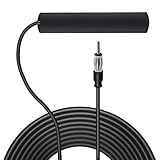
- Top Pick: GE Outdoor HD Digital TV Antenna, Long Range Smart TV Antenna | Supports 4K 1080P HD Smart TV VHF UHF, J Mount Included for Attic or Outdoor, Weather Resistant, 29884
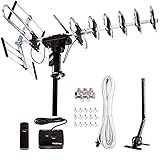
- Best Value: PBD Outdoor TV Antenna for Local Channels & Smart TVs, 360° Remote Rotation | Long-Range UHF/VHF Reception, Built-In High-Gain Amplifier, Dual TV Outputs, Mounting Pole, 40 Ft RG6 Cable, 4K/1080P
- Premium Choice: Five Star TV Antenna Indoor/Outdoor Yagi Satellite HD Antenna with up to 200 Mile Range – Attic or Roof Mount TV Antenna, Digital OTA Radio/FM Antenna for 4K 1080P with Mounting Pole
An outdoor TV antenna solves a problem an indoor one cannot: distance, trees, and walls between you and the broadcast tower. If the channels you want are more than a short drive from the transmitter, or your house sits behind a hill, a roof or attic antenna with a real mast and a coax run is the sensible move. The decision here is how much reach, rotation, and amplification you need, not which box has the biggest mile number on it.
This 2026 guide covers ten outdoor and attic antennas for cord-cutters, RV owners, and households with several TVs. Every comment comes from the listing titles only. Titles do not describe your terrain, so the guide shows what to verify with a reception map and a signal check before you climb a ladder.
Quick Picks
As an Amazon Associate we earn from qualifying purchases at no extra cost to you.






| Product | Best for | Key spec from the title |
|---|---|---|
| GE Outdoor 29884 | Simple attic or roof setup | J mount included, VHF/UHF |
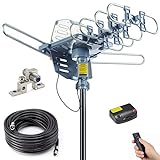
| PBD 40 ft rotating | Two-TV households | 360-degree remote rotation, 40 ft RG6 |
| Five Star Yagi | Distant towers, one direction | Yagi design, attic or roof mount |
| Five Star amplified | Whole-home distribution | Supports 5 TVs, rotation |
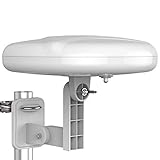
| 1byone omni | RV and attic | 360-degree omni-directional, 39 ft RG6 |
| ClearStream 4V | Mixed VHF and UHF markets | Hi-VHF elements, NextGen TV |
| Aimto-Pro kit | Complete set for two TVs | ATSC 3.0 ready, pole and bracket |
| PBD 59 ft amplified | Long cable runs | 59 ft RG6, grounding block |
| Mornixol | Quick install | No-tools installation |
| Five Star motorized | Aiming without a ladder | Motorized 360-degree rotation |
How to Choose
Check the Towers, Not the Mile Number
Range claims like 70, 100, or 200 miles are best-case figures. Use a reception map to find how far the towers are and which direction they sit. If every tower lies in one direction, a directional design makes sense; if they scatter around the compass, rotation or an omni design helps.
Directional, Omni, and Rotating
Directional and Yagi styles concentrate on a single direction and suit distant stations. Omni-directional designs listen all around but give up focus. A rotator, remote or motorized, lets one antenna serve towers in different directions without a second climb.
Amplification, Cable, and Splitting
An amplifier helps when the cable run is long or several TVs share the signal, but it can overload a nearby, strong signal. Look for RG6 coax, the standard for rooftop runs, and note the length that ships. Supporting several TVs usually means splitting the signal, which weakens it.
Standards and Mounting
VHF and UHF support is essential, since many networks still broadcast on VHF channels. ATSC 3.0 or NextGen TV labels signal readiness for newer broadcasts, though your TV needs a compatible tuner. Check for a mast, bracket, and grounding hardware so the install is safe in wind and lightning. Re-run the channel scan after any change in aim, because a scan only records what the tuner heard at that moment.
The 10 Best Options
GE Outdoor 29884
A straightforward model for a first rooftop or attic install. The title lists VHF and UHF support, 4K and 1080P compatibility, weather resistance, and a J mount for attic or outdoor placement, which makes it an approachable pick for a homeowner doing the work alone.
- J mount included, so mounting hardware is part of the listing
- Weather-resistant build for outdoor use
- Trade-off: no rotator or amplifier is mentioned
Skip it if you need to pick up towers in several directions or feed many TVs from one mast. A rotating or amplified model from the list below fits those jobs better.
PBD 40 ft Rotating Antenna
This one targets households that want to aim from the couch. It lists 360-degree remote rotation, a built-in high-gain amplifier, dual TV outputs, a mounting pole, and 40 ft of RG6 cable, so a pair of sets can share it without extra gear.
- Remote rotation avoids repeated roof visits
- Built-in amplifier and two outputs for a pair of TVs
- Trade-off: 40 ft of cable may be short for a tall house
Skip it if your tower is very close and strong, where an amplifier can overload the tuner and make things worse. In that case the plain GE or the ClearStream keeps the signal clean.
Five Star Yagi Antenna
A classic Yagi shape for pulling in far-off stations along one bearing. The title mentions attic or roof mounting, a mounting pole, indoor or outdoor use, and FM radio reception, so it doubles as a simple, no-frills option for rural homes with towers in one direction.
- Directional design suits distant stations in one direction
- FM radio capability is a bonus
- Trade-off: no rotation or amplifier is listed
Skip it if your stations are spread around the horizon, since a fixed Yagi will miss anything off its axis, and a mismatch between aim and tower direction is the most common reason a Yagi underperforms.
Five Star Amplified HDTV Antenna
This model is aimed at larger homes. It lists an amplifier, directional pickup with 360-degree rotation, support for five TVs, and an installation kit with a mounting pole, making it the whole-house pick of the Five Star trio.
- Supports up to five TVs from one antenna
- Installation kit and pole included
- Trade-off: a five-TV split weakens each feed, and the 200-mile claim is worth checking
Skip it if you have just one or two TVs, where the extra hardware and amplifier are unnecessary. The PBD 59 ft model covers the same ground with a longer cable.
1byone Omni-Directional
The 360-degree omni design suits RV owners and attics where aiming is awkward. The title adds VHF and UHF reception, 39 ft of RG6 cable, 4K-ready labeling, and extra stability, so it can be set up once and forgotten at a campsite or on a roof.
- Omni-directional pickup removes aiming
- Listed for outdoor, attic, and RV placement
- Trade-off: omni designs trade focus for coverage
Skip it if you need to reach a single faraway tower, where a directional unit is the better tool. Omni coverage also picks up more noise from every direction, which matters in cities with crowded airwaves.
Antennas Direct ClearStream 4V
A named multi-directional design with a 20-inch mast, reflectors, and Hi-VHF elements. The title mentions UHD 4K, 8K, and NextGen TV support alongside a 70-mile range, a stated figure that is modest compared with other listings and arguably easier to trust.
- Hi-VHF elements help in markets where VHF stations carry key networks
- Clear spec list, including its mast and range
- Trade-off: no amplifier or rotator is listed
Skip it if you want motorized aiming or support for many TVs in one build. Buyers who want a rotator should compare the PBD and Five Star motorized options before settling on this fixed mast.
Aimto-Pro Long-Range Kit
A complete set for two TVs, with a mount pole and bracket in the listing. It is labeled 4K, 1080P, and ATSC 3.0 ready, with UHF and VHF coverage, so it appeals to buyers who want a ready package and some future-proofing.
- Pole and bracket included
- ATSC 3.0 ready label for newer broadcasts
- Trade-off: the brand is less established than GE or Antennas Direct
Skip it if you want a recognizable maker or rotation, since neither appears in the title. Verify the cable length and the number of outputs on the full page before committing.
PBD 59 ft Amplified Antenna
A sibling of the 40 ft kit with a longer cable. It lists 360-degree remote rotation, 59 ft of RG6, a high-gain low-noise amplifier, dual outputs, and a grounding block, which suits a taller house or a roof far from the living room.
- 59 ft of cable reaches farther from the roof to the TV
- Grounding block is included for safer installs
- Trade-off: the amplifier is unnecessary near a strong tower
Skip it if the cable run is short or you only need one TV and no rotation, because the longer wire is the main reason to pick it over the 40 ft sibling.
Mornixol Outdoor Antenna
The easy-install option. The title promises no-tools installation, weather resistance, and a mountable design with a 70-mile range, aimed at smart TVs, so it fits a renter or beginner who wants fast results without a toolbox.
- No-tools setup suits first-timers
- Weather-resistant for outdoor use
- Trade-off: no rotation, amplifier, or cable length is listed
Skip it if you need long-range reception or multi-TV support, or if you want to know exactly what cable ships. Check whether a mast or pole is bundled, since the title only says it is mountable.
Five Star Motorized Antenna
The most automated listing here: motorized 360-degree rotation, an amplifier, NextGen ATSC 3.0 readiness, support for five TVs, and tool-free setup with a mounting pole. It is the one for households whose stations sit in several directions.
- Motorized rotation aims the antenna without ladder trips
- Supports five TVs and ATSC 3.0
- Trade-off: more moving parts than a fixed antenna
Skip it if you prefer a fixed, simple mount with nothing mechanical to fail over the years. A fixed Yagi or the ClearStream has nothing to jam, freeze, or wear out in winter weather.
Which One Fits Your Situation
All Towers Sit in One Direction
The Five Star Yagi or the ClearStream 4V keeps things simple. Aim once and leave it alone, then confirm the channel scan finds every station you expect.
Towers Are Scattered Around the Compass
The Five Star Motorized or the PBD 40 ft rotating model lets you turn toward each station. For an RV, the 1byone omni removes aiming entirely.
Several TVs Need a Signal
Choose the Five Star Amplified for up to five TVs, or the PBD 59 ft if you want a longer cable run and dual outputs.
You Want the Easiest Install
The Mornixol and the GE 29884 are the simplest, with the GE bringing its J mount for an attic or an outside wall. Neither needs a long list of accessories to get started.
Common Mistakes
- Believing the mile number on the box instead of checking a reception map.
- Adding an amplifier when the signal is already strong.
- Skipping grounding hardware on a rooftop mast.
- Splitting the signal to many TVs without checking the quality at each set.
- Buying for ATSC 3.0 without confirming that your TV has a compatible tuner.
Related guides
- Combination Smoke And Carbon Monoxide Detectors
- Aio Liquid Coolers For High Performance Gaming
- How To Lower Input Delay In Competitive Shooters
Frequently Asked Questions
Do I need an amplifier?
Only if your cable run is long or you feed several TVs. For a strong, nearby signal an amplifier can cause overload and make reception worse.
Is an attic install good enough?
Often, yes, if the roof material and walls do not block the signal. Roof mounting usually gives a cleaner path to the towers. Metal roofing, foil insulation, and stucco with wire mesh are the usual culprits when an attic unit struggles.
What does ATSC 3.0 ready mean?
It means the antenna handles frequencies used for NextGen TV broadcasts. You also need a TV or tuner box that supports the standard.
Do I need a rotator?
Only if your stations lie in different directions. If they sit in a single line, a fixed directional antenna is simpler and has fewer parts to fail. A single hillside bearing is the usual case in rural areas, while suburbs near several transmitters often justify rotation.