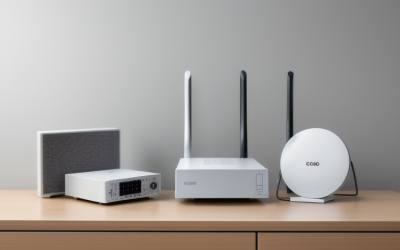
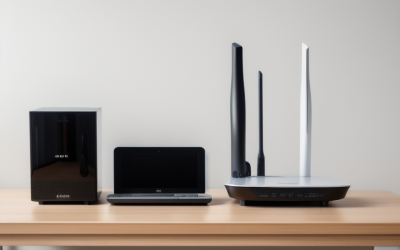
- Top Pick: Cudy 4G AC1200 4-Port Wi-Fi 5 Dual-Band Router with SIM Slot, LT500 | 867+300 Mbps Cellular wifi 5 4G LTE, 4x 100M Ports, Nano SIM Slot, Multiple VPN Server & Client, App & Cloud Control
- Best Value: GL.iNet GL-X2000 Spitz Plus 4G LTE CAT 12 Wi-Fi 6 Dual-SIM Router, NA Only | 4G CAT 12, Wi-Fi 6, Detachable Antennas, Dual-SIM, T-Mobile & AT&T IoT Certified, OpenWrt VPN, Home, RV, Road Trips, Offices
- Premium Choice: Dionlink Dual Band 4G LTE Router with SIM Card Slot | Unlocked Modem, 1200Mbps Mobile Hotspot, Support AT&T and T-Mobile, 6-Antenna Wireless Wi-Fi Router, Plug and Play
A 4G LTE router swaps the cable from your internet provider for a SIM card, which makes it the answer when fixed broadband is slow, unavailable, or simply not worth installing. The decision behind this search is less about raw speed and more about fit: a router for a cabin, an RV, a farm gate, a rented apartment, a backup link for a home office, or a pocket device for travel. Each of those jobs rewards a different design, and a model built for one is a headache in another.
This guide is for buyers who already know they want a cellular connection and need to narrow ten very different devices in 2026. Some are indoor Wi-Fi routers, some are weatherproof outdoor units, two are industrial gateways, and one runs on a solar panel. Everything below is judged from the specifications written in each product title, so confirm carrier bands and your local coverage before you commit.
Quick Picks
As an Amazon Associate we earn from qualifying purchases at no extra cost to you.




| Product | Best for | Key spec from the title |
|---|---|---|
| Cudy LT500 | Everyday home router | AC1200 dual-band, nano SIM slot |
| GL.iNet GL-X2000 Spitz Plus | Home, RV, and office use | CAT 12, Wi-Fi 6, dual-SIM |
| Dionlink Dual Band 4G LTE Router | Plug-and-play setup | 1200Mbps, six antennas |
| KuWFi Outdoor 4G LTE CPE | IP cameras outdoors | 150Mbps CAT4, waterproof |
| 15W Solar Powered 4G LTE Router | Off-grid farm or garden | Solar powered, IP66 |
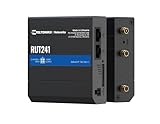
| Teltonika RUT241 | Small remote sites | Industrial, RMS support |
| InHand Networks IR302 | Monitoring equipment | LTE Cat 4+, DI/DO port |
| Unlocked 4G LTE Mobile WiFi Router | Overseas trips | 150Mbps pocket hotspot |
| GL.iNet GL-E750V2 Mudi | Portable travel router | 7000mAh, 8-hour battery |
| VSVABEV Outdoor 4G LTE Router | Garage or warehouse | PoE access point, high-gain antenna |
How to Choose
Match the Cellular Category to Your Use
The category number in a title tells you the theoretical ceiling. Cat 4 tops out near 150Mbps, which suits cameras, sensors, and light browsing. Cat 12 sits well above that and fits streaming households or several people working at once. Remember that your carrier and signal strength set the real speed long before the router does, so a mid-range category with a good antenna often beats a faster model sitting in a weak spot.
Check Carrier Compatibility Before Anything Else
Several titles name carriers: AT&T and T-Mobile, or all three major networks. Others say unlocked, which still does not guarantee support for every band. Look for explicit carrier names, and treat region warnings in a title as binding. Two listings here state that they are not for the USA or the Americas, which makes them travel or overseas tools rather than domestic picks.
Decide Between Indoor, Outdoor, Portable, and Industrial
Indoor routers want four Ethernet ports and dual-band Wi-Fi. Outdoor units want a waterproof level such as IP66 and a way to power them over Ethernet. Portable devices live or die on battery capacity; look for a milliamp-hour figure plus a stated runtime. Industrial gateways add remote management, VPN support, and I/O ports, features most households never touch.
Where Budget Models Cut Corners
The common compromises are 100M Ethernet ports instead of gigabit, 2.4GHz-only Wi-Fi, a single SIM slot, and limited VPN features. None of these is a problem for a camera feed or a laptop, but they matter if you plan to route a fast plan to a wired desktop. Ignore headline Wi-Fi numbers that add two bands together; they describe the sum of the radios, not what one device receives.
The 10 Best Options
Cudy LT500
The title lists AC1200 dual-band Wi-Fi 5, a nano SIM slot, and four wired ports, which makes this a conventional home-style router that happens to take a SIM. It also advertises multiple VPN server and client options and app plus cloud control. It suits renters and small households wanting a straightforward cellular replacement for a cable modem, especially when the plan is modest and wired speed is not the priority.
- Strength: dual-band Wi-Fi 5 with four LAN ports covers a typical apartment.
- Strength: VPN server and client support plus app control.
- Trade-off: the 100M port speed in the title caps wired transfers below gigabit.
Skip it if you plan to run a fast cellular plan to a wired workstation.
GL.iNet GL-X2000 Spitz Plus
This is the most feature-rich indoor option in the group: LTE CAT 12, Wi-Fi 6, dual-SIM, and detachable antennas. The title also mentions T-Mobile and AT&T IoT certification and OpenWrt with VPN, and it names home, RV, road trips, and offices as uses. That combination suits people who want a flexible primary or failover connection, and who are comfortable adjusting settings in an open firmware interface.
- Strength: dual-SIM allows two carriers for backup.
- Strength: detachable antennas let you upgrade reception later.
- Trade-off: it is labeled for North America only, so it is not a travel-abroad device.
Skip it if you want a simple setup with no interest in OpenWrt.
Dionlink Dual Band 4G LTE Router
Dionlink describes an unlocked modem with a SIM slot, 1200Mbps dual-band Wi-Fi, and support for AT&T and T-Mobile. Six antennas and a plug-and-play label point toward buyers who want to insert a SIM and go. It fits a spare room, a cabin, or a temporary workspace where someone just needs to get online quickly without reading a manual first.
- Strength: six antennas aim to widen coverage across a small home.
- Strength: explicit AT&T and T-Mobile support removes guesswork.
- Trade-off: the title gives no cellular category, so peak cellular speed is unclear.
Skip it if Verizon is your carrier, since the title names only two networks.
KuWFi Outdoor 4G LTE CPE
The KuWFi is a waterproof outdoor unit with 150Mbps CAT4 and two antennas, pitched at IP cameras and extending Wi-Fi coverage outside. It belongs on a pole or wall rather than a desk, which makes it a camera-feed tool more than a household router. The title adds that it works in SIM card mode only and is not for the USA.
- Strength: weatherproof housing suits cameras at a gate or barn.
- Strength: CAT4 is plenty for video uplinks and basic browsing.
- Trade-off: the not-for-USA note rules it out for domestic networks.
Skip it if you live in the United States or need fast streaming.
15W Solar Powered 4G LTE Router
This unusual unit combines a 15W solar panel, a SIM slot, and an IP66 waterproof body. The title promises a 50M Wi-Fi range for gardens, farms, and ranches, so it is aimed at places with no mains power at all. It doubles as a signal booster according to the listing, so it can also stretch a weak outdoor signal toward a shed or a barn.
- Strength: solar power removes the need for an outlet.
- Strength: IP66 protection suits exposed locations.
- Trade-off: the title states a modest 50M range and no cellular category.
Skip it if you need to serve a whole house or high-bandwidth devices.
Teltonika RUT241
Teltonika positions the RUT241 as a compact, rugged industrial router with Ethernet, Wi-Fi, VPN, RMS support, and remote monitoring. RMS is the maker's remote management system, which lets one person oversee devices at several locations. It fits kiosks, vending sites, and small field installations where nobody wants to drive out just to reboot a device.
- Strength: remote management reduces site visits.
- Strength: rugged build and VPN support suit unattended sites.
- Trade-off: it is an industrial device, so setup assumes some networking knowledge.
Skip it if you only want a quick home hotspot with a friendly app.
InHand Networks IR302
InHand's IR302 is an industrial IoT cellular router with LTE Cat 4+, Wi-Fi, dual SIM slots, VPN, and cloud platform management. It also includes a DI/DO port for digital input and output and names T-Mobile, AT&T, and Verizon. That makes it a strong fit for pumps, alarms, and equipment that must stay online, as long as someone on the team can configure it through the cloud platform.
- Strength: dual SIM slots and three named carriers give failover options.
- Strength: DI/DO port connects simple sensors and switches.
- Trade-off: the industrial feature set goes beyond what a household needs.
Skip it if you are looking for a plug-in living-room router.
Unlocked 4G LTE Mobile WiFi Router
This pocket-size hotspot lists 150Mbps, a SIM slot, and use cases such as camping and vacation homes. The title says it is built for global travel and is not for the Americas except for certain regions. It suits someone who crosses borders and buys local SIM cards, or a family renting a vacation home abroad that has no wired internet to share.
- Strength: small footprint travels easily.
- Strength: unlocked design accepts local SIMs abroad.
- Trade-off: the Americas restriction makes it a poor domestic choice.
Skip it if you mostly stay in North America.
GL.iNet GL-E750V2 Mudi
The Mudi is a portable travel router with a SIM slot, OpenWrt, OpenVPN and WireGuard, a 7000mAh battery with an 8-hour runtime, and dual-band Wi-Fi at 300 plus 433Mbps. At 285g it is meant to ride in a bag. It fits remote workers who want a private VPN-protected network in hotels and cafes, and anyone who prefers carrying their own network over trusting public Wi-Fi.
- Strength: built-in battery keeps it running without an outlet.
- Strength: WireGuard and OpenVPN support on a pocket device.
- Trade-off: an 8-hour runtime may not cover a full day away from power.
Skip it if the router will sit on a shelf permanently.
VSVABEV Outdoor 4G LTE Router
VSVABEV sells an outdoor modem router with a SIM slot, 2.4G 300Mbps Wi-Fi for indoor and outdoor use, a PoE access point mode, and a high-gain antenna. Garages, warehouses, and farms are the stated settings. It works as a cellular gateway or as a repeater, which gives it more than one job, and the PoE access point mode named in the title means one cable can carry both power and data to it.
- Strength: PoE support simplifies a single-cable install.
- Strength: high-gain antenna targets weak-signal locations.
- Trade-off: 2.4G-only Wi-Fi limits speed and crowds easily.
Skip it if you need 5GHz Wi-Fi for streaming or gaming.
Which One Fits Your Situation
You Are Replacing Home Broadband
Pick the GL.iNet GL-X2000 Spitz Plus for Wi-Fi 6, CAT 12, and dual-SIM backup. The Cudy LT500 is the simpler alternative for a smaller place.
You Live Off the Grid
The 15W Solar Powered 4G LTE Router is the only listing here built around its own power source, which makes it the natural choice for a ranch gate or garden outbuilding.
You Travel for Work
The GL.iNet GL-E750V2 Mudi gives you a battery, VPN protocols, and a pocket-friendly 285g body, so it follows you between hotels and cafes.
You Need Reliable Remote Monitoring
Choose the Teltonika RUT241 or the InHand Networks IR302. The InHand adds dual SIM and a DI/DO port, while the Teltonika leans on RMS remote management.
Common Mistakes
- Ignoring region notes in the title, such as not for the USA or Americas, and then discovering missing bands.
- Assuming an unlocked label means every carrier band is supported.
- Buying an industrial gateway for a home that needs only a basic hotspot.
- Placing the router deep inside a building where signal is weakest instead of near a window.
- Counting combined dual-band Wi-Fi numbers as the speed a single phone will see.
Related guides
- Aio Liquid Coolers For High Performance Gaming
- How To Lower Input Delay In Competitive Shooters
- Wireless Gaming Headsets Under 100 For Pc
Frequently Asked Questions
Can a 4G LTE router replace cable internet?
It can, provided your carrier signal is strong and your plan allows enough data. Many buyers keep cable for the main link and use LTE as a backup.
Do I need a dual-SIM model?
Only if uptime matters. Dual SIM lets the router fail over to a second carrier, which is useful for remote equipment and home offices that cannot lose connectivity.
What does Cat 4 versus Cat 12 mean?
These are cellular capability classes. Cat 4 reaches about 150Mbps in theory, while Cat 12 supports much faster aggregated connections when the network offers them.
Are Wi-Fi 6 routers worth it for LTE?
Wi-Fi 6 helps when many devices share the connection. For a single laptop or camera, Wi-Fi 5 is usually sufficient.