- Top Pick: Thermalright Aqua Elite 240 V3 Water Cooling CPU Cooler, Double PWM ARGB Fans with S-FDB Bearings,Efficient PWM Controlled Pump,for AMD/AM4/AM5, Intel LGA1150/1151/1200/1700/1851, (AE240 V3)
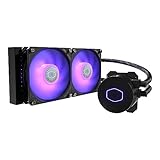
- Best Value: Cooler Master Elite Liquid 240 AIO Liquid CPU Cooler, ARGB
- Premium Choice: NZXT Kraken Plus 240-240mm AIO CPU Cooler, LCD – Black
Affiliate disclosure: As an Amazon Associate we earn from qualifying purchases. This post contains affiliate links — if you buy through them we may earn a small commission at no extra cost to you. This never affects our recommendations.
240mm AIO (All-In-One) liquid coolers are the sweet spot for most gaming builds — more cooling capacity than top-end air coolers in a smaller footprint, without the complexity or cost of custom water loops. They fit in almost any mid-tower case and handle CPUs up to 125W TDP with ease.
In a hurry? See the top-rated 240mm AIO Coolers for Gaming PCs deals available right now:
🛒 Check 240Mm Aio Coolers For Gaming Pcs Prices on Amazon →🛒 Best Price Today on Amazon
Prime members get fast, free shipping on everything above, plus member-only deals. New members get a 30-day free trial — cancel anytime.
Start 30-Day Prime Free Trial →See Today’s Amazon DealsBest 240mm AIO Liquid Coolers
As an Amazon Associate we earn from qualifying purchases at no extra cost to you.




240mm vs 360mm AIO — Which Do You Need?
240mm — Best for Most Builds
A quality 240mm AIO cools any mainstream gaming CPU (i5-13600K, Ryzen 5 7600X, Ryzen 7 7700X) to excellent temperatures. CPU temps of 65–75°C under sustained load with a 240mm are normal and safe. 240mm radiators fit in virtually every mid-tower case.
360mm — For High-TDP CPUs
If you’re running an i9-13900K, Ryzen 9 7950X, or overclocking aggressively, a 360mm radiator handles the extra heat without throttling. Requires a full-tower or large mid-tower with top/front 360mm mounting. Costs $30–80 more than 240mm equivalents.

AIO vs Air Cooling in 2026
Air coolers (like Noctua NH-D15): Cheaper, more reliable (no pump to fail), often quieter. Top air coolers match or beat 240mm AIOs in cooling performance. The NH-D15 at $100 beats many 240mm AIOs.
240mm AIOs: Better for small cases, cleaner aesthetics, easier RAM clearance, better cooling for high-TDP CPUs. Slightly better sustained performance than most air coolers. Pump lifespan is 5–7 years typically.
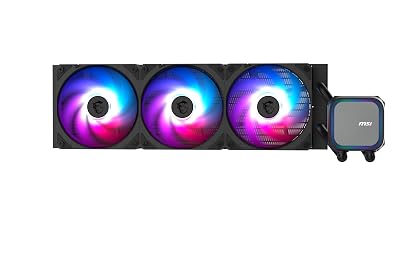
AIO Buying Considerations
Pump Head Quality
The pump is the most critical component — it determines longevity and noise. Asetek OEM pumps (used by Corsair, NZXT, and others) have excellent track records. Proprietary pump designs vary in quality. Read reviews for pump noise reports.
Fan Quality
The bundled fans make a big difference. Premium AIOs include PWM fans with good static pressure (for pushing air through the radiator). Some budget AIOs include mediocre fans that cause unnecessary noise. Aftermarket fans (Noctua NF-A12x25) can improve any AIO.

Mounting Compatibility
Ensure your AIO supports your CPU socket: LGA1700 (Intel 12th/13th/14th gen), AM5 (Ryzen 7000), AM4 (Ryzen 5000). Most modern AIOs include brackets for all current sockets. Check case radiator mounting dimensions (top vs front) before buying.
Frequently Asked Questions
How long does a 240mm AIO last?
Quality AIOs from Corsair, NZXT, and Lian Li last 5–7 years in typical use. The pump is the weakest link — keep the AIO mounted correctly (pump head not lowest point in loop) and check for coolant evaporation every 2–3 years.
Is 240mm enough for an i9 or Ryzen 9?
It depends on the workload. A 240mm AIO handles gaming workloads fine even for high-end CPUs (games rarely push 100% CPU load). For sustained all-core workloads (video rendering, Cinebench), high-TDP CPUs benefit from 360mm.
Can I mount a 240mm AIO in the front of a case?
Front-mounted radiators receive ambient air from outside the case — slightly cooler than top-mounted in some scenarios. Top mounting is more common and works excellently. Check your case specifications for mounting options and clearance.
Related Articles
Looking for more on this topic? Browse the hand-picked guides below — each one applies the same scoring rubric used in this review.