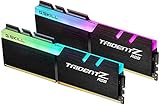
- Top Pick: CORSAIR Vengeance LPX DDR4 RAM 32GB (2x16GB) Up to 3200MHz CL16-20-20-38 1.35V Intel XMP AMD EXPO Computer Memory – Black (CMK32GX4M2E3200C16)
- Best Value: PUSKILL DDR4 3200MHz CL16 Desktop RAM Kit, 32GB (2x16GB)
- Premium Choice: Silicon Power Value Gaming DDR4 RAM 32GB (2x16GB) 3200MHz (PC4 25600) 288-pin CL16 1.35V UDIMM Desktop Memory Module with Heatsink Grey SU032GXLZU320BDAJ7
RAM capacity debates never really end, but in 2026 the 32GB vs 16GB question has a clearer answer than it did a few years ago. Modern AAA titles, background overlays, Discord, browser tabs with a hundred open pages, and shader compilation caches all compete for memory at once, and 16GB kits that felt generous in 2020 are now the bare minimum on the box for several new releases.
Below we break down what actually changes when you double your memory, which kits are worth buying, and when 16GB is still perfectly fine. We’ll reference real DDR4 and DDR5 kits so you can see the practical price and performance tradeoffs instead of just theoretical numbers.
As an Amazon Associate we earn from qualifying purchases at no extra cost to you.



⚡ Save on Your Next PC — Amazon Prime
Prime members get fast free shipping on the systems above, plus early access to Prime Day & Black Friday PC deals. New members get a 30-day free trial.
Watch: 32GB vs 16GB RAM for Gaming — Video Review
Quick Verdict
For gaming in 2026, 32GB is the safer long-term buy, especially if you stream, mod, or run Chrome with 40 tabs while playing. A kit like the CORSAIR Vengeance LPX 32GB (2x16GB) 3200MHz costs only modestly more than a 16GB equivalent and removes memory as a bottleneck for years. That said, 16GB DDR5 at higher speeds (like 6000MT/s) still delivers excellent frame rates in most competitive and mid-tier titles, so if your budget is tight, it’s not a dealbreaker.
Key Differences
- Headroom for background tasks: 32GB comfortably handles game plus OBS, Discord, and a browser without swapping to disk; 16GB can start paging under the same load.
- Frame rate impact: In most single-tasked benchmarks, 16GB vs 32GB shows a difference of only 1-3% at the same speed and timings, since the game itself rarely needs more than 10-12GB.
- Stutter and 1% lows: The bigger win from 32GB shows up in 1% low frame times in memory-hungry open-world titles and heavily modded games, not average FPS.
- Future-proofing: Several 2025-2026 releases recommend 16GB as a minimum, not a target, pushing recommended specs toward 32GB.
- Cost delta: A 32GB DDR4 3200MHz kit like the Silicon Power Value Gaming kit typically costs only $15-25 more than a 16GB kit at the same speed, making the upgrade cheap insurance.
- Platform differences: DDR5 kits, such as the Crucial 32GB SODIMM at up to 5600MHz, close the latency gap with DDR4 while offering more bandwidth, which matters more as capacity grows.
32GB RAM
32GB has become the practical sweet spot for anyone building a gaming PC from scratch in 2026. Kits like the CORSAIR Vengeance LPX 32GB (2x16GB) at 3200MHz CL16 give you dual-channel bandwidth with tight enough timings for real gains over single-stick setups, and at 1.35V they run cool without needing aggressive cooling. If you’re on AMD, the EXPO profile support means one-click stable overclocking without hand-tuning voltages.
For those building around DDR5 platforms, the Silicon Power Value Gaming DDR5 32GB kit at 6000MT/s CL30 pairs well with current Ryzen and Intel Core chips, and the AVGPC Hellfire prebuilt with a Ryzen 7 7800X3D and RTX 5060 Ti ships with 32GB standard, which tells you where the industry has settled. Laptop users aren’t left out either: the Crucial 32GB DDR5 SODIMM kit fits Intel and Ryzen 7000 mobile platforms and brings desktop-class multitasking headroom to a portable build.
16GB RAM
16GB (as a single kit, or half of a 32GB purchase like the PUSKILL 2x16GB kit sold individually) still runs the vast majority of current games at high settings without issue, particularly esports titles like Valorant, CS2, or Rocket League that rarely touch more than 8GB. If your PC is dedicated purely to gaming with nothing else running in the background, 16GB at a fast speed will feel nearly identical to 32GB in raw FPS.
The tradeoff shows up the moment you multitask. Streaming software, a dozen browser tabs, texture-heavy mods, or newer open-world titles with large asset streaming can push usage past 14-15GB, leaving little headroom and causing occasional stutters or swap-to-disk slowdowns. 16GB is a reasonable budget choice, but it’s the kind of decision you may revisit within a year or two as game requirements creep upward.
Which Should You Buy?
- Choose 32GB if you stream, record, or run Discord/browser alongside games regularly.
- Choose 32GB if you play modded titles (Skyrim, Minecraft with shaders, simulation games) that are known memory hogs.
- Choose 16GB if you’re building a tight-budget esports rig focused purely on competitive titles.
- Choose 16GB DDR5 at high speed (5600MHz+) over slower 32GB DDR4 only if your workload is genuinely single-tasked gaming.
- Go with a prebuilt like the AVGPC Hellfire if you want 32GB already balanced against a capable GPU and CPU without sourcing parts yourself.
Frequently Asked Questions
Does 32GB RAM actually improve FPS over 16GB?
Rarely, and only marginally in most titles. The real benefit is smoother 1% lows and fewer stutters when other applications are running alongside the game, not a jump in average frame rate.
Is DDR5 worth it over DDR4 for gaming in 2026?
If you’re building new, yes. DDR5 kits like the Silicon Power 6000MT/s or Crucial 5600MHz SODIMM offer more bandwidth, which helps with newer CPUs that have integrated graphics or memory-sensitive architectures. If you already own a DDR4 platform, upgrading to 32GB DDR4 is more cost-effective than switching platforms.
Can I mix a 16GB stick with an existing 16GB stick to reach 32GB?
You can, but matched kits like the CORSAIR Vengeance LPX or Silicon Power Value Gaming 2x16GB sets are safer, since they’re tested together for timing and voltage compatibility, reducing the chance of instability.
How much RAM do laptops need for gaming in 2026?
16GB is the practical minimum for a gaming laptop today, but 32GB kits like the Crucial DDR5 SODIMM are increasingly common in mid-to-high-end models, especially if the laptop doubles as a workstation.
Final Verdict
16GB isn’t obsolete, but 32GB is where gaming PCs are heading in 2026, and the price gap has narrowed enough that it’s hard to justify skipping it on a new build. Unless you’re strictly budget-constrained and gaming is the only thing your PC does, spend the extra $20-30 for a 32GB kit like the CORSAIR Vengeance LPX or Silicon Power Value Gaming and avoid revisiting this upgrade next year.