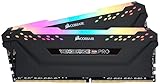
- Top Pick: CORSAIR Vengeance LPX DDR4 RAM 32GB (2x16GB) Up to 3200MHz CL16-20-20-38 1.35V Intel XMP AMD EXPO Computer Memory – Black (CMK32GX4M2E3200C16)
- Best Value: CORSAIR Vengeance RGB PRO DDR4 RAM 32GB (2x16GB) 3200MHz CL16-20-20-38 1.35V Intel AMD Desktop Computer Memory – Black (CMW16GX4M2C3200C16)
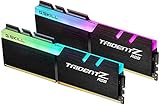
- Premium Choice: G.SKILL Trident Z RGB Series DDR4 RAM (XMP) 32GB (2x16GB) Up to 3600MT/s* CL18-22-22-42 1.35V Intel AMD Desktop Computer Memory U-DIMM (F4-3600C18D-32GTZR)
Affiliate disclosure: As an Amazon Associate we earn from qualifying purchases. This post contains affiliate links — if you buy through them we may earn a small commission at no extra cost to you. This never affects our recommendations.
As an Amazon Associate we earn from qualifying purchases at no extra cost to you.



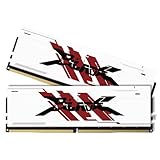

Title: Best 32GB Gaming RAM Kit in 2026: Top Picks for Every Budget
In a hurry? See the top-rated 32GB Gaming RAM deals available right now:
🛒 Check 32Gb Gaming Ram Prices on Amazon →🛒 Best Price Today on Amazon
Prime members get fast, free shipping on everything above, plus member-only deals. New members get a 30-day free trial — cancel anytime.
Start 30-Day Prime Free Trial →See Today’s Amazon DealsWhy 32GB Is the Gaming Sweet Spot in 2026
For most of 2022–2024, 16GB was the “safe” recommendation for gaming PCs. That window has closed. Open-world titles like Hogwarts Legacy routinely spike past 14GB of system RAM during dense traversal sequences. Microsoft Flight Simulator 2024 with AI traffic enabled can sit at 15–16GB at 4K. Palworld dedicated servers chew through memory faster than expected. Meanwhile, background tasks — Discord, OBS, a browser tab or three — don’t disappear while you game.
The result: 16GB users see stutters, hitching, and texture pop-in that 32GB users simply don’t encounter. 32GB eliminates the ceiling without the diminishing returns of 64GB (which, outside of content creation or virtualization workloads, adds cost with no gaming benefit).
DDR5 is now the default. Intel’s 12th-gen LGA1700 and AMD’s AM5 (Ryzen 7000/9000 series) both support DDR5 natively. DDR4 motherboards still exist, but any new build in 2026 is almost certainly DDR5. This guide covers DDR5 exclusively.
2×16GB vs 4×8GB
Always buy a 2×16GB dual-channel kit. Running two sticks gives you full dual-channel bandwidth, leaves two slots free for future expansion to 64GB, and produces lower memory temperatures than packing all four slots. 4×8GB kits can stress the memory controller on AM5 and some Intel platforms, sometimes requiring lower subtimings or causing instability. The 2×16GB configuration is universally safer and more upgrade-friendly.
Quick Comparison: Best 32GB DDR5 Gaming RAM Kits
| Kit | Speed | Timings | Type | RGB | Est. Price |
|---|---|---|---|---|---|
| G.Skill Trident Z5 RGB | DDR5-6000 | CL30-38-38-96 | DDR5 | Yes | ~$120 |
| Corsair Dominator Platinum RGB | DDR5-6200 | CL36-38-38-96 | DDR5 | Yes | ~$145 |
| Kingston Fury Beast | DDR5-5600 | CL36-36-36-80 | DDR5 | Optional | ~$95 |
| Crucial Pro | DDR5-5600 | CL46-45-45-90 | DDR5 | No | ~$80 |
| G.Skill Ripjaws S5 | DDR5-6000 | CL30-38-38-96 | DDR5 | No | ~$100 |
Prices are estimates as of May 2026. Check Amazon for current pricing.
The 5 Best 32GB Gaming RAM Kits in 2026
G.Skill Trident Z5 RGB 32GB DDR5-6000
G.Skill Trident Z5 RGB 32GB DDR5-6000 on Amazon
Key Specs
- Capacity: 32GB (2×16GB)
- Speed: DDR5-6000
- Timings: CL30-38-38-96
- Voltage: 1.35V
- Form Factor: DIMM, 288-pin
- RGB: Yes, addressable per-zone
- XMP/EXPO: XMP 3.0 / EXPO
The Trident Z5 RGB at DDR5-6000 CL30 is the closest thing to a universal recommendation for 2026 gaming builds. On AMD AM5 (Ryzen 7000/9000), DDR5-6000 hits the 1:1 memory ratio with the Infinity Fabric — meaning the FCLK and memory controller run in sync, minimizing latency. Intel platforms (LGA1700 and LGA1851) also scale well at this speed. CL30 is tight for a 6000 MT/s kit; most competing kits at this speed ship at CL36 or CL40. The narrower timings translate to real latency advantages in CPU-bound gaming scenarios.
The aluminum heatspreader sits at 44mm tall — it clears most 120mm tower coolers without conflict. Per-key RGB lighting syncs with iCUE, Armoury Crate, and Mystic Light via ASUS Aura Sync. G.Skill uses Samsung B-die or Hynix A-die ICs depending on production run; both bin well and respond to manual overclocking.
Pros & Cons
Pros:
- DDR5-6000 CL30 is the sweet spot for AM5 — best latency-per-dollar ratio
- Excellent overclocking headroom (CL28 at 6000 achievable on good samples)
- Wide software compatibility (XMP 3.0 + EXPO profiles)
- Reliable build quality — G.Skill’s track record on DDR5 is strong
Cons:
- RGB adds $20–25 over the non-RGB Ripjaws S5 with identical performance
- Availability can fluctuate; check for current stock
- Some AM5 boards need a BIOS update to load EXPO profiles correctly
Who It’s For
The Trident Z5 RGB is the pick for AMD AM5 builders who want RGB and the best real-world latency at a fair price. Also excellent for Intel LGA1851 (Core Ultra 200 series). If RGB isn’t a priority, see the Ripjaws S5 below and save $20.
Corsair Dominator Platinum RGB 32GB DDR5-6200
Corsair Dominator Platinum RGB 32GB DDR5-6200 on Amazon

Key Specs
- Capacity: 32GB (2×16GB)
- Speed: DDR5-6200
- Timings: CL36-38-38-96
- Voltage: 1.40V
- Form Factor: DIMM, 288-pin
- RGB: Yes, 12 individually addressable LEDs per stick
- XMP/EXPO: XMP 3.0
The Dominator Platinum has been Corsair’s flagship RAM line for over a decade, and the DDR5 generation maintains that position. At DDR5-6200, this kit runs slightly faster than the Trident Z5 RGB, though the CL36 timings give back some of that advantage in raw latency. For Intel Core Ultra 200-series platforms, DDR5-6400 is the sweet spot; DDR5-6200 is a solid step in that direction and often more stable out of the box than 6400 kits on budget Intel motherboards.
Build quality is genuinely premium — the hammered aluminum top bar is distinctive and dissipates heat effectively. Corsair’s DHX (Dual-path Heat eXchange) cooling design uses the PCB itself as a secondary heatsink layer, which matters at 1.4V operation. RGB integration with iCUE is the tightest in the industry if you’re already in Corsair’s ecosystem.
The Dominator commands a price premium. You’re paying for the aesthetic, the Corsair ecosystem integration, and a slightly higher frequency bin. The raw gaming performance delta vs the Trident Z5 RGB is small — typically 1–3 FPS in CPU-limited scenarios.
Pros & Cons
Pros:
- Premium build quality with excellent thermal management at 1.4V
- Best-in-class iCUE RGB integration for Corsair-heavy builds
- DDR5-6200 gives headroom to push toward 6400 with manual tuning
- Strong QC — Corsair tests all Dominator sticks individually
Cons:
- Most expensive kit in this roundup — hard to justify the delta vs Trident Z5 RGB purely on performance
- CL36 at 6200 is looser than CL30 at 6000 — latency is not class-leading
- Height (57mm with fins) can conflict with large tower coolers
Who It’s For
Intel LGA1851 builders who are already invested in the Corsair iCUE ecosystem — matching Corsair cooler, case fans, and peripherals — and want flagship aesthetics. If you’re on AM5 and purely chasing performance-per-dollar, the Trident Z5 RGB at CL30 DDR5-6000 wins.
Kingston Fury Beast 32GB DDR5-5600
Kingston Fury Beast 32GB DDR5-5600 on Amazon
Key Specs
- Capacity: 32GB (2×16GB)
- Speed: DDR5-5600
- Timings: CL36-36-36-80
- Voltage: 1.25V
- Form Factor: DIMM, 288-pin
- RGB: Available in RGB and non-RGB SKUs
- XMP/EXPO: Intel XMP 3.0 / AMD EXPO
Kingston’s Fury Beast is the mid-range workhorse of this guide. At DDR5-5600 CL36, it runs below the DDR5-6000 sweet spot for AM5, but the performance gap is smaller than the price gap suggests. Real-world gaming benchmarks typically show a 3–5% fps difference between DDR5-5600 and DDR5-6000 in CPU-bound scenarios — often within margin of error at 1440p or 4K where the GPU is the bottleneck.
The Fury Beast uses Hynix A-die ICs, which are among the most stable for plug-and-play use. The low-profile 34mm height fits virtually any cooler without clearance issues. Both RGB and non-RGB versions are available at the same speed — the non-RGB variant saves another $10–15 and is the better value if you don’t care about lighting.
Kingston’s warranty and support are solid, and the Fury Beast has broad compatibility across Intel and AMD platforms.
Pros & Cons
Pros:
- Excellent value — strong real-world gaming performance at a lower price
- Low-profile heatspreader (34mm) fits tight cooler clearances
- Hynix A-die ICs are stable and predictable on XMP/EXPO
- Available in RGB and non-RGB versions
Cons:
- DDR5-5600 sits below AM5’s 6000 MT/s sweet spot — small but measurable latency penalty
- CL36 timings are loose; manual tightening to CL34 is possible but requires BIOS work
- Less visual impact than Trident Z5 or Dominator
Who It’s For
Builders on a mid-range budget ($90–100 range) who want reliable, low-drama DDR5 performance. Also ideal for SFF (small form factor) builds where cooler clearance is tight — the 34mm height is genuinely helpful. A smart pick if you’re spending the savings on a better GPU.
Crucial Pro 32GB DDR5-5600
Crucial Pro 32GB DDR5-5600 on Amazon
Key Specs
- Capacity: 32GB (2×16GB)
- Speed: DDR5-5600
- Timings: CL46-45-45-90
- Voltage: 1.10V
- Form Factor: DIMM, 288-pin
- RGB: No
- XMP/EXPO: Intel XMP 5.0 / AMD EXPO
The Crucial Pro is the budget entry point in this guide and the honest choice for anyone who sees RAM as infrastructure rather than a performance variable. At DDR5-5600 CL46, the timings are looser than any other kit here — this matters in highly CPU-bound synthetic benchmarks more than in actual game frametimes at 1440p or 4K.
What Crucial Pro offers instead: rock-solid reliability, the lowest voltage in the roundup at 1.10V (vs 1.35–1.40V for the others), and Micron’s manufacturing consistency. Crucial is Micron’s consumer brand, and Micron’s DDR5 fabrication is among the most controlled in the industry. At ~$80 for 32GB DDR5, the price-per-gigabyte is hard to argue with.
The tradeoff is clear: CL46 vs CL30 at similar bandwidth is a meaningful latency difference in tools like AIDA64 and CPU-Z. In actual game titles at 1440p with a mid-to-high-end GPU, the real-world gap often collapses to 1–2 FPS.
Pros & Cons
Pros:
- Lowest price in this roundup — best entry price for 32GB DDR5
- Ultra-low 1.10V operation runs cool and stresses the memory controller minimally
- Micron ICs — consistent, reliable, no lottery involved
- XMP 5.0 and EXPO support for one-click enabling
Cons:
- CL46 timings are the loosest here — latency-sensitive workloads take a measurable hit
- No RGB (not a con for everyone, but worth noting)
- No overclocking headroom beyond rated spec — not a tweaker’s kit
- DDR5-5600 misses AM5’s 6000 sweet spot
Who It’s For
Budget-conscious builders who need reliable 32GB DDR5 and plan to spend the savings elsewhere — better GPU, NVMe SSD, cooling. Also a solid choice for workstation-adjacent gaming PCs where stability at low voltage matters more than peak frame rates. If you’re debating between 16GB and 32GB and cost is the barrier, the Crucial Pro makes 32GB accessible.
G.Skill Ripjaws S5 32GB DDR5-6000 (No-RGB Budget Pick)
G.Skill Ripjaws S5 32GB DDR5-6000 on Amazon
Key Specs
- Capacity: 32GB (2×16GB)
- Speed: DDR5-6000
- Timings: CL30-38-38-96
- Voltage: 1.35V
- Form Factor: DIMM, 288-pin
- RGB: No
- XMP/EXPO: XMP 3.0 / EXPO
The Ripjaws S5 is the Trident Z5 RGB with the lighting stripped out — literally. G.Skill uses the same DDR5-6000 CL30 binning, the same ICs, and the same timings in both kits. The only meaningful differences: the Ripjaws S5 has a lower-profile heatspreader (38mm vs 44mm on the Trident Z5) and no RGB. The result is a $20–25 price reduction with identical gaming performance.
For anyone building inside a closed case, running a dark aesthetic, or simply allergic to paying the RGB tax, the Ripjaws S5 is the rational choice. The CL30 timings at DDR5-6000 remain the performance sweet spot for AM5, and the lower heatspreader height is a genuine quality-of-life improvement for mid-tower builds with large air coolers.
G.Skill’s quality control on the S5 line matches the Trident Z5 — same warranty, same customer support, same RMA process.
Pros & Cons
Pros:
- Identical performance to the Trident Z5 RGB at DDR5-6000 CL30 — for less money
- Lower-profile heatspreader (38mm) improves cooler clearance
- Best performance-per-dollar ratio in this roundup for AM5 builds
- XMP 3.0 + EXPO support
Cons:
- No RGB — not a con for everyone, but some builders want the aesthetic
- Availability fluctuates; stock moves faster than the Trident Z5
Who It’s For
AM5 builders who want maximum gaming performance without the RGB premium. This is the pick if you’re optimizing purely for frames-per-dollar and don’t care about lighting. It’s also the recommendation for anyone building inside a case with no windowed panel. Objectively, the Ripjaws S5 is the best value 32GB DDR5 kit in this guide for pure gaming purposes.

Buyer’s Guide: What to Know Before You Buy
DDR5-6000 CL30: The AM5 Sweet Spot Explained
AMD’s AM5 platform uses a synchronous memory architecture where the best performance comes from running memory at exactly 2× the Infinity Fabric clock (FCLK). At DDR5-6000 (6000 MT/s), the memory controller and FCLK run at 3000 MHz in 1:1 sync — the lowest-latency configuration. Push to DDR5-6400 or DDR5-6800, and the controller often drops to 2:1 async mode, which increases latency despite the higher bandwidth. This is why DDR5-6000 consistently outperforms DDR5-6400 in real gaming benchmarks on Ryzen 7000 and 9000 systems.
Intel is different. On LGA1700 and LGA1851 (Core Ultra 200), the memory controller handles higher speeds more linearly. DDR5-6400 is the common sweet spot — DDR5-6200 to 6400 is where Intel gaming performance peaks before diminishing returns set in.
Latency vs Speed: The CL Tradeoff
Higher MT/s is not always faster. Compare CL30 DDR5-6000 vs CL36 DDR5-7200:
- CL30 at 6000 MT/s: true latency = (30 / 6000) × 2000 = 10.0 ns
- CL36 at 7200 MT/s: true latency = (36 / 7200) × 2000 = 10.0 ns
They’re identical in absolute latency. But DDR5-7200 costs significantly more, stresses the memory controller harder, and may require CPU-heavy tuning to stabilize. DDR5-6000 CL30 delivers the same latency at lower cost, lower voltage, and higher stability. The only scenario where DDR5-7200 wins is if you also achieve tighter timings like CL34 or below — achievable with binned kits and manual overclocking, but not out of the box.
RGB vs Non-RGB: The $20–30 Premium
RGB RAM looks good in a windowed build — and it’s genuinely popular. But on a 32GB 2×16GB kit, RGB consistently adds $20–30 over an identical non-RGB version. G.Skill’s Trident Z5 vs Ripjaws S5 is the clearest example: same ICs, same timings, same XMP/EXPO profiles, $20–25 price gap. If your case has no window, or you run a dark/minimal aesthetic, buy the non-RGB version and spend the difference on a better game.
Heat and Voltage
DDR5 kits at DDR5-6000+ typically run at 1.35V, up from the 1.10V DDR5 JEDEC spec. This is safe — all mainstream DDR5 kits are designed for 1.35V operation with XMP/EXPO enabled. The Corsair Dominator at 1.40V runs slightly hotter and benefits from its extended heatspreader design. If you’re building in a poor-airflow case, prioritize kits with robust heatspreaders (Dominator, Trident Z5) over bare-heatspreader budget kits.
Verdict: Which 32GB DDR5 Kit Should You Buy?
Best overall for AM5: G.Skill Trident Z5 RGB DDR5-6000 CL30. The DDR5-6000 1:1 ratio with AM5’s Infinity Fabric and CL30 timings deliver the best latency-per-dollar for Ryzen 7000/9000 gaming builds.
Best overall for Intel: Corsair Dominator Platinum RGB DDR5-6200. For Core Ultra 200 builders already in the Corsair ecosystem, the Dominator’s premium is justified. Budget-focused Intel builders should take the Trident Z5 RGB instead.
Best value pick: G.Skill Ripjaws S5 DDR5-6000 CL30. Identical performance to the Trident Z5 RGB for $20–25 less. The right answer for anyone who doesn’t need RGB.
Best budget pick: Crucial Pro DDR5-5600. CL46 timings hurt in synthetics but rarely in actual game sessions at 1440p+. At ~$80 for 32GB DDR5, it makes upgrading from 16GB accessible.
Best for tight clearance builds: Kingston Fury Beast DDR5-5600. The 34mm heatspreader height resolves virtually every cooler conflict, and the Hynix A-die ICs are predictably stable.
32GB DDR5 is no longer an enthusiast luxury — it’s the sensible baseline for any PC you expect to game on through 2027 and beyond. Any kit in this guide will serve you well; the differences are about matching your platform, budget, and aesthetic priorities.
Frequently Asked Questions
Is 32GB of RAM worth it for gaming in 2026?
Yes. While many games run on 16GB, 32GB is the new comfortable standard. It handles modern titles, background apps, and browser tabs without slowdowns and future-proofs your build.
Should I buy 32GB as one kit or two?
Buy a matched 2x16GB dual-channel kit. Mixing separate sticks risks compatibility and stability issues, while a single kit is tested to run together at rated speed.
What speed should 32GB DDR5 gaming RAM run at?
DDR5-6000 with low timings is the sweet spot, especially for AMD Ryzen. It balances real performance gains with rock-solid stability.
Will 32GB of RAM improve my frame rates?
If you already have enough RAM, adding more will not raise FPS. The benefit of 32GB is eliminating stutters from running out of memory while multitasking or in memory-heavy games.
Related Articles
Looking for more on this topic? Browse the hand-picked guides below — each one applies the same scoring rubric used in this review.