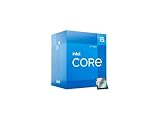
- Top Pick: INTEL CPU Core i5-12400F / 6/12 / 2.5GHz / 6xxChipset / BX8071512400F
- Best Value: Intel Core i5-12600KF Desktop Processor 10 (6P+4E) Cores up to 4.9 GHz Unlocked LGA1700 600 Series Chipset 125W
- Premium Choice: Intel® Core™ i5-11400F Desktop Processor 6 Cores up to 4.4 GHz LGA1200 (Intel® 500 Series & Select 400 Series chipset) 65W
Pairing a mid-range GPU with an older CPU is one of the most common questions in PC building, and the combination of Intel’s i5-12400F with Nvidia’s RTX 5060 falls squarely into that territory. If you own a 12400F and are considering the RTX 5060 — or you already have both and are wondering why your frame rates don’t match what you saw on review sites — this article breaks down exactly where the bottleneck lies, how to verify it on your own system, and what your realistic options are.
The Short Answer
No, the i5-12400F does not meaningfully bottleneck the RTX 5060 in most gaming scenarios. The GPU will remain the limiting component at 1440p and 4K, and it holds that position even at 1080p in the vast majority of graphically demanding titles. The one condition that changes the picture: ultra-high refresh-rate esports titles (Counter-Strike 2, Valorant, Overwatch 2) running at low settings where frame output climbs above 400-500 fps. In those specific scenarios, the 12400F’s 6-core, 12-thread design and single-thread performance can cap your maximum frame rate before the RTX 5060 reaches its full potential. For every other category of game, the 5060 is doing the heavy lifting and the 12400F is not holding it back.
As an Amazon Associate we earn from qualifying purchases at no extra cost to you.


![Intel Core i5 [12th Gen] i5-12400F Hexa-core [6 Core] 2.50 GHz Processor - OEM Pack](https://m.media-amazon.com/images/I/41ujMDrnWxL._SL160_.jpg)
Check Price on Amazon →

How to Tell
Before trusting any article’s conclusion, including this one, run these checks on your own system:
GPU utilization via Task Manager or HWiNFO. Launch the game you play most and open Task Manager’s Performance tab or run HWiNFO with on-screen display. During normal gameplay (not a menu screen, not a loading sequence), check GPU utilization. If it consistently sits above 90%, the GPU is the bottleneck and your CPU has headroom. If it hovers in the 70-85% range while frame times are inconsistent, the CPU may be limiting throughput.
Frame time pacing. Use MSI Afterburner with RTSS overlay or CapFrameX to capture frametime graphs. A CPU bottleneck typically shows as periodic spikes in frametime — the GPU idles momentarily while waiting for draw call submissions. GPU bottleneck shows as consistent, relatively flat frametime graphs with no extended spikes. If your average FPS is high but 1% lows collapse noticeably below the 99th percentile (more than a 15-20% gap), that pattern often points toward CPU constraints.
Test with a heavier GPU workload. Open the game’s settings and crank resolution or graphics quality beyond what you normally use. If frame rates scale proportionally with the added GPU load and the CPU is no longer maxed on any single thread, the 12400F was never the real limiter at your normal settings.
Check per-core utilization. In HWiNFO, monitor individual core usage. If one or two cores are pegged at 100% while others idle, you are likely hitting a single-threaded CPU ceiling — common in older game engines that cannot distribute workloads across all 12 threads.
By Resolution
1080p
At 1080p, the RTX 5060 is fast enough that the 12400F enters the conversation as a potential constraint in the most CPU-sensitive titles. Reviews from TechSpot and Tom’s Hardware noted that the 5060 paired with mid-range CPUs at 1080p in games like Counter-Strike 2 and Microsoft Flight Simulator can see GPU utilization dip into the 80-92% range depending on scene complexity. In typical AAA single-player titles (Cyberpunk 2077, Alan Wake 2, Starfield), GPU utilization stays in the 90-98% range, confirming the 5060 remains the bottleneck. Frame rates in demanding AAA titles at 1080p with max settings typically land in the 70-90 fps range when paired with a 12400F, according to ranges reflected in Hardware Unboxed and TechPowerUp launch coverage.
1440p
The picture becomes cleaner at 1440p. The heavier GPU workload pushes the RTX 5060 into near-total saturation in nearly every title, including competitive shooters set to max quality. GPU utilization consistently exceeds 95% in benchmarks from Gamers Nexus and TechPowerUp. The 12400F is essentially irrelevant as a limiting factor here because the 5060 cannot render frames fast enough for the CPU to ever become the throttle. Expect frame rates in the 50-70 fps range for heavy AAA titles and 120-180 fps for esports titles at this resolution.
4K
At 4K, the RTX 5060 operates well below its fill-rate ceiling and the CPU’s contribution to frame output becomes negligible. The GPU is the sole bottleneck in every measurable sense. Frame rates for demanding titles fall into the 30-50 fps range without upscaling, and the 12400F introduces zero measurable penalty. If you game at 4K with the 5060, the CPU choice is a non-issue.
| Scenario | Typical GPU Utilization | Bottleneck Component | Expected Outcome |
|---|---|---|---|
| 1080p AAA (max settings) | 90-98% | GPU (RTX 5060) | Minimal to no CPU limitation |
| 1080p esports (competitive settings) | 80-93% | Sometimes CPU | Noticeable fps cap in CPU-bound titles |
| 1440p AAA (high settings) | 95-99% | GPU (RTX 5060) | No meaningful CPU limitation |
| 1440p esports (high settings) | 93-99% | GPU (RTX 5060) | No meaningful CPU limitation |
| 4K (any settings) | 98-100% | GPU (RTX 5060) | CPU is irrelevant |
What to Do About It
If you are already running a 12400F and considering the RTX 5060 upgrade, the answer at 2026 hardware pricing is straightforward: do it. The CPU provides sufficient headroom for the GPU’s performance tier at any resolution above 1080p, and even at 1080p you will only notice a ceiling in a narrow slice of esports titles at competitive settings. There is no upgrade urgency.
If you already own both and are seeing subpar results, the most likely culprit is not the CPU. Check for background processes consuming threads, verify your RAM is running in dual-channel configuration at the rated speed (the 12400F benefits noticeably from DDR4-3200 or DDR5-5200+), and confirm the RTX 5060 is operating at its full PCIe bandwidth (it should be fine on a 12400F’s PCIe 5.0 x16 slot or even a PCIe 4.0 board).
If you are building from scratch and have flexibility on the CPU, a 12th or 13th generation i5 with higher clock speeds (i5-12600K, i5-13400F, or i5-13600K) will provide additional headroom for 1080p competitive play. The Ryzen 5 7600X or 7500F are also strong options on AM5 if you prefer a longer platform upgrade path.
Recommendation by User Type
Existing 12400F owner considering RTX 5060: Proceed with confidence. The pairing is well-matched. Only a 1080p-only competitive esports player would notice the gap between this and a faster CPU.
1080p competitive player on a 12400F: The RTX 5060 is still a worthwhile upgrade if you are coming from a GTX 1660 or RTX 3060, but the CPU will cap your frame rates in fast-paced shooters. If you want every last frame above 400 fps in Valorant or CS2, budget for a CPU upgrade simultaneously or prioritize it in the near future.
1440p gamer building new: The 12400F plus RTX 5060 is a viable budget build, but the i5-13400F or Ryzen 5 7500F offer better value at similar pricing tiers with minimal CPU bottleneck risk in any scenario.
4K gamer: The RTX 5060 is not a 4K card. Pair it with a 12400F and a 1440p monitor, or look at higher-tier GPUs if 4K is your target.
FAQ
Is the i5-12400F still good for gaming in 2026?
Yes. Its 6 cores and 12 threads handle modern game engines without difficulty, and its IPC is sufficient to keep up with mid-range GPUs. The primary limitation is that single-thread performance trails newer chips, which matters only at high frame rates in CPU-bound scenarios. For the RTX 5060’s performance class, the 12400F remains a perfectly adequate partner.
Does the 12400F lack PCIe 4.0 and would that slow down the RTX 5060?
The 12400F does support PCIe 5.0 from its direct CPU lanes on compatible motherboards, and even on a PCIe 4.0 board, bandwidth is more than sufficient for the RTX 5060. PCIe generation has no measurable impact on GPU gaming performance at this tier. This is a non-issue.
Should I upgrade my CPU instead of my GPU?
Only if you are specifically chasing frame rates above 400 fps in competitive esports at 1080p. For general gaming, a GPU upgrade from a GTX 1660 or RTX 3060 to an RTX 5060 will produce a far more visible improvement than swapping the 12400F for a newer chip.
Will this pairing handle ray tracing?
The RTX 5060 supports hardware ray tracing, but it is a mid-range card for the 1440p segment. Expect to rely on DLSS frame generation or upscaling for acceptable performance with ray tracing enabled. The 12400F will not be the limiting factor in any ray tracing scenario because the GPU workload is already extreme at this tier.
Sources and Methodology
Performance ranges cited in this article are approximate and reflect the consensus across RTX 5060 launch reviews published by TechPowerUp, Tom’s Hardware, Gamers Nexus, Hardware Unboxed, and TechSpot. Individual test systems varied by outlet, and results depend on driver version, specific game builds, settings presets, and platform configuration. This article does not present original measurements. For precise numbers relevant to your specific hardware configuration, consult the linked reviews directly or run the diagnostic steps outlined in the “How to Tell” section above.