Tainted Grail: Conquest, the roguelike deck-builder Questline built on Awaken Realms’ Arthurian board-game setting, is one of the easier Linux questions to answer and one of the harder ones to summarise. Steam’s record says the game is native, and the paperwork holds up: a filled-in Linux requirements tab and a full-size Linux depot inside the package on sale. The argument starts in the community filings, where a loud minority of players abandon the native build for Proton.
So this check separates two questions. The first is documentary: does a Linux build exist, is it the one being sold, and what did Valve’s own test find? The second is practical: how do the 38 ProtonDB filings split between running the game natively and forcing the Windows version through Proton? Both answers are worth having before a run starts.
As an Amazon Associate, we earn from qualifying purchases.
Quick answer
Tainted Grail: Conquest ships a real native Linux build on Steam: the Linux flag is set, the Linux requirements are filled in, and a 5.45 GiB Linux depot sits inside the package on sale. It is Steam Deck Verified on the native runtime, although a share of players force Proton for stability.
The record, layer by layer
Start with the flags. Steam’s platform line reads Windows true, Mac false, Linux true, and the requirements tabs match it. The Windows minimum asks for 64-bit Windows 7, 8 or 10, a 3.2 GHz dual-core processor, 8 GB of RAM, a GTX 750 class card and 8 GB of storage. The Linux minimum is a genuine port of that specification rather than a placeholder: an up-to-date Ubuntu release, with the same processor, memory, graphics and storage figures. Only the Linux recommended tier is empty. The Mac tab is headings over empty lists on a Mac-false record, a true negative rather than a hidden port.
The depot census settles what the flags promise. Depot 1199031 is the Windows content at 5.24 GiB. Depot 1199032 is named “Tainted Grail Linux + SteamOS” and weighs 5.45 GiB, slightly larger than the Windows build: a real port, not a stub. Depot 1199033 is a macOS entry marked unused, with no size at all: a ghost that delivers nothing. The decisive layer is package membership. The store package on sale contains exactly two depots: the Windows one and the Linux one. The native build is not stranded in a CD-key sub or a test branch; it is in the box a buyer receives.
Two smaller details complete the picture. The registered assets run to a client icon, an icon, a logo and a logo small, with no LinuxClientIcon in any form, yet the build is real: the inverse of the fossil-icon case, where artwork outlives a withdrawn port. The game’s own record lists full controller support. On anti-cheat there is nothing to report: the game is single-player, none is named on its record, and the AreWeAntiCheatYet catalogue holds no entry for it in either direction, documentation silence rather than a clearance. One wrinkle: the Linux depot last changed in September 2022, the Windows depot in September 2025.
The soundtrack is the only flag that lies
The DLC array holds exactly one entry, read on its own record. App 1738770 is the Tainted Grail: Conquest Soundtrack, a music product released in October 2021, whose platform flags read Windows true, Mac true and Linux true, two of which agree with the base game. The Mac flag does not: the base game is Mac false on every layer, with only an unused size-less macOS depot behind it, so the soundtrack’s Mac flag is the family’s one false platform claim, the standard soundtrack all-true shape. It changes nothing about the game itself, because the base game’s Linux flag is backed by a depot, requirements and package membership rather than family paperwork. A scan that reads the soundtrack first would call this a three-platform family; it is not one.
Native on paper, argued about in the filings
ProtonDB classifies the game as Native, and its page carries the “Natively Supports:” heading. Steam’s record confirms it on every layer, so for once the heading agrees with the store. The summary, read in full, settles at Gold, with best-reported and trending tiers of Platinum, 38 reports and strong confidence. Because a native build exists, that file mixes reports on the Linux build with reports from players who forced the Windows build through Proton instead.
The colour inside the file is genuinely split, and smoothing it over would misrepresent the game. Several native filings describe crashes after the tutorial, hitching when cards activate in battle, low overworld frame rates and, in the oldest reports, missing textures the developers reportedly promised to fix. A recent filing on a high-end NVIDIA card is blunt about terrible native performance, while another recent report, filed on Proton 10.0-3, reports no problems at all. The pattern is that the Proton route is the steadier one for many desktop players, with current Proton and GE-Proton builds absorbing the hitches. None of that removes the native build; existence and polish are separate facts, and this game is where they come apart.
The Deck badge grades the native build
Valve’s own compatibility endpoint gives the game its strongest result. The resolved category is Verified, with all four checks passing: the default controller configuration is fully functional, the game shows Steam Deck controller icons, the interface text is legible, and the default graphics configuration performs well. The configuration block is just as clean: gamepad input, no manual keyboard invocation, no small-text deduction. Most importantly, the sheet’s recommended runtime is native, so the badge grades the Linux build itself, not a Proton pass. The SteamOS side resolves separately as Compatible, with game startup confirmed functional.
The test metadata comes from SteamDB’s republication of Valve’s sheet, with the usual age caveat. The test is dated 2 December 2023 against build 9696699, while the current branch serves a far later build from September 2025. The badge therefore certifies the native line as it stood at the end of 2023, not the exact branch on sale today: the verdict is real, the runtime it grades is the right one, and the sheet cannot speak for the current branch. Deck filings lean playable, with battery caveats at default settings.
Buying it away from Steam
GOG sells this game, and the ruling is short. The GOG product record for Tainted Grail: Conquest, product 1257094744, reads compatibility as Windows true, macOS false and Linux false. A DRM-free copy exists, but it is the Windows build. Anyone who wants the native version has exactly one storefront for it, and it is Steam. The separate GOG listing for Tainted Grail: The Fall of Avalon is a different game and says nothing about this one.
Gear that fits the record
The gear below follows the record’s shape: the handheld whose test sheet grades the native build, two pads, a mouse and library storage.
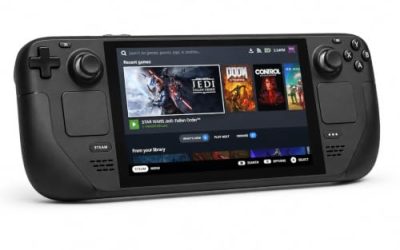
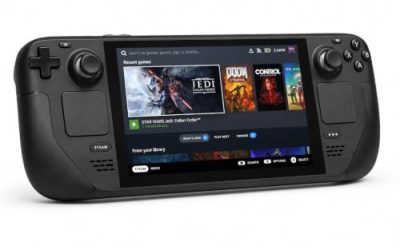
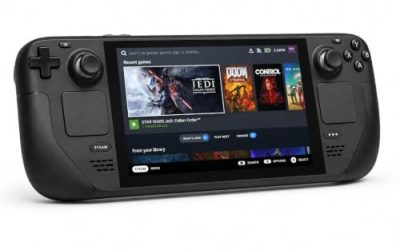
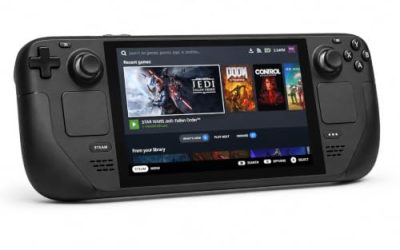
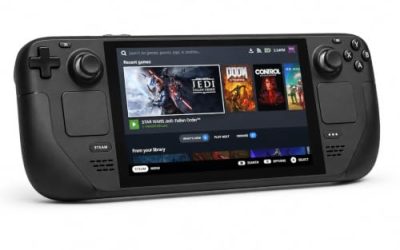
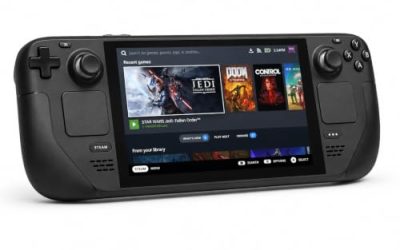
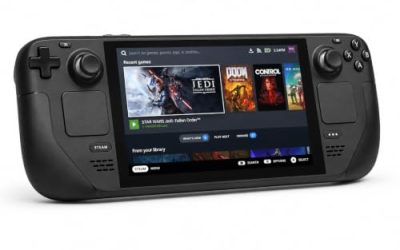
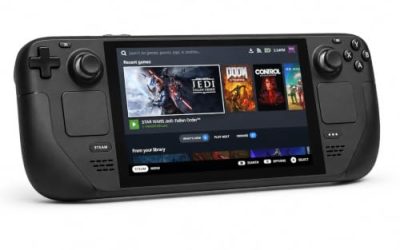
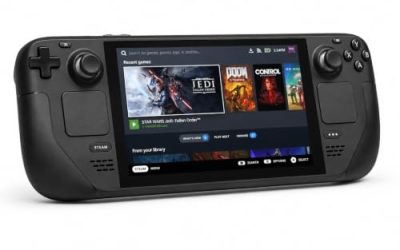
Valve Steam Deck OLED 512GB

The handheld the Verified badge was written for, with Valve’s sheet recommending the native runtime. A turn-based deck-builder is exactly the load this APU shrugs off.
Specs
- Display: 7.4-inch HDR OLED, 1280 by 800, up to 90 Hz
- Processor: AMD Zen 2 and RDNA 2 custom APU
- Memory: 16 GB LPDDR5
- Storage: 512 GB NVMe, plus a microSD slot
- Wireless: Wi-Fi 6E and Bluetooth
- Channel note: Valve sells the Deck mainly through its own store, so Amazon listings are third-party sellers
8BitDo Ultimate 2 Bluetooth Controller
The docked pad pick: the game’s record lists full controller support, and this pad adds modern sticks, triggers and back buttons.
Specs
- Connectivity: Bluetooth wireless and USB-C wired
- Joysticks: TMR electromagnetic, anti-drift design
- Triggers: Hall effect, with mode switching
- Extras: two remappable back buttons, motion control
- In the box: charging dock included
Xbox Wireless Controller, Carbon Black
The safest guest pad in PC gaming: Steam Input support is universal, the glyphs match what most games display, and it pairs over Bluetooth or its own wireless standard.
- Connectivity: Xbox Wireless and Bluetooth
- Port: USB-C for wired play
- Controls: hybrid D-pad, dedicated Share button
- Power: AA batteries or optional rechargeable pack
Logitech G502 HERO
Conquest is a game of cards, maps and menus, and a precise wired mouse turns deck management into single clicks. Eleven programmable buttons cover the confirm, cancel and inspect inputs a long run repeats.
Specs
- HERO optical sensor, up to 25,600 DPI
- 11 programmable buttons
- Adjustable weight system
- Wired USB connection
- On-board memory profiles
Samsung T9 Portable SSD 2TB
For moving a Linux game library between machines, or keeping an offline backup of installers, a fast USB-C drive is the simple answer. The headline figure needs a Gen 2×2 host port; on a lesser port the drive runs at that ceiling instead.
Specs
- Capacity: 2 TB portable SSD
- Interface: USB 3.2 Gen 2×2, USB-C connector
- Maker-rated speeds: up to 2,000 MB per second read, 1,950 MB per second write
- Features: Dynamic Thermal Guard, maker-rated drop resistance
How to choose
Choose the native build first on a Steam Deck or a mainstream desktop with current drivers: it is the build Valve graded, it needs no compatibility layer, and its demands sit far below the published minimum. Choose the Proton route deliberately if the first native session shows the documented symptoms, meaning hitching as cards resolve, overworld frame drops or freezes at scene changes; current Proton and GE-Proton builds are the route the steadier filings took. Choose the storefront by the build, not the launcher: Steam is the only seller of the native version, while the GOG copy is Windows-only.
Who should skip
Skip the native build, though not the game, if stability matters more than purity and the first run stutters: the Proton file exists precisely because a share of players made that trade. Skip the GOG copy entirely if the point of the purchase is playing on Linux without a compatibility layer, because that copy is the Windows build. Skip the game itself if a grim Arthurian roguelike deck-builder sounds like homework, or if a static native port is a deal-breaker in principle.
FAQ
Is Tainted Grail: Conquest native on Linux?
Yes. Steam sets the Linux flag, publishes a filled-in Linux minimum specification naming an up-to-date Ubuntu release, and ships a 5.45 GiB depot named “Tainted Grail Linux + SteamOS” inside the store package on sale. The ruling rests on all four layers agreeing, not on the flag alone.
Is Tainted Grail: Conquest Steam Deck Verified?
Yes. Valve’s sheet resolves to Verified with all four checks passing, and its recommended runtime is native, so the badge grades the Linux build. The test is dated December 2023 against an older build than the one now on sale, so the paperwork certifies the native line, not the current branch.
Why do some players force Proton for a native game?
Because the native build’s report file is split. Filings describe hitching when cards activate, overworld frame-rate drops and older crash and texture problems on the Linux build, while the Windows build under current Proton runs more steadily for many players. ProtonDB settles at Gold across 38 reports, and that file mixes both routes.
Can I buy a Linux copy of Tainted Grail: Conquest on GOG?
No. GOG’s product record for the game lists Windows as its only supported system, so the DRM-free copy is the Windows build. The native Linux version is sold only through Steam.
Final verdict
Tainted Grail: Conquest is native on Linux in the strongest documentary sense: flag, requirements, depot and sold package all agree, and Valve’s Verified badge was earned on the native runtime rather than on a Proton pass. The native depot has been static since 2022, a visible share of the 38 ProtonDB filings report a rougher ride on it than through Proton, and GOG offers no Linux copy at all. Buy it on Steam, start native, and treat the Proton switch as a documented fallback rather than a defeat.
Product and ASIN Reference
| Product | ASIN |
|---|---|
| Valve Steam Deck OLED 512GB | B0CQ3RWQQZ |
| 8BitDo Ultimate 2 Bluetooth Controller | B0F194QFT2 |
| Xbox Wireless Controller, Carbon Black | B08DF248LD |
| Logitech G502 HERO | B07GBZ4Q68 |
| Samsung T9 Portable SSD 2TB | B0CHFS9K14 |