Sword of the Stars II: Enhanced Edition, Kerberos Productions’ 2012 sequel published by Paradox Interactive, is the awkward middle child of its series on Linux paper. Family paperwork from the first game sometimes gets smeared across the sequel by scanners. Steam’s record for this app is narrower: one platform flag, one set of Windows depots, and a Linux requirements field with nothing in it.


What the sequel does have is a recent date with Valve’s test bench. The Steam Deck sheet for this game was refreshed in October 2026 against the exact build Steam still serves, making it one of the freshest pieces of paperwork in this cluster.
As an Amazon Associate, we earn from qualifying purchases.
Quick answer
Sword of the Stars II: Enhanced Edition is not native on Linux. Steam flags the game Windows only, every depot is a Windows depot, and the Linux requirements field is an empty list. The Proton file is rough: a Bronze headline tier across 11 reports, though the best reports reach Platinum. Valve rates it Playable on Steam Deck, tested in October 2026.
The status at a glance
| Question | Answer from the record |
|---|---|
| Native Linux build | No — Steam flags read Windows only |
| Linux requirements tab | Absent — the field is an empty list |
| Depots | Windows only, soundtrack included |
| ProtonDB record | Bronze headline, Platinum best, 11 reports |
| Steam Deck verdict | Playable, tested October 2026 |
| GOG edition | None — GOG sells the first game only |
| Anti-cheat or launcher | None named on the record |
What Steam’s own record says
Steam’s appdetails record for app 42990 lists the platforms as Windows true, Mac false, Linux false. The Enhanced Edition, released 30 November 2012, folds the Lords of Winter base game and the End of Flesh expansion into a single app, and that app ships one build: a Windows build. The Mac and Linux requirements fields are both empty lists, the barest pattern this project tracks. There is no Linux tab in any form, not even an empty shell a reader could misread as a requirements list.
The published Windows requirements are period pieces: Windows 7 in 64-bit, a Core 2 Duo class processor, 2 GB of RAM and a 512 MB DirectX 10 graphics card, with integrated laptop graphics explicitly unsupported. The record lists multiplayer and Family Sharing, English only, and a third-party EULA. Two legacy artefacts ride along: a registry-based CD key method and a show-key-on-launch flag, leftovers from 2011 that say nothing about platforms. No anti-cheat is named on the record, and AreWeAntiCheatYet carries no entry for the game. Steam’s record also carries no controller support field for this app at all, a point the gear section respects rather than papers over.
The depot trail
SteamDB’s depot table for app 42990 closes the question the flags open. The main content depot, 42992, is configured for Windows and holds 7.54 GiB; it still carries the internal name Sword of the Stars II Beta, a fossil from the troubled 2011 launch. Around it sit the add-on depots, every one labelled Windows: four immersion pack depots marked Windows Optional at zero size, an End of Flesh depot marked Windows Unused, and the soundtrack depot. No Linux or Mac depot exists anywhere in the table.
The branch record matters for the Deck sheet below. The public branch sits on build 363334, built in August 2014, and has never moved since. Whatever Valve tested in 2026 is the build a buyer downloads today.
The add-on apps, read individually
The base app’s own record lists no DLC array, because the Enhanced Edition absorbed the add-ons rather than hanging them off the game. The separate apps that remain were still read individually, and none lends the game a Linux flag. The Original Soundtrack (app 203060) flags Windows and Mac true and Linux false. That Mac flag is the only non-Windows platform flag in this game’s family, and it belongs to an audio product, not to the game. The four immersion pack apps no longer resolve on Steam’s record at all; their content shipped inside the Enhanced Edition, and their depots survive only as zero-size Windows entries. A family scan crediting this game with Mac or Linux support is reading the soundtrack’s flag or the first game’s collection, never this app.
That first game deserves one separating sentence. Sword of the Stars: Complete Collection covers the 2006 original and was covered in its own article. Nothing in its record transfers here.
The Proton file: Bronze headline, Platinum ceiling
ProtonDB’s summary record for app 42990 is one of the roughest files in this cluster: a Bronze headline tier, a Bronze trending tier and a Platinum best-reported tier, across 11 reports with low confidence. The split tells the story: the best reports show the game running well once coaxed into life, while the settled tiers show how much coaxing the average attempt needs.
The report text bears that out. Players describe launch flags that disable the DirectX 10 and 11 paths just to reach the main menu, manual installs of period DirectX and XML components, a launcher whose settings do not take effect, and occasional combat crashes. The Platinum ceiling proves the game can be made to run well; the file still describes a project, not an install-and-play evening. One evidence limit: the ProtonDB page fetched this session rendered report text only, and its classification heading did not render, so this article makes no claim about any heading on that page.
The Steam Deck sheet: a 2026 test of a 2014 build
Valve rates Sword of the Stars II Playable on Steam Deck, its second category, and SteamOS separately Compatible. The paperwork is unusually current: the test is dated 16 October 2026, the tested build is 363334, the very build on the public branch, and the recommended runtime is proton-experimental. A Playable verdict usually decays as a game updates away from its tested build; here the build froze in 2014, so the verdict describes exactly what a buyer installs.
The deductions are the input-shaped ones a mouse-driven strategy game earns. The launcher may require the touchscreen or virtual keyboard; some functionality is not accessible under the default controller configuration; the game sometimes shows mouse, keyboard or non-Deck controller icons; entering text requires manually invoking the on-screen keyboard; some in-game text is small; and the game supports the Deck’s native resolution but does not set it by default. Against those, Valve records that the default graphics configuration performs well. One caution: Steam lists no controller support category for this game, so the Deck experience runs through Steam Input mapping rather than native gamepad support.
The storefront ruling
There is no second storefront copy to consider. GOG’s catalogue holds no Sword of the Stars II product; the only series entry its catalogue search returns is Sword of the Stars: Complete Collection, the first game, flagged Windows only. The Steam copy is therefore ruled the only PC edition: it is the build the Proton file describes and the build Valve tested on Deck in 2026.
Gear that fits the record
The gear follows the record: the handheld whose badge Valve refreshed this year, a mouse as the honest primary input for a menu-and-map strategy game, two pads framed strictly as library gear used through Steam Input, and fast library storage.
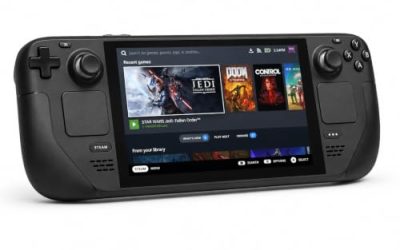
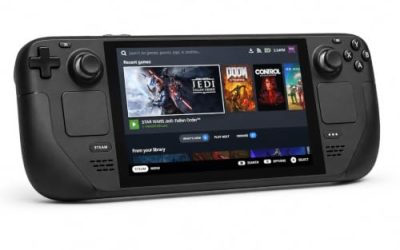
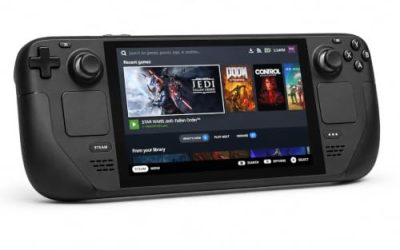
Valve Steam Deck OLED 512GB
The handheld on Valve’s test sheet. The badge is Playable rather than Verified because of input and text notes, not performance: the default graphics configuration performs well, and the tested build is the build you download today.
Specs
- Display: 7.4-inch HDR OLED, 1280 by 800, up to 90 Hz
- Processor: AMD Zen 2 and RDNA 2 custom APU
- Memory: 16 GB LPDDR5
- Storage: 512 GB NVMe, plus a microSD slot
- Wireless: Wi-Fi 6E and Bluetooth
- Channel note: Valve sells the Deck mainly through its own store, so Amazon listings are third-party sellers
Logitech G502 HERO
The input this game was built for. A 4X strategy game lives on its star map and menus, and the Deck sheet’s deductions are exactly the friction a wired mouse removes at a desk.
Specs
- HERO optical sensor, up to 25,600 DPI
- 11 programmable buttons
- Adjustable weight system
- Wired USB connection
- On-board memory profiles
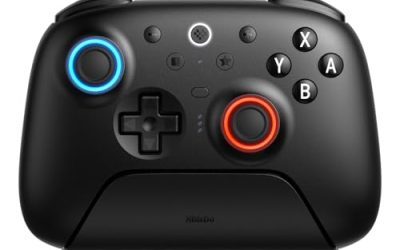
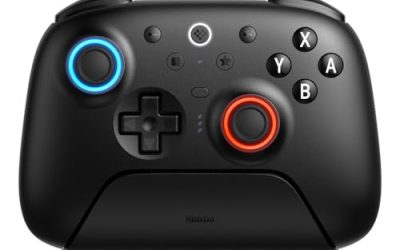
8BitDo Ultimate 2 Bluetooth Controller
A library pad for the docked case, with the record’s caveat attached: this game declares no controller support, so it works only through Steam Input mapping, as Valve’s test describes.
Specs
- Connectivity: Bluetooth wireless and USB-C wired
- Joysticks: TMR electromagnetic, anti-drift design
- Triggers: Hall effect, with mode switching
- Extras: two remappable back buttons, motion control
- In the box: charging dock included
Xbox Wireless Controller, Carbon Black
The second library pad, for the wider catalogue rather than this title. Its value is the same Steam Input route: universal mapping support and the glyphs most games display.
- Connectivity: Xbox Wireless and Bluetooth
- Port: USB-C for wired play
- Controls: hybrid D-pad, dedicated Share button
- Power: AA batteries or optional rechargeable pack
Samsung T9 Portable SSD 2TB
Library storage for moving installs between machines. A 7.54 GiB depot is a small move, and the same drive carries the rest of a strategy library.
Specs
- Capacity: 2 TB portable SSD
- Interface: USB 3.2 Gen 2×2, USB-C connector
- Maker-rated speeds: up to 2,000 MB per second read, 1,950 MB per second write
- Features: Dynamic Thermal Guard, maker-rated drop resistance
How to choose
Choose the Steam copy; it is the only PC edition sold anywhere, and it is the build both compatibility records describe. On a Steam Deck, install and play, with the touchscreen and on-screen keyboard covering the launcher and text-entry moments Valve’s sheet names. On desktop, choose with the Proton file open in front of you: the Platinum best-reported tier says the ceiling is high, but the Bronze headline says reaching it can involve launch flags and manual component installs. For input, choose a mouse first; add a pad only as library gear, since this title maps whatever it gets through Steam Input.
Who should skip
Skip this one if you are shopping for a native Linux strategy game: there is no Linux build, depot or tab, and the family’s only stray platform flag sits on a soundtrack. Skip it if you want a DRM-free copy, because GOG sells only the first game. Skip it if Bronze-tier tinkering sounds like a chore; the community file is honest about the coaxing involved. And skip the Deck plan if small text and touchscreen launcher moments are deal-breakers, because Valve’s sheet lists both.
FAQ
Is Sword of the Stars II native on Linux?
No. Steam’s record for app 42990 flags Windows only, the Linux requirements field is an empty list, and every depot is a Windows depot. No native build exists in any edition.
How well does Sword of the Stars II run under Proton?
ProtonDB’s summary reads Bronze on its headline and trending tiers and Platinum on its best-reported tier, across 11 reports with low confidence. Reports describe launch flags and manual component installs before the game settles, so expect setup work.
Is Sword of the Stars II Steam Deck Playable?
Yes. Valve rates it Playable, with SteamOS marked Compatible, tested on 16 October 2026 against build 363334, the current public build, under proton-experimental. The deductions cover the launcher, text entry, small text and controller configuration.
Can I buy Sword of the Stars II on GOG instead?
No. GOG’s catalogue carries no edition of this game; its only series entry is the Complete Collection of the first game, flagged Windows only.
Final verdict
Sword of the Stars II: Enhanced Edition is a Windows-only release whose paperwork is cleaner than its reputation. No Linux tab pretends otherwise, no depot hides a second build, and the family’s one stray flag sits openly on a soundtrack. What Linux players get instead is a divided offer: a fresh, build-accurate Playable rating on Steam Deck, and a Bronze Proton file on desktop that rewards tinkerers and warns everyone else.
Product and ASIN Reference
| Product | ASIN |
|---|---|
| Valve Steam Deck OLED 512GB | B0CQ3RWQQZ |
| 8BitDo Ultimate 2 Bluetooth Controller | B0F194QFT2 |
| Xbox Wireless Controller, Carbon Black | B08DF248LD |
| Logitech G502 HERO | B07GBZ4Q68 |
| Samsung T9 Portable SSD 2TB | B0CHFS9K14 |