Our Short List of 3

- Display: 7.4-inch HDR OLED, 1280 by 800, up to 90 Hz
- Processor: AMD Zen 2 and RDNA 2 custom APU
- Memory: 16 GB LPDDR5
- Storage: 512 GB NVMe, plus a microSD slot

- Connectivity: Bluetooth wireless and USB-C wired
- Joysticks: TMR electromagnetic, anti-drift design
- Triggers: Hall effect, with mode switching
- Extras: two remappable back buttons, motion control

- Connectivity: Xbox Wireless and Bluetooth
- Port: USB-C for wired play
- Controls: hybrid D-pad, dedicated Share button
- Power: AA batteries or optional rechargeable pack
All 5 Picks at a Glance
| Product | Specs | Action |
|---|---|---|
| Valve Steam Deck OLED 512GB |
| Check price on Amazon |
| 8BitDo Ultimate 2 Bluetooth Controller |
| Check price on Amazon |
| Xbox Wireless Controller, Carbon Black |
| Check price on Amazon |
 Logitech G502 HERO |
| Check price on Amazon |
 Samsung T9 Portable SSD 2TB |
| Check price on Amazon |
Star Conflict is a free-to-play space MMO from Star Gem Inc. and Gaijin Network Ltd, on Steam since 27 February 2013, built around crewed starship battles, PvE missions and open-space exploration. Few games leave a more misleading Linux paper trail: the record still carries a full Linux requirements block, a Linux client icon and a Linux depot, yet none of it corresponds to a build Steam will deliver to a Linux machine today.
The second change matters just as much. Gaijin has shut the official servers down and reissued the game in an autonomous format, bundling the client with a local server component so players can host their own sessions. The Linux question is therefore two questions: whether a native build is still sold, and how the surviving Windows build behaves under Proton and on Steam Deck.
As an Amazon Associate, we earn from qualifying purchases.
Quick answer
No native Linux build of Star Conflict is sold today. Steam’s platform flags list Windows only, the app’s valid-OS list names macOS and Windows, and the Linux depot still attached to the package holds zero bytes, its newest displayed manifest dating to December 2014. The practical route is Proton: ProtonDB rates the game Gold across 19 reports with a Platinum best-reported tier, and Valve rates it Steam Deck Playable.
The paperwork says Linux; the delivery says Windows
Start with the flags, because they are unambiguous. The appdetails record for app 212070 returns platforms windows true, mac false, linux false. SteamDB’s record agrees and goes further: the valid OS list reads macOS and Windows, with Linux absent entirely. A Linux install ordered today resolves to the Windows content, exactly as the depot table shows.
The depots are where the history hides. Four depots hang off the app: depot 212071 carries the Windows content at 11.58 GiB, depot 212072 is common content at zero bytes, depot 212073 is macOS content at zero bytes, and depot 212074 is named Linux Content and also sits at zero bytes. The Linux depot is still referenced by the store package, but SteamDB’s manifest page for it displays a manifest dated 19 December 2014, and nothing newer. A native build existed in the game’s early years; the depot that once carried it no longer delivers anything.
Around that empty depot sits a full set of fossils. The appdetails record still publishes a populated Linux requirements block, naming modern Ubuntu distributions and SteamOS, 6 GB of RAM and a Pixel Shader 3.0 class video card; the macOS block is populated too, though the mac flag is also false. The asset list still includes a Linux client icon, and Valve’s Deck configuration block carries a recommended runtime of native, a leftover from when a native build was the expected path. Every artefact is real, and every one describes a build that is no longer the product. This article rules from the delivery layer: flags, the valid OS list and depot contents, all of which say Windows only.
One more absence: the app record exposes no DLC list at all — appdetails carries no DLC array and the store’s DLC endpoint returns nothing — so there is no add-on family to audit. Controller support, for the record, is partial: the store categories and the app configuration both say so, and that is the only controller claim this article makes.
ProtonDB: Gold, and the native ghost in the reports
ProtonDB’s summary for the app is a full read, not a headline: tier Gold, best-reported tier Platinum, trending tier Gold, 19 reports, confidence good. The recent reports are the useful ones: current Proton and GE-Proton builds run the autonomous version well, and several note that forcing Proton fixes the problems the default path produces.
The game page carries a heading that reads Natively Supports, and the report list underneath explains how it got there. A handful of reports are filed as Native, describing a Linux build that genuinely ran: one launches a StarConflict binary directly with a library preload, another describes the native version crashing on startup until the Steam Linux Runtime was forced, and a third states flatly that the native version has not been working for several years. Together they corroborate the depot record: a native build existed, aged badly, and has since been emptied out of the package. The heading survives the build it described, so this article follows the delivery record: the Gold tier grades the Windows build under Proton, which is what a Linux buyer receives today.
Steam Deck: Playable, tested in 2022
Valve’s compatibility record returns resolved category 2, Playable, and the SteamOS record separately returns Compatible. The test sheet behind the badge is dated 22 November 2022 and was run against build 9146472; the current public build, published in November 2026 for the autonomous reissue, is 26867613. The badge therefore describes the old online game on an old build, not the self-hosted version now on sale, and should be read as a floor rather than a fresh measurement.
The deductions on that sheet are the familiar launcher-era set: the launcher may require the touchscreen or virtual keyboard, or have difficult-to-read text; some functionality sits outside the default controller configuration; the game sometimes shows mouse, keyboard or non-Steam-Deck controller icons; entering text requires manually invoking the on-screen keyboard; and some in-game text is small. Against those, the sheet confirms the default graphics configuration performs well. For a game now launched alongside its own local server component, the launcher caveats deserve extra weight: drive setup with the touchscreen, then fly with the sticks.
Servers, anti-cheat and the GOG question
The autonomous reissue changes the multiplayer facts. The store page states that the official servers have shut down and that the game now ships with both client and server components: a player installs the game, launches the local server, then connects with the client, alone or with invited friends.
On anti-cheat, the ruling is an absence. The Are We Anti-Cheat Yet database, read in full at its repository root, carries no entry for Star Conflict under its name or its app ID, and the Steam records read here name no anti-cheat either. The honest statement is that no record documents one, not that one was tested and passed.
GOG is simpler. There is no GOG edition: the game’s natural GOG product address redirects to the general catalogue, and GOG’s own store search returns no Star Conflict product, so the Steam copy is the only PC edition.
Gear that fits the record
The gear below follows the badge and the input record: the handheld Valve tested, two pads, a mouse for hangar work, and library storage.
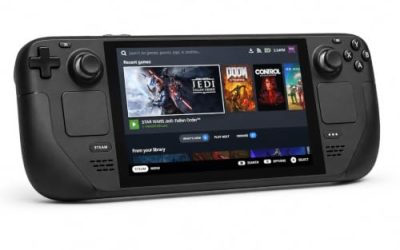
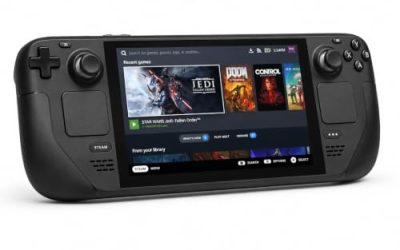
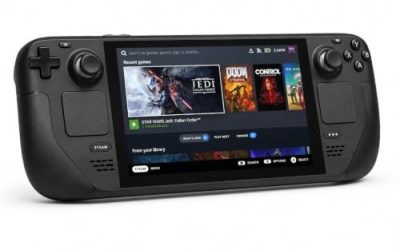
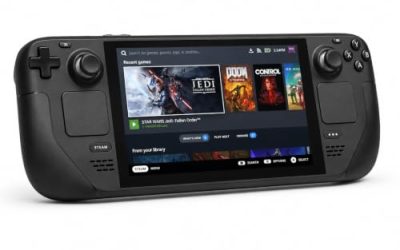
Valve Steam Deck OLED 512GB
- Display: 7.4-inch HDR OLED, 1280 by 800, up to 90 Hz
- Processor: AMD Zen 2 and RDNA 2 custom APU
- Memory: 16 GB LPDDR5
- Storage: 512 GB NVMe, plus a microSD slot
The handheld the Playable badge was written for, with the launcher and text caveats noted above.
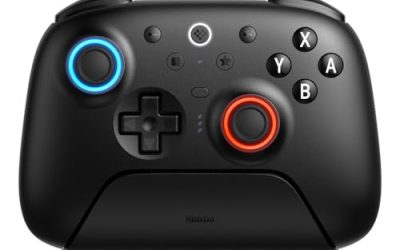
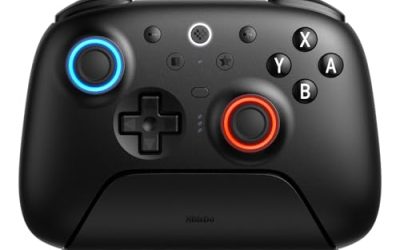
8BitDo Ultimate 2 Bluetooth Controller
- Connectivity: Bluetooth wireless and USB-C wired
- Joysticks: TMR electromagnetic, anti-drift design
- Triggers: Hall effect, with mode switching
- Extras: two remappable back buttons, motion control
The docked and desktop pad pick. The game’s record claims partial controller support, and Valve’s sheet warns some functions need a community configuration; remappable back buttons give those functions somewhere to live.
Xbox Wireless Controller, Carbon Black
- Connectivity: Xbox Wireless and Bluetooth
- Port: USB-C for wired play
- Controls: hybrid D-pad, dedicated Share button
- Power: AA batteries or optional rechargeable pack
The safest guest pad in PC gaming: Steam Input support is universal, the glyphs match what most games display, and it pairs over Bluetooth or its own wireless standard.
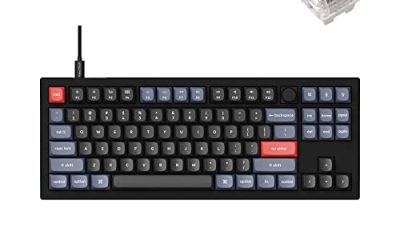
Logitech G502 HERO
- HERO optical sensor, up to 25,600 DPI
- 11 programmable buttons
- Adjustable weight system
- Wired USB connection
Star Conflict’s hangar, module screens and server setup are menu work, and at a desk a precise wired mouse turns loadout trips into single clicks.
Samsung T9 Portable SSD 2TB
- Capacity: 2 TB portable SSD
- Interface: USB 3.2 Gen 2×2, USB-C connector
- Maker-rated speeds: up to 2,000 MB per second read, 1,950 MB per second write
- Features: Dynamic Thermal Guard, maker-rated drop resistance
For moving a Linux game library between machines, or keeping an offline backup of installers, a fast USB-C drive is the simple answer. The headline figure needs a Gen 2×2 host port; on a lesser port the drive runs at that ceiling instead.
How to choose
Choose the Steam copy, because it is the only PC edition and the build both compatibility records describe. Install it as a Proton title from the start: do not chase the native entry the old paperwork implies, because the depot behind it is empty. Leave the compatibility tool on a current Proton or GE-Proton build, which is what the strongest recent reports use. On Steam Deck, budget a few minutes with the touchscreen for launcher and server setup before the Playable badge’s promise kicks in. Treat the pad as primary for flight and keep a mouse nearby for hangar work; the record claims only partial controller support, and the Deck sheet says some functions sit outside the default layout.
Who should skip
Skip this one if you want the old online Star Conflict: the official servers are gone, and what remains is a self-hosted preservation build whose modes and features differ from the original. Skip it if a native Linux client is a hard requirement: the build that once filled that role was emptied out of the package years ago, and the requirements block still on the store page does not change what downloads. Skip it on Deck if small text and launcher friction are deal-breakers, because Valve’s own sheet flags both.
FAQ
Is Star Conflict native on Linux today?
No. A native build existed in the game’s early years, but the current record delivers Windows only: the Linux platform flag is false, the valid OS list names macOS and Windows, and the Linux depot holds zero bytes, its newest displayed manifest dated December 2014. The populated Linux requirements block is leftover paperwork.
Why does ProtonDB call it Natively Supports if Steam sells no Linux build?
The heading reflects the game’s history, not its current delivery. ProtonDB’s own report list includes Native submissions from when the Linux build ran, alongside later reports stating it stopped working and recommending forced Proton. The Gold tier across 19 reports grades the Windows build under Proton.
Can I still play Star Conflict with friends?
Yes, in the form the game now takes. The official servers have shut down, and the current release bundles a local server component with the client, so one player hosts and friends connect to that session. Some features and modes may differ from the original online version.
How does Star Conflict run on Steam Deck?
Valve rates it Playable, with a separate SteamOS Compatible mark. The caveats are launcher interaction, some functions outside the default controller configuration, non-Deck glyphs, manual on-screen keyboard for text, and small in-game text; the default graphics configuration performs well. The test dates from November 2022, against an older build and before the autonomous reissue, so treat the badge as a starting point rather than a current measurement.
Final verdict
Star Conflict is the catalogue’s clearest fossil record: a game that once shipped a real Linux build, kept every scrap of its Linux paperwork, and quietly emptied the depot that made the paperwork true. Ruled on delivery, it is Windows-only today, and well-evidenced: ProtonDB Gold across 19 reports with good confidence, a Platinum best-reported tier, and a Steam Deck Playable badge whose 2022 date and launcher caveats are printed on its face. Buy the Steam copy as a Proton game, host it yourself, and ignore the requirements block that promises a build Steam no longer sends.
Product and ASIN Reference
| Product | ASIN |
|---|---|
| Valve Steam Deck OLED 512GB | B0CQ3RWQQZ |
| 8BitDo Ultimate 2 Bluetooth Controller | B0F194QFT2 |
| Xbox Wireless Controller, Carbon Black | B08DF248LD |
| Logitech G502 HERO | B07GBZ4Q68 |
| Samsung T9 Portable SSD 2TB | B0CHFS9K14 |