Supreme Ruler 2020 Gold is BattleGoat Studios’ whole-world grand strategy game, first released in June 2008 and brought to Steam in July 2009. The Gold edition folds the base game and its Global Crisis expansion into a single app: one world map, every nation playable, and a simulation running from regional skirmishes to a full world war. It is a separate record from Supreme Ruler Ultimate and Supreme Ruler 1936; this article reads only the 2020 Gold record — what Steam sells, what the package grants, what the community files say, and what Valve has published about the Steam Deck.


The short version is as plain as this series gets. Every platform layer points the same way, and none points at Linux. The interest lies in how thin everything around that answer is: a community file two reports deep, a Deck verdict that does not exist, and a second storefront that never stocked the game.
As an Amazon Associate, we earn from qualifying purchases.
Quick answer
No. Supreme Ruler 2020 Gold has no native Linux build: Steam’s flags, its single purchase package and its only depot are all Windows-only, and no GOG edition exists. Proton is the only route, but the community file is just two reports deep with no settled tier, and Valve has published no Steam Deck verdict at all.
A record with only one platform on it
Start with the layer that decides what a purchase delivers. Steam sells exactly one package for this game, package 32870, and on packagedetails it reads windows true, mac false, linux false, granting the base app alone. The app-level platform flags repeat the same mask exactly. Windows is the only platform this record claims, sells or delivers.
The requirements fields agree. The Windows minimum is genuinely populated with period hardware: a Pentium III 800 processor, 512 MB of memory, a 3D graphics card with 16 MB of video memory and DirectX 8.1. The Mac and Linux requirements fields are empty lists outright — no tab in any form. A Linux port was never even sketched into the store page.
The depot layer closes the question. SteamDB lists exactly one content depot, depot 25911, at 849.10 MiB on disk, with no operating-system split of any kind. There is no Linux depot, nothing emptied and nothing stranded. The icon set registers a client icon, a client tga, an icon and logos — but no LinuxClientIcon, so not even a leftover asset hints at a port that was planned and abandoned. The public branch sits on build 11740416, built in July 2023, a maintenance touch on a record whose platform shape has never changed.
The family sweep is the shortest in this cluster. The base record exposes no DLC field at all, and SteamDB associates no add-on apps: family size zero. That is not missing content — the Gold edition’s point is that the Global Crisis expansion is folded inside the single app, so no separate expansion records exist to dissent, and no soundtrack app forms the all-true trap this series watches for. One app, one package, one depot, one platform.
The community file is two reports deep
ProtonDB’s summary for this app reads as unsettled as a summary can read. The headline tier is pending, the trending tier is pending, the provisional tier reads borked, the confidence is inadequate, and the total behind all of it is two reports. No tier has settled, and the article claims none: a pending headline over two filings is an absence of evidence, not a verdict either way.
The two filings themselves, at report weight, are milder than the summary’s provisional label. One grades the game Platinum and reports no issues, on an Ubuntu system with a GeForce GTX 1080. The other grades it Silver and notes slow scrolling when zoomed out on the world map, on older Ubuntu. Neither is recent, neither is from a Steam Deck, and two ageing filings cannot carry a buy decision — they say the Windows build has run under Proton, and nothing stronger.
One page artefact needs naming because it misleads at a glance. The game’s ProtonDB page heads its requirements block with the line “Natively Supports:”, the stray template heading this series keeps meeting on Windows-only games. Steam’s record contradicts it at the flag, package, field and depot layers simultaneously, and the page’s own report file grades the game as a Proton title. Follow Steam: the heading is a label the template prints, not a platform the game ships.
No Deck verdict exists
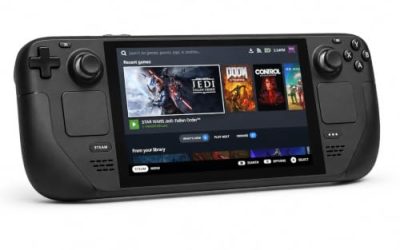
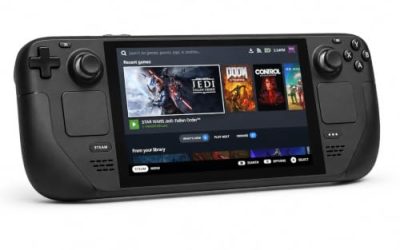
Valve has published no Steam Deck compatibility verdict for this game, and the article claims none. The routes were checked three ways. Valve’s own compatibility endpoint returned empty and garbled responses on repeated reads. ProtonDB’s republication of Valve’s Deck status reads Unknown — no category has been assigned. SteamDB publishes no compatibility sheet either. Three routes converge: no badge, no test sheet, no tested build, no paperwork to be stale or current.
Because no test exists, there is nothing to compare against build 11740416; the question is not whether old paperwork matches the build on sale, but whether Valve has ever graded the game at all. The record also lists no controller support of any kind, which fits a mouse-driven game of its era, and means any handheld play would rest entirely on Steam Input’s translation layer with no verdict behind it. Treat Deck play as unproven.
Three silences on anti-cheat
Anti-cheat was checked three ways, and all three are silent, reported as silence, not a ruling. Steam’s record names no anti-cheat: the categories are Single-player, Multi-player and Family Sharing, with no drm_notice and no external account notice. SteamDB’s detection finds only the Miles Sound System SDK, an audio library from the game’s era. The AreWeAntiCheatYet catalogue, read in full, carries no entry for this app. A 2008 strategy title predates the kernel anti-cheat era — but the honest statement is that no source names a blocker, not that one was ruled out.
No second storefront
There is no GOG edition to weigh. The natural product addresses redirect to GOG’s general catalogue rather than resolving to a product page; GOG’s embed search returns no product for the title; and GOG’s filtered storefront search reports zero results. Those checks were run because GOG’s search endpoints are known to miss games the store does sell — here the address check agrees with the searches, so the ruling rests on all of them together: GOG never stocked this game, in any edition, on any platform. No Dreamlist claim is asserted. The Steam copy is the only PC edition.
Gear for a desktop-first record
The record lists no controller support and Valve has published no Deck verdict, so the gear below is framed for the desktop: a keyboard and mouse for a menu-and-map game, two pads kept as wider-library picks, and fast library storage.
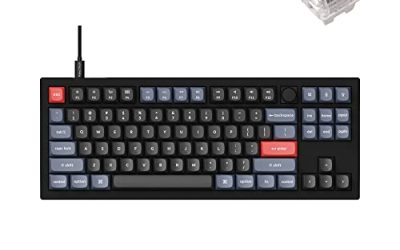
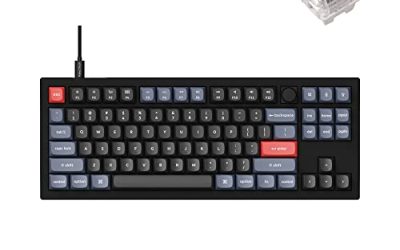
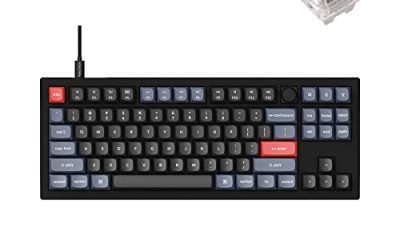
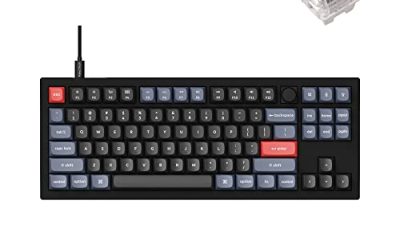
Keychron V3
The primary input pick for this game. A grand strategy session is hours of hotkeys, map orders and menu work, and a tenkeyless board with firmware-level remapping puts the game’s most repeated commands under the hand that never leaves the desk.
Specs
- Tenkeyless layout with rotary knob
- QMK and VIA remapping support
- Hot-swappable K Pro Brown switches
- Wired USB-C connection
- Maker-rated 1,000 Hz polling
Logitech G502 HERO
The mouse is the real controller of this game: unit orders, region clicks and zoom work all day long. A precise wired sensor and eleven programmable buttons suit a title whose interface is a world map of small targets.
Specs
- HERO optical sensor, up to 25,600 DPI
- 11 programmable buttons
- Adjustable weight system
- Wired USB connection
- On-board memory profiles
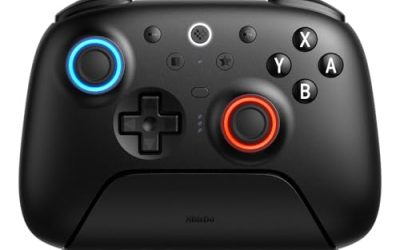
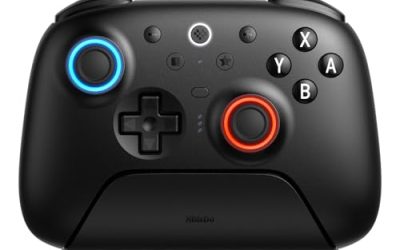
8BitDo Ultimate 2 Bluetooth Controller

A wider-library pick, stated plainly: this game’s record lists no controller support at all, so the pad earns its place for the rest of a Linux shelf — modern sticks, back buttons and a dock — rather than for anything Supreme Ruler itself would recognise.
Specs
- Connectivity: Bluetooth wireless and USB-C wired
- Joysticks: TMR electromagnetic, anti-drift design
- Triggers: Hall effect, with mode switching
- Extras: two remappable back buttons, motion control
- In the box: charging dock included
Xbox Wireless Controller, Carbon Black

The second wider-library pick, for the same stated reason: universal Steam Input support and matching glyphs make it the safest guest pad for shelf games that do carry controller support, even though this record is not one of them.
Specs
- Connectivity: Xbox Wireless and Bluetooth
- Port: USB-C for wired play
- Controls: hybrid D-pad, dedicated Share button
- Power: AA batteries or optional rechargeable pack
Samsung T9 Portable SSD 2TB

For moving a Linux game library between machines, or keeping an offline backup of installers, a fast USB-C drive is the simple answer. The headline figure needs a Gen 2×2 host port; on a lesser port the drive runs at that ceiling.
Specs
- Capacity: 2 TB portable SSD
- Interface: USB 3.2 Gen 2×2, USB-C connector
- Maker-rated speeds: up to 2,000 MB per second read, 1,950 MB per second write
- Features: Dynamic Thermal Guard, maker-rated drop resistance
How to choose
Choose the Steam copy, because it is the only PC edition that exists. Buy it as a desktop Proton title: the record guarantees a Windows build, the two community filings say that build has run under Proton without game-breaking faults, and the game’s demands are light enough for any modern Linux machine. Set the compatibility tool to a current Proton build, expect the map-zoom scrolling quirk the Silver filing describes, and treat anything beyond that as uncharted — with two reports, there is no file of fixes to consult. Skip the handheld question until Valve publishes a verdict. And keep the editions separate in the cart: Ultimate and 1936 are different apps with different records, and none of this evidence carries over to them.
Who should skip
Skip it if a settled compatibility record matters to you: two ageing reports and a pending headline are the whole file, and players who want a tier backed by dozens of filings will not find one here. Skip it if the Steam Deck is the plan, because no verdict exists and the record lists no controller support to build on. Skip it if a DRM-free copy is a requirement, since no GOG edition exists. And skip it if the appeal was a native port hiding in the record — every layer was read, and there is none.
FAQ
Is Supreme Ruler 2020 Gold native on Linux?
No. Steam’s platform flags, the single purchase package and the only content depot are all Windows-only, the Linux requirements field is an empty list, and no Linux depot or Linux client icon exists on the record.
Why does the ProtonDB page say “Natively Supports”?
That line is a heading from the site’s page template, printed even though Steam’s record is Windows-only at every layer. The same page’s report file grades the game as a Proton title, which is the part the evidence supports.
Can I play it on Steam Deck?
There is no published answer. Valve has assigned no compatibility category — the status reads Unknown through ProtonDB’s republication, and no test sheet exists — and the record lists no controller support. Handheld play is unproven, not endorsed.
Is this the same game as Supreme Ruler Ultimate or 1936?
No. They are separate Steam apps with separate records, packages and community files. This article covers only the 2020 Gold record; the others are covered separately.
Final verdict
Supreme Ruler 2020 Gold on Linux is a Proton question with an unusually thin file behind it. The native answer is closed at every layer — flags, package, requirements fields and the single depot all read Windows-only, the family is one folded app with nothing to dissent, and no GOG edition offers another route. What remains is a two-report community file with no settled tier and a Deck category Valve has never assigned. Buy the Steam copy for a Linux desktop if a Platinum and a Silver filing are evidence enough; wait if you need a thicker record, because neither Valve nor the community has built one.
Product and ASIN Reference
| Product | ASIN |
|---|---|
| Keychron V3 | B0B2DMMMG2 |
| Logitech G502 HERO | B07GBZ4Q68 |
| 8BitDo Ultimate 2 Bluetooth Controller | B0F194QFT2 |
| Xbox Wireless Controller, Carbon Black | B08DF248LD |
| Samsung T9 Portable SSD 2TB | B0CHFS9K14 |