Rise of Prussia Gold is Ageod’s Seven Years War strategy game, first released in its original form in 2010 and brought to Steam in May 2014 in this expanded Gold edition, published by Slitherine Ltd. It is a deep, turn-based operational study of the war in Europe between 1757 and 1763, built on the studio’s AGE engine. This article reads only its Steam record: what a purchase delivers, what the depot layer holds, what ProtonDB’s small file says, and what Valve has published for the Deck.


The platform answer is as one-sided as these records get: every layer points at Windows and nothing else, so the Linux question is entirely a Proton question. What keeps the file interesting is how thin the community evidence is on top of that flat answer — a perfect ProtonDB tier on a handful of filings, and a Deck question no published verdict answers.
As an Amazon Associate, we earn from qualifying purchases.
Quick answer
Rise of Prussia Gold has no native Linux build: Steam’s flags, its single purchase package and its only depot are all Windows-only, and the Linux requirements field is an empty list. The route in is Proton, where three reports rate it Platinum at low confidence. Valve has published no Steam Deck verdict.
A record that points one way at every layer
Start with the layer that decides what a licence delivers. Steam sells the game through exactly one purchase package, and that package reads windows true, mac false, linux false on the packagedetails record. It grants the base app alone, so a purchase today delivers the Windows build and nothing else. The app-level flags repeat the same mask: Windows is the only platform this record claims, sells or delivers.
The requirements fields agree in the plainest way. The Windows minimum is genuinely populated with period hardware: Windows Vista through 10, a Pentium 4 class processor, 1 GB of memory, a video card with 256 MB, and 1 GB of storage. The Mac and Linux fields are empty lists outright — no Linux tab in any form, not even a hollow shell.
The depot layer closes the question. SteamDB lists a single content depot, named Rise of Prussia Gold Content, at 1.09 GiB on disk, with no operating-system split because there is only one build to split. Nothing has been emptied or stranded: the icon set holds a client icon, a client tga, an icon and logos, but no Linux client icon, so not even a leftover asset hints a port was ever staged. The public branch has sat on the same build since July 2015 — the record as it has stood for a decade.
Nothing hangs off the base game
Some records hide their real answer in the family around the base app, so the sweep matters even when the base looks plain. Here it is short. The base record exposes no DLC field at all, and SteamDB associates no add-on apps: no separate expansions, no artbook, no soundtrack app. That last absence closes the trap this catalogue is known for, where a soundtrack’s record flags every platform and makes a Windows-only family look broader than it is. There is nothing to dissent and nothing to inflate the base game’s mask; the Gold edition’s extra scenarios are folded inside the single app.
The anti-cheat picture is the same kind of silence, reported as silence rather than as a ruling. Steam’s record names no anti-cheat: no anti-cheat category, no DRM notice and no third-party account notice. Notably, it also carries no PBEM++ account notice, the play-by-email account layer several sibling titles from this publisher wear — multiplayer is listed plainly. SteamDB’s detection finds only the Lua and Squall software kits, neither an anti-cheat technology. The AreWeAntiCheatYet catalogue, checked in full, carries no entry for this app. For a strategy game of this age, that three-way silence is the expected shape: nothing found, nothing claimed.
A perfect tier on a very small file
ProtonDB’s summary reads at full strength and minimum weight at the same time. The headline tier is Platinum, the best-reported tier is Platinum, and the trending tier is Platinum — a clean sweep. Underneath it sit just three reports, with confidence rated low. Three filings say the game has been run under Proton and rated at the top by everyone who filed; they cannot say how it behaves across the range of distributions, drivers and Proton builds a new buyer might bring. The evidence points entirely one way, and is very thin while doing so.
One check could not be completed this session: the ProtonDB page rendered as a script shell through every fetch route tried, so the heading above its requirements block could not be read and no claim is made about it. The figures above come from the summary feed, which answered in full; only the heading check is missing, flagged rather than filled in.
The Deck question has no published answer
Valve has published no Steam Deck compatibility verdict for Rise of Prussia Gold, and this article claims none. The routes were checked and are disclosed so the gap is visible: Valve’s own compatibility endpoint returned garbled bytes on one read and a redirect to the store front page on another, and SteamDB, which republishes Valve’s Deck sheets for tested games, carries no sheet for this app at all. Where those routes converge on nothing published, the correct statement is that the game is untested, not that it failed.
The surrounding facts suggest caution rather than optimism. The record lists no controller support, and the package record confirms no full gamepad support, so any Deck session would rest entirely on Steam Input translating a mouse-and-keyboard game with dense text and small interface elements. The branch build has not moved since July 2015, so the build a Deck experiment would meet is the one that has been on sale for a decade. Treat handheld play as unproven: plausible through Steam Input for a patient player, endorsed by nobody.
No second storefront to fall back on
GOG was checked directly, not by search alone, and the ruling is that no GOG edition exists. The natural product addresses redirect to GOG’s general catalogue rather than resolving to a product page. GOG’s catalogue records, queried for the title, return other strategy games — Gary Grigsby’s War in the East and Armored Brigade among them — and no Rise of Prussia product in any form. The embed search returning zero was noted but not relied on, since that endpoint is a known blind spot; the ruling rests on the address and catalogue checks.
Gear for a mouse-driven desktop game
The record shapes the picks: a desktop game with no controller support on its record and no Deck verdict. The keyboard and mouse lead; the pads are wider-library picks, framed as such.
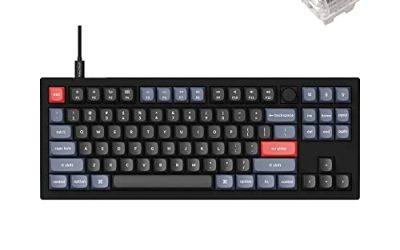
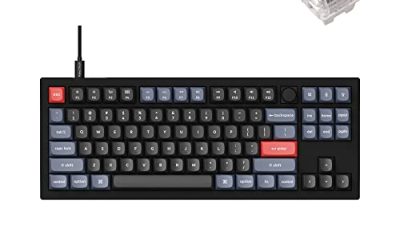
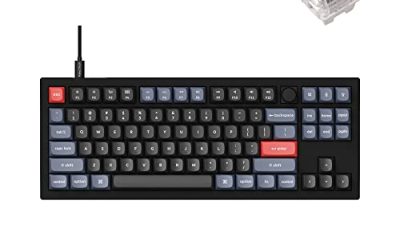
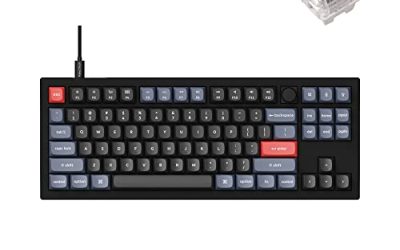
Keychron V3
The keyboard pick for desktop sessions: QMK and VIA support lets you remap keys at the keyboard level, across every Linux install you plug it into. A game paced by hotkeys and end-turn shortcuts benefits directly.
Specs
- Tenkeyless layout with rotary knob
- QMK and VIA remapping support
- Hot-swappable K Pro Brown switches
- Wired USB-C connection
- Maker-rated 1,000 Hz polling
Logitech G502 HERO
The primary input pick for the game. Ageod’s interface is a map, a stack of panels and a right-click order system, and a precise wired mouse is the tool it was designed for. Eleven programmable buttons cover the confirm, cancel and map-scroll inputs a long turn repeats.
Specs
- HERO optical sensor, up to 25,600 DPI
- 11 programmable buttons
- Adjustable weight system
- Wired USB connection
- On-board memory profiles
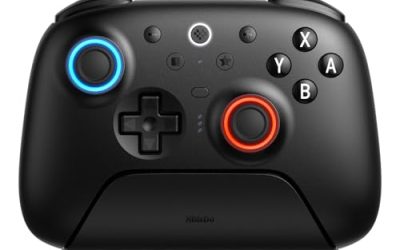
8BitDo Ultimate 2 Bluetooth Controller

A wider-library pick rather than a pick for this title: the record lists no controller support for the game, so this pad earns its place for the pad-shaped games in a Linux library, with modern sticks, triggers and back buttons.
Specs
- Connectivity: Bluetooth wireless and USB-C wired
- Joysticks: TMR electromagnetic, anti-drift design
- Triggers: Hall effect, with mode switching
- Extras: two remappable back buttons, motion control
- In the box: charging dock included
Xbox Wireless Controller, Carbon Black

The second wider-library pad: Steam Input support is universal, the glyphs match what most games display, and it pairs over Bluetooth or its own wireless standard. For this game it would serve only as a Steam Input pointer — a poor substitute for a mouse.
- Connectivity: Xbox Wireless and Bluetooth
- Port: USB-C for wired play
- Controls: hybrid D-pad, dedicated Share button
- Power: AA batteries or optional rechargeable pack
Samsung T9 Portable SSD 2TB

For moving a Linux game library between machines, or keeping an offline backup of installers, a fast USB-C drive is the simple answer. The headline figure needs a Gen 2×2 host port; on a lesser port the drive runs at that ceiling.
Specs
- Capacity: 2 TB portable SSD
- Interface: USB 3.2 Gen 2×2, USB-C connector
- Maker-rated speeds: up to 2,000 MB per second read, 1,950 MB per second write
- Features: Dynamic Thermal Guard, maker-rated drop resistance
How to choose
Choose the Steam copy, because it is the only PC edition on sale anywhere. Install it under Proton on a Linux desktop and leave the compatibility tool at its default first: the Platinum sweep says the filings on record ran the game at the top tier, and with only three reports the sensible move is to start from the default and change one variable at a time if your system disagrees. Keep a mouse as the primary input — the record lists no controller support. Budget expectations by the sample size rather than the tier.
Who should skip
Skip it if a native build is a condition of purchase: there is none, on any layer, and the record has not changed in a decade, so waiting will not produce one. Skip it if you want a verified handheld game — Valve has published no Deck verdict, the record offers no controller support, and the interface’s small text suits a small screen poorly. Skip it if three low-confidence reports are not evidence enough; that is a fair reading of this file, and thicker Proton records exist for other Ageod titles. And skip it if you want a DRM-free copy, because no GOG edition exists.
FAQ
Is Rise of Prussia Gold native on Linux?
No. Steam’s platform flags, the single purchase package and the only content depot are all Windows-only, the Linux requirements field is an empty list, and no Linux client icon is registered. There is no native build to buy on any storefront.
How well does it run under Proton?
ProtonDB’s summary rates it Platinum on its headline, best-reported and trending tiers, the strongest sweep the site gives. The caution is the sample: three reports, confidence rated low, so the file points one way without proving the game behaves identically on every system.
Can I play it on Steam Deck?
There is no published answer. Valve has issued no compatibility verdict for this game, and SteamDB carries no Deck sheet for it, so it sits in the untested category. The record lists no controller support, so any attempt runs through Steam Input on a mouse-driven interface; treat it as an experiment.
Is there a GOG or DRM-free edition?
No. The game’s natural GOG addresses redirect to the general catalogue, and GOG’s catalogue records return no product for this title. The Steam copy is the only PC edition.
Final verdict
Rise of Prussia Gold on Linux is a Proton-only proposition with an unusually clean shape: a Windows-only record at the flag, package, field and depot layers, no family members to complicate it, no anti-cheat named by any of the three sources checked, and no second storefront. ProtonDB’s file is a Platinum sweep on three low-confidence reports — encouraging, and thin enough that both halves bear stating. The Deck is a genuine blank. Buy the Steam copy for a Linux desktop with a mouse if the thin file is evidence enough; look elsewhere in the Ageod catalogue if you need a thicker record or a handheld answer.
Product and ASIN Reference
| Product | ASIN |
|---|---|
| Keychron V3 | B0B2DMMMG2 |
| Logitech G502 HERO | B07GBZ4Q68 |
| 8BitDo Ultimate 2 Bluetooth Controller | B0F194QFT2 |
| Xbox Wireless Controller, Carbon Black | B08DF248LD |
| Samsung T9 Portable SSD 2TB | B0CHFS9K14 |