Supreme Ruler Ultimate is BattleGoat Studios’ grand strategy sandbox, folding the Second World War, the Cold War and modern-era scenarios into one real-time wargame where you run a nation’s economy, diplomacy and military at once. It reached Steam on 17 October 2014, and its platform story has a twist: this record genuinely ships a second operating system, just not the one Linux players need.
The flags, the purchase package and the depot list all cover Windows and Mac, and all stop there — what follows is the layer-by-layer evidence, the split inside the DLC, the ten-report ProtonDB file, and a Deck sheet whose test predates the current build.
As an Amazon Associate, we earn from qualifying purchases.
Quick answer
No — Supreme Ruler Ultimate is not native on Linux. Steam’s record sells Windows and Mac builds only: the flags, the sole purchase package and the depot list all stop at those two systems. On Linux the route is Proton, where ten reports land on Gold. Valve rates the Steam Deck Unsupported, so treat this as a desktop game.
The record, layer by layer
The game’s only purchase package, package 47908, reads windows true, mac true and linux false on packagedetails, granting the base app alone. The app-level flags repeat the mask exactly. A licence bought today delivers a Windows build and a Mac build, and nothing else.
The requirements fields agree, and they separate a real port from an empty form. The Windows minimum is genuinely populated: a Pentium IV class processor, 1 GB of memory, DirectX 9.0c graphics and 4 GB of storage. The Mac minimum is populated too, and the Linux requirements field is an empty list outright — no tab, no shell, no half-filled form.
The depot list closes the question. SteamDB lists a Windows content depot at 1.49 GiB and a macOS depot at 2.98 GiB, the larger of the two, plus the Windows DirectX June 2010 redistributable. There is no Linux depot of any size — nothing emptied, nothing stranded — and the icon set holds no Linux client icon, so not even a leftover asset hints a Linux build was ever staged.
The DLC split: one add-on keeps the Mac, one drops it
The base record’s DLC array holds exactly two apps. They disagree with each other — but they agree completely on the question this article asks.
Supreme Ruler: Trump Rising, released in July 2016, flags windows true, mac true and linux false, matching the base game platform for platform. Its own depot is a 65-byte stub, a token rather than content: the scenario rides on the base game’s depots, so the add-on is a separate store app with almost no payload.
Supreme Ruler: The Great War DLC, released in August 2017, is narrower still. Its flags read Windows-only — mac false as well as linux false — and its own purchase package repeats the mask. Its content depot carries 61.39 MiB, alongside a second, unused Windows depot with no size recorded. The family’s newest member dropped even the Mac build.
The sweep reads two for two on Linux, and the one add-on with a readable package confirms Windows-only there too. No soundtrack or artbook app sits in or outside the array, so the familiar all-true trap never forms. The family instead shows a slow narrowing: two systems at the base, two in the first add-on, one in the second.
Anti-cheat: three sources, all silence
This game has online multiplayer on its record, so the anti-cheat question deserves a direct check. Steam names nothing: no anti-cheat category, no DRM notice, no account notice. SteamDB’s detection finds only the Discord SDK and the OpenAL audio SDK — plumbing, not protection. The community database AreWeAntiCheatYet carries no entry for this app. That silence is not a ruling that no protection exists; it means no source names one.
The Proton file: Gold on top, Bronze underneath
With no native build to grade, ProtonDB’s file is the Linux evidence that matters, and it is a split one. The summary API reads headline tier Gold, best-reported tier Platinum and trending tier Bronze, across ten reports with moderate confidence. The best filings describe a game that runs beautifully, the recent trend is weaker, and the settled average sits between them.
The report texture explains the split. The newest filing, on Proton 9.0-3, reports audio crackling cured by a PipeWire metadata command that forces a larger audio quantum — a real fix, but one to re-apply after every reboot. Older filings on Proton 7 and Proton 5 describe the other end: near-instant crashes on one AMD system, a flickering monitor on another, slowdowns at full map zoom, and launch flags disabling parts of the Direct3D stack. One filing, on Proton 5.0-4, grades the game Platinum outright. Ten reports is thin for a game this old; the honest reading is a build playable under Proton with known wrinkles — audio first, zoom performance second — rather than flawless or broken.
ProtonDB’s own page heads its requirements block “Natively Supports:”, and that heading is wrong for Linux: a template line contradicted by Steam at the flag, package, field and depot layers. Its likely referent is the genuine Mac build on the same record. This article follows Steam.
The Steam Deck sheet: Unsupported, and ageing
Valve’s own compatibility endpoint returned an empty response on repeated reads, so this verdict was read through SteamDB’s republication of Valve’s Deck data. The sheet rates the game Unsupported, with SteamOS rated Unsupported separately. The test ran on 30 August 2022 against build 6125770, on the stable Proton runtime, with input classed as “other”; its deductions are small text and a manually invoked on-screen keyboard, the classic profile of a mouse-driven strategy game on a handheld screen.
The paperwork problem is that the game moved on. The public branch now stands at build 15639793, built in September 2024 — BattleGoat still ships updates a decade after release. The 2022 test grades a build Steam no longer delivers, so the verdict measures that build, not the current one. Whether the newer build behaves better on the Deck only a fresh test can answer. Combined with ProtonDB’s trending Bronze line, the cautious reading is that desktop Linux is the route with evidence behind it and the Deck is an experiment.
No GOG edition to fall back on
A DRM-free edition sometimes opens a door a Steam record closes, so GOG was checked directly rather than assumed. The natural product address for this title redirects to GOG’s general catalogue — no product page exists there. GOG’s catalogue API, queried for the exact title, returns only unrelated games, and the filtered storefront search returns no product either. There is no GOG edition on any system: the Steam copy is the only copy, and on Linux it is a Proton copy.
Gear for a desktop campaign
No controller support is listed anywhere on this record, and the Deck sheet classes the input as “other”: this is a mouse-and-keyboard game. The picks below are framed for a Linux desk; the two pads serve the rest of a Steam library, since here they would only ever work as Steam Input translations of a mouse.
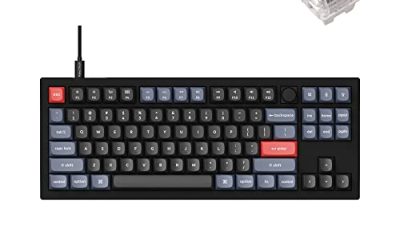
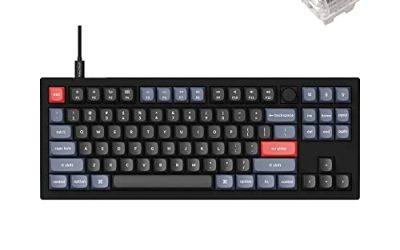
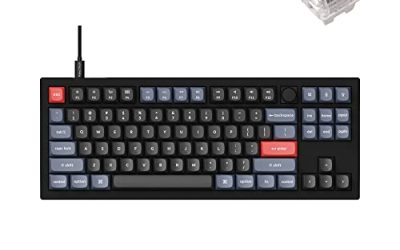
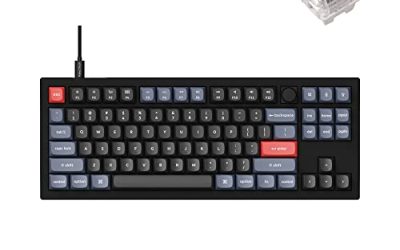
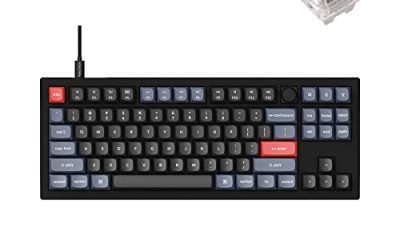
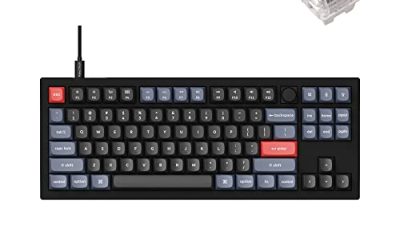
Keychron V3
A grand strategy game lives on its hotkeys, and a tenkeyless board with firmware-level remapping puts the map, ledger and diplomacy keys where your hand expects them, on any Linux install.
Specs
- Tenkeyless layout with rotary knob
- QMK and VIA remapping support
- Hot-swappable K Pro Brown switches
- Wired USB-C connection
- Maker-rated 1,000 Hz polling
Logitech G502 HERO
The primary input for this game. Panning a world map and working nested menus for hours is precision mouse work, and eleven programmable buttons hold the shortcuts a long campaign repeats.
Specs
- HERO optical sensor, up to 25,600 DPI
- 11 programmable buttons
- Adjustable weight system
- Wired USB connection
- On-board memory profiles
Samsung T9 Portable SSD 2TB
The whole game fits in a few gigabytes, but a fast external drive earns its place moving a full Linux library between machines or keeping saves and Workshop content backed up.
Specs
- Capacity: 2 TB portable SSD
- Interface: USB 3.2 Gen 2×2, USB-C connector
- Maker-rated speeds: up to 2,000 MB per second read, 1,950 MB per second write
- Features: Dynamic Thermal Guard, maker-rated drop resistance
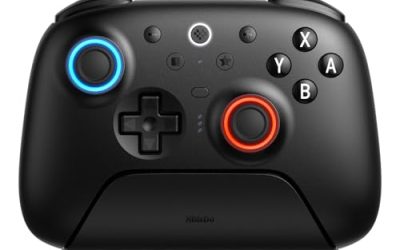
8BitDo Ultimate 2 Bluetooth Controller

For the wider library rather than this title: a modern pad with anti-drift sticks and a charging dock covers the games on a Linux shelf that do speak controller.
Specs
- Connectivity: Bluetooth wireless and USB-C wired
- Joysticks: TMR electromagnetic, anti-drift design
- Triggers: Hall effect, with mode switching
- Extras: two remappable back buttons, motion control
- In the box: charging dock included
Xbox Wireless Controller, Carbon Black
The guest-pad standard: universal Steam Input support and familiar glyphs for the parts of a collection that use them. For this title it changes nothing — the record lists no controller support — but as a second pad it is the safe buy.
- Connectivity: Xbox Wireless and Bluetooth
- Port: USB-C for wired play
- Controls: hybrid D-pad, dedicated Share button
- Power: AA batteries or optional rechargeable pack
How to choose
Decide first whether the Proton file is thick enough for you. Ten reports, a Gold headline and a Bronze trend describe a game that runs with fixes in reserve, not one that runs itself; if your tolerance for tinkering is low, that split is the whole decision. Choose the Steam copy knowing what it is: the only edition sold anywhere, Windows and Mac builds on the record, Linux reached through Proton on a desktop, with a first session budgeted for the known wrinkles — the audio fix, the zoom performance. Treat the Deck as unproven: its only test is old and the build has changed since.
Who should skip
Skip it if a native Linux build is a hard requirement — there is none, on any layer, in the base game or either add-on. Skip it if the Steam Deck is your only machine: the rating is Unsupported and its paperwork predates the current build. Skip it if you wanted the Mac copy for a modern Mac — the port predates 64-bit-only macOS and cannot run there. And skip it if ten mixed Proton reports feel too thin to buy on.
FAQ
Is Supreme Ruler Ultimate native on Linux?
No. The app flags, the sole purchase package and the depot list all read Windows and Mac only, the Linux requirements field is an empty list, and no Linux depot or Linux client icon exists on the record. Both DLC apps agree.
Why does ProtonDB say “Natively Supports”?
That line is a page-template heading, contradicted by Steam’s record at every layer. The same record carries a genuine Mac build, the heading’s plausible referent; the report file itself grades the game as a Proton title, which is the part the evidence supports.
Can I play it on Steam Deck?
Valve rates the game Unsupported, and the test behind that rating ran in August 2022 on a build the public branch replaced in September 2024. The rating is real but stale, and no newer test exists. Desktop Linux under Proton is the route with evidence behind it.
Is there a GOG version?
No. The title’s natural GOG address redirects to the general catalogue, and GOG’s catalogue API returns no product for this game. Steam is the only storefront selling it.
Final verdict
Supreme Ruler Ultimate on Linux is a Proton story with unusually clean paperwork everywhere else. Steam’s record is unambiguous: a real Windows build, a real but ageing Mac build, and no Linux presence at the flags, the package, the requirements fields or the depots — with the two add-ons agreeing, and the newer one narrowing to Windows alone. Proton carries the Linux case at Gold over ten reports, trending weaker, with an audio fix documented and caveats at full zoom. The Deck’s Unsupported sheet grades a superseded build. Buy it for a Linux desktop if a Gold-rated Proton file is evidence enough; wait if you need a native build, a current Deck test or a thicker file, because none of the three exists.
Product and ASIN Reference
| Product | ASIN |
|---|---|
| Keychron V3 | B0B2DMMMG2 |
| Logitech G502 HERO | B07GBZ4Q68 |
| Samsung T9 Portable SSD 2TB | B0CHFS9K14 |
| 8BitDo Ultimate 2 Bluetooth Controller | B0F194QFT2 |
| Xbox Wireless Controller, Carbon Black | B08DF248LD |