
NVENC vs AV1 Streaming Codec Comparison 2026: Which Encoder to Use
Choosing a streaming codec is one of the few decisions that changes your picture quality without changing your hardware budget. NVENC is NVIDIA’s hardware encoder built into GeForce graphics cards, and it has been the default for many gaming streamers for years. AV1 is a newer, more efficient video codec, and recent graphics cards from several vendors include hardware support for encoding it. This comparison explains the practical difference, the questions to ask before switching, and which encoder fits which kind of stream.
The hero listing above is the main pick for the query “streaming codec NVENC”, with four alternatives that support the same encoding decision from different angles. Treat each card as the closest match for its category rather than a claim about one exact model. Check the card for the model, the supported features and the current price before you buy.


What NVENC and AV1 Actually Do
A video codec compresses the picture so it fits the bitrate your connection can carry. A more efficient codec gives a cleaner image at the same bitrate, or the same image at a lower bitrate. NVENC refers to NVIDIA’s hardware encoder, which runs on dedicated silicon on the graphics card rather than on the processor. It supports H.264 and, on newer cards, HEVC. AV1 is a royalty-free codec designed for higher efficiency than H.264, and it can be encoded in hardware on recent GPUs from NVIDIA, AMD and Intel.
The key point is that the encoder is hardware, so it does not take much processing from the game. The codec is the software format, and it decides how much quality each megabit can carry. Both work on the same kind of stream, but they differ in efficiency, in support across platforms and in how viewers can play them.
Quality at the Same Bitrate
AV1 is designed to reach a given picture quality at a lower bitrate than H.264. In practice, the gain depends on the content. Fast motion, fine detail and dark scenes show the difference more than a static desktop does. A game with busy environments and quick camera turns is a good test, because it stresses the encoder in the same way a real session does.
Efficiency is not the same as a free upgrade. An encoder can be efficient and still look worse if the bitrate is too low for the motion in the game. Start with a bitrate your upload connection can hold steadily, then compare the two encoders at that setting. A lower-bitrate AV1 stream can look sharper than an H.264 stream, but only when the platform accepts the codec and the viewer’s device plays it smoothly.
Testing the Two Encoders Fairly
Record the same ten-minute gameplay segment twice, once with each encoder, at the same resolution, frame rate and bitrate. Watch both files on a large screen and on a laptop. Compare motion blur, text in the interface and the edges of fast-moving objects. Keep notes on what you see, because memory of a single viewing is unreliable.
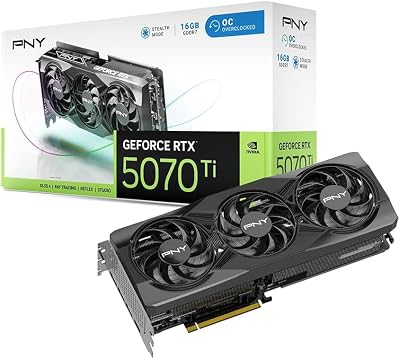
NVIDIA GeForce RTX™ 5070 Ti OC Triple-Fan Graphics Card | 16GB GDDR7, 256-bit, Boost: 2572 MHz, PCIe® 5.0, HDMI®/DP 2.1, 2.98-Slot, NVIDIA Blackwell Architecture, DLSS 5


As an Amazon Associate we earn from qualifying purchases. Product prices and availability are accurate as of the date/time indicated.
Platform and Viewer Support
The codec you choose must work on the platform you stream to, and on the devices your viewers use. Platform support for newer codecs changes over time, so check the current ingest guidance before you switch. Some platforms accept H.264 everywhere and add other codecs only for select outputs. Some viewer devices decode AV1 smoothly, while older phones, televisions or browsers may struggle with it.
This is the main reason many streamers keep H.264 as their default. It is the most widely supported option, and it works on almost every device. If your audience is mostly on modern desktops and recent phones, AV1 can be worth testing. If you cannot check your viewers’ devices, H.264 is the lower-risk choice.
For the bitrate side of this decision, the bitrate guide for YouTube streaming explains how to choose a target, and the internet speed guide helps you confirm the upload headroom before you change codecs.
Comparing Encoder Hardware Options
The table compares the hero listing and four alternatives by the role each plays in the encoding decision. It does not list prices or ratings, because those change often and vary between sellers. Confirm every number on the live listing before ordering.
| Option | Role in this guide | Best for | What to confirm | Price |
|---|---|---|---|---|
| Hero listing | Primary pick for the NVENC query | Streamers on an NVIDIA GeForce card | Encoder generation and AV1 support | Check current price |
| Alternative 1 | Same encoder family, different tier | Budget-conscious streamers | NVENC features listed for that model | Check current price |
| Alternative 2 | Alternative vendor with AV1 encode | Buyers comparing vendors | Software support in your streaming app | Check current price |
| Alternative 3 | Capture-side hardware for a second input | Streamers with a separate capture path | Maximum input resolution and frame rate | Check current price |
| Alternative 4 | Supporting accessory for a dual setup | Creators splitting encode and game work | Compatibility with your capture chain | Check current price |
Use the table to match the encoder to your existing card. If your graphics card already has a capable hardware encoder, the codec choice is usually a software setting rather than a purchase.
How to Choose Between the Two
Stay on H.264 When Reach Matters Most
If your priority is that every viewer can watch without buffering, and you stream to several platforms at once, H.264 remains the safe default. It is also the easier choice when you troubleshoot, because the support picture is well known.
Test AV1 When Efficiency Matters Most
If you are bandwidth-limited, or you want a sharper picture at the same upload rate, AV1 is worth testing. Confirm that your platform and your main viewer devices accept it. Run a side-by-side test first, then stream a short trial to a small audience before you switch the whole schedule.
Match the Encoder to the Game
Fast shooters and racing games stress the encoder more than slower strategy or narrative games. If your main content is fast, test the codec with that game rather than a menu or a desktop capture. The GPU guide for gaming explains which graphics cards suit the games you play, and the gaming PC for streaming guide covers the full system choice.
Related reading: the CPU guide for gaming and streaming shows how much processor headroom a software encoder needs, the how to stream on Twitch from a PC guide covers the output settings, the GPU guide for video editing and gaming explains which cards handle encoding well, and the roundup of streaming setups places the encoder inside a full build.
Frequently Asked Questions
Is AV1 always better than NVENC H.264 for streaming?
No. AV1 can reach a given quality at a lower bitrate, but only if the platform and the viewers’ devices support it. For many streamers, H.264 remains the most reliable choice.
Does encoding with NVENC slow down my game?
The hardware encoder uses separate silicon, so the impact is usually smaller than software encoding on the processor. The exact effect depends on the game, the resolution and the bitrate, so test your own setup.
Do I need a new graphics card to use AV1?
Not always, but hardware AV1 encoding depends on the card generation. Check the encoder support for your specific model before assuming it is available, and confirm that your streaming app exposes the option.
How do I know if my viewers can watch AV1 streams?
You cannot know for certain, so use your analytics where your platform provides them, and watch for buffering reports in chat. If a meaningful share of viewers cannot play the stream, fall back to H.264.


