- Top Pick: GIGABYTE GeForce RTX 5070 Gaming OC 12G Graphics Card, 12GB 192-bit GDDR7, PCIe 5.0, WINDFORCE Cooling System, GV-N5070GAMING OC-12GD Video Card
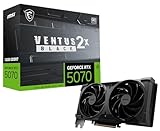
- Best Value: msi Gaming RTX 5070 12G Ventus 2X OC Black Graphics Card (12GB GDDR7, 192-bit, Extreme Performance: 2542 MHz, DisplayPort x3 2.1a, HDMI 2.1b, NVIDIA Blackwell Architecture)
- Premium Choice: ASUS SFF-Ready Prime NVIDIA GeForce RTX™ 5070 OC Edition Graphics Card (PCIe® 5.0, 12GB GDDR7, HDMI®/DP 2.1, 2.5-Slot, Axial-tech Fans, Dual BIOS), 3 Year Warranty find alternatives
The world of PC gaming is in a constant state of evolution, and at the forefront of visual fidelity and performance enhancements is NVIDIA’s Deep Learning Super Sampling (DLSS) technology. As we look towards the future with the highly anticipated RTX 50 series GPUs, a crucial question arises for eager gamers: will these next-generation cards fully embrace the latest iteration of DLSS, specifically DLSS 4, when they launch, presumably around 2026?
Understanding DLSS compatibility with upcoming hardware is vital for making informed purchasing decisions and ensuring your rig is future-proofed. This guide will delve into the likelihood of RTX 50 series support for DLSS 4, explain what DLSS 4 could bring to the table, and offer advice on how to prepare for this exciting technological leap.
As an Amazon Associate we earn from qualifying purchases at no extra cost to you.



🎮 Get More From Your Setup — Free
Prime Gaming gives you free PC games every month, in-game loot, and a free Twitch sub — plus fast free shipping on the gear above. New members get a 30-day free trial.
The Foundation: DLSS and NVIDIA Hardware
NVIDIA’s DLSS technology leverages dedicated Tensor Cores within its RTX graphics cards to intelligently upscale lower-resolution images to higher resolutions, resulting in significant performance gains with minimal perceptible loss in image quality. DLSS 3, introduced with the RTX 40 series, further enhanced this by adding Frame Generation, which uses AI to generate entirely new frames between traditionally rendered frames, dramatically boosting frame rates. The RTX 50 series, codenamed “Blackwell,” is expected to build upon this architecture, making DLSS 4 support a near certainty.
What to Expect from DLSS 4
While NVIDIA has not officially detailed DLSS 4, based on the trajectory of DLSS development, we can anticipate several key advancements. DLSS 4 will likely refine existing features like Super Resolution and Frame Generation, offering even better image reconstruction and smoother motion. We might also see AI-powered techniques applied to other aspects of rendering, such as denoising, ray tracing improvements, or even intelligent asset loading. The goal will undoubtedly be to push visual boundaries further while maintaining or improving performance across an even wider range of games.
RTX 50 Series Architecture and DLSS 4
The RTX 50 series is widely expected to feature an entirely new architecture, likely codenamed Blackwell. This new architecture will almost certainly include significantly upgraded Tensor Cores, the specialized hardware responsible for DLSS computations. These enhanced cores will be crucial for handling the more complex AI algorithms that will underpin DLSS 4. Furthermore, the increased memory bandwidth (likely featuring GDDR7 as seen in some early RTX 5070 models) and raw processing power of the RTX 50 series will provide the necessary headroom for these advanced DLSS features to operate effectively.
Ensuring Game Compatibility
The adoption of DLSS 4 will ultimately depend on game developers integrating support into their titles. However, given the widespread success and adoption of DLSS 3, it’s highly probable that major game studios will be eager to implement DLSS 4 to showcase the capabilities of the RTX 50 series. Developers often work closely with NVIDIA during the development of new GPU architectures, ensuring that their games are optimized to take full advantage of new technologies like DLSS 4 from day one.
Tips for Future-Proofing
- Prioritize RTX 50 Series: When the RTX 50 series launches, ensure your purchase includes a card from this generation to guarantee DLSS 4 compatibility.
- Check Game Requirements: Keep an eye on game announcements and system requirements, as they will indicate DLSS 4 support.
- Consider Sufficient VRAM: While DLSS reduces the reliance on raw GPU power for rendering, higher resolutions and more complex AI tasks may benefit from cards with ample VRAM.
- Stay Updated on Drivers: NVIDIA consistently releases driver updates that optimize performance and add support for new features.
Frequently Asked Questions
Will the RTX 50 Series definitely support DLSS 4?
While not officially confirmed, it is highly probable that the RTX 50 series will support DLSS 4. NVIDIA’s hardware and software development cycles strongly suggest that new GPU architectures are designed with future iterations of their flagship technologies in mind.
When is DLSS 4 expected to be released?
DLSS 4 will likely be released alongside or shortly after the launch of the RTX 50 series GPUs, which are anticipated around 2026. Specific game implementations will follow as developers integrate the technology.
What are the benefits of DLSS 4?
DLSS 4 is expected to offer improved image quality, even higher frame rates through advanced AI frame generation, and potentially enhancements to other graphical features like ray tracing and denoising, all contributing to a more immersive and performant gaming experience.
Do I need to buy a new GPU to use DLSS 4?
Yes, DLSS 4 will require dedicated hardware, specifically the Tensor Cores found in NVIDIA’s RTX graphics cards. The RTX 50 series is expected to have the necessary advancements to support DLSS 4.
Conclusion
The convergence of the RTX 50 series and DLSS 4 represents a significant leap forward for PC gaming. While we await official confirmation from NVIDIA, all indicators point towards a seamless integration, promising unprecedented visual fidelity and performance. By understanding the underlying technology and preparing your system, you’ll be well-equipped to embrace the future of gaming when the RTX 50 series arrives.