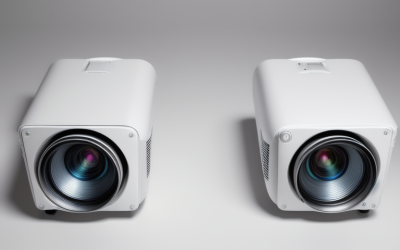
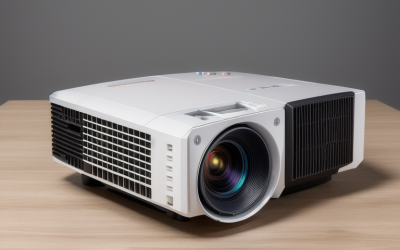
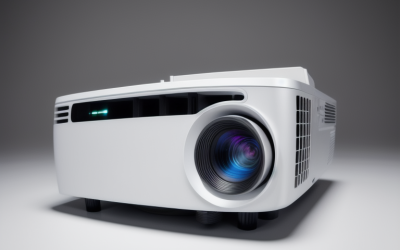
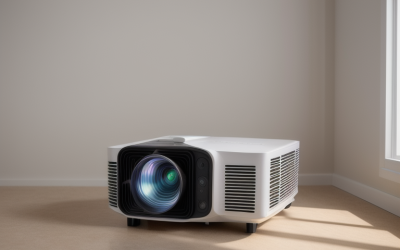
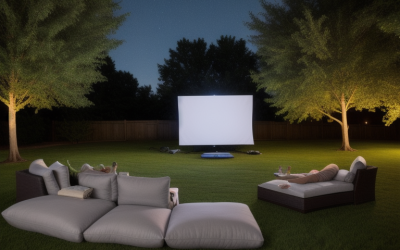
An ultra short throw (UST) projector turns a living room wall into a television. Instead of hanging from the ceiling at the back of the room, it sits on a console just inches from the wall and throws a huge image upward. There is no ceiling mount to run cables to, no one walking through the beam, and no long throw distance to plan. For a console, PC or movie setup, it is the closest thing to a big-screen TV that still folds away into a box.
Three questions narrow the field. How bright is the room, and does the projector’s lumen figure suit it? Is it a basic 1080p model or a true 4K laser with a better light source? And what do you need built in: apps, a speaker system and low input lag for games? Seven models are compared below using their listing titles, and one short-throw model was left out because the title does not describe it as ultra short throw. Check each full spec sheet for anything the title cuts off.
Quick Picks
| Product | Best for | Key spec from the title |
|---|---|---|
| Optoma ML1080UST Photon GO | Small rooms and portable use | 1080p, ultra short throw, portable |
| AWOL VISION LTV-3000 Pro | Movie rooms with a big wall | 4K 3D, triple laser, Dolby Vision and Atmos, 150 inch |
| AWOL VISION Aetherion Pro | Living room laser TV replacement | 4K, RGB triple laser, Google TV, PixelLock |
| XGIMI MIRA Pro | Gamers who want low latency | 4K, 3000 ISO lumens, 1ms, Harman Kardon |
| Hisense PX3-PRO | Large screen sizes | 4K, 3,000 lumens, 80 to 150 inch, IMAX Enhanced |
| XGIMI MIRA | Dim to moderately lit rooms | 4K triple laser, 2000 ISO lumens, ISA 5.0 |
| JMGO O2S Ultra | The brightest claim on the list | 4K, 3600 ISO lumen, Dynaudio speakers |
How to Choose
Check the light source and the lumen standard
Triple laser projectors use red, green and blue lasers, and they tend to be marketed for wide color. Read the brightness figure and note the unit: ISO lumens and ANSI lumens are standardized, while a bare lumens figure is harder to compare. If your living room has big windows, favor the larger figures. In a room you can darken, a lower number may be enough.
Confirm the wall space and distance
UST projectors list a screen size range and a distance from the wall, often in the manual or in a chart. Measure your console and wall, and see whether the picture will fit where you want it. Also note whether the projector has a feature for keeping a straight picture on an uneven wall, such as PixelLock or ISA, which appear in some of the titles below.
Pair it with a screen that suits UST
A UST projector shines upward at a steep angle, so a flat white wall may show imperfections. Many people use an ambient light rejecting screen made for UST. Check that your screen is labeled for ultra short throw, and check the screen size matches the projector’s range. A screen with a fixed frame also keeps the surface taut, which matters because even small waves show up when light skims across the surface at a steep angle.
Look at inputs, apps, audio and lag
Google TV in the title means built-in streaming without a box. Count the HDMI ports for your console, PC and soundbar, and look for eARC if you plan to use one. If you play fast games, find the input lag figure, such as the 1ms claim in one title. Built-in speakers from known audio names can reduce the need for a soundbar, though a separate sound system still gives you more control over volume and bass in a big room. If you do plan to add one, confirm the audio output on the listing.
The 7 Best Options
Optoma ML1080UST Photon GO

The compact entry in this group, a 1080p portable ultra short throw projector. It suits small rooms, a bedroom or a dorm where a large 4K laser would be overkill. The title is short, so check the spec sheet for brightness, light source and inputs.
- Ultra short throw in a portable body
- 1080p output, a sensible match for a small wall
- Limit: the title gives no brightness figure
Skip it if you want a bright 4K laser for a lit room.
AWOL VISION LTV-3000 Pro
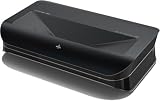
A 4K, 3D, triple laser UST projector with Dolby Vision, Atmos and HDR10+ in the title. It targets a 150 inch laser TV experience, so it suits a home theater with a large wall. It leans toward movies and sports more than casual use, and with a 150 inch class title it needs a wall that can hold a very large picture. Check the full spec sheet for brightness and the supported size range before you commit to a room layout.
- 4K triple laser with Dolby Vision and HDR10+
- 150 inch laser TV class and Dolby Atmos
- Limit: the title does not list a lumen figure
Skip it if your wall cannot take a big picture.
AWOL VISION Aetherion Pro
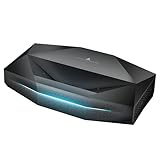
A newer 4K laser model with Google TV, RGB triple laser, Dolby Vision and PixelLock. The title lists 6,000:1 contrast, which is a stated figure to compare against others. It fits a living room where you want to replace a TV and stream directly.
- RGB triple laser with Google TV
- PixelLock named in the title
- Limit: the title is cut off before brightness
Skip it if you want a lumen number confirmed up front.
XGIMI MIRA Pro

XGIMI’s MIRA Pro lists 3000 ISO lumens, 4K UHD, RGB triple laser and 20,000:1 contrast. The 1ms low latency claim and Harman Kardon audio make it interesting for gamers with a console. Google TV adds built-in apps.
- 3000 ISO lumens, RGB triple laser, 20,000:1 contrast
- 1ms low latency and Harman Kardon sound
- Limit: likely a premium tier
Skip it if you only need a basic movie projector.
Hisense PX3-PRO

A triple laser UST that lists a size range of 80 to 150 inches, 3,000 lumens and 3000:1 contrast. Dolby Vision, Dolby Atmos and IMAX Enhanced are in the title. That range suits a household that may change the screen size later.
- 80 to 150 inch size range
- Dolby Vision, Atmos and IMAX Enhanced
- Limit: contrast figure is lower than some others here
Skip it if you want more detail than the title gives on inputs and refresh rate.
XGIMI MIRA

The MIRA is the lower-brightness sibling with 2000 ISO lumens, 20,000:1 dynamic contrast and ISA 5.0 for UST. Google TV and Dolby Vision are listed. It suits a living room that can be dimmed. The title mentions ISA 5.0 for UST, so read the listing to see exactly what that feature does during setup and alignment on your wall.
- Triple laser 4K with ISA 5.0 for UST
- Google TV and Dolby Vision
- Limit: 2000 ISO lumens is lowest of the 4K models here
Skip it if the room is bright all day.
JMGO O2S Ultra

The brightness leader by title, listing 3600 ISO lumens, 4K, triple laser and Dolby Vision. The 20W Dynaudio speakers, Google TV and Dolby Atmos mean fewer extras to buy. It suits an open living room where lamps and windows stay on.
- 3600 ISO lumens with triple laser
- Dynaudio speakers and Google TV
- Limit: the title is cut off, so check the full spec sheet
Skip it if you already own a good sound system.
Which One Fits Your Situation
A bright open-plan living room
Start with the JMGO O2S Ultra for its 3600 ISO lumen claim, then compare the XGIMI MIRA Pro and Hisense PX3-PRO at 3000. Pair any of them with a UST ALR screen.
A console corner with fast games
The XGIMI MIRA Pro lists 1ms latency, so it is the clear starting point. Check HDMI inputs and any game mode details on the listing for the others.
A dedicated home theater
The AWOL VISION LTV-3000 Pro and Aetherion Pro lean toward cinema with Dolby Vision, Atmos and large sizes. They suit a room you can dim.
A bedroom, den or small flat
The Optoma ML1080UST Photon GO is portable and 1080p, which is enough for a small wall, while the XGIMI MIRA suits a modestly dim room that wants 4K.
Common Mistakes
- Skipping the wall measurements, then finding the console is too deep or the image too big.
- Putting a UST projector on a wobbly stand, so the image distorts when someone walks by.
- Using an ordinary white screen and wondering why lit rooms look washed out.
- Assuming 4K on the title means every input runs at high refresh rates.
- Ignoring the sound plan, even though built-in speakers differ widely between models.
Frequently Asked Questions
Is a UST projector better than a TV?
It gives a much larger picture in a smaller footprint, but a TV usually handles bright rooms easily. The choice comes down to size, room light and whether you like a screen that disappears.
Do I need a special screen?
Not strictly, since a flat wall can work. A screen made for UST projectors often improves contrast and keeps the surface flat.
What does a triple laser mean?
The projector uses separate red, green and blue lasers as its light source. It is a design choice aimed at color, and the details of each light engine are on the spec sheet.
Can I game on one?
Many can, if they have the right HDMI inputs and low latency. Check each listing for refresh rate and lag details.