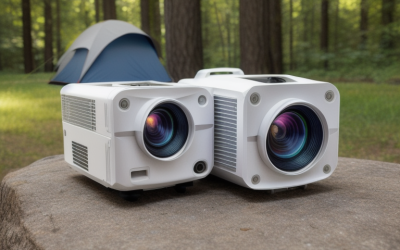
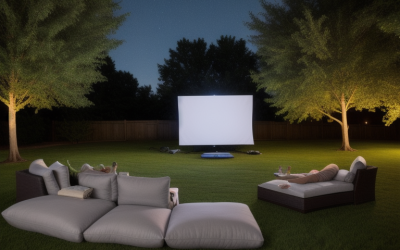
A pocket projector is a different purchase from a living-room projector. You are trading brightness and image size for something small enough to throw in a bag, run from a battery or a power bank, and set up on a hotel desk, a dorm bed or a campsite table. That means the right pick depends more on where and how you will use it than on a raw spec race.
This guide is for travelers, students, presenters and anyone who wants a casual big-screen option for a bedroom wall, a game session or a quick slideshow. The three trade-offs that matter are brightness versus portability, native resolution versus what the projector merely accepts as input, and whether you want built-in apps or plan to plug in your own stick or laptop.
Quick Picks
| Product | Best for | Key spec from the title |
|---|---|---|
| Kodak Luma 150 | Simple plug-in movie nights | 1080p input, built-in battery |
| AKASO WT50 | Self-contained streaming on the go | 1080P DLP, Wi-Fi, Bluetooth, Android system, battery |
| Kodak Luma 75 | Pocket-sized travel kit | 1080p HD DLP, 100-inch display |
| Aurzen ZIP Tri-Fold | Smallest carry, USB-C hookups | DLP, USB-C, ToF focus, 1.5H playtime |
| Aurzen Roku TV D1R air | Outdoor streaming from a power bank | Native 1080P, Roku TV, USB-C powered |
How to Choose
Resolution and what the label really means
Look for the words “native” or “supported” on the listing. A projector that accepts a 1080p signal may still use a lower-resolution chip, while one labeled native 1080P draws the full picture. For a small screen in a dark room, either can work, but text-heavy slides are where the difference shows. The full spec sheet is the place to settle it.
Brightness and room light
Pocket models are usually dimmer than full-size projectors, so a dark room or dusk matters. If the listing does not give an ANSI lumen figure, treat the projector as a night-time device and check the spec sheet for a number. A white wall or a portable screen improves contrast far more than a bigger beam does, and closing curtains or waiting for dusk helps a lot. Keep the projector close to the surface so the same light covers a smaller area.
Battery, power and charging
Some units include a battery, and some run from a USB-C power bank. A power bank with enough output for the projector is a good travel accessory in either case. Check the playtime on the title or specs, and remember that real runtime depends on brightness and speaker volume. A short rated playtime, like the 1.5H figure on one listing here, means a power bank is part of the kit rather than an optional extra. If you plan to use the projector during flights or camping, confirm whether it can run while charging.
Focus, mounting and inputs
Autofocus or time-of-flight focus cuts down fiddling on a tiny lens. Look for a tripod thread, a stand or an included case, and check which ports exist: HDMI for a console or laptop, USB-C for a phone, and wireless casting for streaming. A pocket projector without an easy input path becomes a gadget, not a tool. If you game, check whether the listing mentions input lag, and if you present, check that your laptop’s ports or an adapter will connect without hassle.
The 5 Best Options
Kodak Luma 150
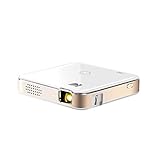
A straightforward battery-powered mini projector from a familiar camera brand. The title is short: 1080p input and a battery. That makes it a reasonable pick for someone who wants to connect a phone, a laptop or a stick and project onto a bedroom wall without building a setup around apps. Pair it with a streaming stick if you want movies, and with a laptop if you want to show photos or slides to a small group.
- Strength: accepts a 1080p input signal.
- Strength: built-in battery for cord-free use.
- Limit: the title does not say whether the resolution is native, so check the full spec sheet.
Skip it if you want built-in streaming apps or a bright image for a lit room.
AKASO WT50
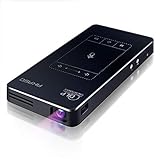
The most self-contained option here. The listing names Wi-Fi, Bluetooth, a 1080P DLP engine, a built-in battery and an Android system, so you can watch content without a separate streaming stick. It is a good fit for cabin trips, backyard movie nights or a spare room where you do not want extra cables. The Android system also means you can keep the viewing setup in one device, which suits kids’ rooms and guest rooms.
- Strength: Wi-Fi, Bluetooth and an Android system built in.
- Strength: DLP design with a built-in battery for outdoor use.
- Limit: the title is cut off, so check the full spec sheet for brightness and ports.
Skip it if you want a polished app store or the most compact body possible.
Kodak Luma 75

The smaller Kodak, described as a pocket-sized, portable 1080p HD DLP projector able to throw up to a 100-inch display. It suits travelers who value a light carry and a quick setup over streaming features, especially for a hotel wall or a dorm. The 100-inch figure is a maximum, so expect the picture to be dimmer when you stretch it, and move the projector closer when you want a crisper image.
- Strength: pocket-sized body with DLP technology.
- Strength: a 100-inch maximum display size per the title.
- Limit: the title gives no battery or brightness details, so verify them.
Skip it if you need a built-in smart platform or a long runtime, or want to project in a lit room.
Aurzen ZIP Tri-Fold

This is the most unusual design in the group: a tri-fold DLP pico projector with USB-C, Bluetooth and ToF real-time focus. It is meant for people who want the smallest possible carry for movies, travel and quick demos from a phone or laptop. The tri-fold shape suggests it slips into a jacket or a laptop sleeve, though you should check the full spec sheet for exact dimensions and weight before you count on that.
- Strength: ToF real-time focus removes manual adjustment.
- Strength: USB-C connection and Bluetooth in a very small body.
- Limit: 1.5H playtime is short for a full movie plus a trailer.
Skip it if you plan long sessions away from a power source or need a large, bright image.
Aurzen Roku TV D1R air
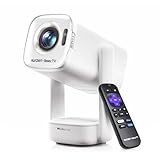
A portable outdoor projector with Roku TV built in, Wi-Fi, Bluetooth and a native 1080P label. It is powered by USB-C and works with a power bank, which makes it a practical camping, backyard or patio choice for people who already know the Roku interface. Since the title also says the unit works from a power bank, it can sit on a camp table next to a speaker with no wall outlet nearby.
- Strength: native 1080P with Roku TV built in.
- Strength: USB-C powered and compatible with power banks.
- Limit: it depends on external power, so plan for a power bank on long outings.
Skip it if you want a built-in battery or a projector that does not need any external power.
Which One Fits Your Situation
Frequent traveler with a laptop or phone
The Kodak Luma 75 and the Aurzen ZIP Tri-Fold are the most travel-ready. Choose the Luma 75 for a simple shape and a stated 100-inch display, or the ZIP for its folding design and USB-C connection. Both are easy to pack, but remember to bring the right cable or adapter for your phone or laptop.
Outdoor movies and camping
The Aurzen Roku TV D1R air pairs built-in streaming with power-bank support, while the AKASO WT50 brings an internal battery and Android system. Whichever you choose, follow the manufacturer’s instructions for outdoor use and keep it away from moisture. Bring a small speaker as well, since tiny built-in speakers struggle against wind and crowd noise, and use a white sheet or portable screen for the picture.
Presentations and a gamer’s spare screen
For a laptop slideshow or a handheld PC session in a dim room, the Kodak Luma 150 keeps things simple with a 1080p input and a battery. Check the ports on the listing against your device before you commit. A small tripod or a stack of books under the projector also helps you aim the picture at the wall instead of the ceiling.
Common Mistakes
- Expecting a pocket projector to compete with a full-size model in a bright room.
- Reading “1080p input” as native 1080p without checking the spec sheet.
- Planning a long movie without confirming the real battery runtime.
- Forgetting the port you need, such as HDMI for a console or USB-C for a phone.
- Projecting on a textured or dark wall instead of using a white wall or a portable screen.
Frequently Asked Questions
How big of a picture can a pocket projector make?
It depends on the lens and brightness. Some listings quote a maximum size, such as the 100-inch figure on the Kodak Luma 75, but smaller sizes will look brighter and sharper.
Do I need a screen?
No, a clean white wall works. A portable screen can improve contrast and color, especially for presentations. Keep in mind that these models suit travel, bedrooms and outdoor nights better than they suit daily use as a main TV.
Can I play games on one?
You can connect a console or a handheld PC if the projector has the right input. Pocket models are not built for fast competitive games, so check for any input-lag details on the listing.
How long does the battery last?
It varies with brightness and volume. Only the Aurzen ZIP lists a playtime in its title, so check the full spec sheet for the others.