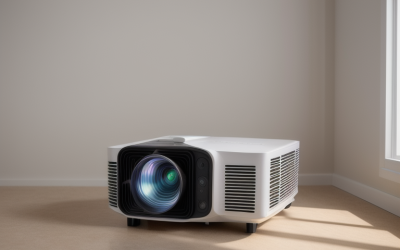
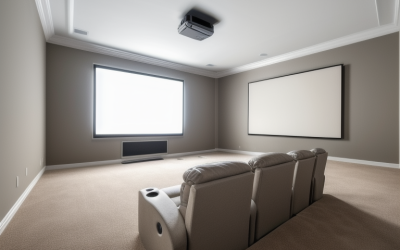
Laser projectors trade the fading, replaceable lamp of older models for a light source that holds its brightness for years and switches on quickly. They also cost more up front, so the real question is whether you want a dedicated home cinema box, a gaming-friendly living room projector, or a portable unit that happens to use a laser. The answer shapes everything else on the spec sheet.
Most buying decisions come down to three things: true 4K versus Full HD, how bright the picture stays with the lights on, and how far the projector needs to sit from the wall. Short-throw models fit tight rooms, while long-throw units with lens shift fit ceiling mounts. The seven projectors below are described from their listing titles only, so confirm anything missing on the full spec sheet.
Quick Picks
| Product | Best for | Key spec from the title |
|---|---|---|
| Valerion StreamMaster Plus2 | Gaming and movies in one room | 4K laser, 240Hz response, 4ms, Dolby Vision |
| NEBULA Capsule 3 Laser | Portable movie nights | Laser, Google TV, 120″ display, 2.5H battery |
| XGIMI HORIZON 20 | All-round living room cinema | 4K RGB triple laser, 3200 ISO lumens, lens shift |
| Optoma UHZ36 | Dedicated home theater | 4K UHD laser, HDR |
| XGIMI Elfin Flip | Small rooms and travel | 4K, RGB triple laser, 1600 ISO lumens |
| Valerion VisionMaster Pro2 | Picture-quality enthusiasts | 4K triple laser, 15000:1 contrast, HDR10+ |
| Optoma GT2400HDR | Tight rooms and gaming | 1080p, 4,200 lumens, short throw, laser |
How to Choose
Resolution and light source
Look for the words “4K” or “UHD” in the title, then check whether the listing says native or supported. Some projectors accept a 4K signal but shift a smaller chip to build the image. Laser can mean a single laser with a phosphor wheel, or an RGB triple laser setup that mixes red, green and blue light for wider color. Titles that say “triple laser” are describing the second kind. If the listing never states the light source, treat it as unconfirmed. Also look for a stated lifespan in hours and the warranty terms, since a laser engine is the main reason to pay the premium tier.
Brightness numbers
Brightness appears as lumens, ISO lumens or ANSI lumens. These are different measurement standards, so a figure on one model is not directly comparable to a figure on another. Check which standard the listing uses and whether a manufacturer spec sheet is linked. A brighter number helps in a room with windows, while a dark dedicated room can get by with less. If the listing gives only a contrast ratio such as 15000:1 and no lumens, open the manufacturer’s page before you decide.
Throw distance and installation
A throw ratio such as 0.98-1.3:1 tells you how large the image is at a given distance. Short-throw models sit close to the wall, which suits desks and low furniture. Optical zoom and lens shift let you place a projector off-center without distorting the picture. Measure your room, compare it with the throw ratio on the listing, and follow the manufacturer’s installation and safety instructions for ceiling mounts. A tape measure and a rough sketch of the room prevent most setup surprises.
Inputs, latency and operating system
For consoles and PCs, look for an HDMI input, a stated response time, and whether a game mode or low input lag is mentioned. Google TV, built-in apps and licensed streaming apps matter if you plan to skip an external streaming stick. Check the fan noise note in the specifications and make sure there is a headphone or audio output if the built-in speakers will not be enough. Projectors with licensed streaming apps are simpler, but an HDMI stick works with any model that has a free port.
The 7 Best Options
Valerion StreamMaster Plus2

Valerion aims this 4K laser projector at people who want a living room cinema and a gaming screen in one. The title lists 4ms and 240Hz response, Dolby Vision, HDR10, 3D support and IMAX Enhanced certification, a long list for one box.
- Strength: 4K laser with a stated 4ms and 240Hz response.
- Strength: Dolby Vision, HDR10 and IMAX Enhanced listed.
- Limit: the title cuts off, so check the full spec sheet for brightness and ports.
Skip it if you want a portable unit; this is a fixed-placement home projector.
NEBULA Capsule 3 Laser
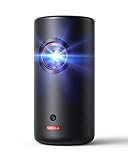
Small and battery powered, this is the grab-and-go laser option in the list. Google TV, Netflix certification and Dolby Digital sound are in the title, and the 2.5H built-in battery means a movie in the yard without an extension cord.
- Strength: portable body with a built-in battery and Google TV.
- Strength: 120″ display size listed, with Dolby Digital sound.
- Limit: native resolution and brightness are not shown in the title.
Skip it if you want a big-screen, bright-room projector for every night.
XGIMI HORIZON 20
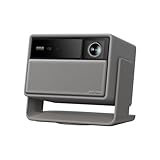
A 4K RGB triple laser home projector listed at 3200 ISO lumens, with optical zoom and lens shift so placement is forgiving. Google TV with licensed Netflix and IMAX Enhanced support round out the title, which makes it a strong all-round living room pick.
- Strength: RGB triple laser with 3200 ISO lumens.
- Strength: optical zoom and lens shift for easier setup.
- Limit: the rest of the title is cut off, so verify ports and audio.
Skip it if you only watch in a fully dark room and want a lower tier of projector; this is a premium model.
Optoma UHZ36

Optoma gives few details in this title: 4K UHD, laser, HDR and a black finish. It is a home theater projector in the traditional sense, with no smart platform or battery advertised, which makes it the one for people who already own a streaming box.
- Strength: 4K UHD laser with HDR listed.
- Strength: a dedicated home theater design rather than a portable one.
- Limit: very little detail in the title, so check brightness, throw ratio and inputs.
Skip it if you want built-in streaming apps without extra hardware.
XGIMI Elfin Flip

A compact 4K portable projector with Wi-Fi, Bluetooth, Google TV and RGB triple laser light. The 0.98-1.3:1 optical zoom and Harman Kardon audio are stated, so it handles small bedrooms, apartments and travel setups.
- Strength: 4K with RGB triple laser and Google TV.
- Strength: 0.98-1.3:1 optical zoom and Harman Kardon sound listed.
- Limit: 1600 ISO lumens is modest for a lit living room.
Skip it if your main viewing room has strong daylight.
Valerion VisionMaster Pro2

The picture-quality-focused Valerion model, with triple laser light, Anti-RBE (rainbow reduction), 3D and a 15000:1 contrast figure in the title. HDR10+ and IMAX Enhanced are listed for the movie crowd.
- Strength: triple laser with Anti-RBE and 15000:1 contrast.
- Strength: HDR10+, 3D and IMAX Enhanced listed.
- Limit: lumens and throw ratio are not visible in the title.
Skip it if you need a portable or short-throw design for a small room.
Optoma GT2400HDR
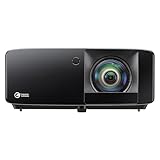
This short-throw laser projector is Full HD at 1080p with 4,200 lumens, which is bright enough to be interesting for rooms that can not go fully dark. The title mentions low input lag for gaming and golf simulator readiness.
- Strength: short throw and 4,200 lumens.
- Strength: low input lag for gaming is called out.
- Limit: 1080p rather than 4K.
Skip it if native 4K detail is your priority.
Which One Fits Your Situation
A gaming desk or console corner
The Valerion StreamMaster Plus2 lists 4ms and 240Hz response, and the Optoma GT2400HDR lists low input lag in a short-throw package. Pick the first for 4K, the second for tight rooms.
A dedicated movie room
The XGIMI HORIZON 20, Valerion VisionMaster Pro2 and Optoma UHZ36 are the home theater candidates. The Pro2 targets contrast and rainbow reduction, the HORIZON 20 adds Google TV, and the UHZ36 is the no-frills option.
A rental or small apartment
The XGIMI Elfin Flip and NEBULA Capsule 3 Laser are compact enough for a bedroom shelf or a coffee table. Both include Google TV, so you can stream without extra boxes. Remember that a small room shortens the throw distance, so check the zoom range before you commit.
A creator or streamer studio
Use a short-throw model like the Optoma GT2400HDR to project reference footage onto a wall without casting shadows from your desk. Confirm the HDMI inputs before wiring a capture card, and keep the projector on a stable shelf so vibration does not shift focus during a stream. A projector also makes a good second screen for viewing chat or reference material during a long session.
Common Mistakes
- Comparing lumens figures across ISO, ANSI and plain lumens as if they were the same.
- Assuming “4K” means native 4K without reading the resolution line.
- Ignoring throw ratio, then finding the image too big or small for the room.
- Buying a portable projector for a bright living room.
- Skipping the audio plan; projector speakers are usually the weakest part of the setup.
- Forgetting the screen: a flat white wall limits contrast, so plan for a proper screen.
Frequently Asked Questions
Are laser projectors better than lamp projectors?
They hold brightness longer and warm up faster, and they do not need lamp swaps. The trade-off is a higher entry tier, so a lamp model can still make sense for occasional use in a dark room.
Do I need a special screen?
Not required, but an ambient-light-rejecting or high-contrast screen helps in lit rooms. A plain wall works for casual viewing.
What is RGB triple laser?
It uses separate red, green and blue lasers rather than one source and a phosphor wheel. The goal is wider color range and more accurate hues.
Can I game on a laser projector?
Yes, if the listing mentions low input lag, a game mode or a stated response time. Check HDMI version and refresh rate support for your console or PC.