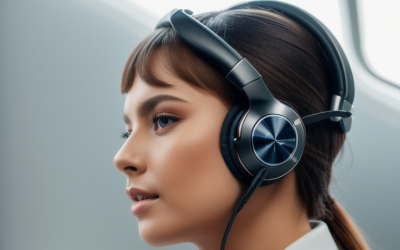
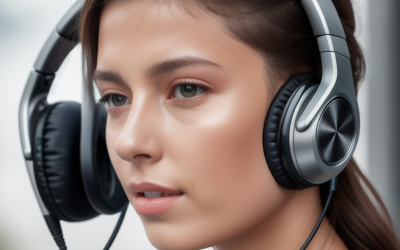
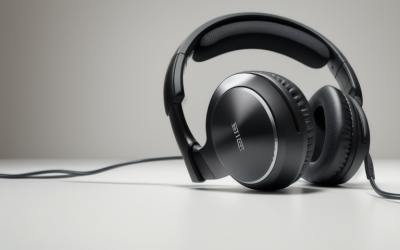
- Top Pick: Audio-Technica ATH-M20x Professional Studio Monitor Headphones, Black | 96dB Sensitivity, 15-20kHz Frequency Response, Suspension Headband, 6.3mm Adapter, for Monitoring, Tracking and Mixing
- Best Value: OneOdio Wired DJ Hi-Res Over-Ear Headphones for PC, Keyboard Guitar – Black | headphone with 50mm drivers, dual 3.5mm and 6.35mm jacks for studio monitoring, recording, podcasting, mixing and DJ use.
- Premium Choice: Sony MDR7506 Professional Large Diaphragm Headphone
Gaming headsets sell you a microphone, surround-sound branding and a lot of plastic. Studio monitor headphones sell you the opposite: a wired cable, a flat tuning philosophy and drivers meant to reveal what is in the mix, which is also why many competitive players like them. Footsteps, reloads and directional cues come through as plain sound rather than as a bass-heavy show. The catch is that none of the titles below mention a built-in microphone, so you will pair them with a desk mic or a clip-on boom.
This 2026 guide is for PC players who also stream, record voice or edit video, and who would rather spend on a wired pair that works with a sound card than on a headset with a wireless dongle. Nine products made the list, from budget pairs with dual 3.5mm and 6.35mm jacks to long-running studio standards from Audio-Technica, Sony and Sennheiser. One extra listing, a Sony on-ear ZX110, was left out because it is a general consumer pair rather than a studio monitor.
Quick Picks
As an Amazon Associate we earn from qualifying purchases at no extra cost to you.


| Product | Best for | Key spec from the title |
|---|---|---|
| Audio-Technica ATH-M20x | Entry-level monitoring | 96dB sensitivity, 6.3mm adapter |
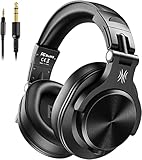
| OneOdio Wired DJ Hi-Res | PC plus keyboard or guitar | 50mm drivers, dual jacks |
| Sony MDR7506 | Classic studio standard | Large diaphragm drivers |
| Audio-Technica ATH-M50X | Detachable-cable flexibility | Detachable cable |
| Sennheiser HD 280 Pro | Noisy rooms and loud games | 32dB attenuation, closed-back |
| TASCAM TH-02 | Recording and podcast duty | Wired over-ear, 1/4 inch adapter |
| syndesmos Wired Studio Headphones | Low-cost desk setup | 50mm drivers, 1/4 to 3.5mm |
| OneOdio A71 | Foldable carry | Hi-Res, foldable design |
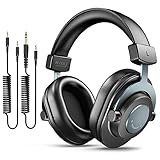
| FIFINE HD8 | Podcasting and streaming | Detachable cables, closed-back |
How to Choose
Closed-back or open-back
Every pair here is described as a studio or monitoring model, and several, like the HD 280 Pro and the FIFINE HD8, state closed-back construction. Closed-back keeps game audio from leaking into your microphone and blocks some room noise. Open-back models sound airier but leak sound, so skip them if you stream or share a room with a sleeping partner. For shooters, where hearing a distant reload matters, isolation also lets you play at a lower volume, which is easier on your ears over a long evening.
Match the jack to your hardware
Studio headphones often ship with a 6.35mm (1/4 inch) plug, while PC motherboards and consoles use 3.5mm. Look for an included adapter or dual cables, as the M20x, TH-02, OneOdio models and FIFINE list. Confirm whether your motherboard output can drive the headphones, since some studio pairs need more power than a laptop jack provides, and a USB DAC solves that cleanly.
Cable and comfort
A detachable cable, as on the M50X and HD8, lets you replace a damaged lead without replacing the headphones. Coiled cables like the HD 280 Pro stay off the desk but can tug. Over-ear pads suit long sessions, while on-ear designs put pressure on the ear. Budget pairs usually cut corners on pad quality, which shows up after a few months of daily wear.
Ignore the mic gap, plan for it
No title mentions a microphone, so budget for a separate USB or XLR mic. This split is a feature: you can upgrade each piece separately, and a dedicated mic usually beats a boom arm built into a cheap headset. Also ignore “Hi-Res” labels as a quality guarantee, since they describe supported formats rather than comfort or tuning.
One more threshold worth checking is how the pair is driven. Higher sensitivity, such as the 96dB printed on the M20x listing, generally means less amplification is needed to reach a given volume, which is friendly to weak outputs. If a listing gives no sensitivity or impedance, assume a modest output may leave you short on volume in competitive games, and keep a small DAC or amp in mind as the fix.
The 9 Best Options
Audio-Technica ATH-M20x
The entry point into Audio-Technica’s monitoring family, listed with 96dB sensitivity, a 15-20kHz frequency response and a suspension headband. It suits first-time buyers who want a recognized studio brand for gaming and basic recording, and it is designed for monitoring, tracking and mixing.
- The sensitivity figure suggests it can run from common PC outputs.
- A suspension headband and a 6.3mm adapter are in the listing.
- Trade-off: the cable looks fixed, and it sits at the entry level of the lineup.
Skip it if you want a detachable cable or a more advanced model from the same brand. It is a straightforward pair for people who just need clear sound.
OneOdio Wired DJ Hi-Res
Over-ear wired headphones with 50mm drivers and dual 3.5mm and 6.35mm jacks, positioned for PC, keyboard and guitar. A flexible pick if you move between a gaming PC and a music instrument and do not want to juggle adapters at the desk.
- Dual jacks avoid hunting for adapters.
- 50mm drivers are named in the title.
- Trade-off: DJ-style tuning is not the same as a studio-flat target.
Skip it if you want a neutral monitoring signature for mixing. It suits buyers who value versatility over a famous brand name.
Sony MDR7506
A long-standing professional pair with large diaphragm drivers. The listing gives few specs, so the appeal is its studio pedigree and straightforward design for monitoring voice and music, which carries over naturally to gaming sessions with a separate microphone.
- Professional positioning with large diaphragm drivers.
- A simple, known quantity in studios.
- Trade-off: the title offers no jack, cable or sensitivity detail, so read the full listing.
Skip it if you need a detachable cable or want to verify technical numbers before buying.
Audio-Technica ATH-M50X
A step up from the M20x, described as professional grade and critically acclaimed, with a detachable cable. It suits players who want a single pair for gaming, music and editing, and who plan to keep it for years rather than replace it.
- A detachable cable simplifies replacement.
- Professional-grade positioning from a well-known studio brand.
- Trade-off: the title lists no measurements, and it sits in a higher tier than the M20x.
Skip it if budget is the main constraint, since the entry model covers the basics for less.
Sennheiser HD 280 Pro
Closed-back studio and live monitoring headphones, listed with 32dB attenuation and a coiled cable for monitoring, recording and fieldwork. This is for noisy rooms or players who stream and need isolation so game sound stays out of the microphone.
- 32dB attenuation helps in loud rooms.
- Closed-back construction limits leakage.
- Trade-off: the coiled cable can tug on a crowded desk.
Skip it if you want a detachable lead or a lightweight feel for marathon sessions.
TASCAM TH-02
Wired over-ear monitor headphones for recording, podcasting, DJ, music and guitar, with a 1/4 inch jack adapter. A sensible budget pick for creators who record voice and play games on the same desk and want one pair for both jobs.
- An adapter is included for 1/4 inch gear.
- Multiple uses are listed, from podcasts to guitar.
- Trade-off: few specifics in the title beyond the brand and the uses.
Skip it if you need numbers such as impedance or sensitivity on the listing before you buy.
syndesmos Wired Studio Headphones
A generic-brand over-ear pair with 50mm drivers and a 1/4 to 3.5mm jack, aimed at studio monitoring, mixing, DJ use, guitar amps, podcasts and computer recording. It fits a low-cost secondary desk setup where a famous name is not the goal.
- 50mm drivers and stereo sound are stated.
- Jack options are named in the listing.
- Trade-off: a lesser-known brand with no track record to lean on.
Skip it if you prefer an established name for warranty and replacement parts. Because the title is generic, read the full listing for return terms before committing to it.
OneOdio A71
A Hi-Res wired over-ear pair with a foldable design and 3.5mm and 6.35mm jacks, built for recording, monitoring, mixing and DJ use, and connecting to PC. It suits players who carry headphones between rooms or to a friend’s house.
- A foldable design makes it easy to pack.
- Dual jacks cover PC and studio gear.
- Trade-off: the title does not name a detachable cable.
Skip it if cable replacement matters to you, or if you want a pair tuned for flat monitoring. Think of it as a portable, mixed-use pair rather than a reference tool.
FIFINE HD8
A wired studio monitor headphone with detachable 3.5mm and 6.35mm cables, 50mm drivers and a closed-back design with passive noise canceling. It targets podcasting, mixers, instruments and microphone setups, and the lightweight design suits long streams.
- Detachable cables come in both jack sizes.
- Closed-back and lightweight, according to the listing.
- Trade-off: a newer name than the Audio-Technica and Sony pairs.
Skip it if brand history matters more to you than features.
Which One Fits Your Situation
Competitive play and streaming
The Sennheiser HD 280 Pro pairs closed-back isolation with 32dB attenuation, which is helpful when your microphone sits near the speakers and you want clean voice capture. Add a desk mic on a boom arm and you have a streaming rig that beats most all-in-one headsets.
Budget desk with one pair for everything
The Audio-Technica ATH-M20x gives you a studio brand and a 6.3mm adapter at the entry tier, and it is easy to drive from a regular PC jack. If you later outgrow it, the ATH-M50X is the natural upgrade inside the same family and brings the detachable cable.
Replaceable cable
The ATH-M50X and FIFINE HD8 both list detachable cables, so a snagged lead is a cheap fix instead of a new purchase.
Gaming PC plus music gear
The OneOdio Wired DJ Hi-Res handles both a desktop and a keyboard or guitar through its dual jacks, which saves you from carrying adapters between rooms. The OneOdio A71 is the foldable sibling if the headphones travel in a bag as often as they sit on a stand.
Common Mistakes
- Expecting a built-in microphone from a studio pair.
- Buying open-back models for a shared room or a streaming desk.
- Forgetting a 6.35mm to 3.5mm adapter when the box lacks one.
- Choosing a coiled cable on a cramped desk where it keeps catching on the keyboard tray.
- Assuming DJ-style tuning is flat enough for accurate monitoring.
Related guides
- Aio Liquid Coolers For High Performance Gaming
- How To Lower Input Delay In Competitive Shooters
- Wireless Gaming Headsets Under 100 For Pc
Frequently Asked Questions
Are studio headphones good for gaming?
Yes, for players who value clear positional audio and who bring their own microphone. They lack the surround features and wireless convenience that headsets advertise, and the wired lead means you stay close to the PC. Many players find that trade worthwhile for the cleaner sound.
Do I need an amplifier?
Not always. Entry models like the M20x list a high sensitivity, which helps with weak outputs, but higher-impedance pairs can benefit from a USB DAC or headphone amp.
Which is better for streaming?
Closed-back models limit sound leaking into your microphone, so the HD 280 Pro and the HD8 are logical places to begin your search.
Can I use them on a console?
Many controllers use a 3.5mm jack, so a 3.5mm cable or adapter lets you plug in directly. Console voice chat still needs a separate microphone, and some setups route the headphones through a USB audio interface or a DAC instead of the controller port.