As an Amazon Associate we earn from qualifying purchases

Best High End Headphones for Gaming
High-end gaming audio splits into two camps. On one side are flagship gaming headsets, with a microphone, wireless connections, and console or PC controls built in. On the other are audiophile headphones designed for music first, with no microphone and sometimes no wireless option at all, but with larger drivers and open-back designs. Both can be excellent for gaming, but they suit different desks and expectations about voice chat.
This guide covers five premium models: two flagship wireless gaming headsets, one wireless audiophile headphone with active noise cancellation, and two wired open-back reference headphones. For each pick, connection options, microphone provision, and use case are stated plainly. Published manufacturer specifications are listed under each product, kept distinct from general guidance.
If the rest of the setup is also being upgraded, our guide to the best high-end gaming desktop PC for 2026 covers the PC side of that pairing.
How to Choose High-End Headphones for Gaming
Start with the microphone, because it divides this list more than any driver technology. A gaming headset includes a microphone, retractable, detachable, or built in, and needs nothing extra for Discord or in-game voice. A pure headphone has no microphone at all, so multiplayer use means adding a separate USB, desk, or attachable boom microphone, a real extra cost of the audiophile route.
Next, compare connections against the platforms actually used. Wired is simplest for a fixed desk, with no battery and no wireless latency. USB can carry higher-resolution digital audio from a PC and bypass a weak built-in output. A 2.4 GHz dongle or base station is the preferred wireless route for PC and console gaming because it is designed for low-latency game audio. Bluetooth is flexible for phones and mixing a call with game sound, but standard Bluetooth is not built primarily around gaming latency, so it is a weaker primary choice for competitive play.
Codec support matters only where the manufacturer states it and the source supports the same codec. A listed codec gains nothing if the PC, console, or phone cannot use it.
Open-back headphones let air and sound pass through the ear cups. They suit quiet rooms and single-player games where a spacious presentation is valued, but they leak sound and let room noise in. Closed-back models isolate better and suit shared spaces. Active noise cancellation, offered on two picks here, adds electronic reduction of steady ambient noise.
Amplification also needs a check. A high-impedance headphone is designed for a dedicated amplifier or capable interface and may sound quiet from a controller or basic laptop jack. A low-impedance model is far more flexible. Finally, match the pick to the main use case: competitive multiplayer rewards a ready microphone and low-latency wireless, story-driven play rewards comfort and detail, and mixed gaming and music use rewards a model that handles both.
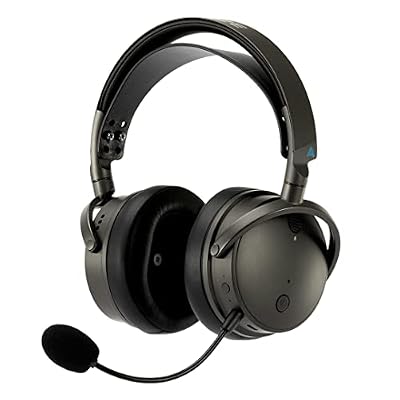
Audeze Maxwell Wireless Gaming Headset
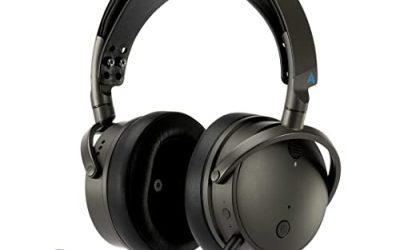
The Audeze Maxwell is the clearest bridge between the audiophile and gaming headset worlds here. It is a closed-back gaming headset built around large planar magnetic drivers, a technology more commonly associated with dedicated music headphones.
Connection flexibility is central. The Maxwell offers low-latency wireless for gaming, Bluetooth for a phone or tablet, and wired listening over USB and 3.5 mm, so it can move between PC, consoles, handhelds, and mobile devices. The manufacturer states high-resolution audio support up to 24-bit/96 kHz over wireless or USB, and codec support including LC3plus, LE Audio, and LDAC for compatible sources. For gaming, the low-latency wireless link, rather than standard Bluetooth, is the connection to use. Microphone provision is complete: a detachable boom microphone for directed voice pickup, plus built-in beamforming microphones when the boom is removed, so no extra purchase is needed for multiplayer. Battery life is rated at over 80 hours, and at 490 grams fit deserves consideration for very long sessions. This is the direct pick for players who want planar magnetic sound without giving up a microphone or wireless freedom.
Specs
- Driver: 90 mm planar magnetic drivers
- Connectivity: Low-latency wireless, Bluetooth, wired USB and 3.5 mm
- Battery life: 80 hours as listed
- Weight: 490 grams
- Microphone: Detachable boom microphone, plus built-in beamforming microphones
- Platforms: Xbox, PlayStation, PC, Mac, and Switch, depending on version
SteelSeries Arctis Nova Pro Wireless for Xbox
The SteelSeries Arctis Nova Pro Wireless builds its system around an OLED base station. That station connects two systems at once over USB, allows switching between them, charges the spare battery, and provides control over volume, equalisation, and chat balance without opening software. For a desk shared between an Xbox and a PC, that hub design is the main reason to choose this model.
Wireless game audio runs over Quantum 2.0 Wireless on 2.4 GHz, with Bluetooth running simultaneously for a second stream such as a phone call, Discord on mobile, or music. Active noise cancellation uses a hybrid microphone system, with a transparency mode for hearing the room. The Infinity Power System includes two hot-swappable batteries, one in use and one charging in the base station, so play does not stop for charging. The ClearCast Gen 2 microphone retracts fully into the ear cup when not needed, and SteelSeries states that it uses AI-powered noise cancellation through its Sonar software on PC. This pick suits multi-system players who value switching, mixing, and uninterrupted wireless play.
Specs
- Driver: 40 mm dynamic drivers, listed as Premium High Fidelity Drivers
- Connectivity: 2.4 GHz wireless via base station, simultaneous Bluetooth, and 3.5 mm wired
- Battery system: Infinity Power System with two hot-swappable batteries, 40 hours listed
- Noise control: Active noise cancellation with Transparency Mode
- Microphone: Retractable ClearCast Gen 2 microphone
- Base station: OLED base station with dual USB connections
- Platforms: Xbox, PC, PlayStation, Switch, Mac, and mobile as listed
Focal Bathys High-Fidelity Bluetooth Noise Cancelling Headphones

The Focal Bathys comes from a traditional high-end headphone manufacturer rather than a gaming brand. It is a closed-back wireless headphone with active noise cancellation, built around aluminium and magnesium M-dome drivers made in France, intended as one premium headphone for music, travel, and gaming rather than a dedicated gaming headset.
Connectivity covers Bluetooth 5.1, a 3.5 mm jack, and USB, including a USB-C DAC mode for wired digital listening from a compatible computer. The manufacturer lists Bluetooth codec support for SBC, AAC, aptX, and aptX Adaptive. There is no 2.4 GHz gaming dongle, so for gaming the most controlled routes are the wired jack or USB connections, with Bluetooth reserved for casual play and media where latency matters less. Battery life is listed at over 30 hours in Bluetooth and noise cancelling mode, with fast charging adding five hours from a 15-minute charge. Microphone expectations need to be plain: the Bathys has integrated microphones for noise cancellation, transparency, and calls, but no gaming boom microphone, so competitive players should plan on a separate microphone.
Specs
- Driver: Aluminium and magnesium M-dome dynamic drivers, made in France
- Design: Closed-back, over-ear, with active noise cancellation
- Connectivity: Bluetooth 5.1 with multipoint, USB-C, and 3.5 mm wired
- Bluetooth codecs: SBC, AAC, aptX, and aptX Adaptive as listed
- Battery life: Over 30 hours in Bluetooth and active noise cancellation mode as listed
- Fast charging: 15 minutes of charging for five additional hours as listed
- Microphone: Integrated microphones for calls and noise cancellation; no boom microphone
- Frequency range: 15 Hz to 22 kHz as listed
Sennheiser HD 800 S Reference Headphones

The Sennheiser HD 800 S is a reference-class open-back headphone and the most specialised gaming choice here. Designed for critical listening, it uses very large ring radiator transducers and absorber technology intended to reduce unwanted frequency response peaks. For gaming, it suits quiet-room, single-player use, where environmental detail, distance cues in a game mix, and comfort matter more than isolation or built-in communication.
This is a wired-only headphone, supplied with two detachable three-metre cables: one with a 6.3 mm single-ended plug and one balanced cable with a 4.4 mm Pentaconn plug, for amplifiers, interfaces, and other sources with matching outputs. There is no Bluetooth, no USB, and no battery. With a published impedance of 300 ohms, it should be paired with a dedicated amplifier or capable interface rather than assumed to perform at its best from a controller or basic laptop socket, and that requirement should be budgeted alongside the headphone. There is also no microphone of any kind, so voice chat requires a separate microphone, and open-back leakage needs consideration near a sensitive microphone.
Specs
- Driver: 56 mm Ring Radiator dynamic transducers
- Design: Open-back, around-ear, reference class
- Frequency response: 4 Hz to 51,000 Hz as published by the manufacturer
- Impedance: 300 ohms
- Sensitivity: 103 dB at 1 kHz, 1 V as published by the manufacturer
- Cables: Three-metre 6.3 mm cable, plus three-metre balanced 4.4 mm Pentaconn cable
- Weight: 330 grams without cable
- Microphone: None; a separate microphone is required for voice chat
- Connectivity: Wired only
beyerdynamic DT 1990 PRO MKII Studio Headphones
The beyerdynamic DT 1990 PRO MKII is an open-back studio reference headphone made in Germany, updated with the TESLA.45 driver and a much lower impedance than the generation it replaces. At 30 ohms, it is designed to deliver studio sound from a wider range of devices, including interfaces and laptops, without making a powerful dedicated amplifier a near-mandatory companion. It remains a professional wired headphone first, but a more flexible one for a gaming desk.
It is wired only, with a detachable cable using a mini-XLR connection. The package includes two sets of velour ear pads with different sound characteristics, plus a three-metre straight cable, a five-metre coiled cable, and a hard case. The spring steel headband and memory foam padding suit long sessions in a quiet room. There is no microphone and no wireless or Bluetooth option, so voice chat requires a separate microphone, and the open-back design leaks sound and admits room noise. It is the more accessible wired reference option for a buyer who wants open-back studio sound without a high-impedance amplifier requirement.
Specs
- Driver: TESLA.45 dynamic driver
- Design: Open-back, over-ear studio reference headphones
- Impedance: 30 ohms as stated by the manufacturer
- Connectivity: Wired only, detachable cable with mini-XLR connection
- Included cables: Three-metre straight cable and five-metre coiled cable as listed
- Ear pads: Two sets included, Producing Velours and Mixing and Mastering Velours
- Weight: 454 grams as listed
- Microphone: None; a separate microphone is required for voice chat
- Additional items: Hard case included
Frequently Asked Questions
Do high-end audiophile headphones work well for gaming without a microphone?
Yes, for listening they can work very well, especially for single-player games where detail, comfort, and a spacious presentation matter. The limitation is communication, not game audio. A headphone with no microphone cannot send voice at all, so multiplayer use requires a separate USB, desk, or attachable microphone. Open-back models also leak sound, so they suit quiet, private rooms.
Is 2.4 GHz wireless or Bluetooth better for gaming?
For game audio on PC and console, a 2.4 GHz connection designed for gaming is generally the better primary choice because it is built for low-latency delivery through a dongle or base station. Bluetooth is valuable as a second connection for a phone, calls, or music. If a headphone offers Bluetooth only, a wired jack or USB connection is the more controlled option for latency-sensitive games.
Do high-impedance gaming headphones need an amplifier?
It depends on the published impedance and the output used. A 300-ohm reference headphone is intended for a dedicated amplifier or capable interface and may not reach satisfying volume from a controller or basic laptop output. A model around 30 ohms is designed for a much wider range of devices.
Should competitive players choose a headset or a separate headphone and microphone?
Players who communicate constantly usually benefit from a gaming headset, with a microphone, low-latency wireless, and chat controls in one product. A separate headphone and microphone can offer stronger pure listening quality, but adds cost, cables, and setup.
Conclusion
There is no single winner here, because the premium tier contains two different products wearing similar labels. The Audeze Maxwell suits players who want planar magnetic sound with a detachable microphone and long battery life in one wireless headset. The SteelSeries Arctis Nova Pro Wireless suits multi-system desks that will use its base station, Bluetooth mixing, and hot-swappable batteries daily. The Focal Bathys suits buyers who want a premium wireless audiophile headphone with noise cancellation for music, travel, and gaming, and who accept a wired connection and separate microphone for serious chat. The Sennheiser HD 800 S is the flagship open-back choice for a quiet desk with a capable amplifier, while the beyerdynamic DT 1990 PRO MKII offers open-back studio sound at a low impedance that fits more sources. Choosing by microphone, connection, and room first leads to the right pick far more reliably than choosing by headline specification alone.