

Machine learning is hungry for two things from storage: capacity to hold large datasets and fast sequential read speed to stream that data into training as quickly as possible. Datasets, model checkpoints and preprocessed tensors add up fast, and a slow drive becomes a bottleneck that leaves an expensive GPU waiting for data. That makes the SSD a genuinely important part of an ML workstation. This guide rounds up the best SSDs for machine learning in 2026, chosen for capacity and read performance across the interfaces that matter — NVMe, SATA and portable USB.
- Best SSDs for Machine Learning at a Glance
- 1. SAMSUNG 970 EVO Plus SSD 2TB NVMe M.2 Internal Solid State Drive
- 2. SANDISK 4TB Extreme Portable SSD – Up to 1050MB/s, USB-C, USB 3.2 Gen 2
- 3. SANDISK 2TB Extreme Portable SSD – Up to 1050MB/s, USB-C, USB 3.2 Gen 2
- 4. SANDISK 2TB SSD Plus 2.5″ SATA Internal SSD, Read up to 545 MB/s
- 5. Kingston 960GB A400 SATA3 2.5″ Internal SSD SA400S37/960G
- 6. Kingston 480GB A400 SATA 3 2.5″ Internal SSD SA400S37/480G
- How to Choose an SSD for Machine Learning
- Frequently Asked Questions
- Related Guides
- Related Articles
- Related Guides
We flag the interface on every pick because it dictates real-world speed. NVMe drives that use the M.2 PCIe interface are dramatically faster for sequential reads than SATA drives, which top out around 545MB/s; portable USB SSDs sit in between and add the flexibility of moving datasets between machines. Our picks were chosen on capacity, read speed and interface fit, with prices from around $114.99 up to around $449.99. We describe each drive by its real capability rather than inventing benchmark numbers. Below is an at-a-glance comparison of all six, then a closer look at each and a buyer’s guide built around capacity, read speed and interface for ML work.
As an Amazon Associate we earn from qualifying purchases.






🛒 Best Price Today on Amazon
Prime members get fast, free shipping on everything above, plus member-only deals. New members get a 30-day free trial — cancel anytime.
Best SSDs for Machine Learning at a Glance
| SSD | Best For | Standout Spec | Approx Price |
|---|---|---|---|
| Samsung 970 EVO Plus 2TB NVMe M.2 | Fast local dataset loading | NVMe M.2, fast reads, 2TB | around $364.99 |
| SanDisk 4TB Extreme Portable SSD | Largest portable dataset store | 4TB, up to 1050MB/s USB-C | around $449.99 |
| SanDisk 2TB Extreme Portable SSD | Portable mid-size datasets | 2TB, up to 1050MB/s USB-C | around $293.99 |
| SanDisk 2TB SSD Plus SATA (2.5″) | Bulk SATA dataset storage | 2TB SATA, up to 545MB/s | around $399.00 |
| Kingston 960GB A400 SATA SSD | Affordable working drive | 960GB SATA 2.5-inch | around $181.00 |
| Kingston 480GB A400 SATA SSD | Budget OS/scratch disk | 480GB SATA 2.5-inch | around $114.99 |
1. SAMSUNG 970 EVO Plus SSD 2TB NVMe M.2 Internal Solid State Drive

SAMSUNG (MZ-V7E500BW) 970 EVO SSD 500GB - M.2 NVMe Interface Internal Solid State Drive with V-NAND Technology, Black/Red


As an Amazon Associate we earn from qualifying purchases. Product prices and availability are accurate as of the date/time indicated.
The Samsung 970 EVO Plus 2TB is the lead pick for machine learning because it is the fastest interface here. It is an NVMe M.2 drive built on Samsung’s V-NAND technology, and NVMe over PCIe delivers sequential read speeds far beyond what any SATA drive can manage — exactly what you want when streaming large datasets into training. Flag the interface clearly: this is M.2 NVMe, so your motherboard needs an M.2 PCIe slot. At around $364.99 it is the performance choice.
For ML the fast sequential read is the headline: feeding batches from a fast local NVMe drive keeps your GPU fed rather than idling, and 2TB holds substantial datasets, checkpoints and preprocessed data locally. The 970 EVO Plus is a long-proven, reliable drive with a strong reputation for sustained performance, and as an internal M.2 stick it lives right on the board for the lowest-latency access. If you want the quickest local storage for training data, this NVMe drive is the clear standout.
Pros: NVMe M.2 with fast sequential reads, 2TB capacity, proven Samsung V-NAND reliability.
Cons: Needs an M.2 PCIe slot; pricier per GB than bulk SATA.
2. SANDISK 4TB Extreme Portable SSD – Up to 1050MB/s, USB-C, USB 3.2 Gen 2

Sandisk 4TB Extreme Portable SSD, Up to 2000MB/s Transfer Speeds-New Model







As an Amazon Associate we earn from qualifying purchases. Product prices and availability are accurate as of the date/time indicated.
The SanDisk 4TB Extreme Portable is the pick for the largest portable dataset store. It is an external USB-C (USB 3.2 Gen 2) drive rated up to 1050MB/s, and its headline is sheer capacity — 4TB is enough to carry very large datasets, multiple project archives or a full data lake between machines. Flag the interface: this is portable USB, faster than SATA but not on par with an internal NVMe slot. At around $449.99 it is the capacity champion here.
For ML this drive solves the portability and scale problem: 4TB lets you keep enormous datasets in one rugged, pocketable unit and move them between a laptop, a workstation and a cloud box without re-downloading. The up-to-1050MB/s read is quick enough to load data respectably over USB-C, and the Extreme line is built tough for life on the move. If your bottleneck is carrying large datasets between systems rather than the absolute fastest local read, this 4TB portable is the standout.
Pros: Huge 4TB capacity, up to 1050MB/s over USB-C, rugged and portable for datasets.
Cons: USB portable, not as fast as internal NVMe; highest price here.
3. SANDISK 2TB Extreme Portable SSD – Up to 1050MB/s, USB-C, USB 3.2 Gen 2
Sandisk 4TB Extreme Portable SSD, Up to 2000MB/s Transfer Speeds-New Model
As an Amazon Associate we earn from qualifying purchases. Product prices and availability are accurate as of the date/time indicated.
The SanDisk 2TB Extreme Portable is the mid-size portable pick. It offers the same up-to-1050MB/s USB-C (USB 3.2 Gen 2) performance and rugged build as its 4TB sibling in a more affordable 2TB capacity. Flag the interface: portable USB, quicker than SATA but below an internal NVMe slot. At around $293.99 it is the balanced portable option for ML datasets that do not need a full 4TB.
For ML this is the drive to carry working datasets and project archives between machines without committing to the largest, priciest unit. The 2TB capacity comfortably holds substantial datasets and checkpoints, the up-to-1050MB/s read loads data quickly over USB-C, and the Extreme build shrugs off the knocks of travel. If you want portable, fast-enough storage for moving ML data around but 4TB is more than you need, this 2TB Extreme hits the sweet spot of capacity, speed and price.
Pros: 2TB portable capacity, up to 1050MB/s USB-C, rugged build, well-priced for the speed.
Cons: USB portable, slower than internal NVMe; smaller than the 4TB unit.
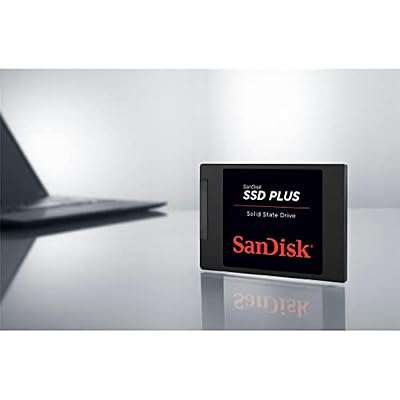
4. SANDISK 2TB SSD Plus 2.5″ SATA Internal SSD, Read up to 545 MB/s

SANDISK 2TB SSD Plus 2.5" SATA SSD, Internal SSD, Read speeds up to 545 MB/s, SATA III 6GB/s, Easy Upgrade


As an Amazon Associate we earn from qualifying purchases. Product prices and availability are accurate as of the date/time indicated.
The SanDisk 2TB SSD Plus is the bulk SATA storage pick. It is a 2.5-inch internal SATA drive with read speeds up to 545MB/s — and flagging the interface matters here, because SATA is far slower for sequential reads than NVMe. Its strength is capacity: 2TB of internal storage to hold datasets and archives in any system with a SATA bay. At around $399.00 it is a roomy, compatible internal option.
For ML this drive is best as bulk storage for datasets you are not actively streaming at maximum speed — staging data, archiving completed projects, or feeding lighter workloads where 545MB/s SATA reads are sufficient. The 2.5-inch SATA form factor fits virtually any desktop or laptop bay, making it a universally compatible way to add a lot of capacity. It is not the drive to pair with a GPU that is starved for data, but as affordable, high-compatibility bulk SATA storage, it does a useful job in the storage tier.
Pros: 2TB capacity, universal 2.5-inch SATA compatibility, dependable bulk storage.
Cons: SATA tops out around 545MB/s — much slower than NVMe for loading.
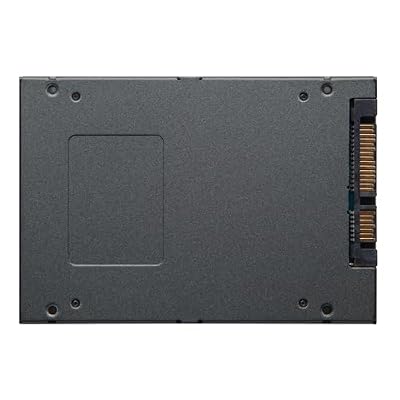
5. Kingston 960GB A400 SATA3 2.5″ Internal SSD SA400S37/960G

Kingston 960GB A400 SATA3 2.5" Internal SSD SA400S37/960G - HDD Replacement for Increase Performance





As an Amazon Associate we earn from qualifying purchases. Product prices and availability are accurate as of the date/time indicated.
The Kingston 960GB A400 is the affordable working-drive pick. It is a 2.5-inch SATA3 SSD — flag the interface, as SATA is slower than NVMe — built as a reliable, low-cost HDD replacement and general-purpose drive. At around $181.00 it offers a useful 960GB of capacity for a sensible price, making it a practical secondary or scratch drive in an ML workstation.
For ML this drive suits the role of an affordable working or scratch disk: somewhere to stage smaller datasets, hold the operating system and environments, or cache intermediate files where SATA speed is adequate. The A400 is a hugely popular, dependable drive known for doing the basics well, and 960GB is enough room for tooling and moderate data. It is not a fast-read powerhouse for streaming huge datasets, but as a cheap, reliable SATA workhorse to round out a build’s storage, it is a sensible inclusion.
Pros: Affordable 960GB SATA, reliable A400 workhorse, good as a working/scratch drive.
Cons: SATA speeds only; not for high-throughput dataset streaming.
6. Kingston 480GB A400 SATA 3 2.5″ Internal SSD SA400S37/480G
Kingston 480GB A400 SATA 3 2.5" Internal SSD SA400S37/480G - HDD Replacement for Increase Performance


As an Amazon Associate we earn from qualifying purchases. Product prices and availability are accurate as of the date/time indicated.
Rounding out the list is the Kingston 480GB A400, the budget OS-and-scratch pick. It is a smaller-capacity 2.5-inch SATA3 SSD — again, flag SATA as the slower interface — and at around $114.99 it is the most affordable drive here. It is the sensible choice for an operating-system disk or a small scratch drive in an ML build where the heavy dataset storage lives elsewhere.
For ML this drive fills the supporting role: a reliable, inexpensive home for the OS, Python environments and ML frameworks, or a small scratch space for temporary files, freeing your faster NVMe and larger drives for active datasets. The A400 line’s reputation for dependable, no-drama operation makes it a safe pick for a boot drive, and 480GB is plenty for system software and tooling. As the cheapest, most modest drive here, it is best understood as a supporting SATA disk rather than a dataset-loading drive.
Pros: Cheapest pick here, dependable 480GB SATA, ideal OS or small scratch disk.
Cons: Small capacity and SATA speeds; a support drive, not a data loader.
How to Choose an SSD for Machine Learning
For machine learning, capacity and read speed are the two priorities, and they matter in roughly that order for most people. Datasets, preprocessed tensors and model checkpoints consume space quickly, so you need enough room to hold your active data locally without constant shuffling — which is why drives like the 2TB NVMe and the 4TB and 2TB portables feature here. Fast sequential read then determines how quickly that data streams into training, keeping an expensive GPU fed rather than idle. Buy enough capacity first, then prioritise read speed for the data you actively train on.
Interface is the factor that decides real-world read performance, so flag it before anything else. NVMe drives using the M.2 PCIe interface, like the Samsung 970 EVO Plus, deliver dramatically faster sequential reads than SATA drives, which are capped around 545MB/s — that is the difference between a GPU that stays fed and one that waits. Portable USB SSDs like the SanDisk Extreme models (up to 1050MB/s) sit in between and add cross-machine flexibility. Match the interface to the job: NVMe for fast local loading, SATA for cheap bulk, portable USB for moving data around.
Think in storage tiers rather than one perfect drive. A strong ML workstation often pairs a fast NVMe drive for the active dataset and checkpoints with a larger, cheaper SATA or portable drive for bulk storage and archives, and a modest SATA SSD like the Kingston A400 for the OS and environments. This keeps your fastest, most expensive storage focused on the data you stream during training while inexpensive capacity handles everything else. Decide which drive plays which role before you buy, and you spend efficiently.
Finally, weigh portability, reliability and value for how you actually work. If you move datasets between a laptop, a workstation and a cloud instance, a rugged portable like the 4TB or 2TB SanDisk Extreme saves endless re-downloading; if everything lives in one machine, internal NVMe and SATA are cheaper per gigabyte and faster on the PCIe side. Favour drives from proven brands like Samsung, SanDisk and Kingston for sustained, dependable operation, set your capacity to your datasets, prioritise NVMe read speed for active training data, and pick the SSD — or combination — on this list that fits your ML workflow.
Frequently Asked Questions
What matters most in an SSD for machine learning?
Capacity and sequential read speed. ML datasets, checkpoints and preprocessed data consume space fast, so you need room to hold active data locally, and fast reads keep your GPU fed rather than waiting on storage. Interface is the key lever for read speed — NVMe like the Samsung 970 EVO Plus is far faster than SATA, which is capped around 545MB/s.
Is NVMe necessary, or is a SATA SSD good enough for ML?
It depends on the role. NVMe M.2 drives are dramatically faster for sequential reads and are the best choice for actively streaming large datasets into training, keeping an expensive GPU fed. SATA drives like the Kingston A400 or SanDisk SSD Plus top out around 545MB/s and are better suited to bulk storage, the OS, environments or scratch space where top read speed is not critical.
Are portable USB SSDs suitable for machine learning datasets?
Yes, especially when you move data between machines. The SanDisk Extreme portables run up to 1050MB/s over USB-C — slower than internal NVMe but much faster than older drives — and capacities up to 4TB let you carry very large datasets between a laptop, workstation and cloud box without re-downloading. They are the flexible choice when portability is your bottleneck.
How much SSD capacity do I need for machine learning?
As much as your datasets and checkpoints demand, with headroom. Many ML users want at least 2TB for active data, like the Samsung 970 EVO Plus or the 2TB portables, and step up to 4TB (the SanDisk Extreme) for very large datasets. A common approach is a fast 2TB NVMe drive for active training data plus a larger SATA or portable drive for bulk storage and archives.
Related Guides
- Best NVMe SSDs
- Best SSDs
- Best Portable SSDs
- Best External Hard Drives
- Best RAM for Gaming
- Best Gaming PCs and Workstations
Affiliate Disclosure: As an Amazon Associate, we earn from qualifying purchases. If you click a link and make a purchase, we may earn a small commission at no extra cost to you. Prices and availability are accurate as of publication and may change.
Ready to decide? Our #1 pick for 2026 is the Samsung 970 EVO Plus 2TB NVMe M.2.
Live price & availability on Amazon.


