

- Top Pick: Genmitsu CNC 3018-PRO Router Kit, 3-Axis CNC Machine, Mini Milling Machine
- Best Value: TTC3018 Pro CNC Router Machine,Desktop CNC Engraving Machine
- Premium Choice: FoxAlien Masuter Pro 3-Axis CNC Router Machine, Beginner Hobby Engraving Machine All-Metal Structure for Wood Acrylic MDF Nylon Routing Milling Carving
🛒 Best Price Today on Amazon
Prime members get fast, free shipping on everything above, plus member-only deals. New members get a 30-day free trial — cancel anytime.
- Top Routers Machine Learning Picks for 2026
- Best Routers for Machine Learning Workflows at a Glance
- 1. TP-Link Archer AXE75 AXE5400 Tri-Band WiFi 6E Router
- 2. TP-Link AX1800 WiFi 6 Router (Archer AX21 V5), Dual Band, Gigabit
- 3. ASUS AC2900 WiFi Gaming Router (RT-AC86U), Dual Band, Gigabit
- 4. GL.iNet GL-MT3000 (Beryl AX) Portable Travel Router, Wi-Fi 6, 2.5G
- 5. ASUS AC1750 WiFi Router (RT-AC66U B1), Dual Band, Gigabit, AiMesh
- 6. TP-Link AC1200 Gigabit WiFi Router (Archer A6), Dual Band, MU-MIMO
- How to Choose a Router for Machine Learning Work
- Frequently Asked Questions
- Related Guides
- Related Articles
- Related Guides
Top Routers Machine Learning Picks for 2026
Here are our current top routers machine learning picks, compared on real Amazon owner reviews, price, and features. Live prices update below.
As an Amazon Associate we earn from qualifying purchases at no extra cost to you.





Let us be honest up front: a router does not train neural networks — your GPU, cloud instance or compute cluster does. What a router does for machine learning work is keep the pipe to that compute fast and stable. If you train on cloud GPUs, pull large datasets, push to remote notebooks, or SSH into a workstation, a flaky or congested connection is a real bottleneck: dropped sessions, stalled downloads and laggy remote desktops. This guide rounds up the best routers for machine learning workflows in 2026, judged on the things that actually help — high throughput, low latency, and a rock-solid wired backbone — and we are clear about what a router can and cannot do.
Our picks were chosen on what matters for a developer connecting to remote compute: real-world bandwidth for moving datasets and model checkpoints, low and consistent latency for interactive remote sessions, gigabit (or faster) wired ports for a stable hardwired link, and value. We have included Wi-Fi 6 and Wi-Fi 6E options plus a portable router for working away from home, with prices from around $40 up to around $121. None of these will speed up training itself — but they will stop your network being the weak link. Below is an at-a-glance comparison of all six, then a closer look at each and an honest buyer’s guide built around bandwidth, latency and wired connectivity.
Best Routers for Machine Learning Workflows at a Glance
| Router | Best For | Standout Spec | Approx Price |
|---|---|---|---|
| TP-Link Archer AXE75 (AXE5400 Wi-Fi 6E) | Lowest-latency 6E link | Tri-band 6E, gigabit ports | around $100 |
| TP-Link Archer AX21 (AX1800 Wi-Fi 6) | Value Wi-Fi 6 for dev | Dual-band Wi-Fi 6, gigabit | around $52 |
| ASUS RT-AC86U (AC2900) | Stable wired backbone | Dual-band, gigabit, strong CPU | around $113 |
| GL.iNet GL-MT3000 (Beryl AX) | Remote work on the move | Wi-Fi 6, 2.5G WAN port | around $84 |
| ASUS RT-AC66U B1 (AC1750) | Reliable everyday link | Dual-band gigabit, AiMesh | around $121 |
| TP-Link Archer A6 (AC1200) | Budget hardwired base | MU-MIMO, gigabit ports | around $40 |
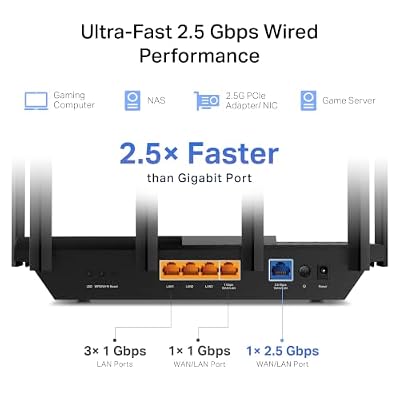
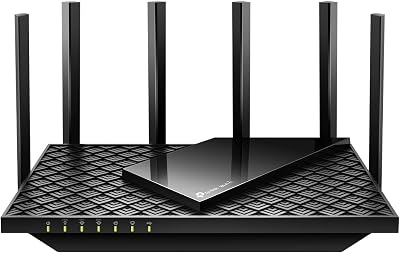
1. TP-Link Archer AXE75 AXE5400 Tri-Band WiFi 6E Router

TP-Link AXE5400 Tri-Band WiFi 6E Router, 2025 PCMag Editors' Choice






As an Amazon Associate we earn from qualifying purchases. Product prices and availability are accurate as of the date/time indicated.
The TP-Link Archer AXE75 is the top pick for keeping a machine-learning workflow’s connection fast and uncluttered. As a tri-band Wi-Fi 6E router it adds the 6GHz band on top of the usual 2.4 and 5GHz, giving you a clean, high-bandwidth lane that congested neighbourhoods and busy 5GHz networks cannot crowd. It has gigabit Ethernet for a wired link, and at around $100 it is a well-priced way to get 6E.
This is the router to choose if you regularly move large datasets to and from cloud storage or hold long interactive sessions on remote GPUs over Wi-Fi. The 6GHz band offers wide channels and low congestion, which translates to more consistent throughput and lower latency for transfers and remote desktops on a compatible device. To be clear, it accelerates your connection to compute, not the training itself — but for a wireless dev setup that needs a clean, fast pipe, the AXE75 is the standout.
Pros: Tri-band Wi-Fi 6E with clean 6GHz band, gigabit ports, low congestion, strong value.
Cons: 6GHz benefits need a 6E-capable client device; does not speed up training.
2. TP-Link AX1800 WiFi 6 Router (Archer AX21 V5), Dual Band, Gigabit
The TP-Link Archer AX21 is the value Wi-Fi 6 pick for developers. It is a dual-band AX1800 router that brings Wi-Fi 6 efficiency — better handling of many connected devices and improved throughput — to a very accessible price. It includes gigabit Ethernet ports for hardwiring your workstation, and at around $52 it is one of the best-value upgrades for a home dev network.
This is the router to choose when you want reliable, modern Wi-Fi for remote machine-learning work without overspending. Wi-Fi 6 keeps the connection responsive even with phones, laptops and smart-home gear all active, which helps your remote notebook session or dataset download stay steady, and the gigabit port lets you hardwire your main machine for the most stable link. It will not make a model train faster, but as an affordable, dependable foundation for cloud-based ML work, the AX21 is an easy recommendation.
Pros: Affordable Wi-Fi 6, efficient with many devices, gigabit ports for hardwiring.
Cons: Dual-band only (no 6GHz); a network upgrade, not a compute upgrade.
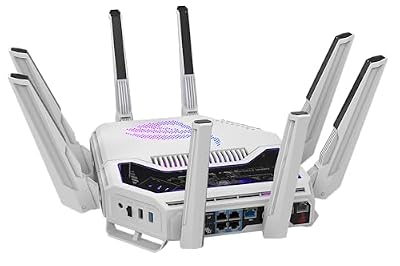
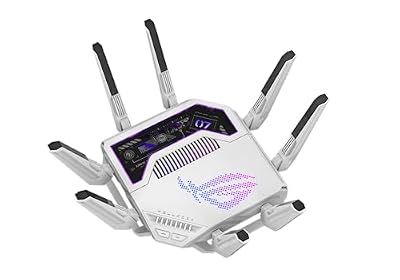
3. ASUS AC2900 WiFi Gaming Router (RT-AC86U), Dual Band, Gigabit

ASUS GT-BE19000AI Tri-Band WiFi 7 AI Gaming Router - 10G, Game Boost








As an Amazon Associate we earn from qualifying purchases. Product prices and availability are accurate as of the date/time indicated.
The ASUS RT-AC86U is the pick for a stable wired backbone. Built as a high-performance dual-band AC2900 router with a powerful processor, it is designed to keep many connections fast and low-latency at once, with gigabit Ethernet ports and ASUS’s well-regarded firmware. At around $113 it is a capable, enthusiast-grade router that holds up under sustained load.
This is the router to choose if a rock-solid hardwired link to your local workstation — and steady throughput for remote sessions — matters more than chasing the newest Wi-Fi standard. The strong CPU keeps latency low even when the network is busy, the gigabit ports give your main machine a dependable wired connection for SSH and large transfers, and the mature firmware offers QoS to prioritise your dev traffic. It does not touch training speed, but for a reliable, low-latency network backbone, the RT-AC86U is a strong choice.
Pros: Powerful CPU for low latency under load, gigabit ports, mature firmware with QoS.
Cons: Wi-Fi 5 (AC) rather than Wi-Fi 6/6E; purely a connectivity device.
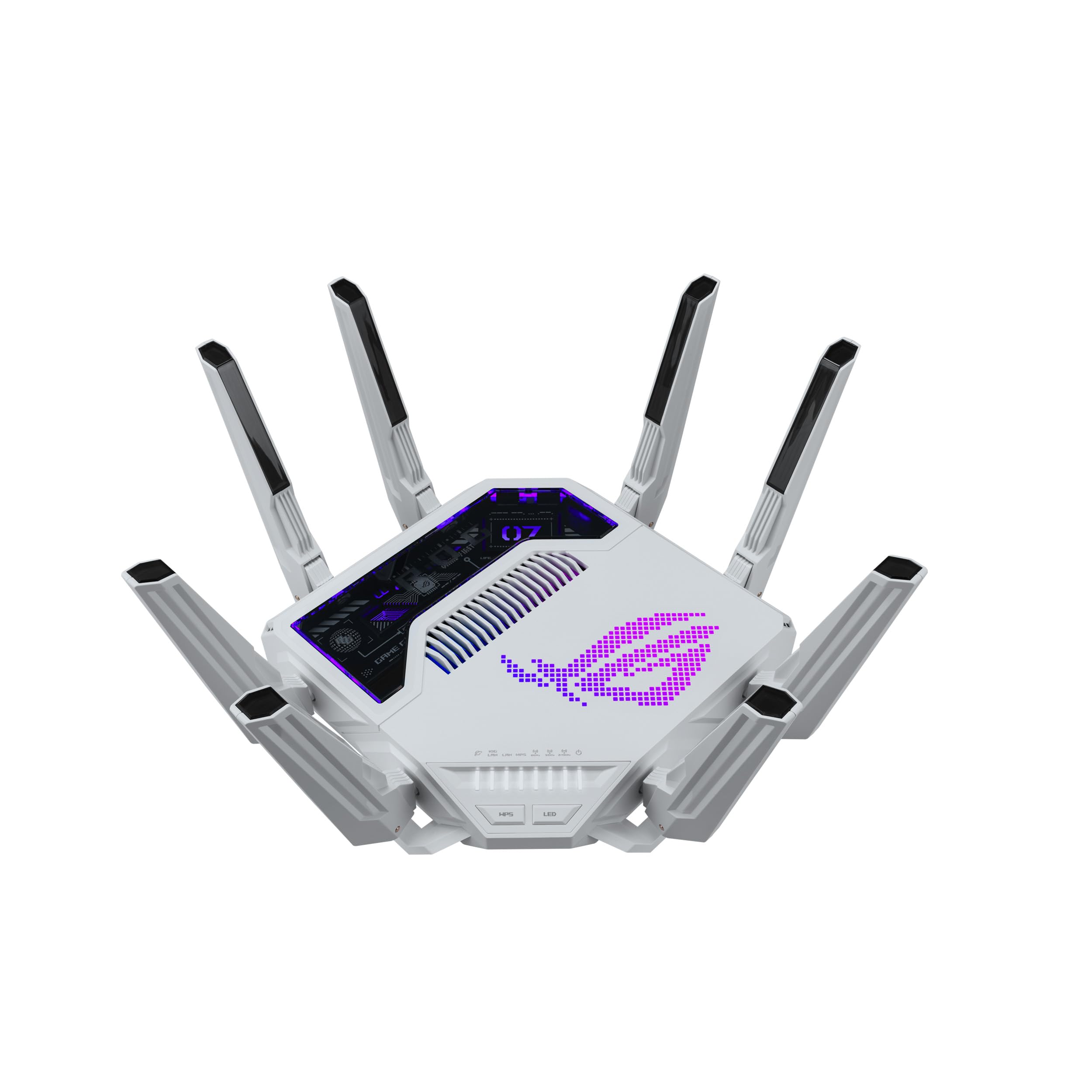
4. GL.iNet GL-MT3000 (Beryl AX) Portable Travel Router, Wi-Fi 6, 2.5G

GL.iNet GL-MT3000 Beryl AX Wi-Fi 6 Travel Router, 2.5G WAN, VPN, OpenWrt





As an Amazon Associate we earn from qualifying purchases. Product prices and availability are accurate as of the date/time indicated.
The GL.iNet GL-MT3000 (Beryl AX) is the pick for machine-learning work on the move. It is a pocket-sized Wi-Fi 6 travel router with a fast 2.5G WAN port and GL.iNet’s flexible OpenWrt-based firmware, including built-in VPN client support. At around $84 it is a uniquely capable little device for keeping your remote-compute connection secure and stable away from your home network.
This is the router to choose if you train or develop on cloud GPUs from hotels, offices or co-working spaces and want a consistent, controllable connection rather than relying on untrusted public Wi-Fi. The 2.5G WAN port can take advantage of fast wired uplinks where available, Wi-Fi 6 keeps your devices responsive, and the built-in VPN support helps secure your SSH and notebook sessions on the road. It is a connectivity tool, not a compute one — but for portable, secure access to remote ML resources, the Beryl AX is excellent.
Pros: Portable Wi-Fi 6, fast 2.5G WAN port, built-in VPN support, flexible firmware.
Cons: Travel-sized coverage, not a whole-home router; no effect on compute speed.
5. ASUS AC1750 WiFi Router (RT-AC66U B1), Dual Band, Gigabit, AiMesh

TP-Link Archer AC1750 WiFi Router - Dualband Gigabit, Qualcomm inside, Works with Alexa(A7), Black
As an Amazon Associate we earn from qualifying purchases. Product prices and availability are accurate as of the date/time indicated.
The ASUS RT-AC66U B1 is the reliable everyday pick. It is a dual-band AC1750 router with gigabit Ethernet, ASUS’s stable firmware, and AiMesh support so you can extend coverage with compatible ASUS units later. At around $121 it is a dependable, well-supported router for a home or small-office network that underpins remote development work.
This is the router to choose when you want trustworthy, no-drama connectivity for cloud-based ML tasks and value ASUS’s long track record of firmware support. The gigabit ports give your workstation a stable wired link for transfers and remote sessions, the AC1750 Wi-Fi covers a typical home well, and AiMesh lets you grow coverage if your space demands it. As with every router here, it improves the connection to your compute and nothing more — but as a solid, expandable everyday base, the RT-AC66U B1 does that job well.
Pros: Dependable AC1750 dual-band, gigabit ports, AiMesh expandable, strong firmware support.
Cons: Wi-Fi 5 generation; priced higher than its raw specs suggest; connectivity only.
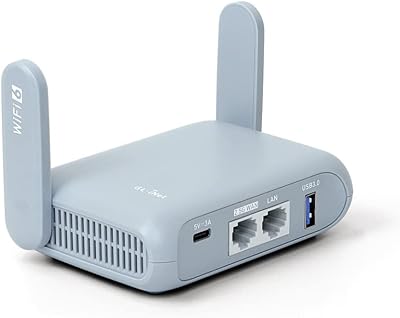
6. TP-Link AC1200 Gigabit WiFi Router (Archer A6), Dual Band, MU-MIMO


As an Amazon Associate we earn from qualifying purchases. Product prices and availability are accurate as of the date/time indicated.
Rounding out the list is the TP-Link Archer A6, the budget hardwired base. It is a dual-band AC1200 router with MU-MIMO and gigabit Ethernet ports, and at around $40 it is the cheapest option here. For a developer who mainly hardwires their main machine and just needs a dependable, inexpensive router behind it, it covers the essentials.
This is the router to choose on the tightest budget, particularly if your workstation connects by Ethernet and Wi-Fi is secondary. The gigabit ports give that wired machine a stable link for remote sessions and dataset transfers, MU-MIMO helps the AC1200 Wi-Fi serve several wireless devices, and the low price leaves more in the budget for the compute that actually does the learning. It will not improve training in any way — but as an affordable, reliable connectivity base, the Archer A6 is a sensible, low-cost pick.
Pros: Cheapest pick here, gigabit ports for hardwiring, MU-MIMO dual-band Wi-Fi.
Cons: Entry-level Wi-Fi 5 throughput; strictly a network device, not compute.
How to Choose a Router for Machine Learning Work
First, the honest framing: no router trains models or speeds up computation — that is the job of your GPU, cloud instance or cluster. A router’s role in a machine-learning workflow is to keep your connection to that compute fast, stable and low-latency, whether you are pulling datasets, pushing checkpoints, or working in a remote notebook or SSH session. Choose with that in mind, and do not expect networking gear to do anything to training time. Every pick here is a connectivity upgrade, not a compute one.
Bandwidth is the first practical criterion, because moving data is where you feel a slow network. A modern standard like Wi-Fi 6 (the Archer AX21) or Wi-Fi 6E (the Archer AXE75, with its clean 6GHz band) gives you higher, more consistent throughput for large dataset and model transfers, especially in a crowded wireless environment. If you frequently sync gigabytes to and from cloud storage, prioritise a router with strong real-world throughput and, ideally, the uncongested 6GHz band — paired with a client device that supports it.
Latency and a wired backbone matter most for interactive work. Remote desktops, live notebooks and SSH sessions feel sluggish when latency spikes, so a router with a capable processor and good QoS — the ASUS RT-AC86U is a strong example — keeps response times steady even when the network is busy. Better still, hardwire your main machine: a gigabit Ethernet connection (every router here has gigabit ports) is inherently more stable and lower-latency than Wi-Fi for the workstation you actually develop from.
Finally, factor in where you work and your budget. If you develop on the road, a portable router like the GL.iNet Beryl AX with built-in VPN keeps your remote-compute access secure and consistent over untrusted networks. At home, match the standard and coverage to your space — value Wi-Fi 6 from the AX21, an expandable AiMesh base in the RT-AC66U B1, or a cheap wired base in the Archer A6. Decide whether bandwidth, latency, portability or price leads, remember the router only ever improves the pipe to your compute, and pick the model on this list that fits how and where you connect.
Frequently Asked Questions
Can a router make machine learning training faster?
No — and any guide that implies otherwise is misleading. Training speed comes from your GPU, CPU, cloud instance or cluster, not your network. A router only affects how fast and reliably you connect to that compute: dataset transfers, remote notebook sessions, SSH and cloud syncing. A good router removes the network as a bottleneck, but it cannot accelerate the math that training actually performs.
Does a router actually help if I train on cloud GPUs?
Yes, in the connectivity sense. If you use cloud GPUs, your experience depends on a fast, stable, low-latency link for uploading data, downloading checkpoints, and interacting with remote notebooks or desktops. A modern Wi-Fi 6/6E router like the Archer AXE75, or a hardwired gigabit connection, keeps those transfers and sessions smooth. It will not change how quickly the cloud GPU computes, only how reliably you reach it.
Should I use Wi-Fi or Ethernet for remote ML development?
Ethernet, wherever you can. A wired gigabit connection — available on every router here — is inherently more stable and lower-latency than Wi-Fi, which matters for SSH sessions and large transfers that you do not want dropping. Use strong Wi-Fi 6/6E for mobility around the house, but hardwire the main workstation you develop from for the most dependable link to your compute.
Is Wi-Fi 6E worth it for a dataset-heavy workflow?
It can be, if you move large datasets wirelessly and your devices support it. Wi-Fi 6E, as on the TP-Link Archer AXE75, adds the 6GHz band — wide channels and far less congestion than the crowded 5GHz space — which means more consistent throughput for big transfers. The benefit only applies to 6E-capable client devices, though, and a stable wired link will still beat Wi-Fi for the machine doing the heavy syncing.
Related Guides
- Best Routers
- Best Wi-Fi 6 Routers
- Best Mesh Wi-Fi Systems
- Best Network Switches
- Best NVMe SSDs for Datasets
- Best Gaming and Workstation PCs
Affiliate Disclosure: As an Amazon Associate, we earn from qualifying purchases. If you click a link and make a purchase, we may earn a small commission at no extra cost to you. Prices and availability are accurate as of publication and may change.
Ready to decide? Our #1 pick for 2026 is the TP-Link Archer AXE75 (AXE5400 Wi-Fi 6E).
Live price & availability on Amazon.


